
A waterfall concrete dining table does more than fill the space between a kitchen island and bi-fold doors. It gives an open-plan room a clear focal point: a substantial, architectural piece with clean lines that still earns its place through daily family meals, homework, celebrations and long Sunday lunches.
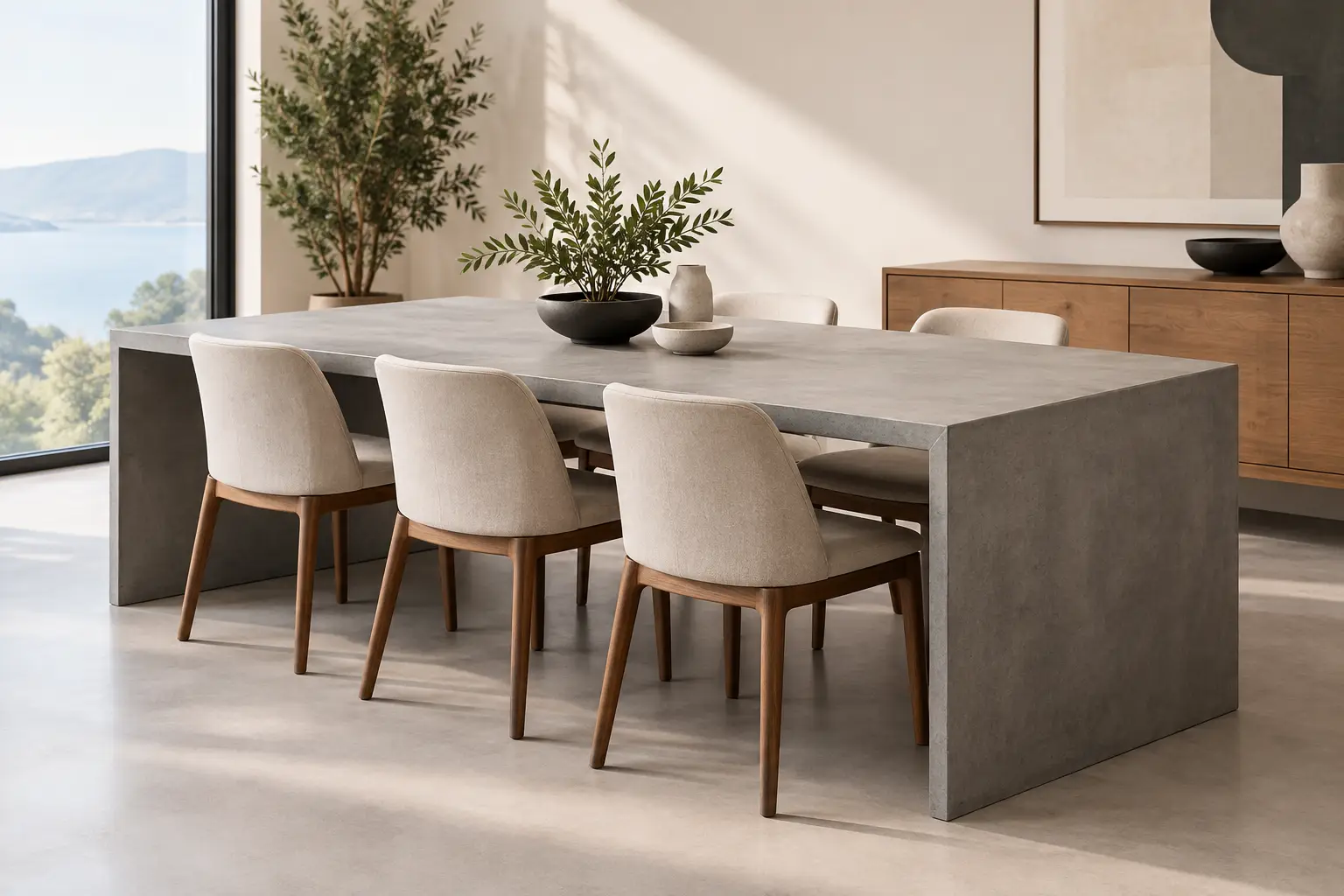
The waterfall form is deceptively simple. Rather than stopping at the edge of the tabletop, the concrete appears to flow down at one or both ends to create the supporting legs. The result is a bold, continuous silhouette that feels considered from every angle. For homeowners creating a forever home, it can be the element that makes a new kitchen or dining extension feel properly finished.
Why choose a waterfall concrete dining table?
A waterfall table has an immediacy that conventional dining furniture often lacks. The top and legs read as one connected form, giving the table a sculptural presence without relying on ornate detailing. It suits contemporary kitchens, industrial-inspired interiors and pared-back schemes particularly well, but it can also bring welcome contrast to timber floors, soft upholstery and period architecture.
Polished concrete adds depth to that form. It is not a flat, printed grey surface. Each hand-finished table has natural variation in tone, movement and character, which means no two pieces are identical. Subtle pinholes, gentle clouding and small shifts in colour are part of the material’s appeal, rather than faults to be hidden.
This is also furniture made for real use. A properly finished and sealed concrete dining table is hard-wearing and practical for everyday living. It offers the reassuring solidity many households want from a large dining table, especially where the table needs to cope with children, guests and regular use rather than simply looking good in photographs.
There is a trade-off, of course. Concrete has visual weight and a strong personality. In a very compact room, a deep, dark or oversized waterfall design can dominate the space. The right answer is not to avoid the material, but to choose proportions, colour and leg placement that give the room space to breathe.
Getting the proportions right
The most successful waterfall concrete dining table is designed around the room first, then the number of people it needs to seat. A table can look magnificent in a large showroom or open-plan extension, yet feel awkward if chairs cannot be pulled out comfortably or if the walkway to the garden is too tight.
As a useful starting point, allow around 60cm of table width per diner, with more room if you enjoy relaxed dinner parties or use larger dining chairs. A six-seater often works well at approximately 180cm to 220cm long, while an eight-seater may need 240cm to 300cm. For ten or twelve guests, a bespoke length can create generous seating without forcing people to sit shoulder to shoulder.
Clearance around the table matters just as much. Aim for enough room behind occupied chairs for someone to pass with ease. In a family kitchen, this is often the difference between a statement table that feels luxurious and one that becomes an obstacle at breakfast time.
Shape changes the way a room feels
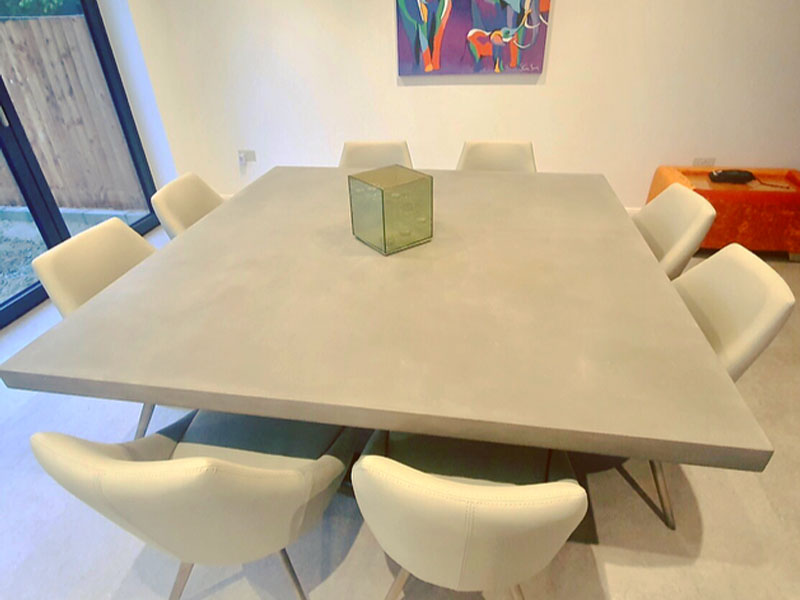
A rectangular waterfall table is the classic choice for long dining rooms and kitchen extensions. Its straight edges echo cabinetry, steel-framed glazing and island units, creating a calm, organised look. A square table can feel more sociable in a wider room, while a softer radius or rounded corner detail can make a substantial concrete piece more relaxed around young children and busy walkways.
The end legs also need careful thought. Their placement affects where diners can sit at each end and how freely chairs move beneath the tabletop. A skilled maker will consider the visual balance of the waterfall form alongside practical seating, support and access.
Choosing colour and finish with confidence
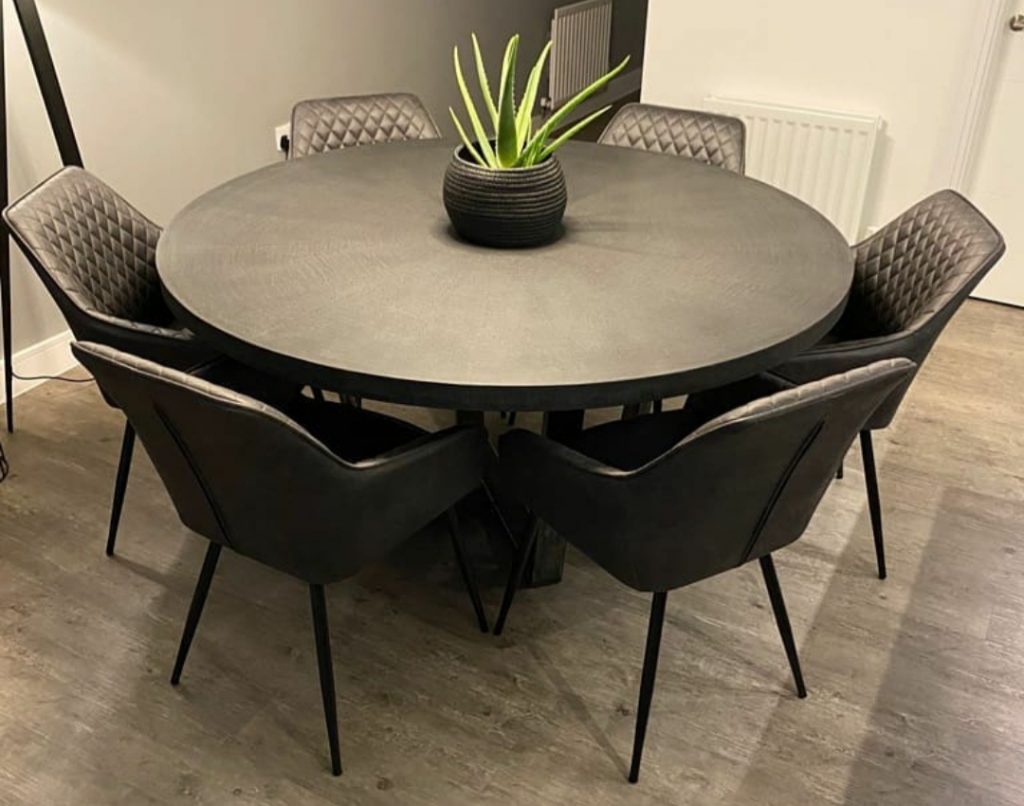
Grey is the colour most people picture first, but polished concrete offers far more scope. Pale tones can sit beautifully with oak, limestone and warm neutral cabinetry. Mid-grey creates a crisp urban design feel, while darker charcoal finishes can anchor a bright room with dramatic confidence. Bespoke pigments allow the table to relate to existing flooring, worktops, hardware or a favourite architectural detail.
Finish is equally influential. A refined polished surface catches light and reveals the material’s depth, making it well suited to contemporary spaces with plenty of glazing. A more tactile, honed look can feel quieter and more organic. Neither is automatically better. It depends on whether the room calls for a sharper statement or a softer, more understated centrepiece.
Expect natural character rather than factory-perfect uniformity. The appeal of handmade concrete lies in its individuality, and a sample or discussion about finish can help set the right expectation before your table is made. This is particularly valuable if you are pairing it with a specific kitchen colour or a floor that has strong grain or variation.
Living with concrete every day
Concrete furniture is reassuringly straightforward to live with when treated with sensible care. Use placemats or trivets for very hot pans, wipe spills promptly and clean with a soft cloth and mild, pH-neutral cleaner. Avoid abrasive pads, bleach and harsh chemical sprays, which can affect the protective finish over time.
Sealing provides vital stain resistance, but it does not turn any natural material into something indestructible. Red wine, oils, citrus and strongly coloured foods are best dealt with promptly, particularly on a pale surface. That small amount of care is part of owning a handmade table, much like looking after timber or natural stone.
The benefit is that the table remains purposeful rather than precious. It is designed for plates, elbows, school projects and the occasional slightly chaotic gathering. Over time, a well-loved surface can gain a gentle lived-in quality that feels appropriate to the material.
Bespoke or a standard size?
For many homes, a standard six, eight or ten-seater configuration offers the quickest route to a striking dining space. It gives you proven proportions, clearer pricing and faster fulfilment while retaining the character of a hand-finished polished concrete piece.
Bespoke is the better route when the architecture asks for something more specific. Perhaps your dining area has an unusual width, a banquette on one side, a bay window, or a requirement for twelve seats without making the table appear excessively long. You may also want a particular tabletop thickness, edge profile, colour, finish or leg arrangement.
At Daniel Polished Concrete, this process begins with how you want to use the table, not simply a list of measurements. A well-planned commission considers the room, seating, access for delivery and installation, and the materials already present in the interior. That is what allows a large concrete table to feel integral to the space rather than dropped into it.
Details that make the finished table feel considered
Dining chairs are worth considering early. Slim upholstered chairs can soften the strength of concrete, while timber chairs bring warmth and texture. Black metal-framed seating reinforces a more industrial look. If the table will sit near a kitchen island, repeating one small detail such as a dark leg, warm oak or brushed metal can make the entire room feel more connected.
Lighting should be planned around the table too. A long linear pendant can emphasise a rectangular silhouette, while a cluster of softer pendants makes a large expanse of concrete feel more intimate in the evening. Position the fitting so it illuminates faces and food rather than creating glare on the tabletop.
Finally, do not leave delivery until the end of the conversation. A waterfall concrete dining table is a substantial piece of furniture. Door widths, turns, stairs, parking and access through a side gate all matter. Planning these details in advance protects the experience and ensures the table arrives ready to take its place.
A great dining table should make daily life feel a little more special, even when the meal is simple. If your room needs a piece with real presence, begin with the measurements, the way your household gathers and the finish you will enjoy seeing every day.