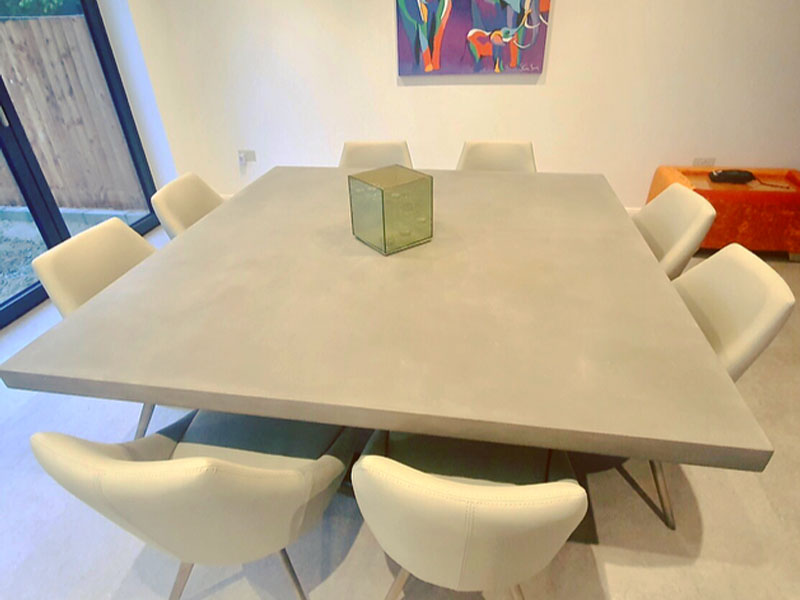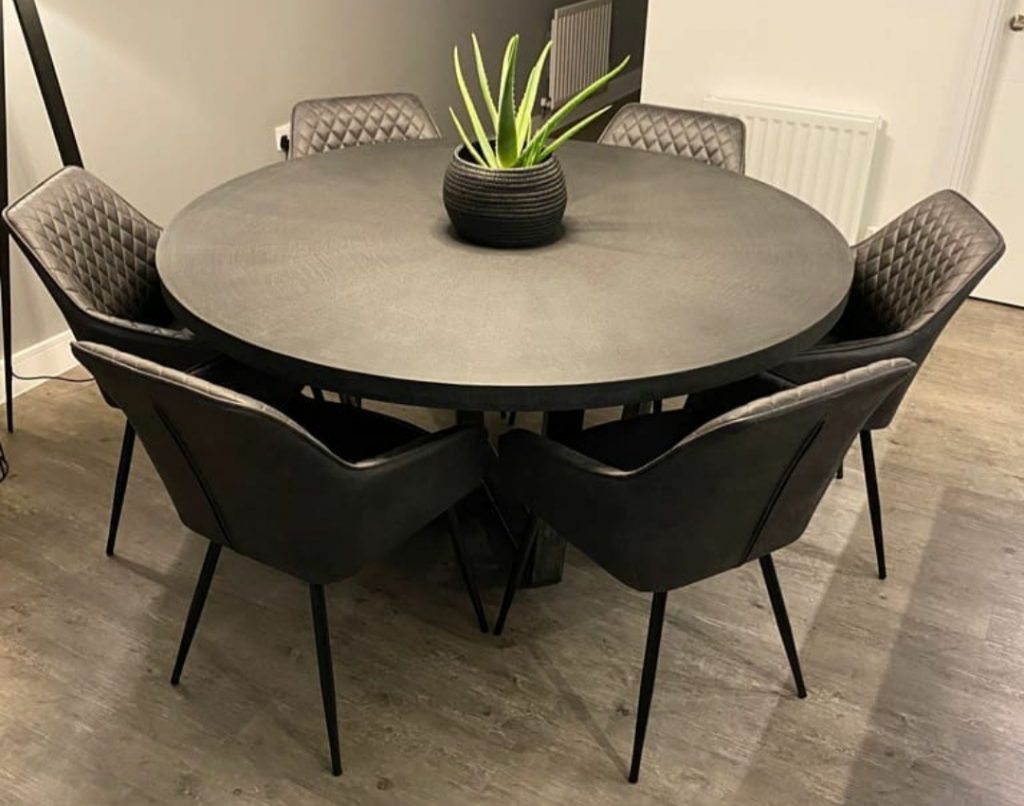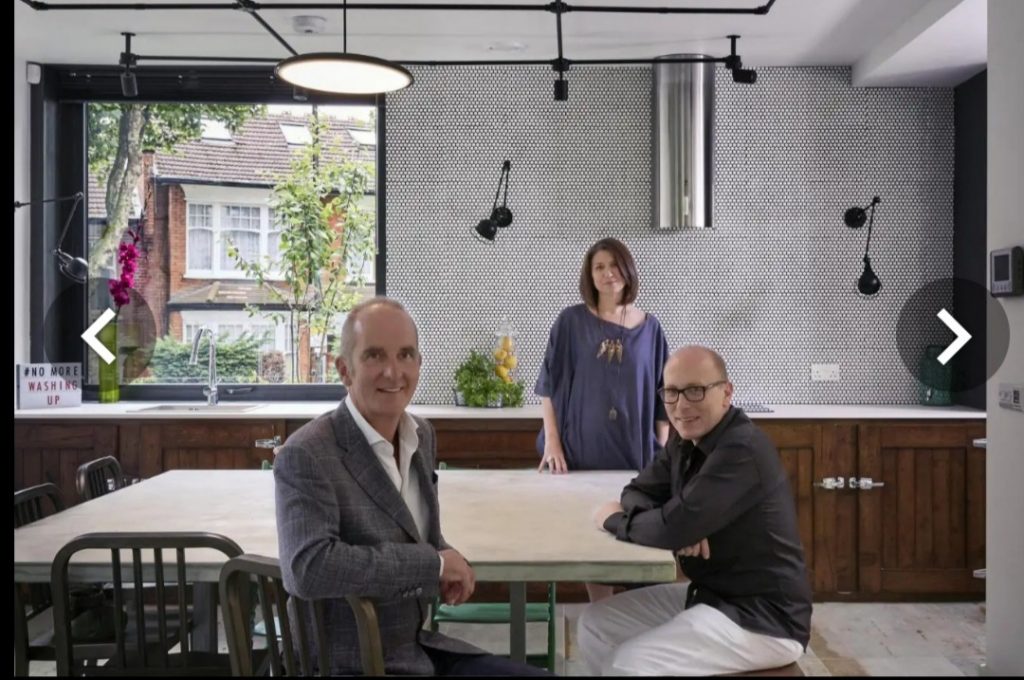

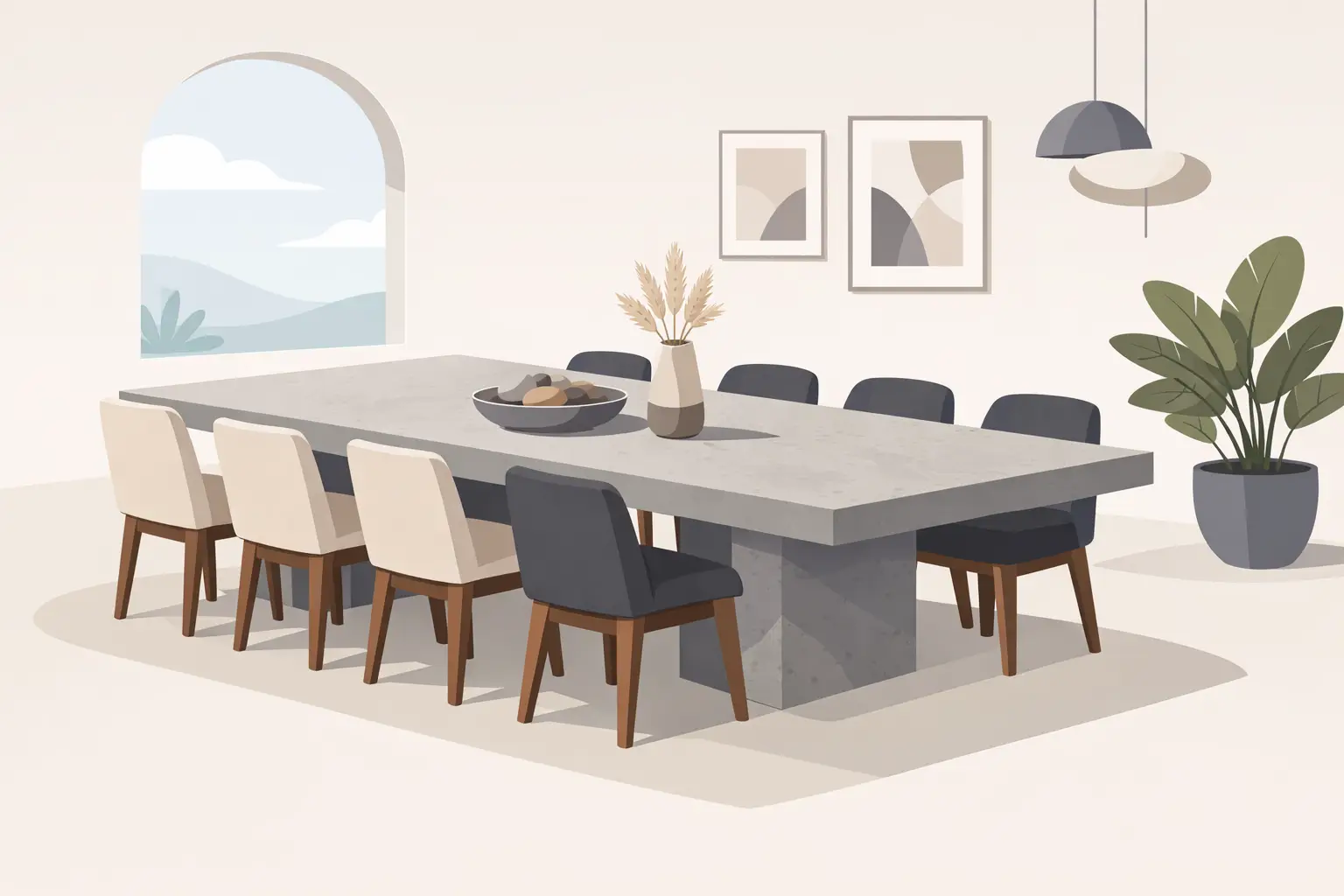
An 8-seater concrete dining table earns its place long before the first dinner party. In a large kitchen extension or open-plan dining room, it sets the rhythm of the whole space – part furniture, part architecture, and used every single day. For families, frequent hosts and homeowners creating a forever home, it solves a familiar problem: finding a table that feels substantial and design-led without becoming precious or impractical.
Concrete has a very different presence from oak, marble or glass. It is calmer, weightier and more grounded. That matters in bigger rooms, where lightweight furniture can disappear and overly ornate pieces can feel busy. A polished concrete top gives an eight-seat table the visual confidence to anchor the room, while still working with understated cabinetry, timber floors, steel-framed glazing and soft upholstered dining chairs.
Why an 8-seater concrete dining table suits modern homes
Eight seats is often the sweet spot. It is generous enough for family life, Christmas lunch and a full table of guests, but usually more manageable than a ten or twelve seater in day-to-day use. In practical terms, it gives you room to spread out without making the room feel like a restaurant.
A concrete dining table works especially well at this size because the material carries scale beautifully. On smaller pieces, concrete can feel like a design statement. On larger tables, it starts to feel architectural. The top has presence, the silhouette stays clean, and the finish introduces texture without fuss. If your home leans contemporary, industrial, minimalist or modern rustic, concrete often ties the scheme together more naturally than people expect.
There is also the question of longevity. A dining table for eight tends to see real life – homework, weekday suppers, laptops, birthday cakes, extra chairs pulled in at the ends, and the general wear that comes with a busy household. A properly made polished concrete table is built for that level of use. It is not a seasonal showpiece. It is a hardworking centrepiece designed to look better settled into a home rather than kept at a distance.
Getting the size right
The best 8-seater concrete dining table is not simply the one with eight chairs around it. It is the one proportioned properly for your room, your seating style and the way you actually live.
For most rectangular eight-seat layouts, length matters most. You need enough room for place settings and elbow space, but also enough circulation around the table so people can move comfortably when chairs are pulled out. In many UK homes, especially renovated kitchens and rear extensions, that balance can be surprisingly tight. A table may fit on paper, yet still make the space awkward once dining chairs and walkways are considered.
Width is just as important. Go too narrow and the table can feel mean for eight people. Go too wide and conversation becomes less intimate while serving dishes begin to dominate the centre. The right dimension depends on whether you prefer a more formal dining arrangement or a table that doubles as a relaxed family hub.
This is where bespoke sizing has real value. Standard sizes are useful because they are proven proportions and often more price-efficient, but made-to-measure dimensions can transform a room. If you have a long, narrow extension, an unusual bay, or a specific chair style in mind, small changes in length, width or leg position can make the difference between a table that merely fits and one that feels completely resolved.
Shape and edge profile
Most people picture a rectangular concrete dining table first, and for good reason. It is the clearest, most versatile format for eight places. It suits open-plan layouts, lines up neatly with kitchen islands and cabinetry, and keeps the overall look crisp.
That said, shape should follow the room. Softer corners can be useful in family spaces or where circulation is tight. A more refined edge profile can make a substantial table feel lighter, while a thicker visual line gives more sculptural weight. Neither approach is universally better. It depends on whether you want the table to recede into a calm scheme or stand out as the focal point.
What polished concrete feels like in everyday use
There is often a gap between how concrete is imagined and how it performs in reality. People expect it to be cold, overly industrial or difficult to maintain. In practice, a polished and sealed concrete dining table is far more tactile and liveable than those assumptions suggest.
The surface is smooth, dense and hand-finished, with subtle tonal variation that gives each piece character. That variation is part of the appeal. Concrete is not flat in the way laminate is flat, and it is not repetitive in the way many manufactured stone alternatives can be. It has movement, depth and a handcrafted quality that becomes more interesting the longer you live with it.
Performance matters too. A dining table has to cope with spills, plates, serving dishes and daily traffic. A well-made polished concrete top is chosen precisely because it is hard-wearing and suitable for real use. Like any premium surface, it benefits from sensible care, but it is built to be lived on, not tiptoed around.
The trade-offs worth knowing
Good furniture should be chosen with clear eyes. Concrete offers exceptional presence and durability, but it is not identical to timber or ceramic, nor should it try to be.
Its visual character is more architectural than cosy, so if you want a country-house softness, the table may need warming through chair fabrics, lighting and surrounding materials. It is also a substantial material, which is why design, engineering and installation matter. The best results come from specialist makers who understand both aesthetics and construction, not from generic furniture manufacturing.
For many clients, those are not drawbacks at all. They are the reason concrete feels special. The point is to choose it because you value material honesty, craftsmanship and a table with genuine presence.
Styling an 8-seater concrete dining table
Concrete is surprisingly flexible when it comes to interiors. In an urban scheme, it sits naturally with black metal, smoked glass and warm neutrals. In a more relaxed family kitchen, it pairs beautifully with oak, linen textures and softer earthy colours. The key is contrast.
If you want the table to feel lighter, introduce upholstered chairs and layered lighting above. If you want a more gallery-like look, keep the palette restrained and let the table do the work. Because polished concrete has depth rather than shine, it tends to absorb surrounding materials well instead of fighting with them.
Chair choice changes the personality of the table quickly. Fully upholstered dining chairs make it feel more refined and welcoming for long meals. Timber or metal-framed chairs pull it in a cleaner, more contemporary direction. Benches can work in some layouts, but with an eight-seater they need careful planning so the setting still feels balanced rather than crowded.
Standard collection or bespoke build?
This is usually the most useful question for buyers. A standard 8-seater concrete dining table offers a straightforward route if you want a proven size, confident proportions and better price efficiency. For many homes, that is exactly the right answer.
Bespoke becomes more compelling when the room has specific demands or when the table is being designed as a true one-off. You may need an exact footprint to suit bifold door clearances, a particular shade to work with your kitchen palette, or a leg style that complements other architectural details in the room. Those details might sound minor, but together they shape whether the final piece feels good or exceptional.
That is why a consultation-led approach matters. A specialist maker can help you think beyond simple length and width and consider finish, colour, base design, seating comfort, access for delivery and how the table will sit in the room from every angle. Daniel Polished Concrete has built its reputation on exactly that sort of process – taking a material with strong visual identity and shaping it into furniture that feels completely at home in the client’s space.
A piece that grows into the room
The best dining tables do more than fill a footprint. They become part of the way a home works and feels. An 8-seater concrete dining table is a strong choice for anyone who wants scale, durability and a design language that feels confidently contemporary without chasing trends.
If you get the proportions, finish and detailing right, it will not feel like a purchase that dates. It will feel like a permanent part of the house – the place where family life gathers, guests linger, and the room finally feels finished.