
A dining table is asked to do more than look good under pendant lighting. It needs to take weekday breakfasts, homework, long lunches and the occasional red-wine mishap without losing its presence. That is why table finishes deserve more consideration than a final styling choice. The finish influences how the surface catches light, how it feels to the touch, how easily it lives with family life and whether the table still feels right when the rest of the room changes around it.
For a renovated kitchen or an open-plan dining room, the best choice usually begins with the room itself: its natural light, flooring, cabinetry and the scale of the space. A dramatic surface can become a stunning centre piece, but it should also earn its place every day.
Table finishes begin with the way you live
There is no single finish that suits every home. A household with young children may prioritise easy cleaning and resistance to everyday marks. A couple creating a quieter, design-led dining room may be drawn to tactile materials, subtle colour variation and a surface that develops character over time.
The key is to distinguish between a material’s natural character and poor performance. Grain in timber, veining in stone and tonal movement in concrete are intentional visual qualities. They give a table depth and individuality. By contrast, a finish that scratches too readily, stains easily or demands more care than you can realistically give it will soon become a source of frustration.
A well-chosen table should feel considered rather than precious. It can be the architectural anchor of the room while still being somewhere everyone is comfortable putting down a bowl of pasta.
Polished concrete: modern, tactile and made for use
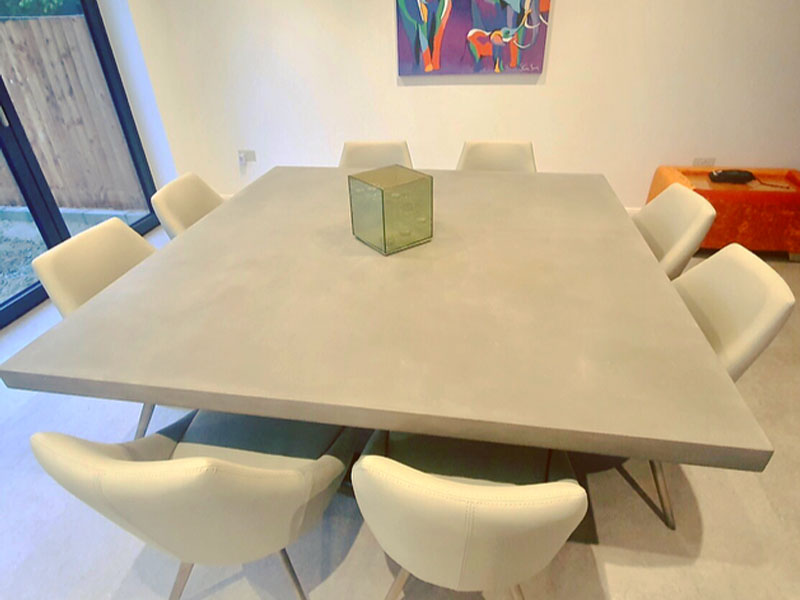
Polished concrete has a particular confidence in a dining setting. Its surface is smooth and refined, yet it retains the quiet movement and mineral character that make concrete so distinctive. No two hand-finished tops are identical. Small variations in tone, aggregate and pattern are part of the material, rather than something to be hidden.
For many homeowners, this is the appeal. A concrete dining table has more visual weight than a thin, mass-produced tabletop, but it does not need to feel cold or industrial. Paired with warm oak flooring, upholstered chairs or soft plaster walls, it creates a balanced urban design that feels both contemporary and established.
A properly sealed and polished concrete surface is designed for daily dining. The sealer helps resist stains and makes cleaning straightforward: a soft cloth, warm water and a mild, pH-neutral cleaner are normally all that is needed. As with any premium finish, it is sensible to wipe up strongly coloured spills promptly and avoid harsh chemicals or abrasive pads.
The trade-off is honest and worth understanding. Concrete is substantial, so delivery and installation need to be planned carefully, particularly where access includes tight turns, stairs or upper-floor dining spaces. Its individuality also means it will not have the flat, uniform appearance of factory-made laminate. For those seeking a table with genuine material presence, that is precisely the point.
Choosing a concrete colour and sheen
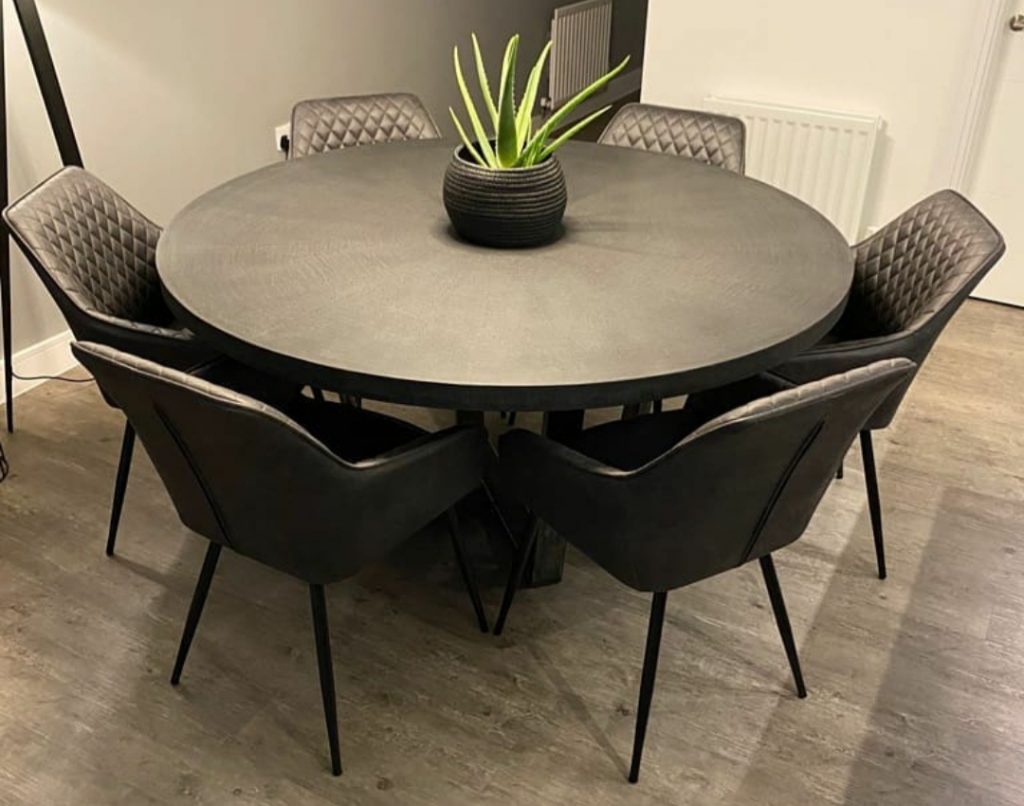
The colour of a concrete table can shift the entire mood of a room. Pale grey works beautifully with light cabinetry and natural timber, keeping a generous table visually calm. Mid-grey offers a classic architectural look, while charcoal creates a bolder contrast against pale walls and brass, timber or textured fabric.
Sheen matters just as much. A polished finish reflects light gently and brings out the depth within the surface. A more restrained finish can feel softer and more understated. Neither is automatically better. In a sunny room with large glazed doors, a lower sheen may be preferable; in a darker dining area, a more polished surface can help the table hold the light.
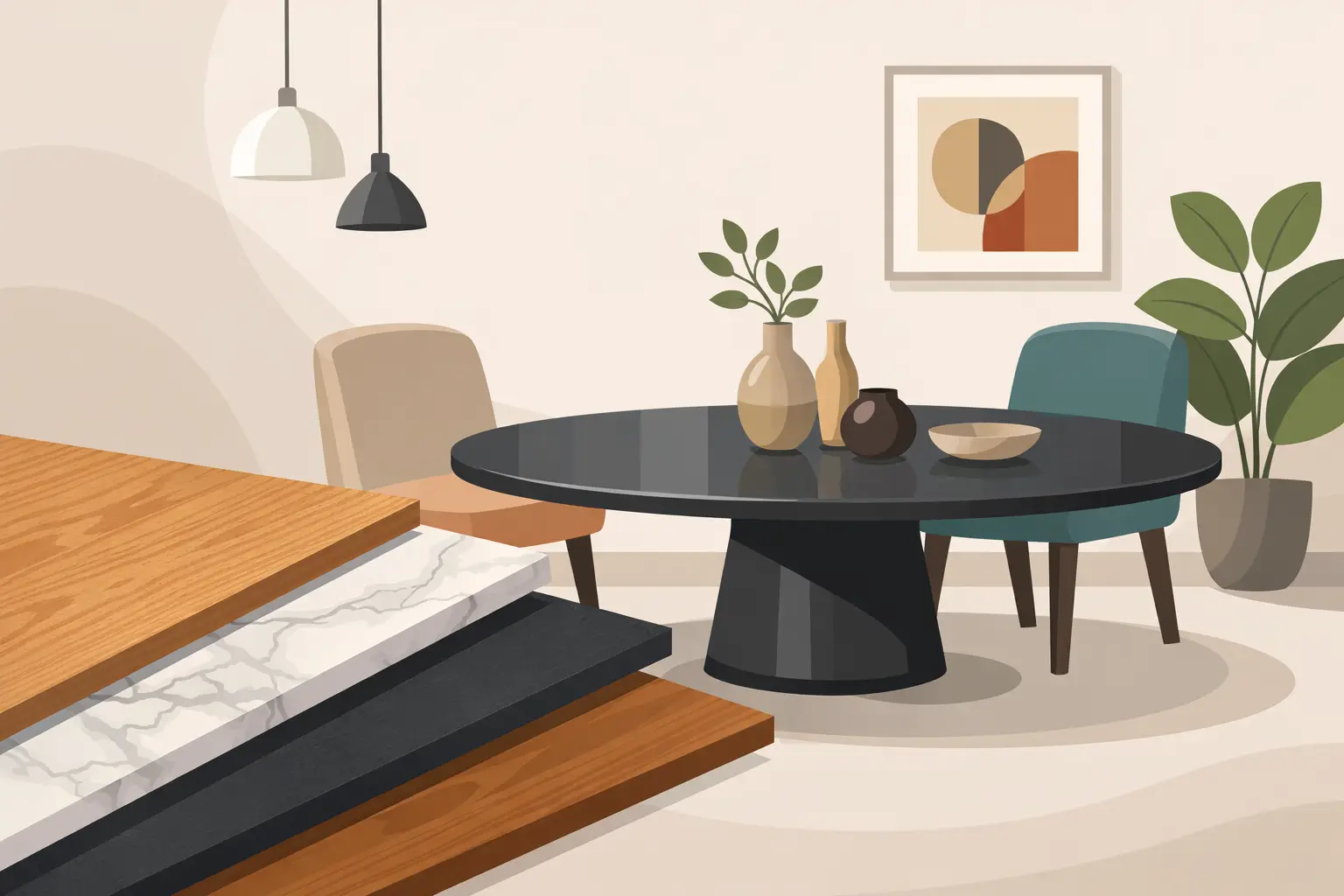
Timber finishes bring warmth, but need the right protection
Timber remains a favourite for good reason. It brings warmth, familiar texture and a sense of comfort to a dining room. Oak, walnut and ash can all work brilliantly in a forever home, whether the look is country, mid-century or contemporary.
The decision is often less about the species than the protective finish. Oiled timber has a natural, tactile appearance and allows the grain to stay at the forefront. It can be repaired locally if marked, but it benefits from periodic maintenance. Lacquered timber offers stronger surface protection and is generally easier to wipe down, although deep damage can be less straightforward to blend away.
Timber also responds to its environment. Direct sun can alter its colour over time, while central heating and changes in humidity can affect the material. That does not make it impractical. It simply means a timber table asks for a little more awareness of where it sits and how it is cared for.
If your kitchen already has oak cabinetry, flooring and shelving, another large timber surface can sometimes feel overly matched. This is where concrete offers a useful contrast: it retains warmth through its hand-finished character while breaking up the wood tones with a more sculptural material.
Stone, ceramic and glass: attractive alternatives with clear compromises
Natural stone, including marble and granite, brings undeniable luxury. Marble has expressive veining and a softness that can look exceptional in formal dining rooms. Yet it is naturally porous and can be vulnerable to acidic foods and drinks unless diligently protected. It rewards careful ownership rather than carefree use.
Ceramic and sintered stone tops are often chosen for their high resistance to heat, scratching and staining. They suit busy homes and can mimic marble, concrete or natural stone convincingly. Their look can be impressively refined, though some buyers still prefer the depth and one-off character of a hand-worked material over a highly consistent manufactured surface.
Glass creates a light, airy effect and can be useful in a compact room because it allows the eye to travel through the table. The reality of fingerprints, smears and reflected clutter should be considered, especially in an open-plan kitchen. It can also lack the visual solidity many people want from a statement dining table.
Match the finish to the table’s proportions
A finish never exists in isolation. On a compact four-seater table, a heavily patterned surface may dominate the room. On a large eight, ten or twelve-seater table, subtle tonal variation becomes more important because there is a greater expanse to look across.
This is one advantage of a made-to-measure table. You can consider the finish alongside the exact length, width, shape and base design, rather than trying to make a standard product work after the fact. A soft grey concrete top on a sculptural black base can suit a wide, open kitchen. The same top on warmer metal or timber legs may feel more relaxed in a period property.
Round and oval tops also change how a finish is experienced. Their continuous edge softens concrete’s architectural quality and makes conversation easier around the table. Rectangular tops offer clear seating positions and often suit long kitchen islands or bifold-door layouts. The right choice depends on circulation space as much as aesthetics. Leave enough room to pull chairs back comfortably and walk around the table without turning every meal into an obstacle course.
Questions to ask before committing
Before choosing between table finishes, bring the decision back to practical use. Think about whether the table will be your main eating surface, how much direct sun it receives and whether you prefer a surface that remains consistent or one that shows natural variation. Ask how it should be cleaned, what protection it has against spills and heat, and what delivery will involve for its size and weight.
It is also worth viewing material samples in your own light where possible. A grey that feels crisp in a studio can appear warmer beside cream cabinetry or cooler against blue-toned flooring. Take note of the finish at different times of day, not just under ceiling lights.
For a table intended to stay with you through renovations, growing families and changing tastes, choose the finish that feels most like your home rather than the one that happens to be everywhere right now. A hand-finished concrete table can offer that rare balance: striking enough to define the room, practical enough to become part of everyday life. If you are planning a table around a particular space, speaking directly with Daniel about the proportions, colour and finish can turn a good idea into a piece made exactly for it.