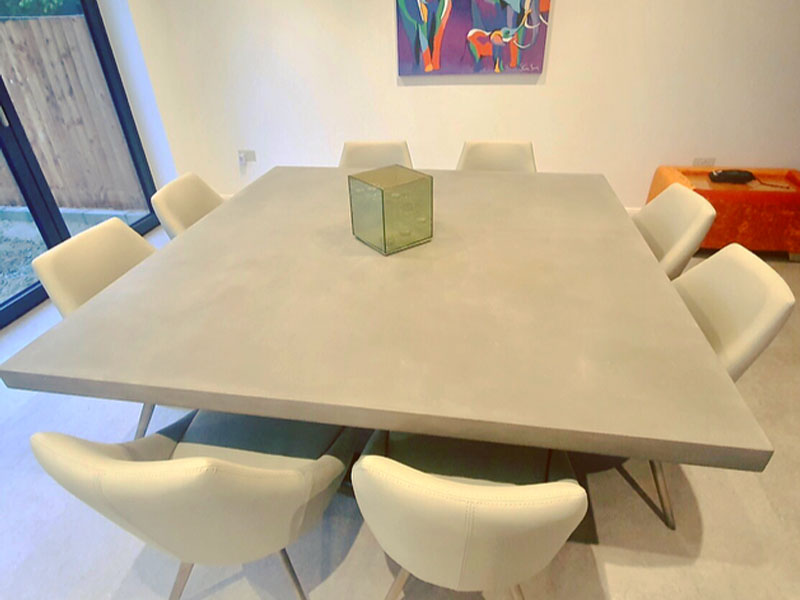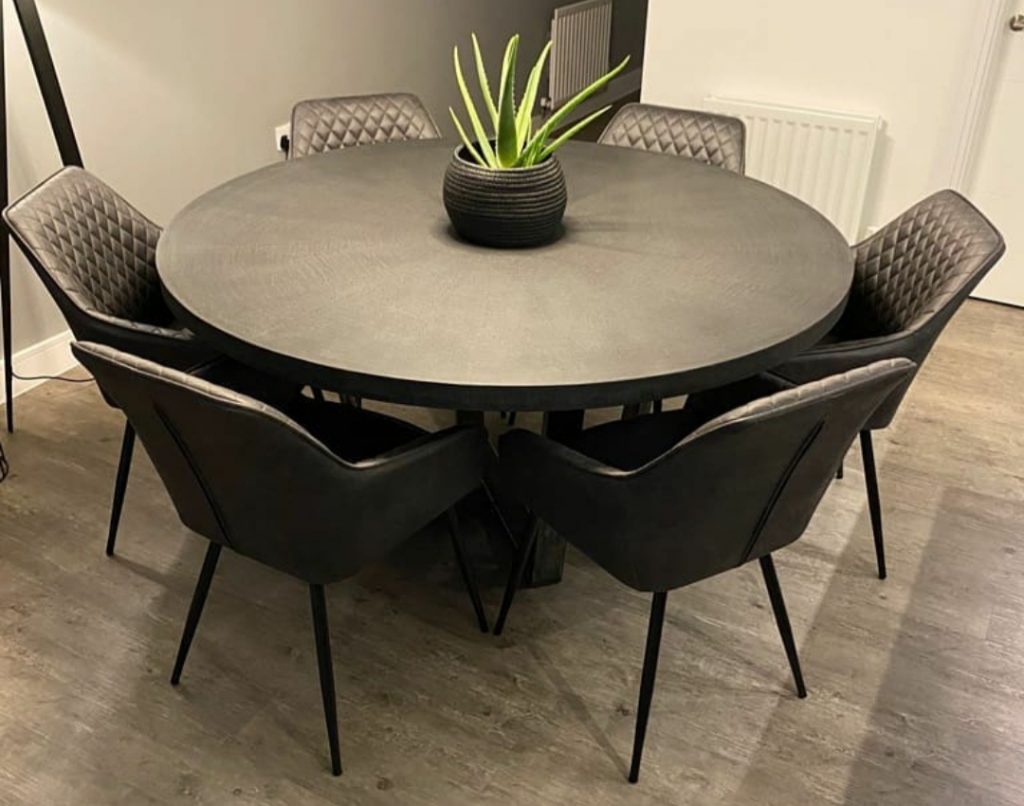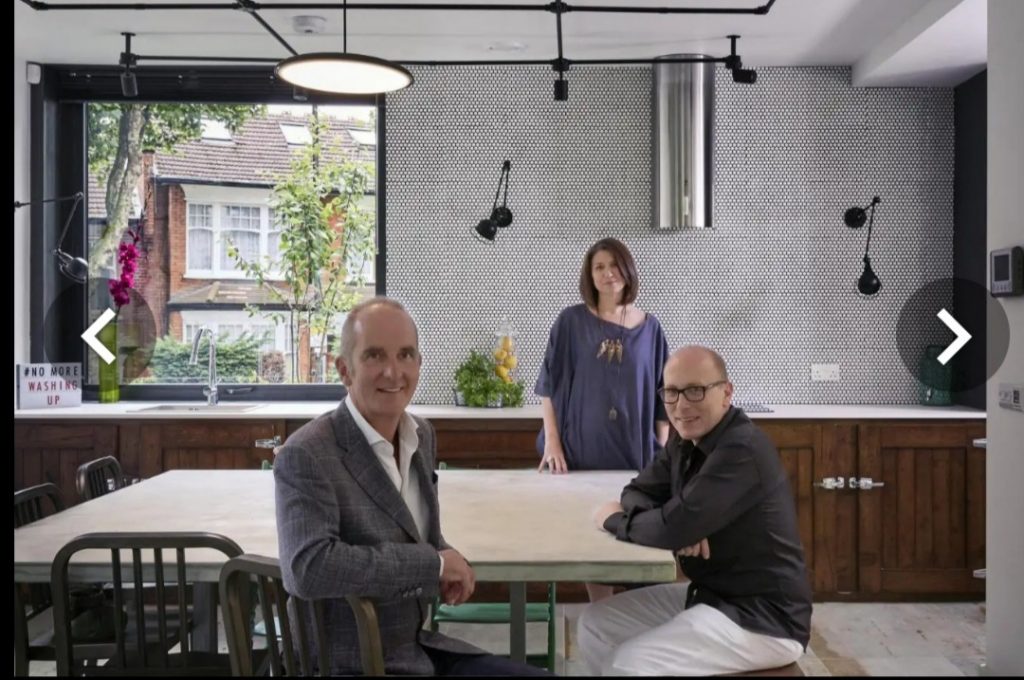

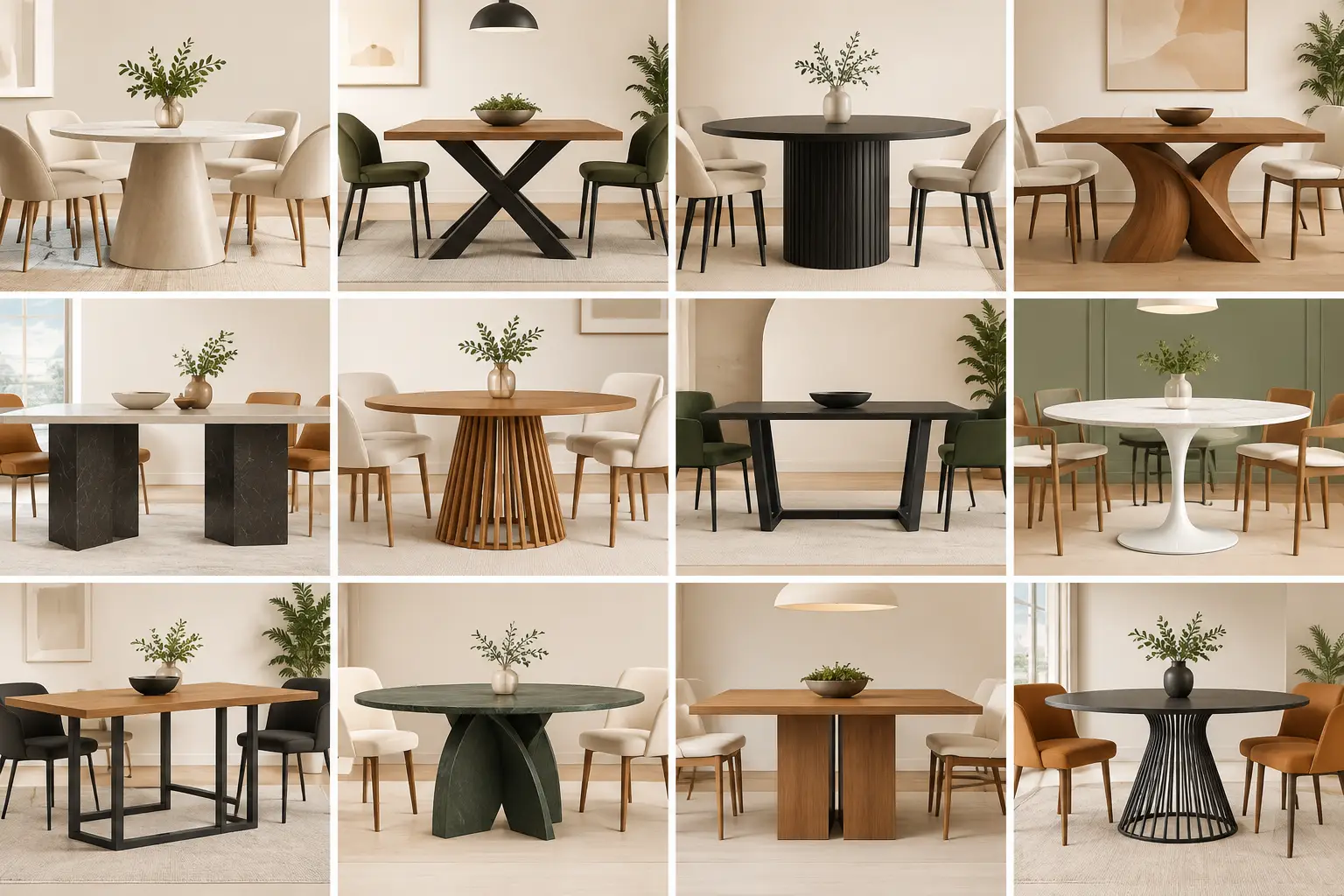
A polished concrete top has presence before anyone sits down. Its softly varied surface, substantial feel and architectural finish make it a natural centrepiece. But the base decides how that centrepiece lives in the room. The best table base design ideas do more than complete the silhouette: they create legroom, set the visual weight of the table and make a large dining surface practical for everyday family life.
Table base design ideas that suit concrete tops
A concrete dining table needs a base with real purpose. The top may appear calm and minimal, but it has weight and requires carefully considered support beneath it. The right design can make an eight or ten-seater feel light and elegant, or deliberately grounded and sculptural.
The choice is rarely only about style. Consider where chairs need to tuck in, whether guests will sit at each end, how much space surrounds the table and whether the base should disappear into the room or become part of the statement. These are the designs we return to most often when creating bespoke concrete tables.
1. Central pedestal base
A central pedestal is one of the most generous options for seating. With no corner legs to negotiate, diners can sit more freely around a round, oval or softly shaped tabletop. It is particularly effective for sociable tables where the seating arrangement may change regularly.
For concrete, the pedestal needs sufficient width and weight to create a stable foundation. A faceted, tapered or gently curved form prevents it from looking too blocky, while keeping the table visually anchored.
2. Twin pedestal base
A pair of pedestals suits longer rectangular and racetrack tables beautifully. The design gives a substantial polished concrete top the support it needs, while preserving clear seating along the long sides.
This option has a considered, architectural rhythm. Position the pedestals too far apart and end seating can feel compromised; bring them too close together and the table can appear top-heavy. The proportions must be worked out around the exact length, width and overhang of the top.
3. A-frame legs
A-frame bases have a familiar workshop character, but they can be refined far beyond the rustic trestle look. Slim steel profiles, neatly mitred joints and a dark powder-coated finish create a strong contrast beneath a pale grey or warm-toned concrete surface.
They work especially well in kitchen-diners with exposed brick, oak cabinetry or black-framed glazing. Do bear in mind that an A-frame may reduce legroom at each end, so it is best for tables where side seating is the priority.
4. Angled trapezium bases
A trapezium base is a clean, contemporary interpretation of the A-frame. Its angled sides bring movement to a long rectangular table and make the base feel less static than straight vertical legs.
This is a popular choice for urban design schemes because it is assertive without becoming fussy. In a large open-plan room, two trapezium bases can give a long dining table a confident, balanced stance.
5. Slim box-section legs
For a quieter look, simple box-section steel legs let the polished concrete do the talking. They suit interiors with a restrained palette and crisp lines, where the table should feel integrated rather than overly decorative.
The skill is in keeping the section slim without compromising stability. A well-engineered steel frame can provide support while allowing the legs to sit slightly inset from the corners, giving the tabletop the impression of floating above the floor.
6. U-shaped bases
The U-shaped base is practical, modern and easy to live with. Two inverted U frames give a table a disciplined outline, with plenty of room for chairs along the sides. It is also a good answer for narrow dining rooms, as the uncomplicated form avoids adding visual clutter.
A black finish creates a sharp industrial contrast. For a softer scheme, consider a muted bronze, warm charcoal or a colour selected to echo kitchen hardware and lighting.
7. X-frame bases
An X-frame introduces a more dramatic structure beneath a simple top. It suits clients who want the base to be as much of a talking point as the concrete itself, particularly in generous rooms with high ceilings or open sightlines.
The trade-off is that the crossing point needs careful placement. A beautifully proportioned X-frame can look sculptural; a bulky or poorly positioned one can interrupt knee space. It is best specified with the intended seating plan in mind.
8. Crossbar trestle bases
A trestle base gives a concrete table a grounded, honest quality. The crossbar can reference traditional joinery, while the material choices keep the result contemporary: blackened steel, oak, ash or a combination of timber and metal.
This design feels at home in converted barns, period renovations and kitchens that balance old materials with modern fittings. If using timber, choose a substantial, well-finished section that can hold its own against the tactile weight of the concrete.
9. Timber statement legs
Concrete and timber are natural companions. The cool, mineral character of the top is softened by the grain, warmth and craftsmanship of solid wood legs. Splayed oak legs can make a concrete table feel more relaxed and Scandinavian; darker timber brings a richer, more tailored mood.
Timber bases benefit from thoughtful detailing at the connection points. The meeting of materials should look intentional, with concealed fixings and proportions that respect both the visual and structural demands of the table.
10. Curved steel bases
Curves have a useful effect in rooms full of hard lines. A gently arched steel base can soften a rectangular dining table, echo a rounded island or reflect the curves of pendant lights and dining chairs.
This is a more bespoke direction, but it can transform a table into a true sculptural piece. It works particularly well with oval tops, where the base continues the same fluid language rather than fighting against it.
11. Plinth or monolithic bases
A solid plinth base gives the strongest architectural effect. It can be finished in concrete for a monolithic look, clad in timber for warmth, or fabricated in metal for a more industrial edge. With the right proportions, the table appears carved rather than assembled.
Because a plinth occupies more floor area, it is best for spacious settings. It also needs careful planning around chair positions. The result, however, can be extraordinary: a dining table that feels more like a permanent piece of interior architecture.
12. Mixed-material bases
There is no rule that says a base must use one material. Steel can be paired with oak, a concrete pedestal can incorporate a discreet metal support, or a timber frame can sit beneath a finely detailed concrete top.
Mixed materials bring depth to a room and allow the table to pick up finishes already present in the kitchen or dining area. The key is restraint. Two materials, handled well, feel intentional; too many finishes can distract from the beauty of the surface.
Choosing the right base for your space
Start with the room rather than a photograph. A base that looks excellent in a large gallery may feel too imposing in a dining area with a busy kitchen island, low ceiling or limited circulation space. Measure not only the table footprint, but also the space required for chairs to be pulled out and for people to walk behind them comfortably.
For rectangular tables, think about who will sit at the ends. Corner legs and end frames may suit a six-seater used mainly by family, whereas pedestals are often more flexible for larger gatherings. For round and oval tables, a single central base usually offers the cleanest seating arrangement and preserves the sociable flow of the shape.
Visual balance matters just as much. A pale polished concrete top paired with fine black steel feels crisp and contemporary. A darker charcoal concrete surface over oak legs can feel warmer and more relaxed. In a minimal kitchen, a sculptural base may provide the personality the room needs. In an already expressive interior, understated frames often let the materials speak for themselves.
Finally, account for daily use. Dining tables are for weekday suppers, homework, celebrations and the occasional over-enthusiastic board game, not just styled photographs. A professionally sealed polished concrete surface is durable and practical, but the base should be equally well considered: stable under a full table setting, comfortable around knees and designed to remain handsome from every angle.
At Daniel Polished Concrete, each base can be considered alongside the chosen dimensions, concrete colour and seating plan, rather than selected as an afterthought. That is how a statement table becomes a piece that genuinely belongs in its home.
The most successful base is the one that makes a substantial table feel effortless: perfectly proportioned, comfortable to gather around and distinctive enough to be remembered long after dinner is over.