
An open-plan kitchen only really works when the dining table earns its place. It is not just somewhere to eat. It becomes the visual anchor between cooking, living and entertaining, and that is exactly why choosing the best dining table for open plan kitchen layouts can feel harder than expected. Too small, and the room looks underfurnished. Too bulky, and the whole space starts to feel awkward, crowded and badly resolved.
In these larger, connected rooms, the table has to do more than match the cabinetry. It needs to hold its own as a centre piece while standing up to everyday life – family meals, homework, coffee cups, guests, and the general wear that comes with being at the heart of the home. The right choice is usually the one that balances scale, material, and presence rather than simply following a trend.
What makes the best dining table for open plan kitchen spaces?
The first thing to understand is that open-plan rooms ask more of a table than separate dining rooms do. In a formal dining room, the table can be decorative first and practical second. In an open-plan kitchen, it is on show from almost every angle and often in use for most of the day. That means proportion, finish and durability matter just as much as style.
A good table for this setting should define the dining zone without chopping up the room. It should feel substantial enough to anchor the space, but not so visually heavy that it competes with the island, glazing or kitchen run. This is why many homeowners end up disappointed with standard off-the-shelf options. They may suit a showroom set-up, but they rarely feel truly right once placed in a real room with real circulation, real sightlines and real family routines.
The best tables in open-plan spaces tend to have architectural presence. They act almost like a piece of built design rather than an afterthought. That could mean a generous rectangular top, a softer oval profile, or a material with enough texture and character to add depth to a clean contemporary scheme.
Start with the room, not the table
It is tempting to begin by choosing a style you love, but in open-plan design the room should lead. Measure not only the dining area, but the routes around it. Think about the walkway from island to garden doors, the distance between chairs and cabinetry, and whether the table will be seen front-on from the sofa or hallway.
As a rule, you want enough clearance for chairs to pull out comfortably and for people to pass behind them without constantly turning sideways. In a generous extension, a larger table can look stunning. In a tighter footprint, pushing for maximum seating often makes the entire space feel less luxurious, not more.
This is where made-to-measure furniture comes into its own. A few centimetres one way or the other can be the difference between a room that feels composed and one that feels compromised. In open-plan kitchens especially, bespoke sizing often solves the practical issues while also giving the finished room a more intentional look.
Rectangular, round or oval?
For many open-plan kitchens, a rectangular dining table is the obvious answer. It mirrors the linear shape of kitchen runs and islands, and it usually makes the best use of long spaces. If you regularly host family or want an 8, 10 or 12 seater arrangement, rectangular designs tend to be the most efficient.
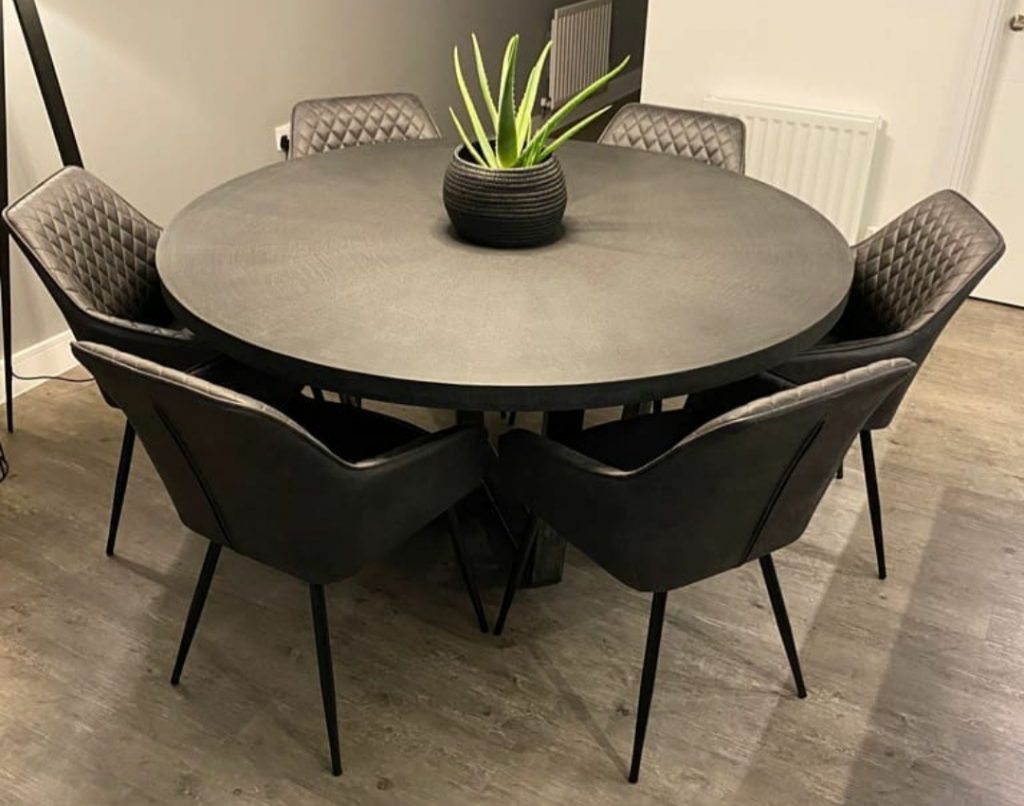
That said, round tables can work beautifully in squarer layouts or where you want the dining area to feel more relaxed and sociable. They soften hard architectural lines and encourage conversation, though they are not always the most space-efficient choice at larger sizes.
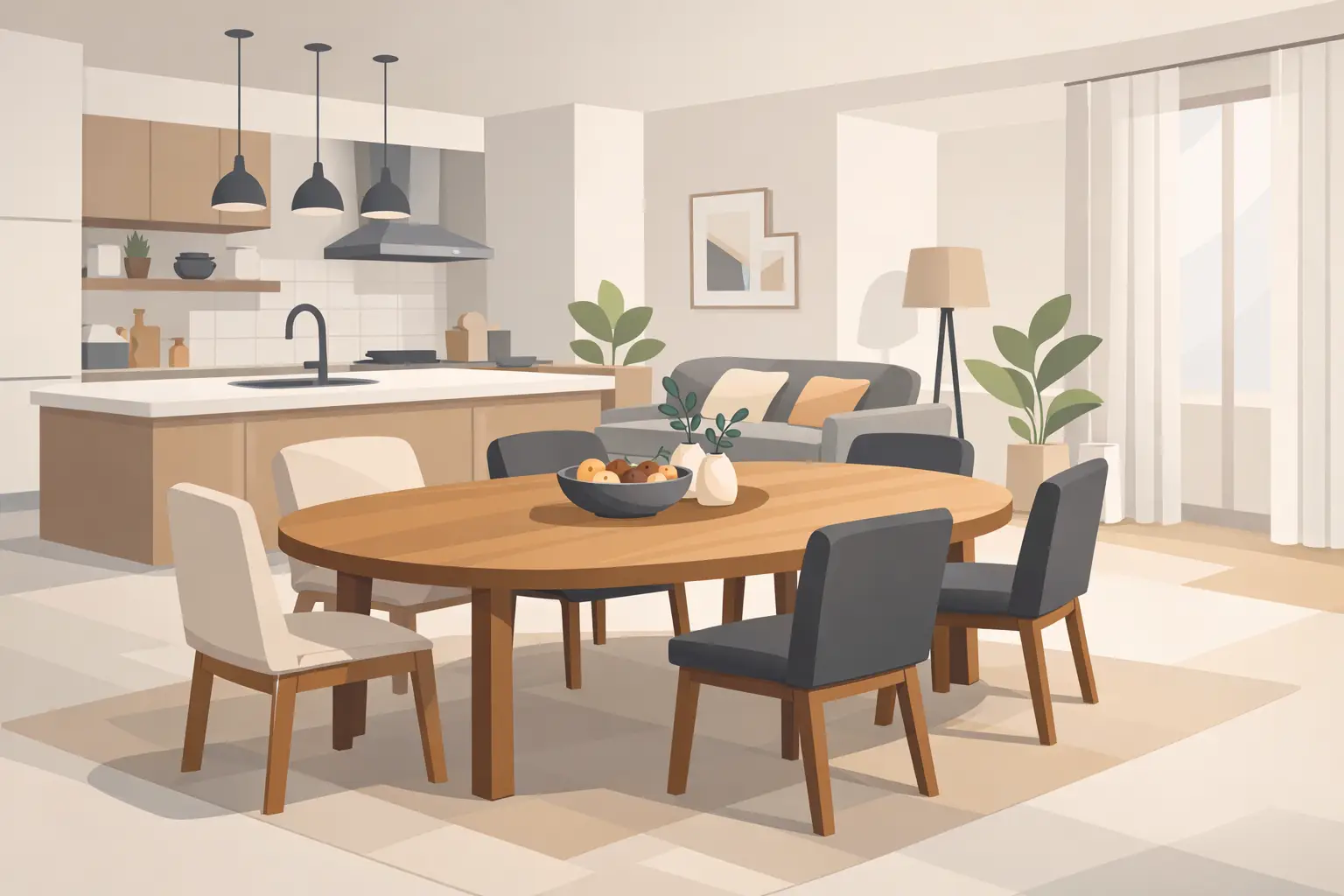
Oval tables often sit in the sweet spot. They offer the length and presence of a rectangular piece but with gentler edges and easier movement around the room. In homes with children, or in narrower walkways, that softer silhouette can be particularly useful.
Material matters more in open-plan living
Because the table is part of the everyday visual field, material choice has an outsized effect on the whole room. Timber brings warmth and familiarity, but depending on the species and finish it can sometimes disappear visually in a large open-plan setting, particularly if there is already a lot of wood in the flooring or joinery.
Glass can keep a space feeling light, but it rarely gives the dining zone enough weight. It also shows fingerprints, smears and general use very quickly, which matters when the table is constantly on display.
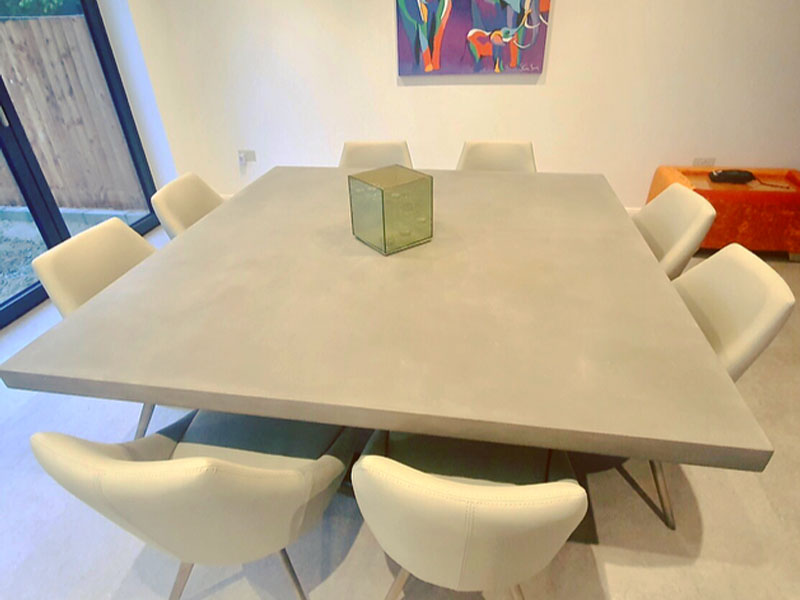
Stone and concrete sit differently. They bring permanence, texture and a more architectural quality. In a well-designed open-plan kitchen, that extra substance can be exactly what the room needs. A polished concrete dining table, for example, has enough visual strength to define the dining area without relying on ornate detailing or bulky proportions. It feels contemporary, but not cold when paired with the right seating, lighting and natural materials.
There is a practical side too. In a busy family kitchen, durability is not a minor detail. A table surface needs to cope with regular use and still look refined. Hard-wearing, hand-finished concrete can offer that balance – distinctive enough to feel special, robust enough to be lived with every day.
Choosing the right size for daily life
The best dining table for open plan kitchen living is rarely the biggest one you can physically fit. It is the one sized around how you actually use the room.
If the table is mainly for a household of four but occasionally hosts extended family, you may not need a vast footprint all year round. On the other hand, if this is the main gathering point every evening, going slightly larger can make daily life far more comfortable. Seat count matters, but so does elbow room, leg placement and whether the table still feels generous once serving dishes, laptops or school bags appear.
In many premium kitchen extensions, 6, 8 and 10 seater tables are the most common sweet spots. A six seater suits many households well while keeping the room airy. An eight seater often feels ideal in larger open-plan homes because it gives proper presence without overwhelming the space. A ten seater creates real impact, but it needs enough room around it to feel elegant rather than oversized.
Leg design changes the feel
People often focus on the tabletop and forget the base, but leg design has a huge effect on comfort and style. Chunky corner legs can reduce usable seating. Central pedestal or carefully positioned statement legs often make larger tables easier to live with, especially when flexibility matters.
Visually, the base also helps set the tone. Black metal can sharpen the look and suit modern architectural interiors. Softer shapes or more sculptural supports can make a substantial top feel lighter and more bespoke. This is one of those details that seems small until you see how much it changes the finished piece.
How to make the table feel integrated, not dropped in
A dining table should not look like it landed in the middle of the room after the kitchen was finished. The strongest open-plan interiors have a sense of dialogue between the table, the island, the flooring, the lighting and the wider palette.
That does not mean everything must match. In fact, too much matching can flatten the room. What you want is balance. If the kitchen is very sleek and pale, a darker or more textured table can add depth. If the cabinetry is bold, a quieter table shape may work better. If the room has a lot of hard surfaces, upholstered dining chairs and softer fabrics can stop the dining area feeling stark.
Lighting above the table plays a major role as well. A statement pendant or a row of pendants helps define the dining zone and gives the table the importance it deserves. In open-plan spaces, this visual framing often matters just as much as the table itself.
Why bespoke often makes the difference
There is a reason so many homeowners struggle to find the right table for an open-plan kitchen. These rooms are individual. Ceiling heights vary, kitchen islands vary, extension widths vary, and family routines vary. A standard table may be good enough, but good enough is not usually what people want when they have invested heavily in a renovation.
A bespoke piece allows you to tune every element to the room – length, width, shape, finish, colour and leg style. That level of control is especially valuable when the table is expected to act as both a practical workhorse and a design statement. It gives you the chance to create something that feels made for the architecture rather than simply placed within it.
For households drawn to urban design, natural texture and long-term quality, a handcrafted polished concrete table can offer a particularly strong answer. It has the presence to become the room’s focal point, yet when carefully designed, it still feels calm, refined and easy to live with. That combination is a large part of why Daniel Polished Concrete pieces suit open-plan kitchens so naturally.
The right table changes how the whole room feels. If you are choosing for an open-plan kitchen, think beyond seat numbers and trends. Look for proportion, material character and a piece with enough presence to belong at the centre of everyday life.