

A dining table can set the tone for an entire room. In open-plan kitchens and carefully renovated family homes, it is rarely just somewhere to eat. The best architectural dining table design gives a space structure, presence and calm. It anchors the room visually, works hard every day, and still feels distinctive years after the first reveal.
That balance is harder to achieve than many people expect. Plenty of tables look striking in a showroom or on a screen, then feel too delicate, too bulky or simply wrong once they are placed in a real home. Architectural design asks more of a table. It should hold its own as a sculptural object, but it also needs to support everyday life – weekday breakfasts, long dinners, homework, celebrations and all the wear that comes with them.
What architectural dining table design really means
Architectural dining table design is not a trend term for something square and minimal. At its best, it refers to furniture designed with the same discipline you would apply to a building or interior scheme. Proportion matters. Material honesty matters. The relationship between weight, line, shadow and space matters.
A well-designed architectural table does not rely on decoration to create impact. It earns it through form. That might mean a monolithic top with clean edges, a bold pedestal base, or a leg profile that introduces rhythm without fuss. The table feels resolved from every angle. Even when it is large, it should not feel clumsy.
This is why material choice becomes so important. Concrete, natural stone, solid timber and metal can all work within an architectural language, but they behave very differently. Some bring warmth, some bring mass, some reflect light, and some absorb it. The right decision depends on the room, the scale, and how the table will be used.
Why polished concrete suits architectural dining table design
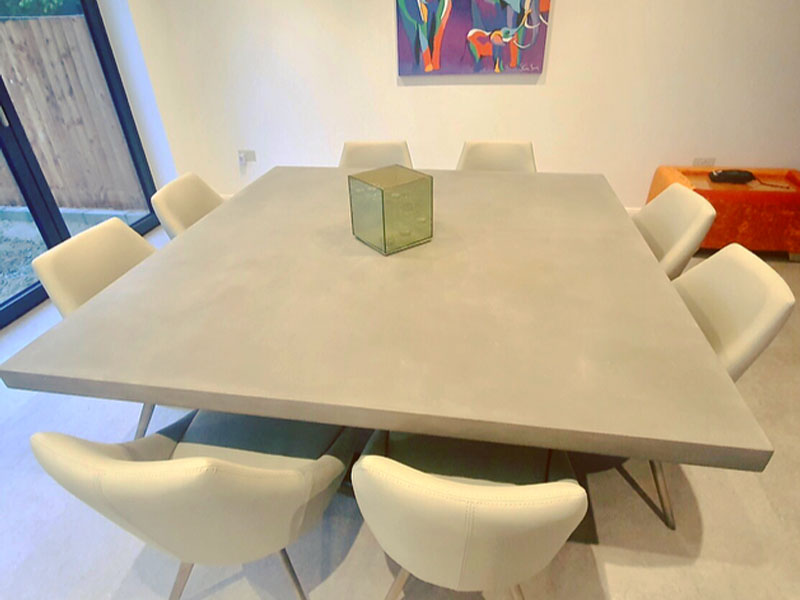
For homeowners drawn to modern interiors, polished concrete has a natural affinity with architectural dining table design because it combines visual weight with refined detailing. It has presence, but it is not flashy. It feels contemporary without being cold when it is designed and finished properly.
A polished concrete dining table offers something that many other statement tables do not. It can look sculptural and substantial while still being made for practical living. The finish is smooth, hand-finished and carefully sealed, so the effect is far more sophisticated than raw construction concrete. What you get is depth, character and subtle tonal movement rather than a flat industrial slab.
There is also an honesty to the material that suits architect-led and design-conscious homes. Concrete does not pretend to be anything else. Its appeal comes from texture, tone, craftsmanship and form. In a space with clean cabinetry, steel-framed glazing, timber floors or soft neutral upholstery, that restraint often works better than ornate detailing.
Proportion is what makes a statement table feel right
The most successful statement tables are not always the biggest. They are the ones scaled correctly for the room and for the people using them. This is where architectural thinking matters most.
Length gets most of the attention, especially for 8, 10 or 12 seater layouts, but width and thickness are just as important. A top that is too narrow can look mean in a generous room. Too wide, and the table becomes awkward for conversation and serving. Thickness needs judgement as well. A substantial top can look beautiful, but only if the base and surrounding space support that visual weight.
Leg placement is another detail that affects the experience of using the table. A dramatic base may look excellent in photographs, but if it compromises seating positions at the corners or along the sides, the design starts to fight the room. Bespoke sizing solves this in a way off-the-shelf furniture often cannot. When a table is made around the dimensions of your space, your circulation routes and your seating needs, the final result feels effortless because it has been considered properly.
Architectural style still needs warmth
There is sometimes a fear that architectural furniture will feel severe. In reality, the strongest interiors use contrast. A bold table can sit beautifully with softer dining chairs, textured fabrics and warmer lighting. The point is not to make the room rigid. It is to give it a clear centre.
This is particularly relevant in family homes. The dining area may be visually led, but it still has to feel inviting at seven in the morning and lively at eight in the evening. The right table brings confidence to the room without making the room feel formal. That often comes down to finish and tone.
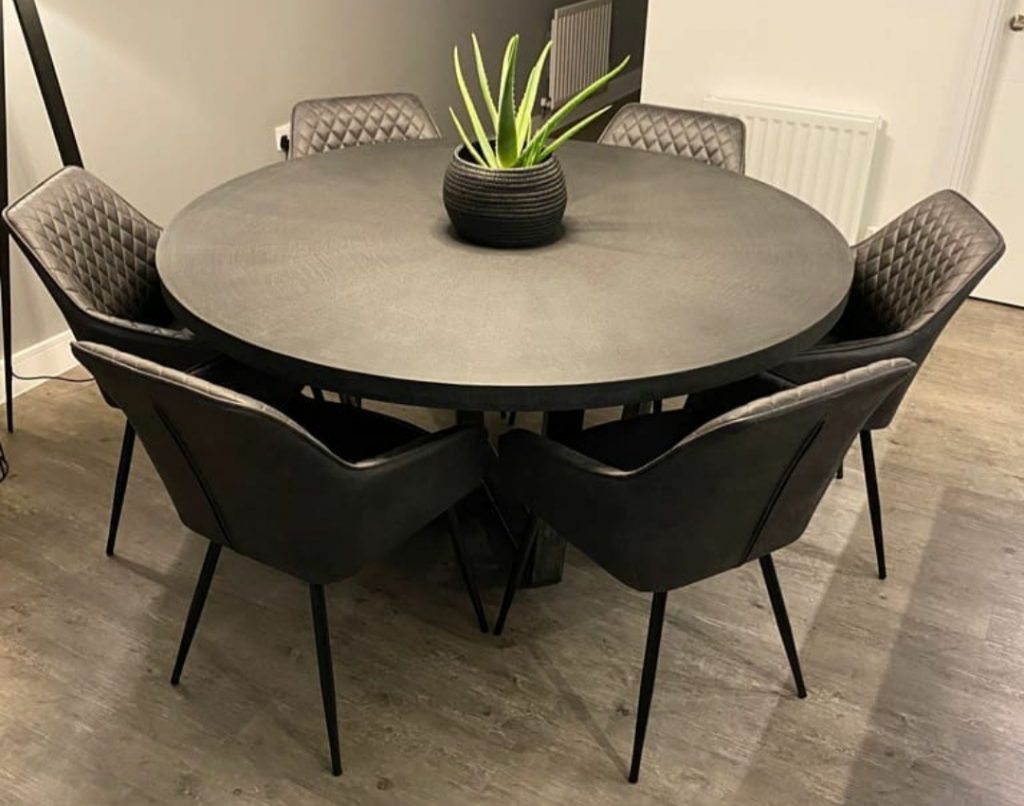
With polished concrete, colour choice can shift the whole mood. Cooler greys create a crisp urban look. Warmer tones soften the effect and sit more comfortably alongside oak, walnut and earthy interior palettes. Edge details, leg styles and top shapes also play a part. A rectangular table feels more linear and assertive, while softened corners or an oval form can make a large piece feel more relaxed.
Bespoke versus standard sizes
There is no universal right answer here. It depends on the project.
If you have a straightforward layout and want a strong design with better lead times and price efficiency, a well-considered standard size can make excellent sense. This is often true for six, eight or ten seater spaces where proportions are already proven and the design has been refined through repeated builds.
Bespoke becomes more valuable when the room has specific challenges or ambitions. Perhaps you need a precise length between cabinetry and glazing. Perhaps you want a narrower top to improve circulation in an open-plan kitchen. Perhaps the base needs to work with certain chair widths, or the finish needs to sit exactly with a flooring and joinery scheme. These are the details that turn a good table into the right table.
That is one reason consultation-led makers stand apart from mass retail. They are not simply selling a surface and four legs. They are helping you resolve scale, style and practicality before the piece is built.
The practical side people rightly ask about
A table can be beautiful, but if it causes daily anxiety, it is the wrong purchase. For most households, durability matters as much as appearance.
This is where a properly made polished concrete table often surprises people. They expect fragility because the piece looks refined and substantial at the same time. In practice, a sealed and hand-finished surface is designed for real use. It is hard-wearing, stain-resistant and well suited to busy homes, provided normal care guidance is followed.
Weight is another common concern. Yes, concrete has presence, and that is part of its appeal. But quality makers design and manufacture with installation in mind. Access, base construction, delivery logistics and final positioning should all be considered before the table arrives. It is not something to leave to guesswork, particularly in renovated properties or upper-floor spaces.
There is also the question of ageing. Natural materials and hand-finished surfaces develop character over time. For many buyers, that is a positive rather than a drawback. The goal is not sterile perfection. It is a table that continues to look confident and lived-in as the home evolves around it.
Choosing an architectural dining table design for your home
Start with the room, not the mood board. Measure properly. Think about how chairs move, how people walk around the table, and where the table sits in relation to kitchen islands, doors and glazing. A striking table only works if the space around it still breathes.
Then think about what kind of presence you want. Do you want the table to read as a bold centre piece the moment you enter, or do you want it to feel integrated into a quieter material palette? Neither is wrong, but the answer affects shape, finish and base design.
After that, be honest about daily life. If the table will host children, guests, laptops and serving dishes every week, choose a finish and form that support that reality. Architectural furniture should elevate a room, not force you to tiptoe around it.
For clients looking for that balance of sculptural design and practical performance, this is exactly where specialist makers such as Daniel Polished Concrete come into their own. The value is not just in the finished object. It is in the judgement behind it – understanding scale, finish, leg style and installation well enough to produce a table that feels made for the house because it was.
The best dining tables do more than fill a footprint. They give a room identity, hold family life with ease, and reward your eye every single day. If you are choosing with the long term in mind, architectural dining table design is less about fashion and more about getting the fundamentals beautifully right.