

A dining table earns its place the hard way. It hosts hurried breakfasts, homework, red wine, birthday cakes, elbows, laptops and the occasional dropped pan. So when people ask how durable is a concrete table, they are usually asking something more practical – will it still look right and perform properly after years of real family life?
The short answer is yes, a well-made concrete table is exceptionally durable. But as with any premium piece of furniture, durability is not just about the raw material. It comes down to how the table is designed, cast, reinforced, finished and sealed, and how well that finish suits the way you live.
How durable is a concrete table in everyday use?
Concrete has a reputation for strength because we associate it with buildings, floors and architecture. In furniture, that same character translates beautifully, but it needs refinement. A polished concrete dining table is not simply a slab poured and left to its own devices. When crafted properly, it becomes a hard-wearing surface with a dense, sealed finish that stands up very well to daily use.
For most households, the key advantages are obvious as soon as the table starts being used. The surface feels solid and stable. It does not wobble or flex like lighter materials can. It copes well with plates, serving dishes, decorative objects and constant movement around the room. If you want a statement centre piece that is also built for everyday life, concrete is one of the strongest options available.
That said, not all concrete tables are equal. Durability depends heavily on workmanship. The mix design, curing process, polishing and sealing all affect how the surface performs over time. A specialist furniture maker will understand how to produce a top that is visually refined but also suitable for dining, entertaining and family use.
What concrete resists well
One of concrete’s biggest strengths is its resistance to wear. A polished and sealed concrete table handles regular contact, shifting chairs and daily use far better than many softer surfaces. It is much less prone to the dents you might see in timber, and it does not chip as easily as people often assume when it has been properly reinforced and finished.
Heat resistance is another reason many homeowners are drawn to it. Concrete itself tolerates heat well, which suits open-plan kitchens and dining rooms where hot serving dishes often make their way to the table. The caveat is that the sealer matters. While the material underneath is highly heat resistant, protective sealers can still be affected by extreme direct heat, so trivets are always sensible for very hot pans and trays.
Concrete also performs well in busy homes because it does not feel precious. That matters. A dining table should be used, not tiptoed around. Families with children, frequent hosts and anyone creating a forever home often want furniture that can take proper use without losing its presence. Concrete has that confidence.
Where the trade-offs sit
If you are asking how durable is a concrete table, it is worth being honest about what durability does and does not mean. Durable does not mean indestructible. Concrete is hard-wearing, but it is still a crafted finish rather than an industrial pavement.
The main thing to understand is porosity. Concrete by nature is porous, which is why sealing is essential. A quality sealer helps protect against stains from wine, coffee, oil and acidic foods, but no dining surface should be treated as completely maintenance-free. Leaving spills to sit for hours is never ideal, particularly with strongly coloured or acidic substances.
There is also the question of character. Concrete can develop subtle variation over time, and many clients see that as part of its appeal. Unlike synthetic surfaces that aim for total uniformity, polished concrete has a more architectural, natural feel. Very minor marks or shifts in patina can add to that lived-in quality rather than detract from it. Whether that counts as wear or beauty depends on what you want from the piece.
Scratches, chips and stains – what should you expect?
A properly finished concrete dining table is highly resistant to scratching in normal use, but it is not scratch-proof. Dragging rough ceramics, cutting directly on the surface or pulling abrasive decorative items across the top can mark the sealer. In most homes, this is easy to manage with common-sense use.
Chipping is another common concern. Because concrete is associated with hardness, people sometimes imagine it to be brittle. In reality, well-made furniture concrete is engineered very differently from a rough outdoor slab. Reinforcement, thickness, edge detailing and curing all play a part. A professionally made table should cope well with normal domestic life, though a heavy impact on an exposed edge could still cause damage, just as it could with stone or timber.
On staining, the answer again is nuanced. A sealed concrete table is far more stain-resistant than unfinished concrete, and for day-to-day dining it performs very well. Wipe up spills reasonably promptly and it will reward you. Leave red wine, lemon juice or oil to sit repeatedly without attention, and any surface finish will eventually show it.
Why craftsmanship matters more than people realise
The durability of a concrete table is not just in the material. It is in the making. This is where specialist furniture craftsmanship makes all the difference.
A good concrete table needs the right balance between strength and refinement. Too crude, and it can feel heavy in all the wrong ways. Too thin or poorly reinforced, and long-term performance may suffer. The best pieces are carefully designed so the proportions feel elegant in the room while the structure remains dependable for years.
Finishing matters just as much. Polishing changes the tactile quality of the surface, while sealing gives it the protection needed for real interiors. The maker should also think about the table base, the weight distribution, access into the property and how the piece will be installed safely. True durability includes practical details, not just surface hardness.
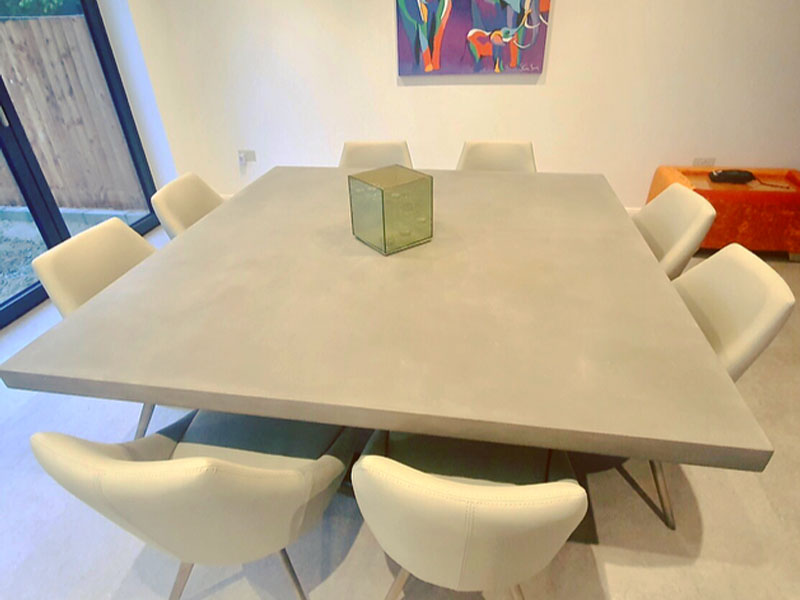
For bespoke work, this is especially valuable. The larger the table, the more important engineering becomes. An 8, 10 or 12 seater concrete dining table needs to look calm and effortless, but behind that simplicity there should be serious technical understanding.
Is a concrete table suitable for family homes?
In many cases, yes – and often more so than people expect. For households that want one table to do everything, polished concrete is a strong contender. It suits everyday meals, entertaining, seasonal gatherings and the general pace of a busy kitchen-diner.
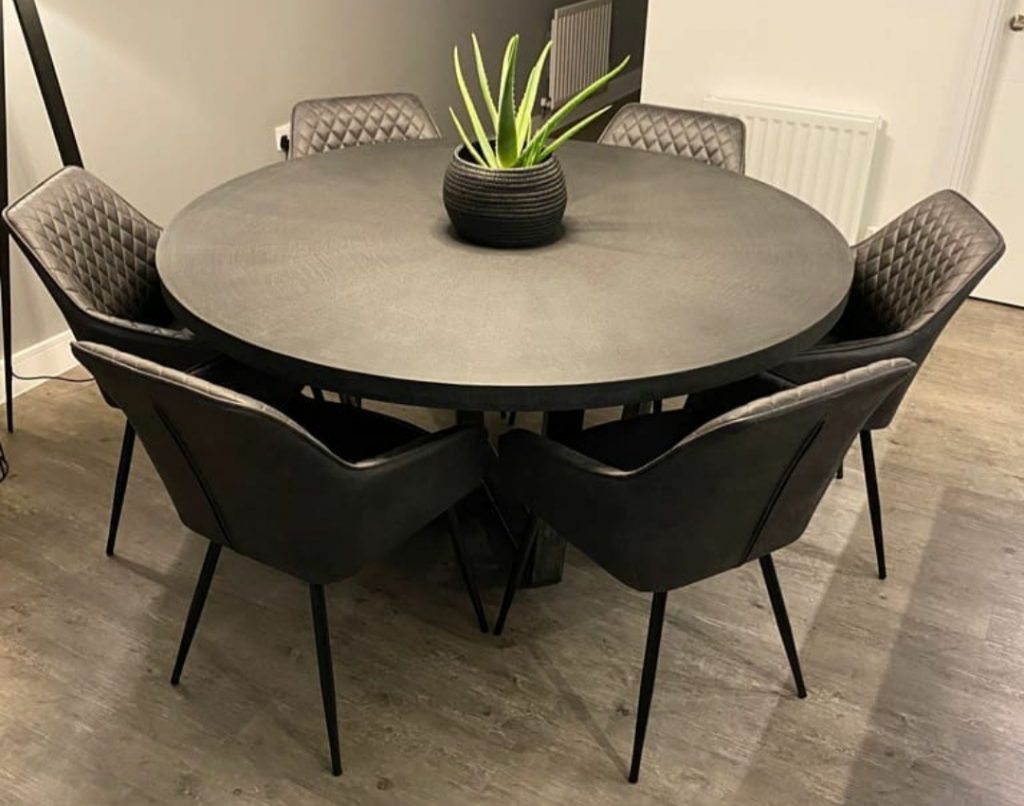
Its visual weight also works well in larger, open-plan spaces where lighter furniture can feel insubstantial. A concrete table has presence. It anchors the room. Yet with the right shape, leg design and finish, it can still feel refined rather than industrial.
The practical question is usually less about durability and more about lifestyle fit. If you want a table that stays pristine under any treatment whatsoever, no natural or crafted surface will promise that. If you want a table that wears well, feels substantial and keeps its impact over time, concrete is an excellent choice.
How to keep a concrete table looking its best
Care is refreshingly straightforward. Wipe the surface with a soft cloth and a mild cleaner, avoid anything harsh or abrasive, and use mats or trivets for very hot cookware. Everyday maintenance is simple, and it does not require specialist routines.
What helps most is treating the table as a high-quality piece of furniture rather than as a worktop. Clean up spills, avoid unnecessary abrasion and use protective pads under rough decorative objects. Do that, and the finish should stay looking smart for years.
Some tables may benefit from periodic resealing depending on the product used, the amount of use and the environment they sit in. That is not a flaw. It is part of responsible care for a premium surface, much like oiling timber or maintaining natural stone.
So, how durable is a concrete table compared with other materials?
Against timber, concrete generally offers greater resistance to dents, movement and everyday wear. Against marble, it often feels more forgiving and less vulnerable to acid etching. Against mass-produced composite surfaces, it offers far more individuality and a stronger handcrafted presence.
Its main compromise is weight, but that same weight is also part of its appeal. It gives the table permanence. It feels architectural, grounded and made for the space rather than simply placed in it.
For design-conscious homeowners, that combination is hard to ignore. A concrete table does not just survive daily life – when made properly, it rises to it. The material has substance, the finish has character, and the best pieces only become more at home as the years pass. If you are choosing one significant table for a renovated kitchen, an open-plan dining room or a long-term family home, durability is one of the strongest reasons to take polished concrete seriously.