
A dining table earns its place the hard way. It needs to look right in the room, cope with everyday meals, survive guests, children, hot plates and constant use, and still feel special years later. So when people ask, are concrete dining tables good, they are usually asking something more specific – will one actually work in my home, and will it justify the investment?
The honest answer is yes, for the right buyer and the right space, a concrete dining table can be an exceptional choice. It offers a level of visual presence, durability and individuality that few materials match. At the same time, it is not a casual purchase. Weight, scale, finish and craftsmanship all matter, and a poorly made version will never show the material at its best.
Are concrete dining tables good for everyday use?
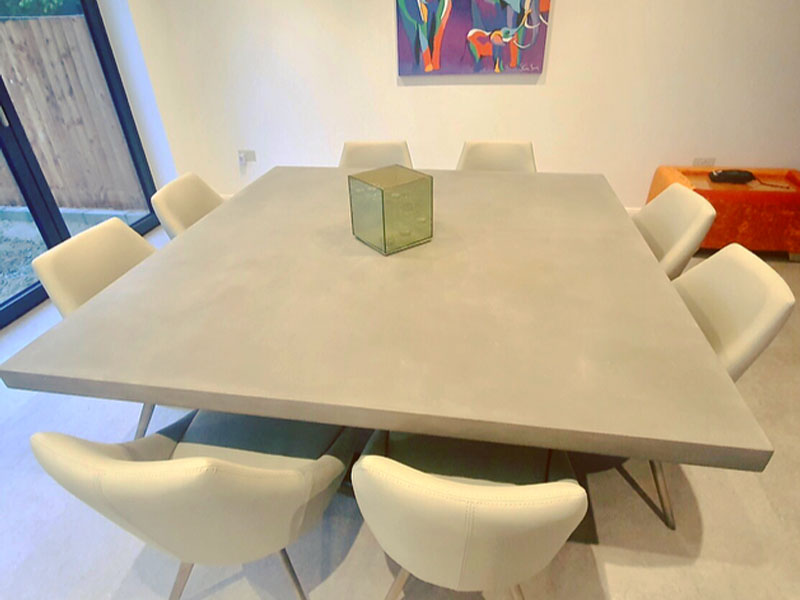
A well-made polished concrete dining table is far more practical than many people expect. The surface is hard-wearing, stable and highly suited to busy households that want a statement piece without treating it like a museum object. In a kitchen-diner or open-plan family room, that balance matters.
Concrete has a naturally architectural quality. It feels grounded and substantial, which is exactly why it works so well as the centre piece in a modern home. Unlike lighter, trend-led materials that can feel temporary, concrete tends to look intentional. It holds its own against large glazing, steel-framed doors, natural oak cabinetry and expansive kitchen islands.
From a day-to-day point of view, a properly sealed polished concrete surface is designed to cope with regular use. Plates, serving dishes, glasses, laptops, homework and weekend entertaining are all part of normal life for a dining table. The key is not simply the material itself, but how that material has been finished. Quality sealing and hand-finishing make the difference between a table that performs beautifully and one that becomes a source of frustration.
The design appeal of concrete
The strongest argument in favour of concrete is often aesthetic. If you want a table that feels distinct rather than mass-produced, concrete offers real character. It has depth, tonal variation and a refined surface that sits somewhere between raw material honesty and luxury craftsmanship.
That combination suits homes where the dining area is visible from the kitchen or living space. In open-plan layouts, furniture has to do more than serve a function. It has to contribute to the architecture of the room. A concrete dining table does exactly that. It can soften sleek contemporary interiors, add edge to warmer natural palettes, and create contrast with timber, brass or upholstered seating.
It also suits buyers who have outgrown the usual options. If standard wooden tables feel too familiar and glass feels too cold or impractical, polished concrete often lands in the sweet spot. It is bold, but not loud. Minimal, but not plain.
Durability is a genuine strength
One reason concrete performs well in dining settings is simple – it is inherently tough. When crafted correctly, it handles the realities of family life very well. Scratches that would quickly show on softer surfaces are less of a concern, and the overall structure feels reassuringly solid.
That does not mean it is indestructible. No premium dining table should be treated carelessly. But compared with many common alternatives, concrete stands up well to regular wear. For households investing in a forever home, that matters. People are not just buying for this year. They want a table that still feels relevant and dependable in five or ten years.
This is where bespoke sizing also becomes important. A dining table that is proportioned properly for the room tends to be used and appreciated more. If a table is too narrow, too wide or awkward around circulation space, even the best material cannot solve the problem. Concrete works best when design and function are considered together.
What about stains, marks and maintenance?
This is the area that deserves nuance. People often assume concrete is porous and high-maintenance, and raw concrete can be. A dining table, however, should not be left in that state. A polished and professionally sealed surface is made for interior use and is far easier to live with.
In practical terms, maintenance is straightforward. Wipe the table with a soft cloth and mild cleaner, deal with spills sensibly, and avoid harsh chemicals. That is not unusual care for a premium table. It is simply sensible housekeeping.
The trade-off is that concrete is a natural-feeling material with variation, not a synthetic surface designed to look identical forever. Many buyers see that as part of its appeal. The surface has character rather than sterile perfection. If you want a completely uniform, factory-flat finish with no visual depth, concrete may not be the best fit. If you appreciate subtle movement and hand-finished quality, it is often exactly right.
Weight matters – and so does planning
If there is one practical consideration people should not ignore, it is weight. Concrete dining tables are substantial. That is part of their appeal, but it also means delivery, access and installation need proper planning.
In most cases, this is not a problem when the table is made and supplied by a specialist. Access routes, staircases, door widths and room layout should be considered before production and delivery. For ground-floor spaces and well-planned renovations, the process is usually very manageable. For awkward access or period properties, it simply needs experienced handling.
The upside is that once in place, the table feels anchored and secure. It does not slide around, wobble or feel insubstantial. In larger dining rooms especially, that sense of permanence can elevate the whole space.
Are concrete dining tables comfortable in family homes?
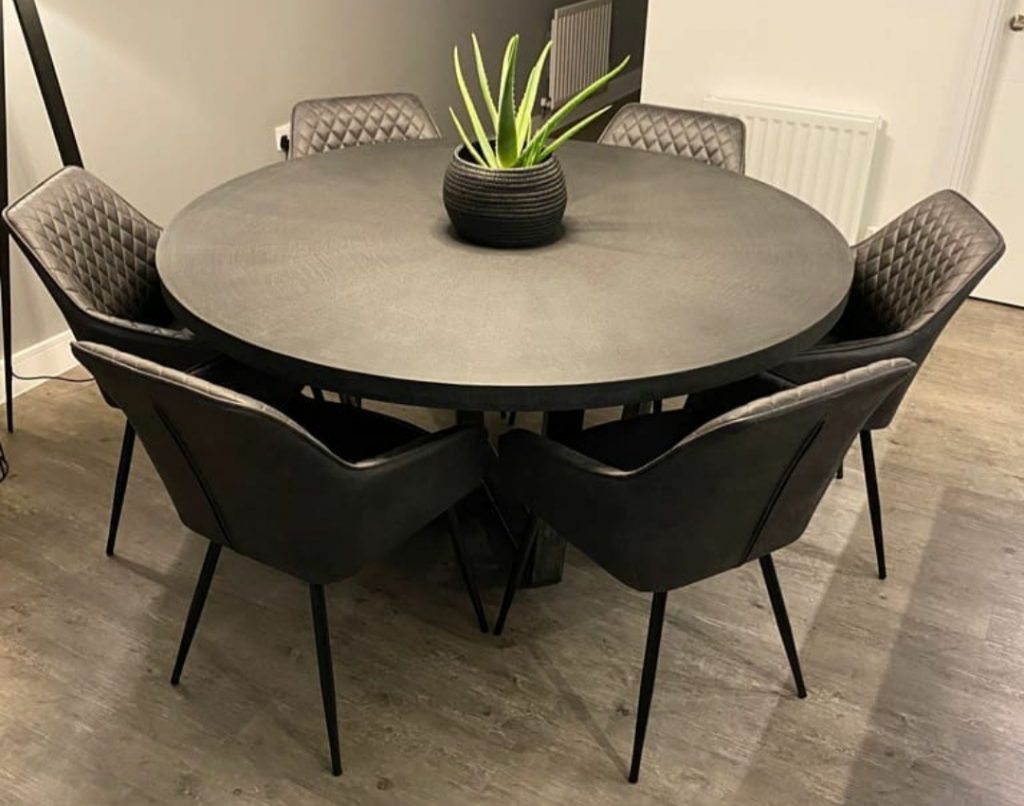
Yes, provided the design is thoughtful. Comfort is not only about the tabletop material. It is about edge detail, table height, leg placement and how easily chairs fit around it. A concrete top paired with a well-resolved base can be every bit as comfortable and practical as more conventional options.
For families, the material also has a quiet advantage. It does not ask for constant fussing. You are not forever worrying about every minor mark in the way you might with some softer timbers or delicate finishes. That makes it particularly attractive for households that want high-end design without feeling precious about daily life.
Larger sizes are another strength. Concrete has the visual heft to suit generous six, eight or ten-seater formats without looking flimsy. In open-plan homes, that scale can be exactly what brings balance to the room.
Are concrete dining tables good value?
They are not the cheapest option, nor should they be. A handcrafted concrete dining table involves specialist knowledge, moulding, curing, finishing, sealing and careful installation. Bespoke work adds another layer, because proportions, shape, colour tone and base design can all be tailored to the project.
Value, then, comes from longevity, individuality and visual impact. If you are comparing purely on upfront price against a mass-produced table, concrete may look expensive. If you are comparing it against other premium statement pieces made to suit a specific interior, it often makes far more sense.
This is especially true when the table becomes one of the defining features of the home. A dining table is one of the most used pieces of furniture you will own. When it is beautifully made and designed around your space, the return is not only practical. It shapes how the room feels every day.
When concrete may not be the right choice
Concrete is not for everyone, and it is better to be clear about that. If you redecorate frequently and like lightweight furniture that can be moved around on a whim, it may feel too permanent. If your style leans heavily towards ornate, traditional detailing, other materials may sit more comfortably.
It also depends on what you want emotionally from the piece. Concrete brings calm strength, sculptural presence and a slightly urban design language. If you want visible grain, warmth and softness above all else, timber may still be your first choice.
That said, concrete is often more versatile than people assume. With the right base, shape and finish, it can feel refined, warm and welcoming rather than stark.
The real answer to are concrete dining tables good
They are good when they are made properly, specified thoughtfully and chosen for the right reasons. A polished concrete dining table is not just a surface to eat from. It is a piece of functional architecture. It delivers durability, individuality and a strong design point of view, while still standing up to the rhythms of everyday life.
For homeowners creating a long-term space, that combination is hard to beat. And if you want something made around your room rather than squeezed into it, working with a specialist maker such as Daniel Polished Concrete can make all the difference between buying a table and commissioning one that truly belongs there.
The best dining tables do more than fill a room – they give it weight, purpose and somewhere memorable for life to happen.