
A dining table is one of the few pieces of furniture that earns its place every day. It hosts rushed breakfasts, birthday suppers, homework, working-from-home days and the occasional glass of red wine that misses its mark. Sustainable concrete furniture starts with making something worthy of that long life: a table designed for your room, built with care and made to remain beautiful through years of proper use.
For design-conscious homes, sustainability is not only about selecting a material with a particular label. It is also about resisting the short lifespan of disposable furniture. A well-made polished concrete dining table has presence, practical strength and a timeless architectural quality that can outlast changing trends – especially when it is made to the right proportions from the outset.
What makes concrete furniture sustainable?
Concrete is a considered choice, not a consequence-free one. Cement production has a significant environmental footprint, and anyone claiming otherwise is oversimplifying the material. The more meaningful question is how the concrete is specified, used and kept in service over time.
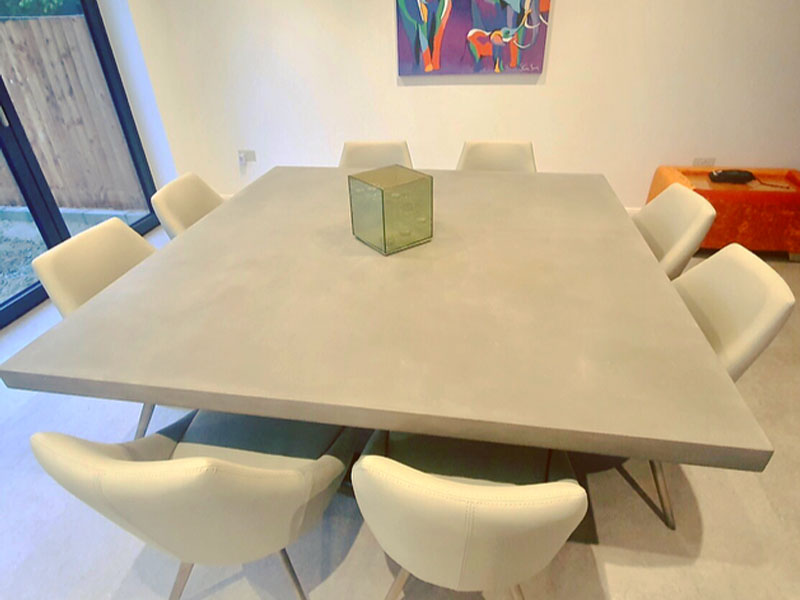
A dining table made as a permanent part of a home can be a very different proposition from a cheaply produced item expected to be replaced within a few years. Concrete furniture is naturally hard-wearing, and a properly sealed polished surface is suited to the realities of family life. Its strength lies in longevity: fewer replacements, less discarded furniture and a piece with enough visual confidence to stay relevant as the rest of the interior evolves.
The manufacturing approach matters too. Made-to-order work helps avoid the waste associated with mass production and excess stock. Rather than choosing a near-enough size from a warehouse, you can commission a table around the dimensions of your dining space, the number of people you host and the way you move around it.
Long life is the first environmental decision
The most sustainable table is not automatically the one made from the least material. It is the one you will still want to use, maintain and live with fifteen or twenty years from now.
Polished concrete has a quiet permanence that works particularly well in open-plan kitchens and contemporary extensions. It can sit comfortably alongside warm oak cabinetry, black steel glazing, textured plaster and natural stone. Unlike heavily trend-led finishes, its tonal variation and hand-finished character tend to deepen rather than date.
That does not mean concrete is right for every home. If you frequently rearrange rooms, live in a property with difficult access or want a table you can easily move on your own, a lighter material may be more practical. Concrete tables require thoughtful planning around delivery, access and installation. For a forever dining space, however, that substantial feel is often exactly the appeal.
Sustainable concrete furniture should be made for the room
A standard dining table can be efficient to produce, and that is why a carefully designed Classic Collection has real value. Established six, eight and ten-seater sizes simplify the decision, reduce design time and offer a more price-efficient route to a hand-finished concrete table.
Bespoke work becomes especially valuable where the room asks for something more precise. Perhaps your kitchen island leaves a narrow circulation route, you need to seat ten without overwhelming the room, or a long banquette calls for an oval rather than a rectangle. Making a table to fit these conditions can prevent the familiar compromise of buying something that is too large, too small or simply wrong for the space.
Before settling on dimensions, allow enough room for chairs to pull back and for people to pass behind them. In many homes, the table needs to do more than provide seats at mealtimes. It may need to accommodate a laptop, serving dishes, children’s crafts or a full Christmas lunch. Designing for these everyday moments makes a piece more useful, and therefore more likely to be kept.
Material choices deserve an honest conversation
There is no single formula for lower-impact concrete. The mix design may be influenced by the required strength, thickness, finish, colour and the size of the table. Supplementary cementitious materials, recycled content and locally available aggregates can all be part of the discussion, but their suitability depends on the desired result and the maker’s tested process.
For premium furniture, finish quality cannot be treated as an afterthought. A polished concrete top must be strong enough for its intended use, consistent in its finish and correctly sealed. An experimental mix that compromises durability is not necessarily the more responsible option if it shortens the table’s lifespan.
This is where specialist workmanship matters. The surface should feel refined while retaining the small variations that make concrete distinctive. Pinholes, gentle movement in tone and subtle marks from the hand-finishing process are part of the material’s character, not defects to be hidden. Each table should be judged as an individual piece rather than expected to look like a printed laminate surface.
Design for repair, care and everyday use
Sustainability continues after installation. A table that is easy to care for is far more likely to remain in service. Quality sealers help protect polished concrete against everyday spills and staining, but they do not turn any natural-looking surface into something that needs no care at all.
Use placemats or trivets for very hot cookware, wipe spills promptly and clean with a mild, pH-neutral product rather than harsh chemicals or abrasive pads. If the surface eventually needs refreshing, professional advice is preferable to treating it with an unsuitable household product. Simple, consistent care protects both the finish and the long-term enjoyment of the piece.
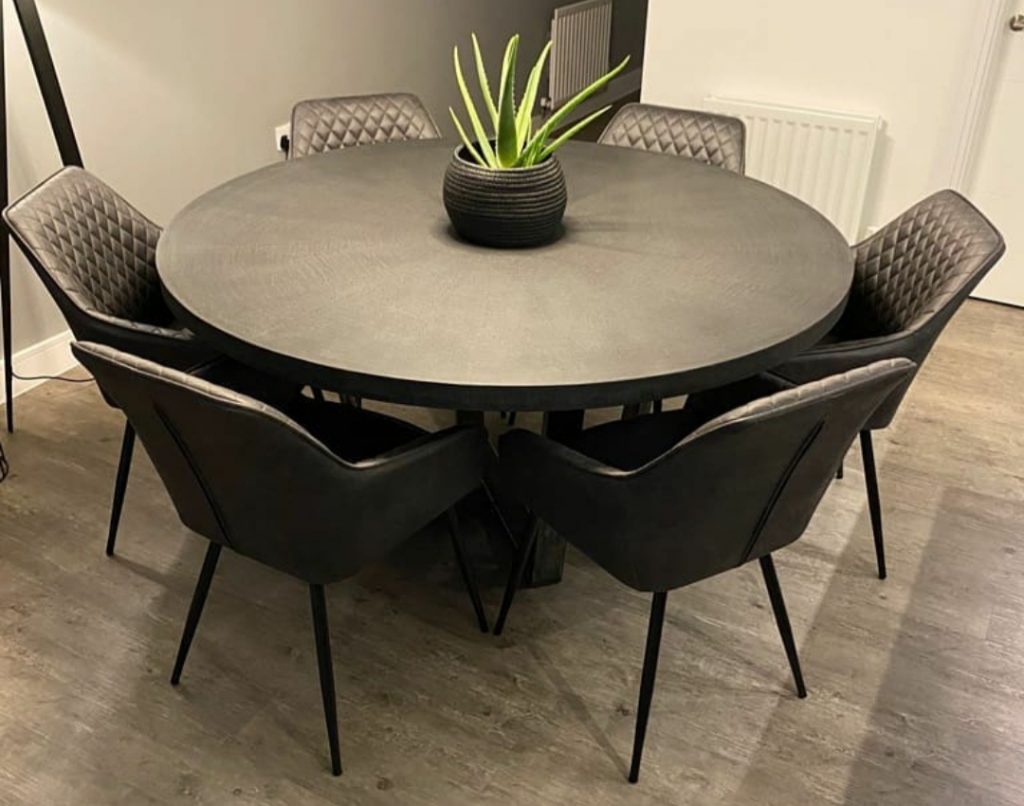
The base is equally important. A well-considered leg design supports the top securely and shapes how comfortably people can sit around it. Steel legs can introduce an urban, architectural edge; timber can soften the composition and bring warmth; a more sculptural base can turn the table into a true centrepiece. The right choice depends on the room, chair layout and the visual weight you want the table to carry.
Why local craftsmanship changes the equation
Furniture made closer to home does not automatically solve every environmental question, but it can make the process more transparent and more personal. You can understand who is making your table, discuss the material, confirm access requirements and make decisions before the piece is poured.
It also reduces the chance of receiving an anonymous product that does not suit the room and is difficult to return, alter or support. With a consultation-led maker, the conversation can cover practical details often missed online: stair access, door widths, floor levels, leg placement and the final seating plan.
At Daniel Polished Concrete, each commission is approached as furniture for real homes rather than an abstract design exercise. That means balancing the sculptural impact of concrete with the daily demands of a busy dining room – from a compact kitchen extension to a large table built for family gatherings.
Choosing a table you will keep
When assessing sustainable concrete furniture, look beyond broad environmental claims and ask more useful questions. Will the design still suit your home if you redecorate? Is the size genuinely right for the room? Can the finish cope with your household? Do you know how it will be delivered, installed and maintained? And does the maker have the experience to build it properly?
A table with clear answers to those questions is less likely to become a compromise purchase. It becomes part of the architecture of the home: a grounded, tactile surface that gives a room purpose and brings people together.
The best place to begin is not with a trend board, but with the life you want the table to support. Measure the room, think about the people around it and choose a piece with enough integrity to remain at the heart of the home long after the first meal is served.