
A dining table should cope with more than a beautifully styled Sunday lunch. It has to handle school bags, serving dishes, laptops, family suppers and the occasional enthusiastic game night. So, can polished concrete tables scratch? Yes, like virtually every table surface, they can pick up marks under the wrong conditions. But a properly made, sealed and cared-for polished concrete table is remarkably resilient in everyday use – and far more forgiving than many people expect.
The useful question is not whether concrete is completely scratch-proof. No honest furniture maker should promise that. It is how a polished concrete surface responds to daily life, what counts as genuine damage, and how easily its character can be maintained over many years.
Can polished concrete tables scratch?
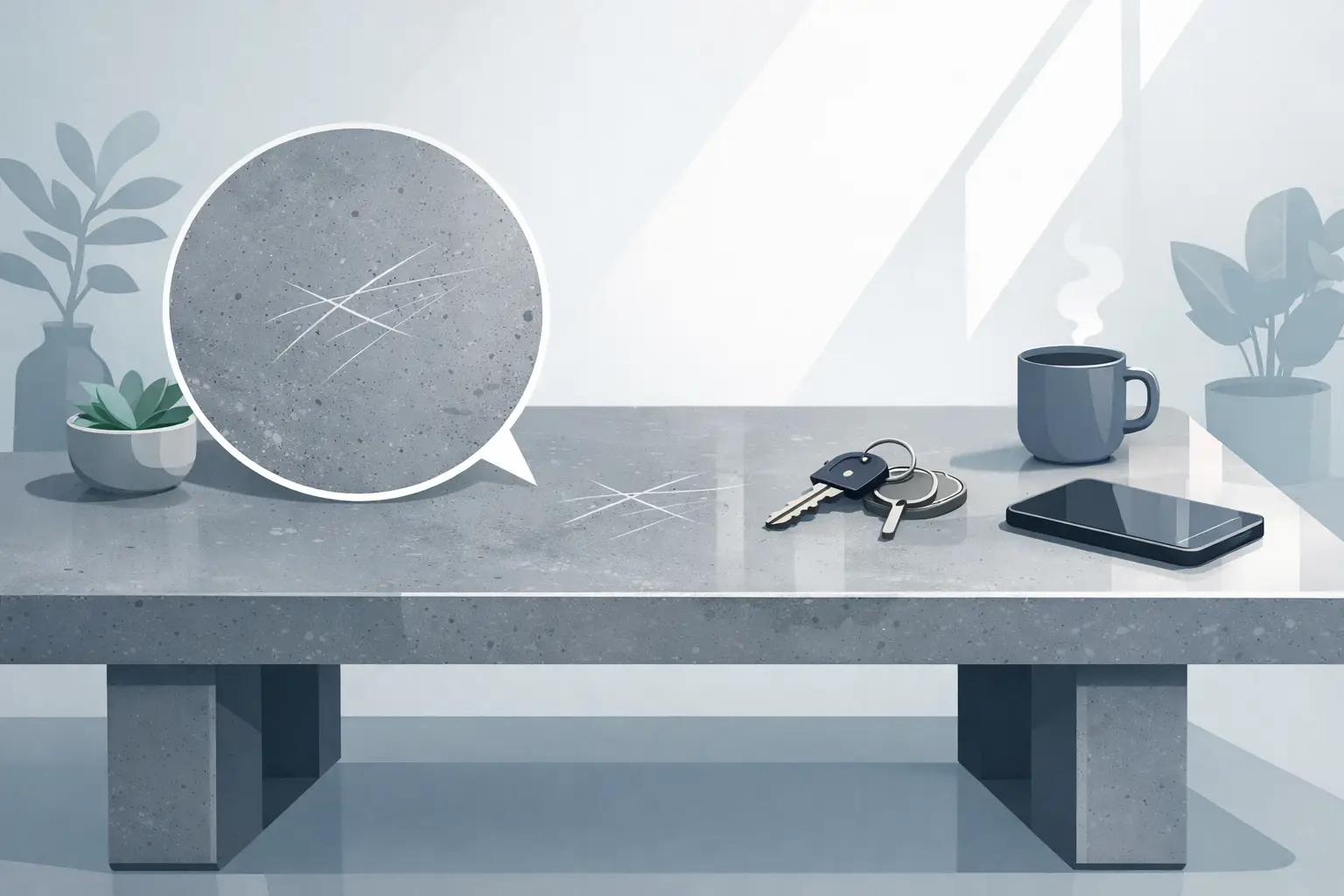
Polished concrete is hard-wearing, but it is not indestructible. A sharp or abrasive object dragged across any dining table can leave a mark. Grit trapped beneath a ceramic vase, an unglazed stoneware plate pulled across the surface, or metal furniture fittings can all create fine scratching or scuffing.
That said, the polished concrete used for a handcrafted dining table is not the same as an untreated paving slab. The surface is refined, polished and protected with specialist sealers designed for furniture use. These sealers create a barrier that helps resist staining, moisture and the minor wear associated with a busy home.
In most cases, what people first notice is not a deep scratch in the concrete itself. It is a light mark in the protective finish, often only visible at a particular angle or in strong sunlight. Depending on the finish and the cause, this may soften naturally with cleaning and use, or it can often be addressed with suitable maintenance advice.
Why concrete’s surface character matters
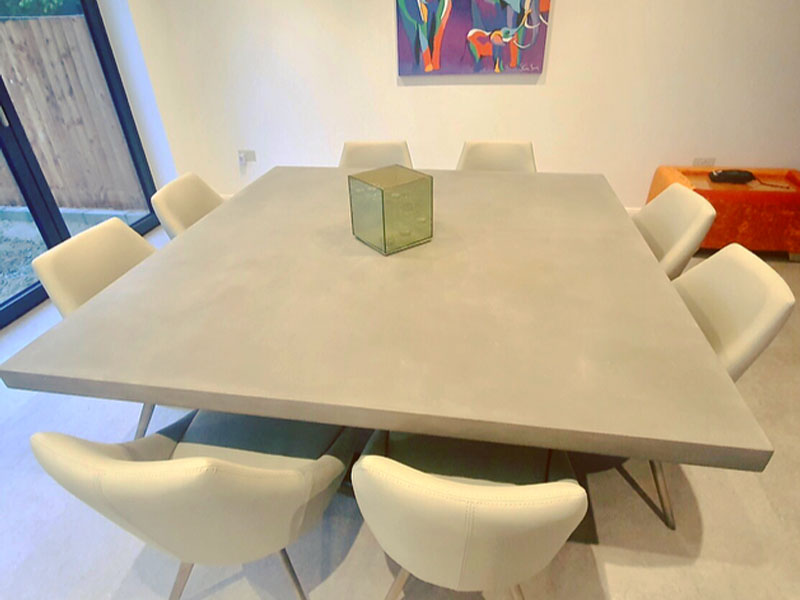
Part of the appeal of a polished concrete table is that it is not trying to imitate plastic, quartz or factory-perfect lacquer. Every table has subtle tonal movement, tiny air marks and variations created through the making and hand-finishing process. These details give the material its architectural depth.
A small sign of use may therefore sit very differently on concrete than it would on a high-gloss dining table. On a reflective black lacquer surface, a fine scratch can appear stark and immediate. On a softly polished concrete finish, the same everyday evidence can be much less visible, blending into a surface with natural texture and variation.
This does not mean accepting poor workmanship or preventable damage. A dining table should still look stunning as the centrepiece of the room. It simply means choosing a material with an honest, lived-in quality rather than one that demands a pristine showroom existence.
The finish affects how marks show
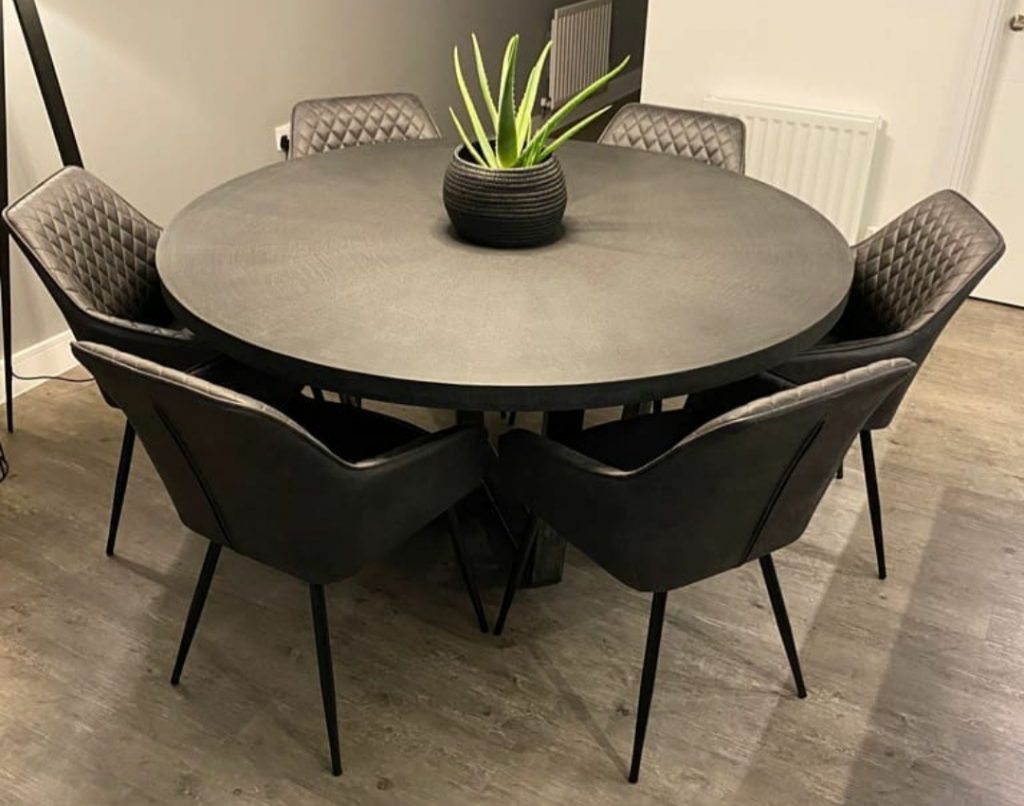
The degree of polish, colour and chosen sealer all influence how visible marks may be. A lighter grey concrete with a natural, satin appearance tends to disguise everyday dust and fine surface variation well. A darker finish can make crumbs and pale smudges more noticeable, while a very high-polish finish will reflect more light and can reveal surface marks more readily.
This is one reason a bespoke table is worth discussing in detail before it is made. The right finish is not only about matching cabinetry, flooring or lighting. It should suit the way you intend to use the room. A formal dining space used occasionally has different demands from an open-plan kitchen where children eat breakfast, homework happens every afternoon and guests gather around the table at weekends.
What is most likely to cause scratching?
Everyday cutlery, plates and glasses are not normally a concern when used as intended. The greater risk comes from abrasion: hard particles, rough bases and objects being dragged rather than lifted.
Ceramic and stoneware pieces deserve the most attention, particularly if their base is unglazed or gritty. Decorative bowls, planters and vases can also have rough undersides. Felt pads are a simple, discreet solution, and they are especially worthwhile for anything that stays in one place on the table.
Avoid using the tabletop as a chopping board or sliding heavy cast-iron cookware across it. When hosting, use trivets beneath hot pans and serving dishes. This protects the finish from both heat and friction, while keeping the table looking considered rather than overprotected.
A polished concrete dining table is made for real meals, not for a life beneath a cover. Sensible habits are enough. Lift heavy objects, wipe away grit before moving accessories, and use placemats if you prefer the extra reassurance or enjoy the layered look they bring to a table setting.
Is a scratch permanent?
It depends on its depth and whether the mark is in the sealer or the concrete beneath. Fine surface scuffs can sometimes be mistaken for residue from rubber, metal or an object’s base. Begin with a soft, damp cloth and a pH-neutral cleaner, then dry the area with a clean microfibre cloth. Do not reach for abrasive creams, scouring pads or harsh household chemicals, as these can dull the protective finish and make a minor issue worse.
If a mark remains, it is best to seek advice before attempting a repair. The correct approach depends on the table’s particular finish, colour and sealing system. Applying an off-the-shelf polish, wax or repair product without guidance can leave a patchy sheen or alter the surface appearance.
A specialist maker can assess whether the table simply needs careful cleaning, a localised treatment or, in rare cases, professional resealing. This is one of the quiet benefits of investing in a made-to-order piece: you know who made it, how it was finished and where to turn if it ever needs attention.
How to protect a polished concrete table without fuss
Good care is straightforward and should not take over your routine. Clean the table with a soft cloth and mild, pH-neutral cleaner, rather than bleach-based sprays or aggressive degreasers. Wipe spills promptly, particularly wine, oils, vinegar, citrus and strongly coloured foods, even though a quality sealer offers valuable stain resistance.
Use mats beneath hot cookware, and add felt pads to permanent decorative objects. If you are moving a centrepiece, lamp or bowl, lift it rather than sliding it. These are small choices, but they make a genuine difference over years of use.
For families, the practical advantage is balance. Concrete does not require the constant vigilance of a delicate timber finish, nor does it have the artificial uniformity of some mass-produced surfaces. It is a substantial, tactile material that earns its place in a home through daily use.
A note on coasters and placemats
Coasters are a sensible habit for cold drinks, especially where condensation could sit for a long period. Placemats are optional rather than essential. Some owners use them for every meal; others prefer the uninterrupted look of the polished surface and bring out mats only for hot dishes or more formal occasions.
The best choice is the one that fits your home. A table commissioned as the heart of a relaxed kitchen-diner should support the way your family actually lives, not add another set of rules to follow.
Choosing a table built for the long term
Scratch resistance begins long before a table arrives in your home. It comes from the quality of the concrete mix, reinforcement, curing process, hand-finishing and the sealer selected for that exact piece. Thickness, edge profile and the table’s supporting base also matter, particularly for larger six, eight or ten-seater tables designed to become a permanent feature of an open-plan room.
At Daniel Polished Concrete, each table is made with this real-world use in mind. The aim is not a fragile sculptural object, but a distinctive dining table with the presence to anchor an interior and the durability to be enjoyed every day.
If you are drawn to concrete because it feels individual, substantial and quietly dramatic, do not let the possibility of a fine mark put you off. Choose a finish that suits your lifestyle, care for it with a little common sense, and allow the table to become part of the life happening around it. The most memorable homes are rarely the ones where nothing is ever touched.