
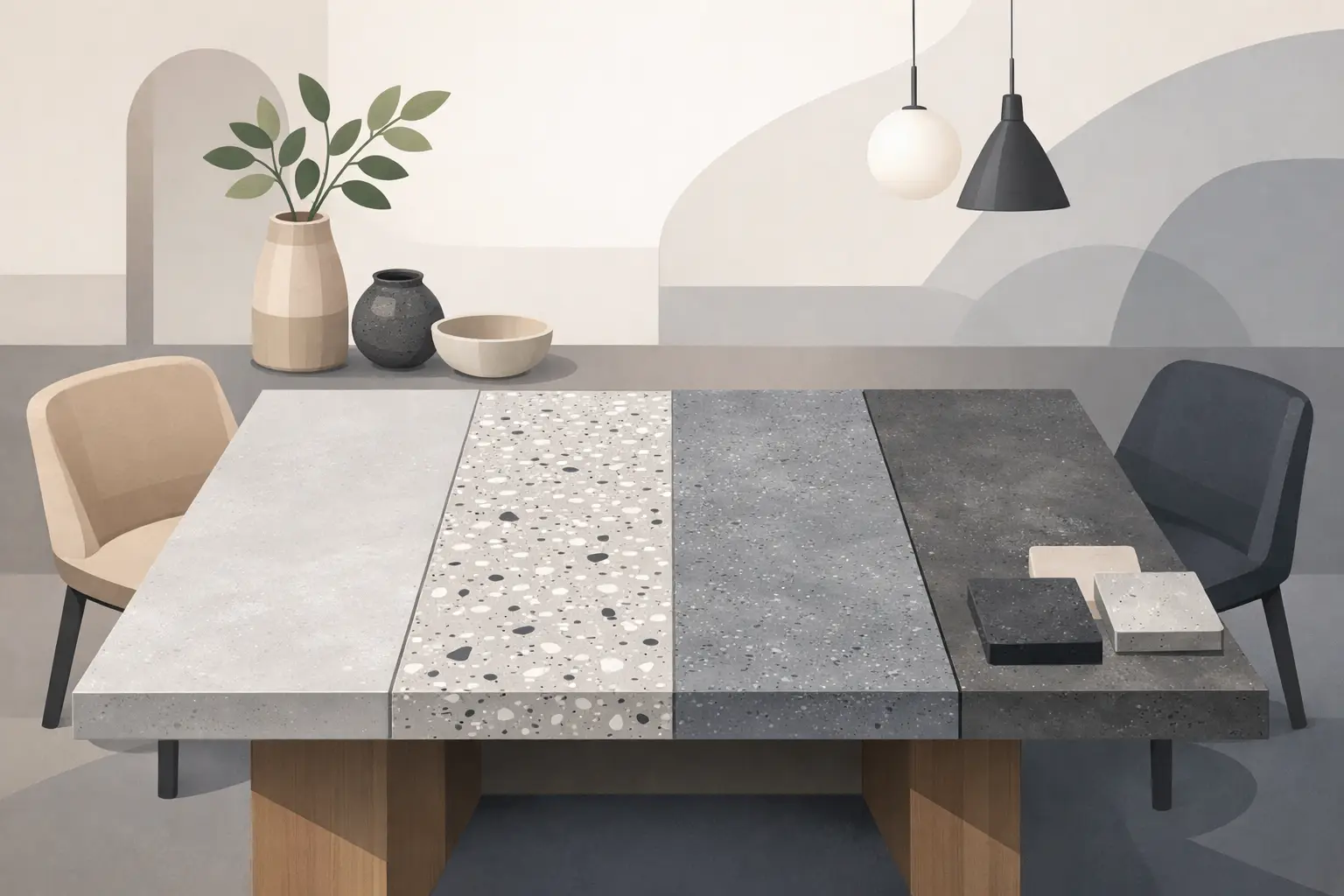
A dining table can look perfect in a photograph and still feel wrong in the room. Usually, the issue is not the size or the shape. It is the finish. This guide to concrete dining table finishes is here to help you understand what really changes from one table to the next – how the surface catches light, how much texture you feel under your hand, how colour reads through the day, and how the final sealing affects daily life.
Concrete has a strong visual identity, but it is not a one-look material. A well-made concrete dining table can feel crisp and refined, softly architectural, or more raw and industrial depending on how it is finished. That choice matters even more in kitchens and open-plan spaces, where the table is often the visual anchor of the room.
What a concrete dining table finish actually includes
When people talk about finish, they often mean shine. In practice, the finish is a combination of surface texture, level of polish, colour tone and protective sealer. Each element changes the character of the piece.
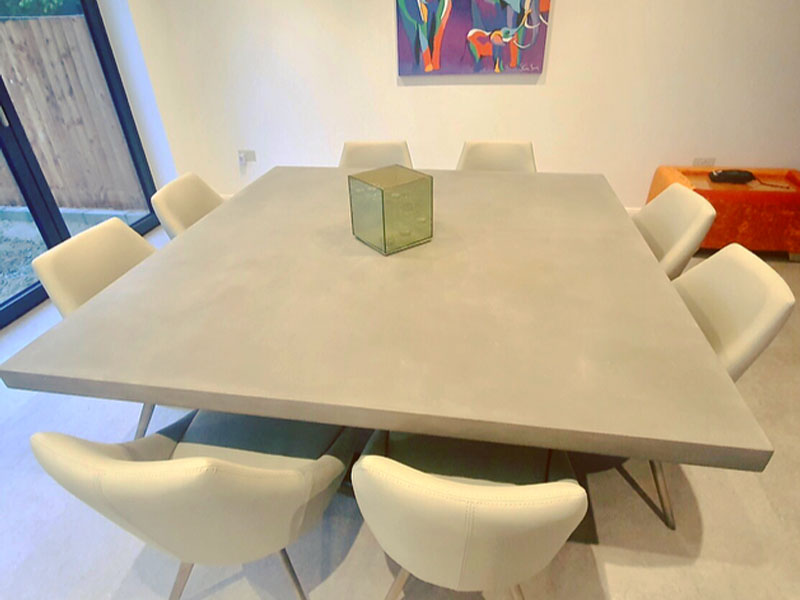
A smoother, more polished surface tends to feel cleaner and more contemporary. It reflects more light, which can be useful in darker rooms or in spaces where you want the table to feel precise and elevated. A more tactile surface with subtle movement can feel warmer and more organic. That can work beautifully in homes where concrete needs to sit comfortably alongside timber cabinetry, upholstered dining chairs or softer architectural details.
The sealer is just as important as the visual finish. A dining table has to cope with plates, glasses, heat, spills and everyday family use. A well-finished concrete surface should offer practical stain resistance without making the table look plasticky or overworked.
A guide to concrete dining table finishes by look and feel
The right finish depends on how you want the table to live in the room, not just how you want it to look on day one.
Polished finishes
A polished concrete finish has a smoother, more refined face. It often suits modern extensions, minimalist kitchens and interiors where clean lines matter. This type of finish gives concrete a more furniture-led quality. It looks deliberate rather than rugged.
The benefit is clarity. Edges can appear sharper, the surface is easier to wipe down, and the table often feels more at home in a premium residential setting than a rougher industrial treatment. The trade-off is that a polished finish will show light differently across the surface, so if you are expecting something completely flat and uniform, concrete may surprise you. Natural variation is part of the appeal.
Honed or satin finishes
For many homes, a satin or honed finish is the sweet spot. It softens the look of concrete without losing its architectural presence. You still get a smooth surface, but with less reflection and a quieter finish overall.
This tends to work especially well in open-plan kitchens where there are multiple materials competing for attention. A satin concrete top can hold its own without feeling too glossy or too stark. If you want a stunning centre piece that still feels calm and liveable, this is often the direction to consider.
More textured finishes
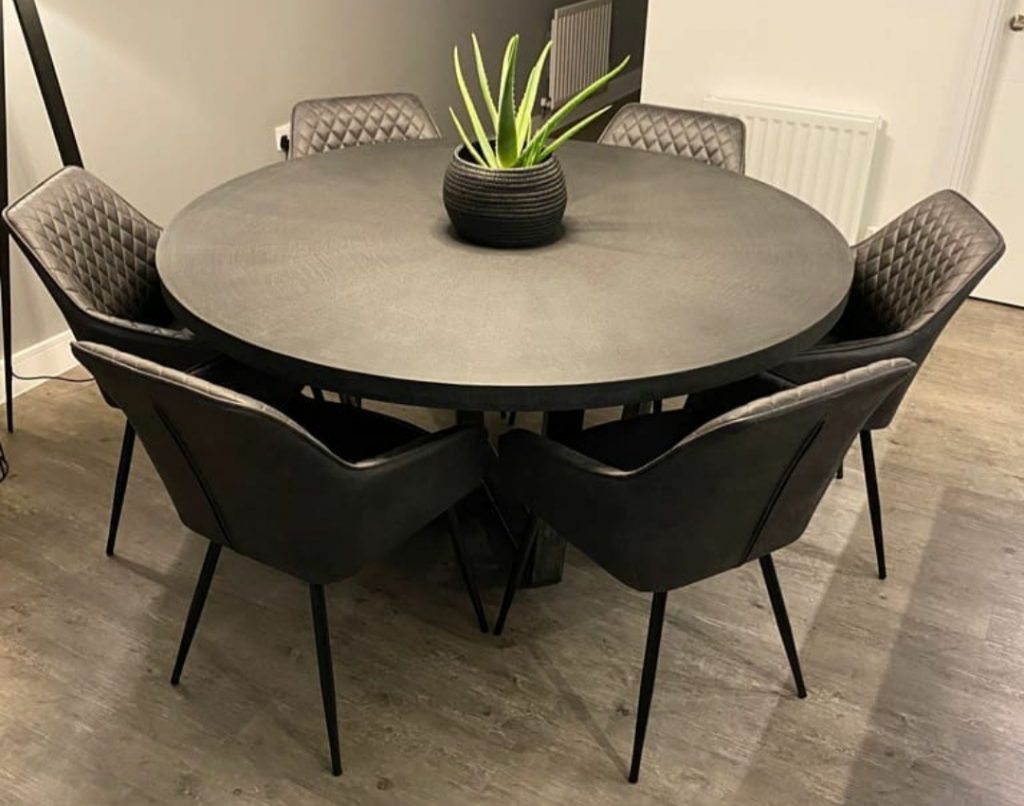
Some clients are drawn to a finish with a little more visible movement or a more tactile character. This can create a stronger sense of material honesty and hand-finishing. It works particularly well in interiors with earthy tones, black steel details, exposed brick or warmer timber floors.
The key question here is practical rather than visual. A dining table should still be comfortable to use every day. Too much texture can make a surface feel less refined and slightly harder to clear quickly after meals. In a statement setting, it can be striking. In a busy family kitchen, it needs to be handled with care.
Choosing the right sheen for your space
Sheen changes everything. A table with more light reflection can feel sharper and more formal. A lower-sheen finish feels softer and more grounded.
In bright south-facing rooms, a very reflective finish may feel a little harder than expected, particularly against white walls and large-format flooring. In darker spaces, that same finish can lift the table and stop it from appearing visually heavy. If your kitchen has matte cabinetry, brushed metal and muted tones, a satin concrete top usually creates better balance than a high sheen.
This is where bespoke work becomes valuable. The same table design can feel completely different depending on the finish. For homeowners investing in a forever home, it is worth choosing a finish that complements the wider palette rather than following a generic idea of what concrete should look like.
Colour matters more than most people expect
Concrete is not simply grey. Even within grey, there is a wide range – pale mineral tones, warmer greys, charcoal shades and deeper urban hues. The finish influences how those colours read.
A smoother polished surface can make the colour appear cleaner and slightly more defined. A softer finish may make the tone feel more muted and natural. Room lighting also has a major effect. Under cool daylight, concrete can feel crisp and architectural. Under warm evening lighting, it often takes on more depth and softness.
If your room includes oak, walnut, brass, black joinery or painted cabinetry, colour should be chosen with those materials in mind. Cooler concrete tones can sharpen a contemporary scheme. Warmer tones tend to sit more comfortably in family homes where the aim is sophisticated but not severe.
Sealers and everyday performance
The best finish is not just about appearance. It is about confidence in use. A dining table should be made to be lived with.
Concrete is a high-performance material, but it still needs proper sealing. The sealer helps protect against common dining-table hazards such as red wine, oil, coffee and general daily wear. It also affects the touch and final look of the surface.
A good sealer should preserve the character of the concrete rather than masking it. If a surface looks thickly coated, it can lose the depth and honesty that make concrete attractive in the first place. At the same time, under-sealing is not a virtue. A dining table is not a decorative slab. It needs to stand up to real use.
There is always a balance here. No material is entirely maintenance-free, especially in a hardworking kitchen-dining space. But a well-made and properly sealed concrete table should offer reassuring durability without demanding constant fuss.
How to match the finish to the way you live
If your table is for a formal dining room used occasionally, you may be freer to prioritise a very specific visual finish. If it will be used for family meals, homework, entertaining and everything in between, practicality should carry more weight.
Large 8, 10 or 12 seater tables often benefit from finishes that feel calm rather than overly busy. On bigger surfaces, every detail is amplified. A finish with controlled movement and a refined seal tends to age well visually because it does not compete with the scale of the piece.
For smaller dining areas, a smoother and lighter finish can help the table feel less dominant. For larger open-plan rooms, deeper tones or a richer polished finish can give the table enough presence to hold the space.
This is also where shape and base style come into play. A bold pedestal base or sculptural leg design may call for a quieter top finish. A simpler base can support a more expressive surface. The best concrete furniture always feels resolved as a whole.
Why samples and real-world viewing matter
Concrete is a material you understand properly when you see it in person. Photographs are useful, but they cannot fully show depth, reflectivity or the subtle movement in the surface.
If you are choosing a bespoke piece, samples are invaluable. They let you compare tones against your flooring, cabinetry and wall colours. They also show whether you prefer a smoother polished look or something with more softness and character.
That conversation is often where the right answer appears. At Daniel Polished Concrete, much of the design confidence comes from guiding clients through those fine details so the final table feels made for the room rather than simply placed in it.
The best finish is the one that still feels right after the excitement of choosing has passed – the one that suits morning coffee, Sunday lunch, evening entertaining and the everyday rhythm of the home. Choose with the room in mind, choose with use in mind, and the table will reward you for years.