
A dining table has to earn its place. It is where weekday suppers, homework, long Sunday lunches and properly lively evenings with friends all happen. This guide to bespoke dining table styles is designed to help you choose a table that suits the way you live, while giving your kitchen or dining room the architectural presence it deserves.
A made-to-measure table is not simply an opportunity to choose something different. It is a chance to get the proportions right, to accommodate the people who gather around it, and to create a stunning centre piece that belongs to your space rather than merely filling it.
Start with the room, not the table
The most successful bespoke tables are led by the room. Before settling on a shape or finish, look carefully at the available footprint and, crucially, the circulation around it. A table can look beautifully generous in a photograph yet make daily life feel cramped if chairs cannot be pulled out comfortably or people have to squeeze past it.
As a practical guide, allow around 90cm between the edge of the table and a wall, kitchen island or sideboard where possible. More room is worthwhile in a busy family kitchen or an open-plan space with regular foot traffic. If the room is compact, a carefully proportioned round or oval table may make better use of the floor area than a rectangular design.
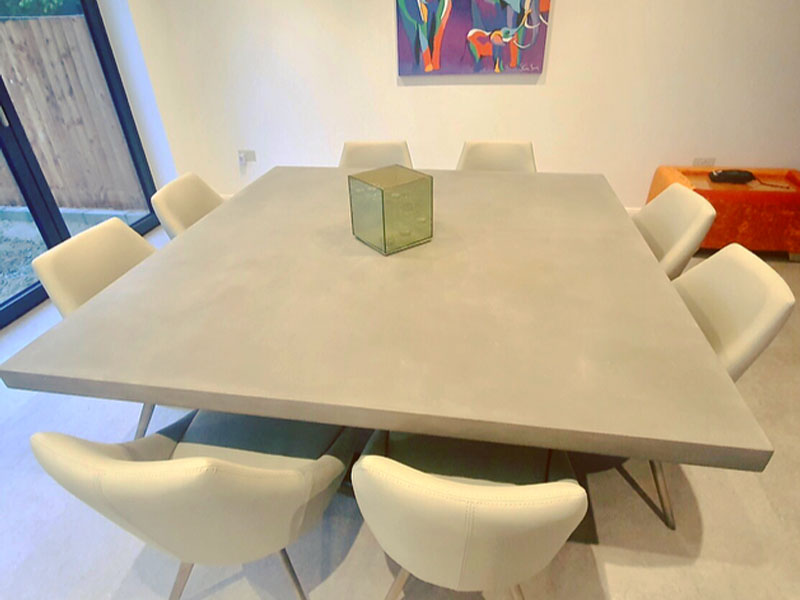
Think beyond measurements, too. Look at sight lines from the kitchen, garden doors and sofa area. In an open-plan setting, a polished concrete dining table can provide a calm, substantial visual anchor, especially when the kitchen includes natural timber, painted cabinetry, black metal or stone surfaces.
Choosing the right bespoke dining table style
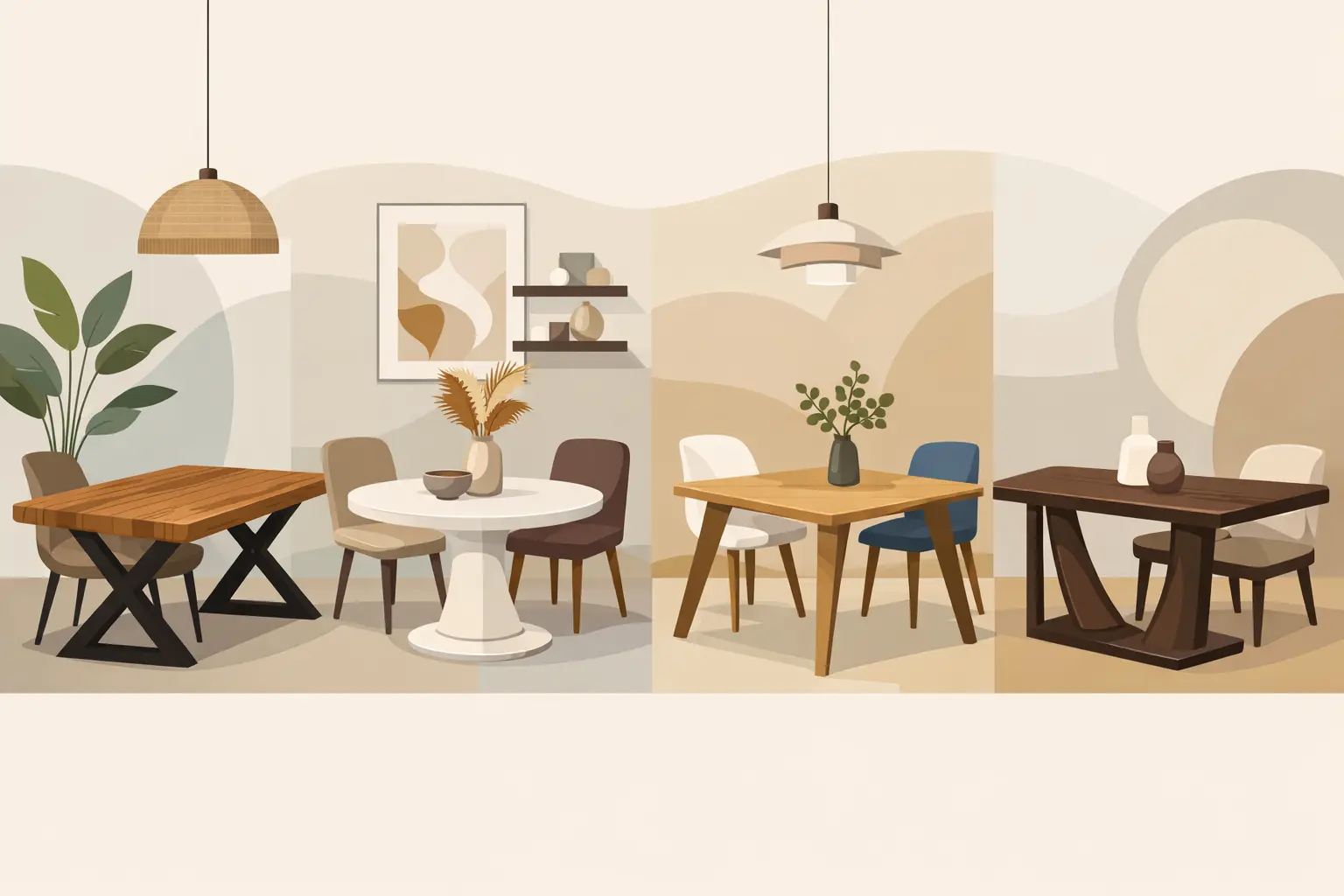
Style is about more than whether a table is round or rectangular. The profile of the top, its thickness, the base design and the relationship between materials all affect how it feels in the room.
Rectangular tables for generous, sociable spaces
A rectangular dining table is the natural choice for many renovated kitchens and long dining rooms. It follows the geometry of the room, makes efficient use of length and gives every guest a clear place at the table. It is particularly effective for eight, ten or twelve seaters, where the scale of the top becomes part of the interior design.
For a sharper urban look, choose clean straight edges and a crisp, contemporary base. A softened edge profile can make the same design feel more relaxed and tactile, particularly in a family home. Rectangular tables are also practical if you enjoy formal place settings or need a dependable surface for larger gatherings.
The trade-off is that corners demand space. In a narrower room, they can interrupt the route through the space more than a curved alternative.
Round tables for conversation and softer layouts
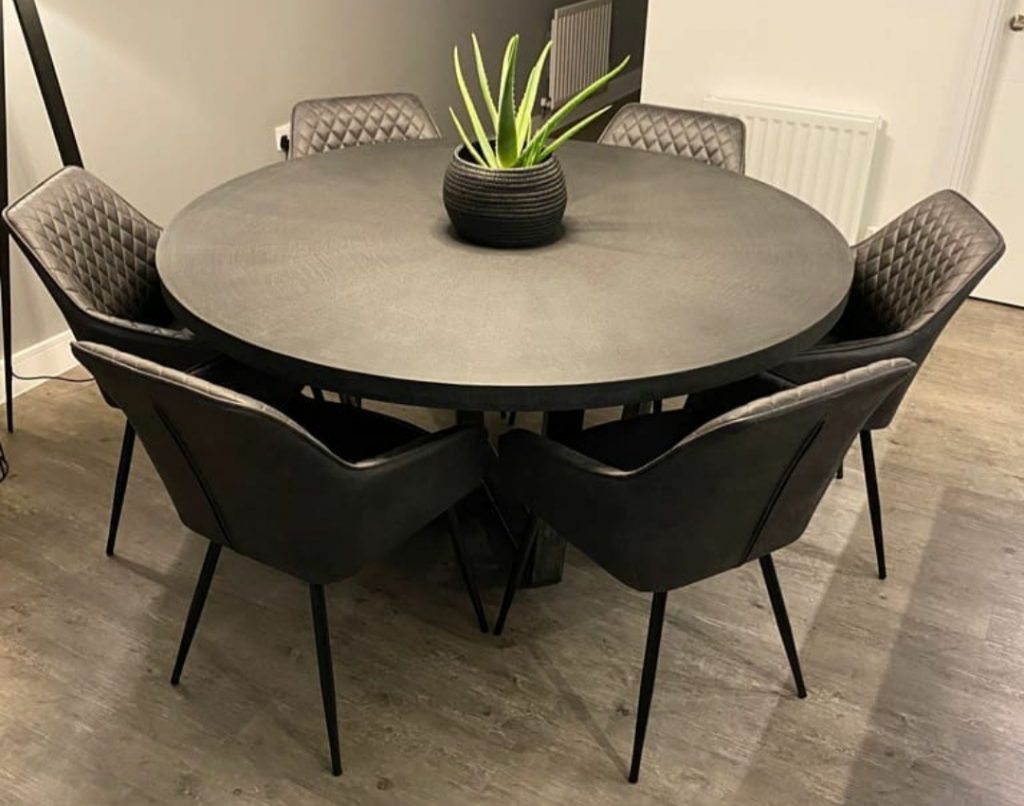
A round table brings everyone into the same conversation. There is no head of the table, no awkward corner seat and no need to stretch across a long expanse to pass a dish. It is an especially elegant answer for square rooms, bay-window dining areas and kitchens where movement around the table matters.
Polished concrete gives a round top real sculptural weight. Paired with a central pedestal base, it can appear almost floating while retaining the solidity that makes concrete so distinctive. The pedestal also removes legs from the perimeter, which can make seating more flexible.
Round tables do need a surprising amount of diameter once chairs are included. They are wonderful for intimate dinners and family meals, but a large round table can overwhelm a modest room faster than a rectangular design of similar capacity.
Oval tables for the best of both
An oval dining table combines the sociability of a circular design with the seating capacity of a rectangle. The softened ends improve flow around the table and work particularly well in open-plan spaces where there is a route behind one or both ends.
This style has a refined, contemporary feel without appearing severe. It is a strong choice for homeowners who want to seat six to ten people regularly but prefer a gentler silhouette than a fully rectangular top. In polished concrete, an oval shape also showcases the hand-finished surface beautifully, allowing the material’s subtle movement and tonal variation to take centre stage.
Organic shapes for a more individual interior
For a home that does not rely on straight lines, an organic or softly asymmetrical table can become a true statement piece. These designs work well with curved joinery, arched openings and interiors that mix modern architecture with warmer, more relaxed furniture.
There is a balance to strike. An unusual silhouette should still seat people comfortably and allow chairs to sit naturally beneath the edge. Bespoke design is where this becomes valuable: the shape can be adjusted to fit a particular room rather than forcing the room to work around it.
The base changes everything
The base is not an afterthought. It determines legroom, visual weight and how the table reads from across the room.
A central pedestal is ideal for round and oval designs because it keeps the seating perimeter clear. It can feel bold and sculptural, especially beneath a substantial concrete top. For rectangular tables, twin pedestals create a grounded, architectural look while allowing comfortable seating along the sides.
Steel legs can introduce a more industrial edge. Slim black frames give a polished concrete top definition and suit modern kitchens, exposed brick and darker detailing. Timber bases bring warmth and soften the material contrast, making them a natural fit alongside oak flooring, neutral cabinetry and layered textures.
It depends on how you use the table. If you often add extra guests, avoid a base layout that traps knees at the corners or limits where chairs can go. A beautiful base must still work when the house is full.
Colour and finish: let concrete show its character
Polished concrete is often imagined as simply grey, but it offers a far broader palette. Cool pale greys can create a restrained, gallery-like look. Mid-grey tones have a confident urban quality, while darker charcoal finishes make a dramatic statement against lighter kitchens. Warmer mineral shades can sit comfortably with timber, brass and earthy painted finishes.
Every concrete table is hand-finished, and that individuality is part of its appeal. Gentle tonal shifts, small variations in the surface and a sense of material depth make it different from a mass-produced laminate or veneer top. The aim is not a perfectly flat block of colour. It is a refined surface with character.
Finish should be chosen in relation to the light in the room. A deep charcoal may look striking in a bright extension with roof lanterns, while a softer grey can prevent a north-facing dining area from feeling too heavy. Samples and project imagery are useful, but viewing the room at different times of day remains the best test.
Size for everyday use, not just special occasions
A bespoke table should accommodate your usual household first, then the occasions that matter most. If four people eat at the table every day but you host eight at Christmas, a generous six or eight seater may be more useful than choosing a huge table that dominates the room throughout the year.
As a rule, allow around 60cm of table edge per person for comfortable dining. A table for six should generally provide at least 180cm of usable length, while an eight-seater often begins around 240cm. These are guides rather than fixed rules: chair width, armrests, the base position and your preferred level of elbow room all make a difference.
For larger families and entertaining spaces, an eight, ten or twelve seater creates a real sense of occasion. It also needs proper planning around access. Consider stairways, door openings, turns from the drive and the final route into the room. Professional delivery and installation matter when the table is a substantial, hand-finished piece.
Why bespoke is worth considering
Off-the-shelf furniture asks you to compromise: accept the available length, settle for the nearest colour, or choose a base that almost works. A bespoke commission gives you control over the details that make a table feel resolved – dimensions, shape, concrete shade, edge profile and leg style.
For those who need a faster route or a more price-efficient option, a standardised collection in proven six, eight and ten seater sizes can be the sensible choice. Bespoke is most rewarding when the room has unusual dimensions, the table needs to seat a particular number of people, or you have a clear design vision that deserves more than an approximate match.
At Daniel Polished Concrete, each table is made as a piece of furniture rather than treated as a generic slab on legs. That craft-led approach matters because a dining table must look exceptional on the day it arrives and continue to serve the household through real, everyday use.
The right table style is the one that makes the room feel more like yours – considered, welcoming and ready for the people you most want around it.