
The right dining table does more than fill the space between a kitchen island and a garden door. It sets the scale for the whole room. A six seater concrete table gives an open-plan kitchen or dedicated dining area a calm, architectural focal point, while still making room for the weekday supper, the homework spread and the friends who stay long after pudding.
Concrete has a presence that lighter materials cannot imitate. Its softly polished surface catches natural light differently throughout the day, revealing gentle movement, fine tonal variation and the marks of a hand-finished material. Yet its appeal is not simply visual. For homes that are lived in properly, a well-made concrete dining table offers reassuring strength and a surface designed for everyday use.
Why choose a six seater concrete table?
Six seats is often the sweet spot for a modern family home. It is generous enough for everyday entertaining without asking a room to accommodate a vast formal dining table. In many kitchen-diners, it creates a more useful balance than an eight seater: enough elbow room for guests, but clearer walkways around the table and easier access to bi-fold doors, cabinetry and islands.
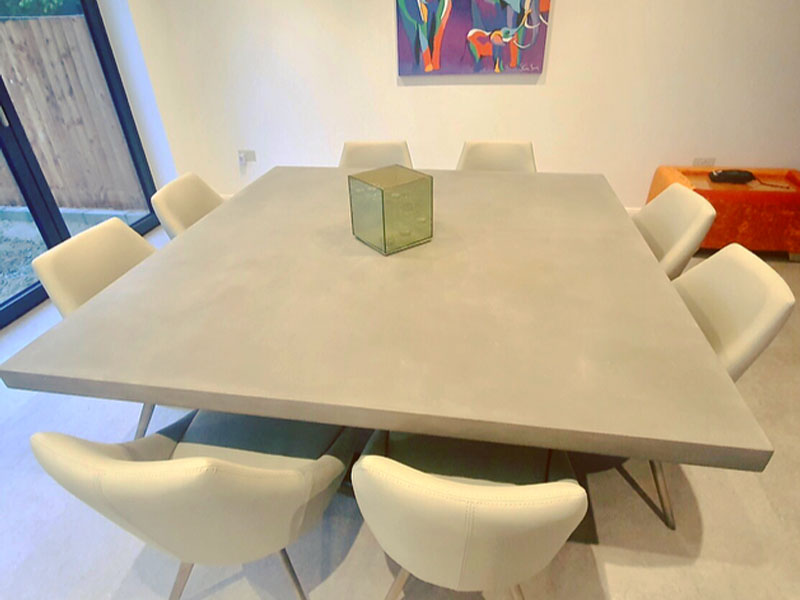
A concrete top brings weight, texture and visual confidence to that practical footprint. It works particularly well where the rest of the interior has clean lines – think timber flooring, painted cabinetry, black-framed glazing or exposed brick. The table grounds these elements rather than competing with them. A pale grey finish can soften a bright scheme; deeper charcoal tones bring drama to a lighter room; warmer, earthy shades sit beautifully alongside oak, brass and natural linen.
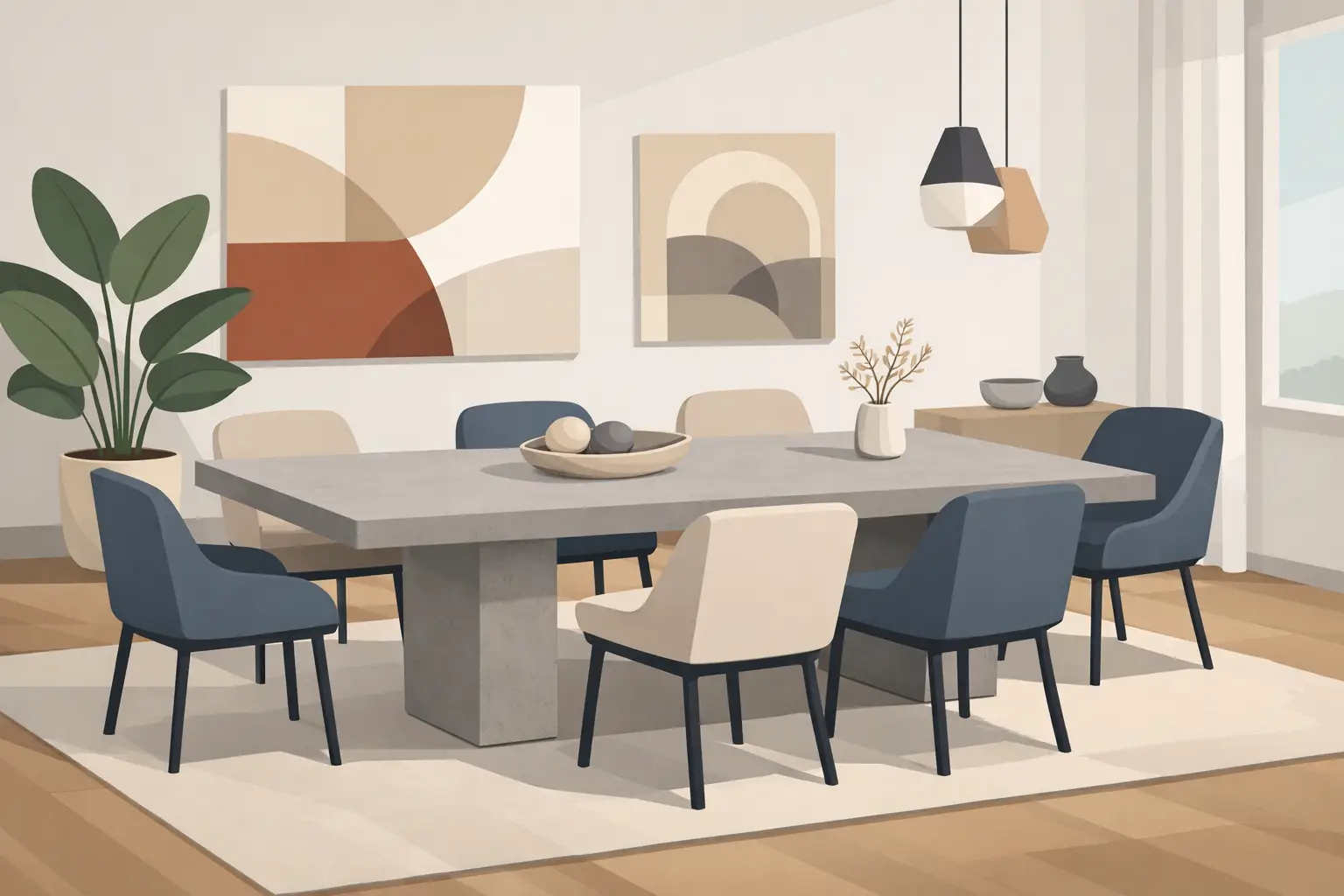
The material is also wonderfully adaptable. A six-seat table can feel crisp and contemporary with a slim top and sculptural steel base, or more organic with softened corners, a warmer finish and timber legs. The same core material can belong in an industrial loft, a coastal extension or a carefully restored Victorian home. Proportion and finish are what make it personal.
Getting the proportions right
A six seater concrete table is usually most comfortable at around 180cm to 220cm long. The ideal length depends on chair width, how formally you dine and whether the table will regularly host serving dishes in the middle. At roughly 180cm, the table suits six people comfortably for day-to-day use. Moving towards 220cm gives each guest more space and creates a more generous setting for entertaining.
Width deserves equal attention. A table around 90cm to 100cm wide is often a good starting point. It leaves room for place settings and shared food without making conversation feel distant across the top. Wider tops can be striking in a large room, but they need enough surrounding space to avoid becoming an obstacle.
Allow around 90cm between the table edge and a wall, kitchen unit or other fixed feature where possible. This gives people enough room to pull a chair back and move through the room without the familiar shuffle of asking everyone to stand. If the table sits beside a busy route to the garden, utility or living area, a little more clearance is worthwhile.
Rectangle, round or oval?
A rectangular table is the natural choice for many six-seat layouts, especially in long kitchen-diners. It mirrors the shape of the room and makes efficient use of available floor space. It also provides a strong linear counterpoint to softer furnishings, pendant lights and upholstered dining chairs.
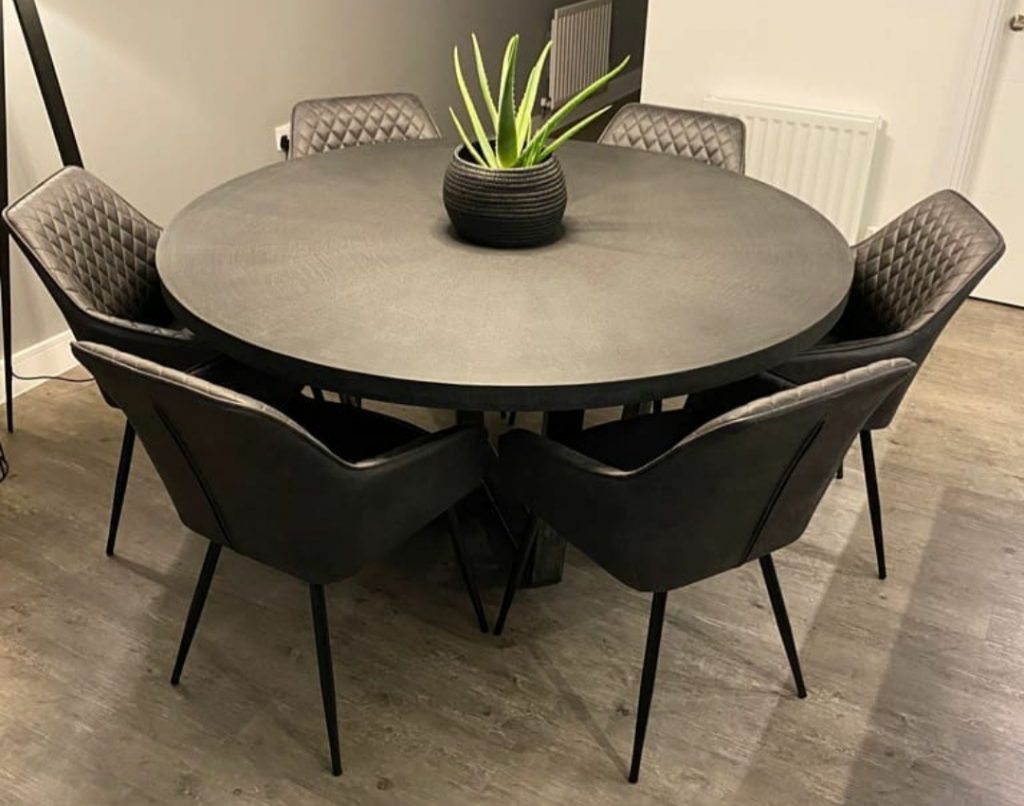
A round concrete table can be an excellent alternative in a more square room. Everyone faces one another, which makes it particularly sociable, and there are no corners to navigate in a tighter layout. The trade-off is that a round six seater needs a generous diameter and can occupy more floor area than expected.
An oval top offers a middle ground. It retains the sociability of a curved form while giving a little more usable length. It is especially effective in homes where a rectangular table feels too severe but a fully round design would interrupt the flow of the space.
The finish is part of the design
Polished concrete is not a printed surface or a uniform factory pattern. Each top has its own character. Fine pinholes, subtle clouding and small shifts in shade are part of what gives the material depth. These details should be seen as evidence of the making process, not faults to be engineered away.
That said, the finish can be tailored to suit the room. A lighter concrete top can keep a large table feeling open in a kitchen with limited daylight. Mid-grey is an enduring choice for urban design schemes, while darker charcoal makes a confident centrepiece against pale walls and timber floors. Bespoke colouring can take the table further, tying it into stonework, cabinetry or a favourite feature elsewhere in the home.
Edge detail makes a surprisingly large difference too. A fine, clean edge looks contemporary and keeps the top visually light. Softer radiused corners introduce a more relaxed feel and are often welcome in homes with younger children. The table should look considered from every angle, including the view from the kitchen and the approach from the hallway.
Choosing a base that works as hard as the top
The base determines not only the table’s silhouette but also how comfortably people can sit around it. Four corner legs are familiar and can suit a traditional rectangular layout, although they need careful positioning to prevent them interfering with chairs at the ends.
A central pedestal or twin-pedestal base often gives greater freedom for seating. It can make a six seater feel less restricted, particularly when you want flexibility to add an extra chair for a larger gathering. Steel bases bring a sharper architectural note, while timber can introduce warmth and connect the table to flooring or kitchen joinery.
There is no single best answer. A substantial, statement base may suit a large extension with high ceilings, whereas a cleaner, more open design can stop the table feeling heavy in a compact room. It is worth considering the chairs at the same time. Their arms, leg shape and seat width all affect how the finished arrangement will feel.
Is concrete practical for family life?
A polished and properly sealed concrete dining table is made for real homes, not just photographs. The sealed surface is designed to resist everyday spills and wipes clean with a soft cloth and mild, pH-neutral cleaner. Coasters and placemats remain sensible for hot pans, red wine, oils and acidic foods, just as they would be on timber, stone or any premium dining surface.
Concrete is exceptionally stable and hard-wearing, but it is not indestructible. It can mark if abused, and its character will develop with use. For many owners, that is part of the appeal: the table becomes more individual over time rather than looking like something replaced every few years.
Weight is the practical consideration that deserves an early conversation. A concrete top requires thoughtful access planning, especially in an upper-floor flat, a home with tight turns or a property reached through narrow side access. Professional delivery and installation matter. Measuring doorways, staircases and access routes before the build is underway prevents unwelcome surprises on delivery day.
Classic sizing or a bespoke build?
A standard six-seat configuration offers a straightforward route to a beautifully made table, with proven proportions and stronger price efficiency. It is ideal when the room works with established dimensions and the priority is choosing a finish and base that reflect your style.
Bespoke is the better route when the room has an unusual footprint, a banquette to work around, a specific chair set or a precise visual brief. A few centimetres can make all the difference in a kitchen renovation. Tailoring the length, width, corner radius, colour and leg design means the table belongs to the architecture rather than merely fitting inside it.
At Daniel Polished Concrete, every decision begins with the way you plan to use the space. Share room dimensions, photographs and a sense of the wider scheme, then allow the table to be shaped around daily life as well as the look you want to achieve.
A dining table will see more than meals: birthday cakes, late-night conversations, work laptops and the ordinary moments that make a house feel settled. Choose a six seater concrete table with the right scale and a finish you genuinely want to live with, and it will earn its place at the heart of the room for years to come.