
A dining table rarely sits quietly in a room. It sets the tone for how the space feels, how people move through it, and how everyday life actually happens around it. If you are weighing up a round or rectangular dining table, the right answer is less about rules and more about proportion, layout and the kind of atmosphere you want to create.
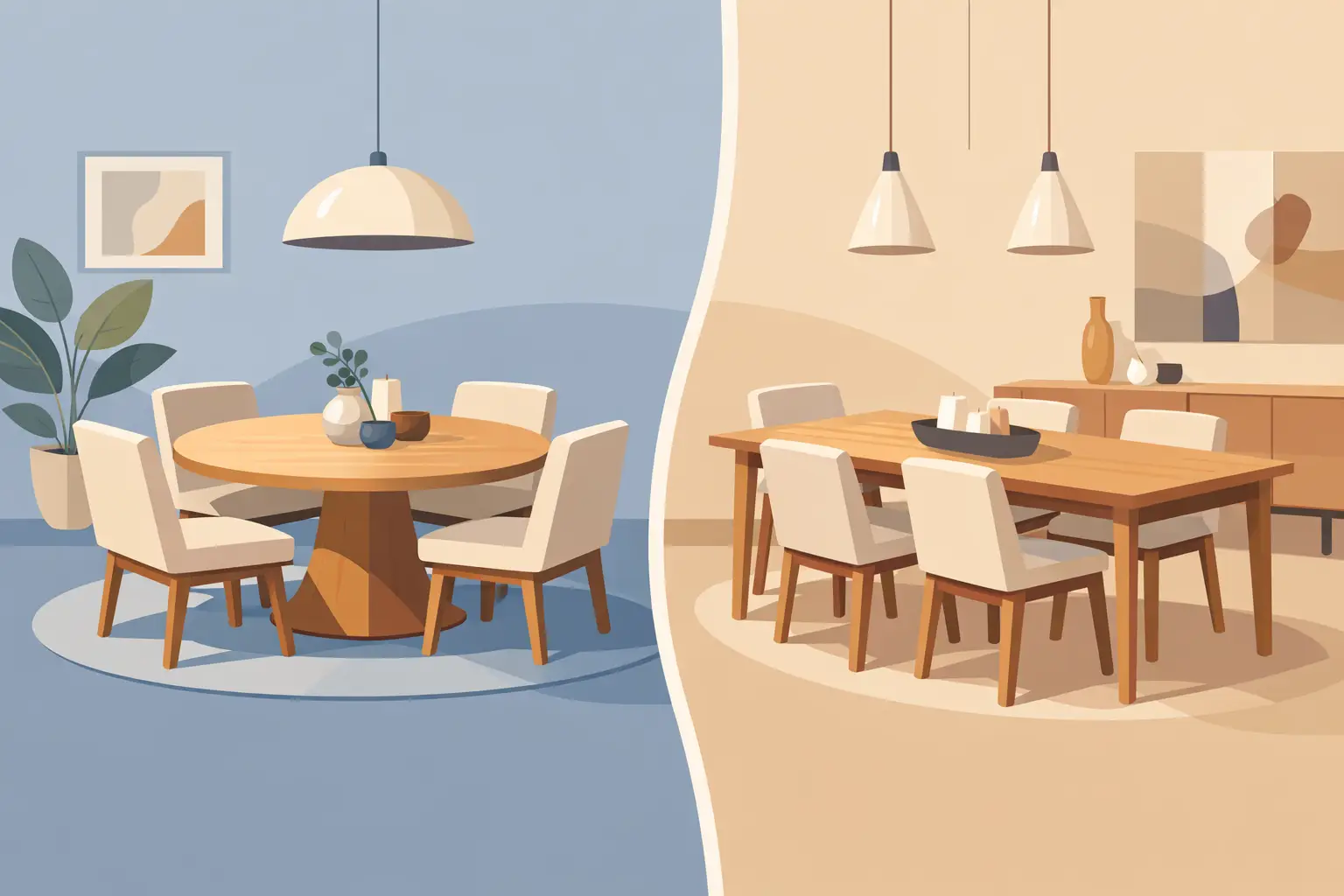
For some homes, a round table softens an open-plan kitchen and makes conversation feel easy. For others, a rectangular table gives the room structure, seats more people with less compromise, and suits the architecture better. Shape matters because it changes not just how a table looks, but how it lives in the space.
Round or rectangular dining table – what changes most?
The biggest difference is how each shape handles space and people. A round table is sociable by nature. Everyone faces one another, no one is stuck on a corner, and the room tends to feel more relaxed. This can work beautifully in a square dining area, a kitchen extension, or a family home where mealtimes are informal and frequent.
A rectangular table is more directional. It gives the room a visual spine and often feels right in longer spaces, particularly where the dining area runs alongside kitchen cabinetry, glazing or an island. It can read as more architectural and more formal, even when the styling is understated.
Neither is automatically better. The better shape is the one that suits your room dimensions, circulation and seat count without forcing the layout.
When a round dining table works best
Round tables are often the first choice when clients want a softer, more intimate dining setup. In practical terms, they are excellent for encouraging conversation. Everyone remains part of the same circle, which makes a noticeable difference when you are hosting friends or sitting down as a family each evening.
They also deal well with tighter spaces, but only when the room is proportioned correctly. A round table can make a compact dining zone feel less rigid because there are no sharp corners to dodge. In open-plan schemes, that softer footprint can help balance the hard lines of cabinetry, stone floors and steel-framed glazing.
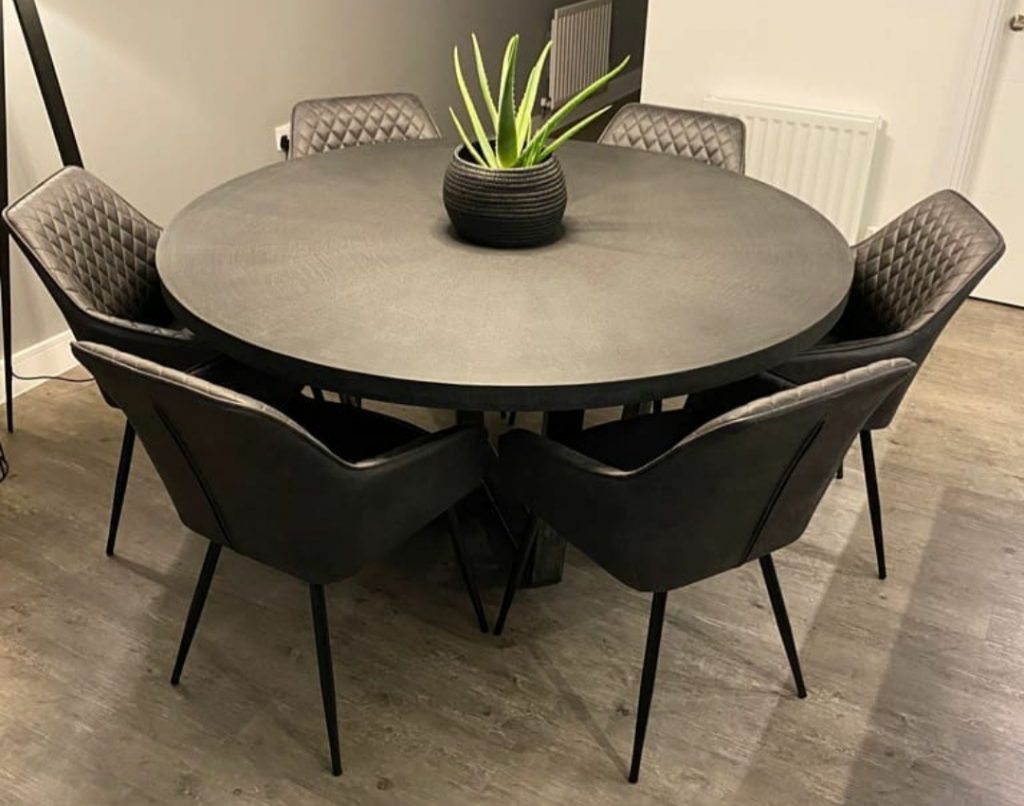
There is also a styling advantage. A circular top introduces contrast into rooms full of straight edges. If your kitchen is highly linear, a round polished concrete table can become the piece that stops the space feeling too severe.
That said, round tables are not always the most efficient use of floor area. Once you move beyond a certain size, they need more breathing room around them. A large round table can be stunning, but if the room is narrow rather than square, it may leave awkward dead space at the sides while still restricting movement.
When a rectangular dining table makes more sense
Rectangular tables remain the most versatile option for many British homes because they are naturally efficient. They fit long rooms well, they sit neatly in line with architecture, and they make it easier to seat larger numbers without increasing the footprint more than necessary.
If you regularly need six, eight or ten seats, a rectangular shape usually gives you more flexibility. You can seat people comfortably along the sides, keep generous place settings, and still maintain practical circulation around the table. For renovated family kitchens and open-plan extensions, that often matters more than the softer social feel of a round table.
Rectangular tables also tend to look more settled in spaces where the dining area has a clear orientation. If your table sits parallel to bifold doors, under a linear pendant, or between a kitchen island and a wall of joinery, a rectangular form often feels intentional rather than imposed.
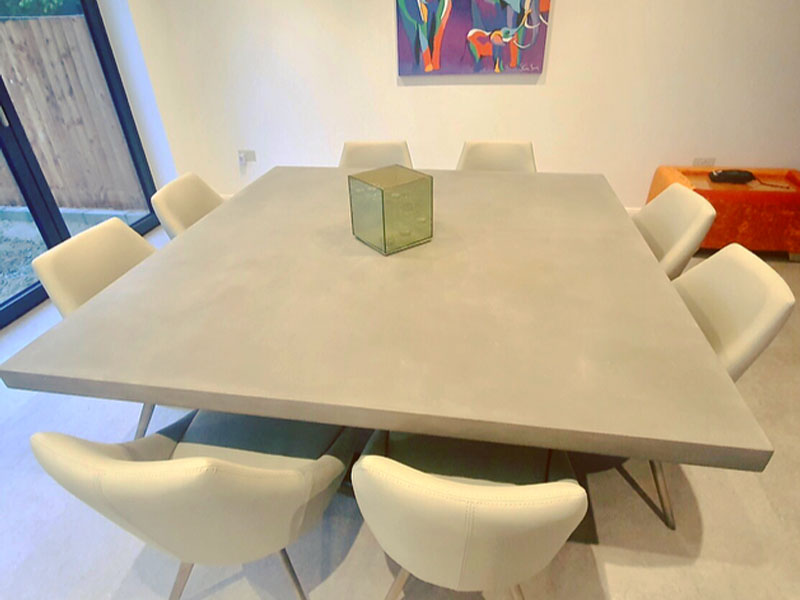
From a design point of view, this shape suits bold materials particularly well. A polished concrete rectangular table has presence. It reads as a centre piece, but it also feels grounded and architectural, especially when proportions, edge profile and leg style are tailored to the room.
The room shape should lead the decision
One of the simplest ways to choose between a round or rectangular dining table is to look at the room itself before looking at the furniture. A square room often welcomes a round table. A long room almost always favours a rectangular one.
That is not a hard rule, but it is a useful starting point. In a square space, a round table can feel balanced and calm. In a narrow room, it can become an obstacle. Likewise, a rectangular table in a compact square room may look oversized even when the measurements seem acceptable on paper.
Clearance matters as much as table size. You need enough space to pull chairs out comfortably and move around them without the room feeling pinched. This is where made-to-measure sizing becomes valuable. A table should suit the way the room is actually used, not just the dimensions listed on a product page.
Seating, hosting and everyday use
A lot of people choose with their eyes first, then realise later that guest numbers tell a different story. If you host often, or have a large family, shape needs to support that reality.
Round tables are generous in conversation but can become less practical as numbers rise. Once you reach larger diameters, place settings spread out and serving across the middle becomes less convenient. They are excellent for four to six in many homes, and sometimes more in the right room, but they are not always the strongest answer for frequent large gatherings.
Rectangular tables usually handle bigger numbers more naturally. They can be proportioned for six, eight, ten or beyond while still keeping the layout disciplined. For clients building a forever home with regular entertaining in mind, this shape often offers the best balance of comfort and impact.
There is also the question of daily life. Families tend to use their dining tables for far more than meals. Homework, working from home, coffee with neighbours, birthday cakes, packing parcels, Saturday papers. A rectangular table often gives clearer zones for all of that. A round one feels more communal, but sometimes less structured.
Style and material character
Shape is only part of the picture. Material changes how that shape reads.
A round table in timber can feel traditional or soft. The same shape in polished concrete feels more sculptural, cleaner and more contemporary. Likewise, a rectangular concrete table can look monolithic in one room and quietly refined in another depending on the finish, base and surrounding palette.
This is where bespoke design has a real advantage. Small adjustments in edge detail, tabletop thickness, surface tone and leg position can alter the whole feel of the piece. A rectangular table does not need to feel heavy. A round table does not need to feel casual. The right craftsmanship allows the table to sit comfortably within the architecture rather than competing with it.
In design-led homes, the best results usually come from considering the table as part of the wider interior composition. Flooring, lighting, sightlines and seating all play a role. The table should be practical, of course, but it should also feel as though it belongs.
A quick way to decide between the two
If your room is square, your seating needs are moderate, and you want a more intimate feel, a round table is often the stronger choice. If your room is long, your household is larger, or you want maximum seating efficiency, rectangular usually wins.
If you are still uncertain, mark the footprint on the floor and live with it for a few days. Walk around it. Open drawers, pull chairs back, imagine serving Sunday lunch, imagine children doing homework. The right answer often becomes obvious once you experience the space physically rather than theoretically.
For homeowners investing in a statement piece, there is another layer to consider. A dining table should not just fit the room. It should elevate it. That is why many clients come to Daniel Polished Concrete looking not for a standard answer, but for a table shaped, sized and finished specifically for their home.
Which shape usually feels more timeless?
Timelessness is often less about shape and more about proportion. A poorly sized round table will date a room faster than a well-proportioned rectangular one, and the reverse is equally true.
That said, rectangular tables tend to have broader architectural compatibility over time. They adapt easily to changing layouts and different chair styles. Round tables can feel more distinctive, which is exactly why many people love them, but they ask more of the room.
The safest choice is not always the most memorable one. If the space calls for a round table, choosing rectangular for the sake of convention can leave the room feeling flatter than it should. Good design is not about defaulting to familiar forms. It is about selecting the one that makes the whole room work harder and look better.
A dining table is used every day and noticed every time you enter the room. Choose the shape that gives your space ease, presence and the right kind of gathering point, and the rest of the interior tends to fall into place.