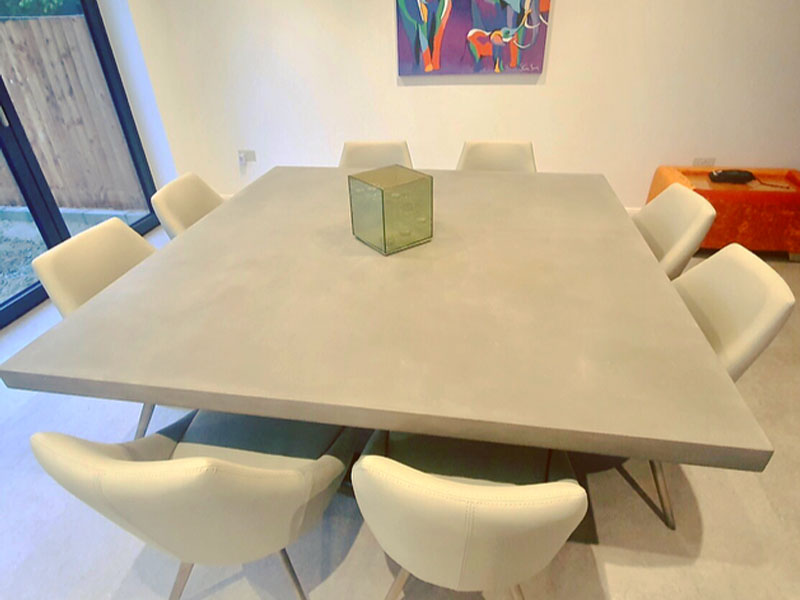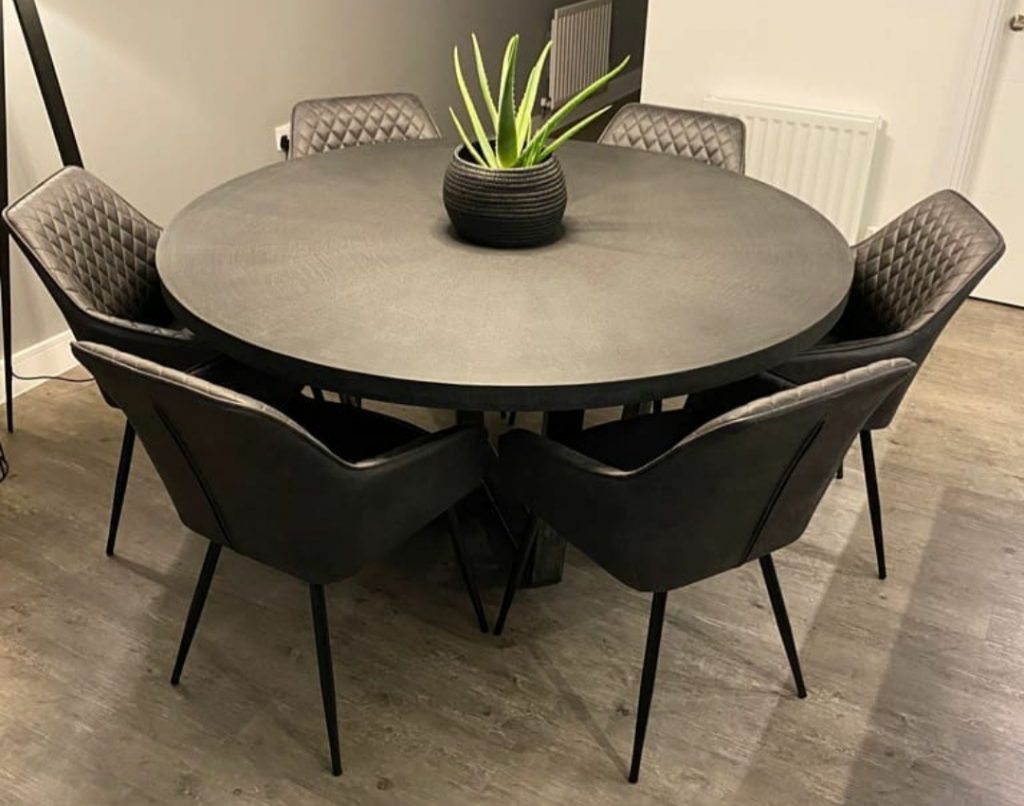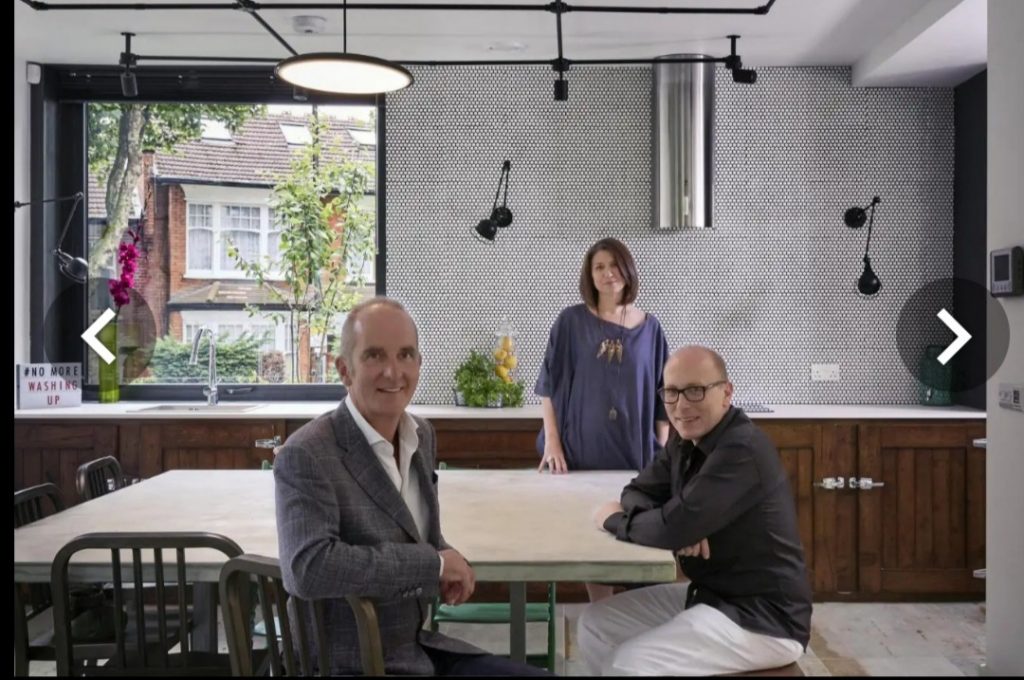

A beautiful concrete dining table should feel like the most assured piece in the room, not the one you are nervous to use. So, can concrete dining tables chip? Yes, they can, just as timber can dent and stone can crack. But a well-made, properly sealed polished concrete table is designed for real dining life, and chipping is uncommon when it is treated with sensible care.
The honest answer lies in how the table is made, where it is placed and how it is used. Concrete is a hard, mineral material with enormous visual presence, but it is not indestructible. Understanding that distinction helps you choose a statement centrepiece with confidence.
Can concrete dining tables chip at the edges?
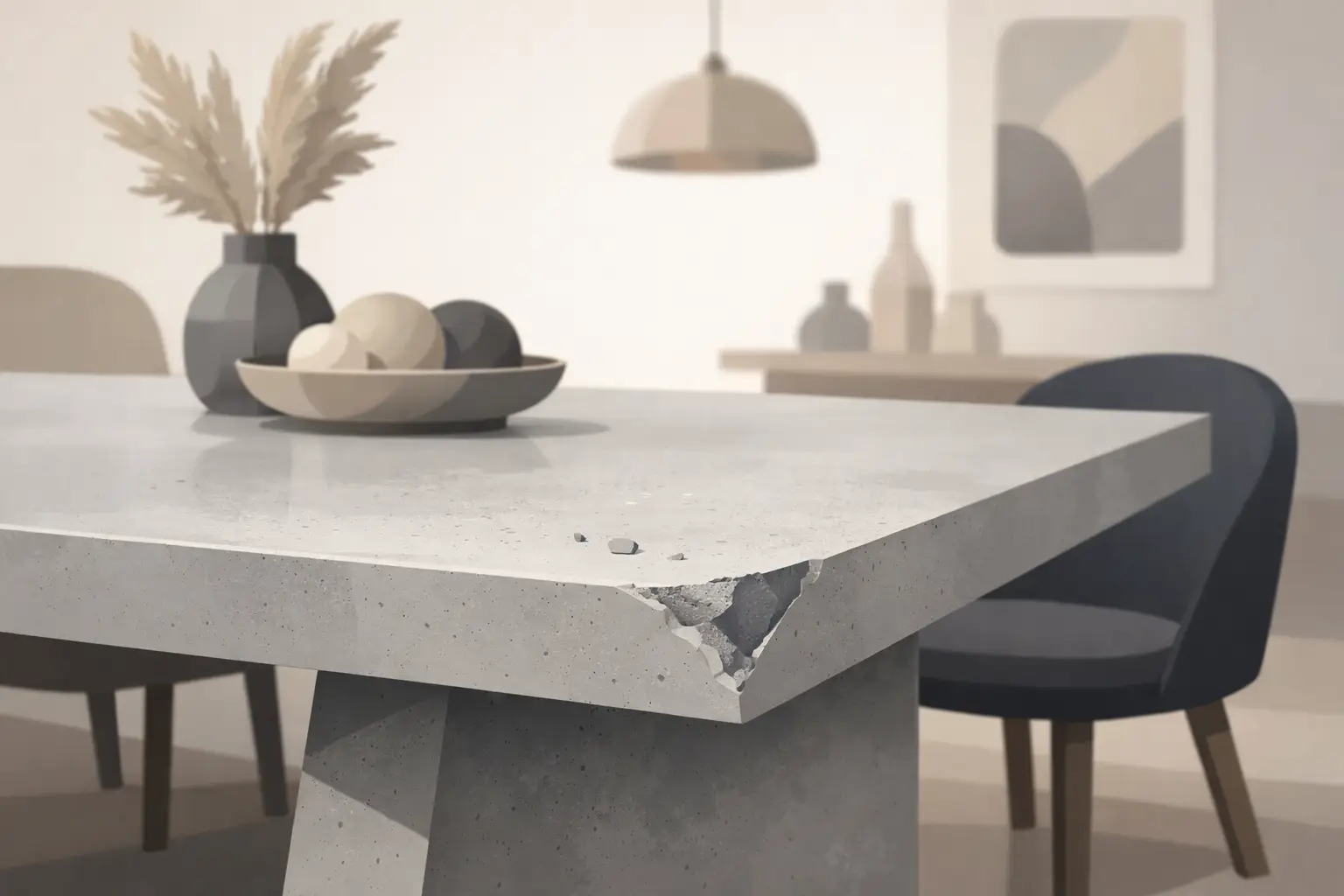
The edges and corners are the most vulnerable areas of any concrete table. A sharp blow from a heavy cast-iron pan, a dropped bottle or a hard object knocked into the corner can remove a small fragment of material. This is particularly true of a thin, crisp-edged design, where the visual delicacy of the profile naturally leaves less material at the very edge.
That does not mean a concrete table is fragile. A dining table made for the home should use a carefully formulated concrete mix, appropriate reinforcement and a hand-finished surface, then be protected with a quality sealer. These details make a considerable difference to the table’s everyday resilience.
It is also worth remembering that a chip is not the same as a surface mark. Concrete has a naturally varied, tactile character. Fine pinholes, subtle tonal movement and slight changes in texture are part of the material’s appeal, not signs that something has gone wrong. A genuine chip is a localised impact damage, usually caused by a distinct hard knock.
What makes chipping more or less likely?
The quality of manufacture comes first. Furniture-grade polished concrete is not simply a paving mix poured into a mould. It needs to be engineered for a relatively slim table top, reinforced appropriately and finished with close attention to the corners, underside and edges. The curing process matters too. Concrete continues to gain strength as it cures, and rushing this stage is never a shortcut worth taking.
The table profile also affects its tolerance for impact. A softly eased edge can be more forgiving than an extremely sharp square corner. Neither is automatically better. A sharp profile suits a crisp, architectural kitchen, while a gently rounded edge has a softer, more relaxed feel and can be a practical choice for a busy family home.
Weight and support matter just as much. Concrete dining tables are substantial pieces of furniture. A correctly designed base, secure fixing points and a level floor help prevent movement that could place unnecessary stress on the top. This is why delivery and installation are part of the service, rather than an afterthought.
Finally, consider the setting. A table in a calm dining room used for evening meals faces a different life from one at the heart of an open-plan kitchen, where school bags, serving dishes, laptops and weekend entertaining all meet. Both are suitable environments for concrete, but the latter benefits from a little more awareness around corners and heavy cookware.
Polished concrete is hard-wearing, not invincible
There is a misconception that concrete should be treated like an outdoor paving slab. In reality, a polished concrete dining table is a finely made interior furniture piece. Its strength is its calm, grounded solidity, but it should not be used as a chopping block, a workbench or somewhere to drop heavy objects.
Normal use is exactly what it is made for: plates, glasses, laptops, family meals, flower vases and generous serving platters. With a good protective finish, the surface is designed to resist everyday spills and make cleaning straightforward. It will also develop a degree of lived-in character over time, much like a timber table or natural stone worktop.
A few simple habits protect the finish without making the table feel precious. Lift rather than drag heavy ceramic bowls and decorative objects. Use trivets beneath very hot pans. Put felt pads under substantial centrepieces or lamps. Avoid banging chairs into exposed corners when moving around the table, especially in tighter dining spaces.
For cleaning, a soft cloth and mild, pH-neutral cleaner are usually all that is needed. Abrasive pads, harsh chemical cleaners and acidic products can compromise the sealer, leaving the surface less protected over time. Wiping up wine, oil, citrus and strongly coloured foods promptly is good practice, not because the table cannot cope with a family supper, but because it preserves the finish at its best.
If a concrete table does chip, can it be repaired?
In many cases, yes. Small chips can often be repaired with a colour-matched cementitious repair material or resin-based system, then carefully blended and resealed. The success of a repair depends on the size and position of the damage, the table’s colour and finish, and whether the exposed area is an edge, corner or flat surface.
Concrete is intentionally individual, so a repair should be approached with realistic expectations. A skilled repair can make a small chip far less noticeable and restore protection to the affected area, but it may not disappear with the absolute uniformity of a factory-coated surface. This is especially true on a heavily mottled or richly coloured finish, where the natural variation is part of the design.
For this reason, it is best not to reach immediately for household fillers or DIY paint. The wrong product can leave a patch that is glossier, flatter or a different shade from the rest of the top. Photograph the damage clearly and seek advice before attempting a repair. A considered solution is always preferable to a quick fix that becomes more visible than the original chip.
Choosing a table that suits your household
The right design can make everyday ownership feel effortless. If you have young children, frequent large gatherings or a lively kitchen-diner, discuss this from the start. A subtly softened edge, a less exposed corner arrangement or a table shape that improves circulation can all make a practical difference while retaining the urban design character that makes concrete so striking.
Bespoke work is especially valuable here. A table can be sized precisely for the room, leaving enough space to pull out chairs without clipping the corners. The finish, colour, top thickness and leg style can be chosen as one considered composition, rather than forcing a standard piece into an awkward space.
For homeowners who want a faster route, a well-proportioned six, eight or ten-seater design can still offer the same material confidence and visual impact. The essential point is to choose a table built as furniture by a concrete specialist, not an object that merely borrows the look of concrete.
The character of a table worth living with
A polished concrete dining table earns its place through more than toughness. It brings visual weight without visual fuss, anchoring an open-plan kitchen or dining room with a surface that feels architectural, tactile and completely individual. Tiny variations in tone and texture make each piece personal, while its quiet neutral palette works beautifully with oak, black steel, linen, leather and contemporary cabinetry.
At Daniel Polished Concrete, every table is hand-finished with that balance in mind: a stunning centrepiece with the strength for everyday use, and the character to become more familiar and loved over the years. Treat it as you would any premium material, with a little care around hard impacts and strong cleaners, and it will remain an exceptionally capable place for daily life.
If your dining table will be the setting for slow Sunday lunches, busy family suppers and celebrations that run late, choose the shape, edge detail and finish that suit the way your household actually lives. That is where a concrete table becomes not just durable furniture, but a piece made to belong.