

A dining table can look perfect in a showroom and still feel wrong the moment it arrives at home. It is too narrow for the room, too bulky near the island, or just not quite right against the flooring, lighting and cabinetry you have spent months choosing. That is exactly where a made to measure dining table earns its place. It is not simply about changing a few dimensions. It is about creating a piece that belongs in the room from every angle.
For many of our clients, the table is the anchor of an open-plan kitchen or dining space. It needs to hold its own visually, seat people properly, and cope with daily life without feeling ordinary. Off-the-shelf furniture can work when the room is straightforward. But when you are designing around a renovation, a forever home, or a space with a strong architectural identity, standard sizing often asks you to compromise in places you notice every day.
What a made to measure dining table really solves
The biggest advantage of a made to measure dining table is precision. Not just the obvious question of length and width, but how the table sits in relation to walkways, glazing, pendant lighting and surrounding furniture. A few centimetres can be the difference between a room that feels generous and one that feels awkward.
This matters even more in British homes, where layouts are rarely as simple as a blank rectangle. You may be working with bifold doors on one side, a kitchen island on the other, and enough space needed for chairs to pull out comfortably without disrupting the flow of the room. In that setting, buying from standard retail dimensions can become a process of settling rather than choosing.
A bespoke table also solves visual proportion. A large room can swallow a table that looked substantial online, while a compact space can be overwhelmed by heavy shapes or thick detailing. Made to measure allows you to tune not only the footprint but the overall presence of the piece. That is often what gives a dining table its calm confidence.
Why material choice matters as much as size
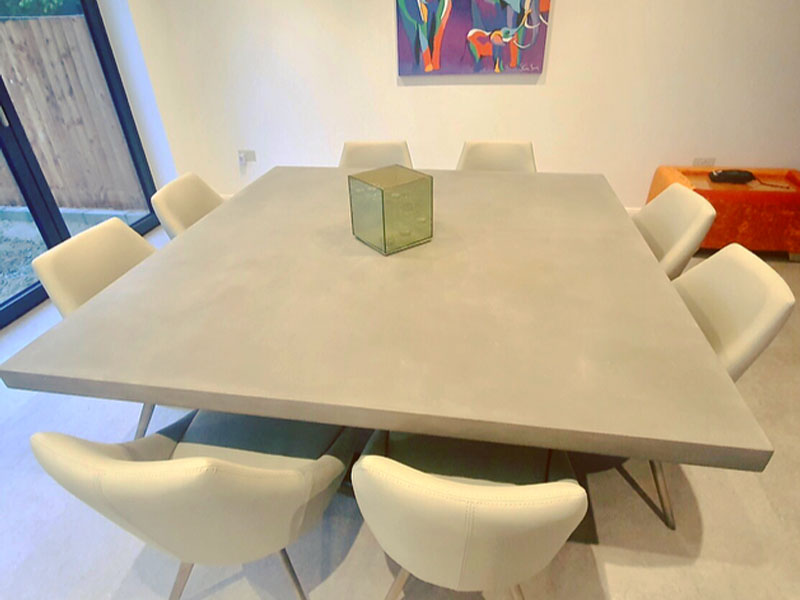
A table made specifically for your room should do more than fit. It should bring character. That is where polished concrete stands apart. It has a quiet architectural quality that feels grounded and contemporary without trying too hard. In the right interior, it becomes a stunning centre piece, but one with real substance behind it.
There is also a practical reason polished concrete suits dining spaces so well. Families want a surface that can handle regular use, dinner parties, homework, morning coffee and the general pace of everyday life. A hand-finished polished concrete top offers durability, stain resistance and a solidity that lighter, more delicate materials cannot always match.
That does not mean it is the right choice for every household or every scheme. If you want a table you can move around regularly, concrete is not pretending to be featherlight. Its strength and presence are part of the appeal. For clients who want permanence, craftsmanship and a more sculptural feel, that is usually a benefit rather than a drawback.
Designing a made to measure dining table for your room
The best bespoke pieces start with the room, not the catalogue. Before thinking about finishes or leg styles, it helps to be clear on how the table will actually be used. Do you need six seats every day and ten at Christmas? Is the table mainly for family meals, or do you host regularly? Do you want the table to echo the clean lines of a new extension, or soften them with a gentler shape?
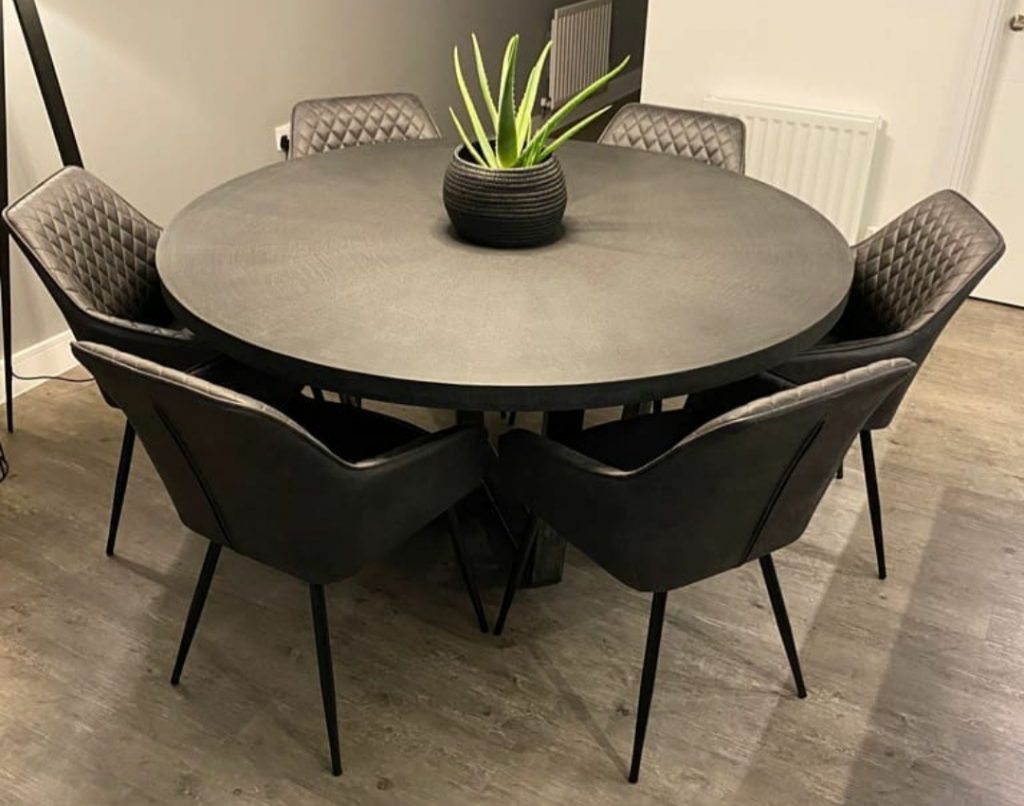
Shape is often underestimated. Rectangular tables remain the natural choice for many larger spaces because they maximise seating and sit neatly with kitchen architecture. But softer forms can work beautifully where circulation is tight or where the room would benefit from a less rigid feel. Rounded corners, oval tops and slightly narrower proportions can all make a large table feel more relaxed.
Base design matters too. A striking tabletop deserves a leg style that supports the look without making seating awkward. Pedestal and central base options can be excellent when flexibility is needed, while more angular metal frames bring a sharper urban design edge. The right choice depends on whether visual lightness, maximum leg room or a stronger industrial statement matters most in your space.
The details that turn bespoke into personal
When people hear bespoke, they often think only of dimensions. In practice, the most satisfying made to measure dining table projects are shaped by a combination of decisions. Colour tone, surface finish, edge profile and base style all affect how the final piece sits within the room.
Concrete is especially rewarding here because it has natural variation and depth. One client may want a lighter tone that keeps the room feeling airy, while another wants a darker, moodier finish to ground a dramatic interior. Some prefer a refined, understated surface. Others want more movement and texture so the table reads as clearly handcrafted rather than factory-flat.
That level of personalisation is what gives bespoke furniture its lasting appeal. Years later, the piece still feels considered because it was not chosen from a trend cycle. It was built around your home, your layout and your taste.
Bespoke or standard collection – which is right?
Not every project needs a fully custom route. If your room suits established six, eight or ten seater dimensions, a standard collection can be an excellent choice. It usually offers stronger price efficiency and a quicker path from order to delivery, while still giving you the benefit of specialist craftsmanship and a distinctive material.
Bespoke comes into its own when the room has constraints, when you need a particular seating capacity, or when the design brief is more exacting. That might mean a narrower width to preserve circulation, a larger format for entertaining, or a very specific finish to sit alongside joinery, flooring or lighting. The right answer depends on whether standard sizing truly fits your space or only almost fits it.
There is no virtue in customisation for its own sake. The aim is not to make the process more complicated. The aim is to produce a table that feels resolved.
What to expect from a consultation-led build
A good bespoke process should feel clear and reassuring from the outset. You are not expected to arrive with technical drawings and all the answers. In most cases, it begins with the room dimensions, a sense of style and a conversation about how the table will be used.
From there, the practicalities can be worked through properly. Seating numbers, shape, finish, base style, access for delivery and installation all need careful thought. This is especially important with substantial furniture pieces, where the route into the property is just as relevant as the final dimensions in the room.
That is one reason an owner-led specialist approach matters. When you are commissioning a statement piece, you want direct advice from someone who understands both the material and the realities of making it work in a lived-in home. At Daniel Polished Concrete, that conversation is central to the process. It keeps the project personal, grounded and properly tailored.
A made to measure dining table as a long-term investment
People often compare bespoke furniture to mass-market pricing and stop there. A more useful comparison is value over time. A made to measure dining table is not trying to be a quick furnishing fix. It is intended to stay, to age well and to remain relevant as the house evolves around it.
That matters in homes where the dining area is used every day and seen from multiple viewpoints. A statement table has to justify itself not just on day one, but five years later when family life, entertaining and daily routines have all left their mark. Materials, workmanship and proportion make the difference between a piece that still feels special and one that simply takes up space.
The strongest bespoke tables do something quite rare. They combine visual impact with ease of use. They look distinctive, but they also work hard.
If you are already investing in the wider room, from cabinetry to flooring to lighting, it makes sense to give the table the same level of thought. The right one does not just fill the gap in the middle. It gives the space its centre of gravity.