
A polished concrete dining table should feel substantial when you take your seat, but never so heavy in appearance that it overwhelms the room. Selecting concrete table thickness is therefore about far more than a measurement. It is the point where architectural style, the table’s scale, its base design and the way your family lives around it all come together.
For a compact kitchen diner, a slimmer profile can create a crisp, contemporary line. In a generous open-plan room, a deeper concrete top may be exactly what gives a large table the presence it deserves. The right choice is the one that looks considered from every angle and feels in proportion with the space around it.
Why concrete table thickness changes the whole design
Concrete has a visual weight unlike timber, glass or ceramic. Its gentle tonal variation, hand-finished surface and solid character make even a simple rectangular table feel like a true centre piece. Thickness amplifies or softens that effect.
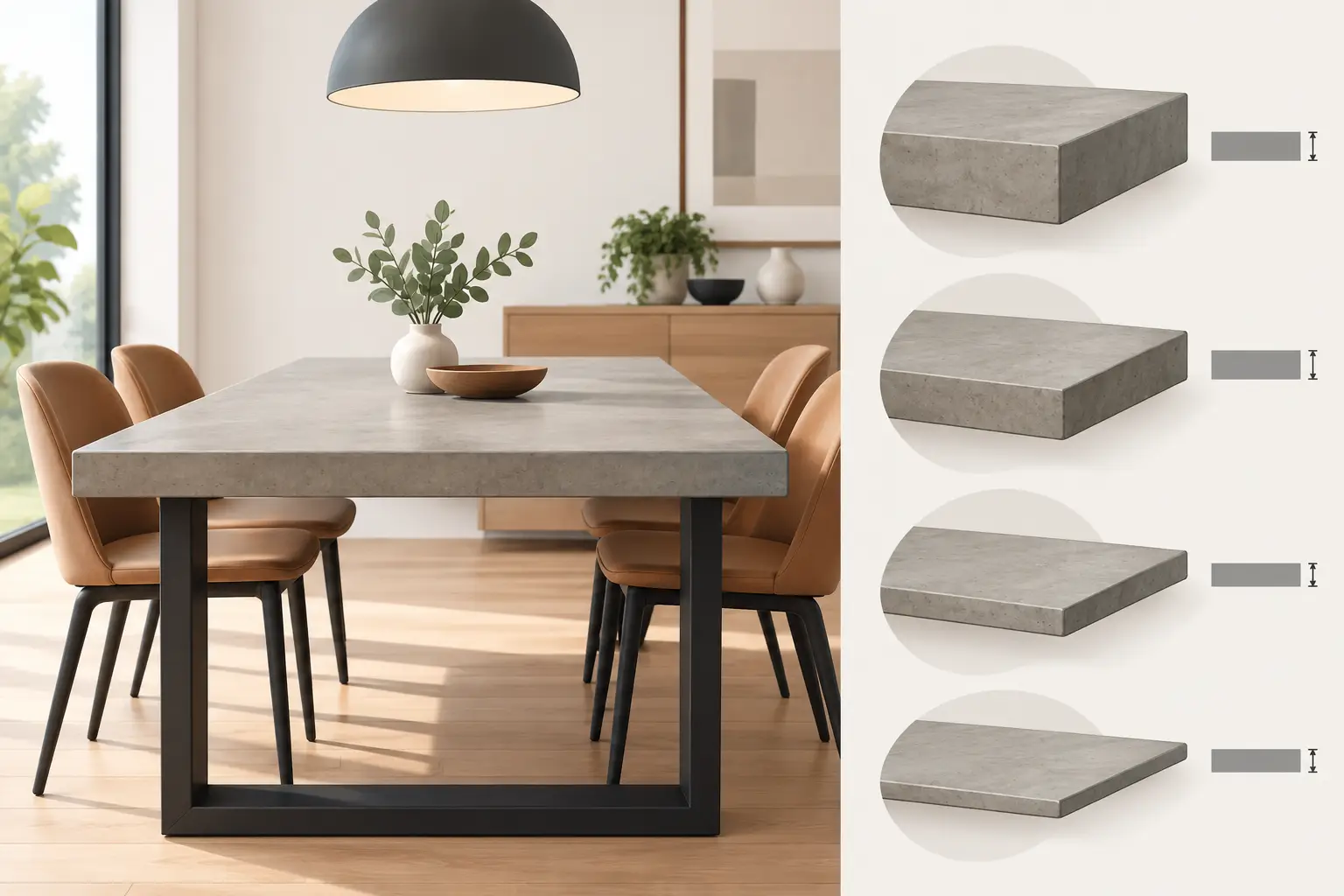
A thinner top gives a table a more refined, almost floating quality, particularly when paired with slim steel legs. A thicker top makes a stronger statement. It suits interiors with exposed brick, large-format flooring, industrial detailing or generous architectural volumes, where the dining table needs to hold its own.
Neither approach is automatically better. A table top that looks beautifully slim at 180 cm long may feel underpowered at 300 cm. Equally, a deep profile on a smaller table can crowd the chairs and make a modest dining area feel visually busy. Proportion is the deciding factor.
Selecting concrete table thickness by table size
The larger the span, the more carefully thickness and support need to work together. This is not simply about strength. A long polished concrete table needs to look composed, with a top and leg arrangement that feels intentional rather than over-engineered.
Six-seater tables
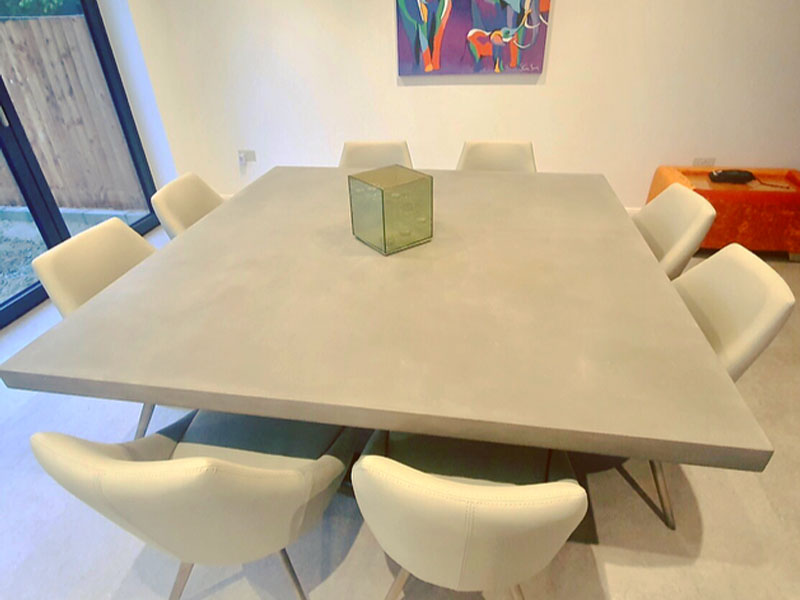
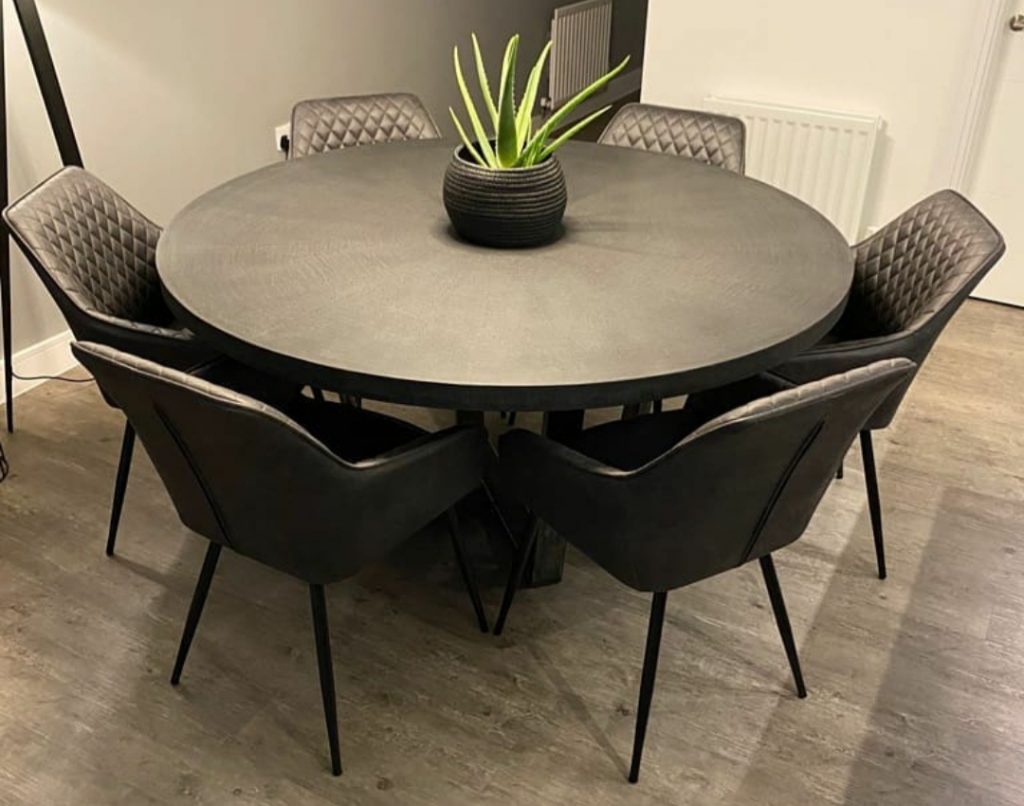
For many six-seater dining tables, a slimmer concrete profile creates an elegant balance. These tables are often placed in kitchen extensions, bay-fronted dining rooms or open-plan spaces where sightlines matter. Keeping the profile restrained helps the table feel sculptural without becoming dominant.
The base matters just as much here. A slim top over chunky legs can feel top-heavy in reverse, while a more substantial top can work very well with a simple, finely detailed metal frame. The aim is a visual conversation between the top, the legs and the chairs, rather than one element shouting above the others.
Eight and ten-seater tables
At eight or ten seats, the table becomes a major piece of furniture. It may be the first thing guests see when they enter the room, and it needs enough visual presence to anchor the setting. A slightly deeper profile often suits this scale, especially if the table is wide or has a bold base design.
This is also where the view across the room counts. In an open-plan kitchen, the table may be seen from the island, the sofa and the garden doors. A well-proportioned edge gives it definition from those longer viewpoints, making the concrete surface read as a purposeful architectural plane rather than a flat slab.
Large bespoke tables
For 12-seater tables and long statement commissions, thickness should never be chosen in isolation. The length, width, base position, overhang and access route all need to be considered together. A broad table with a generous length may call for a bolder edge, but the support beneath must remain comfortable for diners and practical for chairs.
This is where bespoke design pays off. Rather than forcing a standard profile onto an unusual room or family requirement, the dimensions can be resolved as one complete piece. The result is a table that looks right in photographs, certainly, but more importantly feels right when everyone is gathered around it.
Consider the legs before choosing the top
The leg style has a major influence on which concrete thickness will look best. Many people begin with the surface colour or the desired length, then realise later that the base changes the entire character of the table. It is worth making that decision early.
A clean, angular steel frame can carry a slim, modern top beautifully. A central pedestal base may allow a more generous edge because the uninterrupted top becomes the visual focus. Trestle-style legs can suit both directions, depending on their scale and how far they sit in from each end.
Practical clearance matters too. A dining table must work when chairs are pulled out, when someone sits at the end and when the table is fully occupied for Sunday lunch. With a substantial top, the underside height should still leave comfortable room for legs. This is one reason a made-to-measure table feels so different from a generic design: the proportions are resolved for real use, not just showroom appeal.
The room sets the proportion
A concrete table does not need to match every finish in the room. Its appeal often lies in contrast: soft upholstered dining chairs against a cool mineral surface, warm oak cabinetry beside charcoal concrete, or plaster walls framing a pale polished top. Yet thickness should relate to the room’s existing visual language.
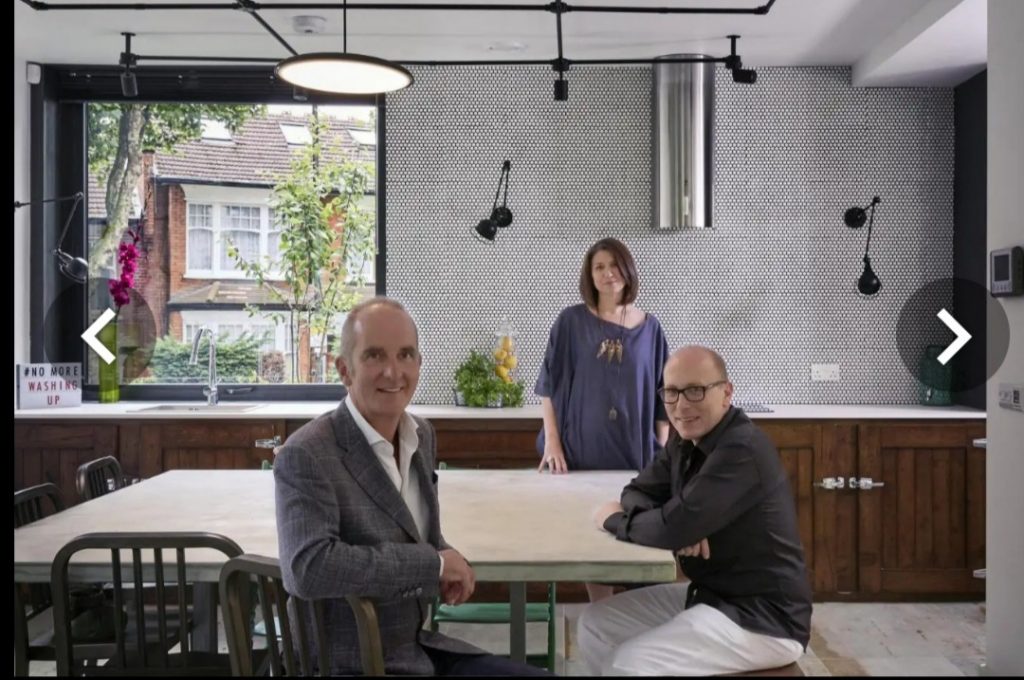
In a minimal space with fine-framed glazing and handleless cabinetry, a slimmer profile can echo those precise lines. In a converted barn or a home with deep timber beams, broad door surrounds and layered materials, a thicker concrete edge may feel more settled.
Look also at what sits nearby. A substantial kitchen island, large pendant lights or a deep window reveal can support a more assertive table. If the room is already full of strong forms, a lighter-profile top can bring calm. Good interior decisions are often about giving each element enough room to be noticed.
Thickness, durability and daily life
A common assumption is that a thicker concrete table is automatically more durable. In practice, long-term performance comes from skilled construction, reinforcement, curing, finishing and sealing, as well as sensible proportions for the design. A beautifully made polished concrete top can be suitable for everyday family meals, homework, serving dishes and entertaining without needing to look excessively heavy.
The finished edge also affects how the table lives. A carefully hand-finished profile softens the feel of the concrete and gives the piece a considered, furniture-grade quality. The surface retains its authentic character, including subtle movement in tone and texture, while being designed for practical dining use.
It is sensible to be honest about the material. Concrete is not pretending to be factory-perfect laminate. Its character is part of its appeal, and small variations make each table individual. A table selected with the right thickness will wear its character with confidence, rather than rely on ornament to make an impression.
Do not forget delivery and installation
A larger or deeper concrete top has implications beyond the dining room. Before finalising the design, think through the route from vehicle to room: gates, steps, hallways, turns, stairwells and finished flooring all matter. The same applies to tables destined for upper-floor flats or properties with restricted access.
This should not limit a good design prematurely. It simply means access needs to form part of the conversation from the start. With a bespoke commission, the design, logistics and installation can be planned around the realities of your home, protecting both the table and the space it is arriving into.
A useful way to make the decision
Begin with the dimensions your room genuinely allows, including enough space to move around seated guests. Then consider the number of people you want to seat most often, not only on special occasions. From there, choose the base style and decide whether you want the table to recede slightly into the scheme or become its defining feature.
Bring photographs, floor plans and inspiration images to the discussion if you have them. They reveal details that measurements alone cannot: the scale of your kitchen island, the shape of your chairs, the height of nearby joinery and the mood you want the room to hold. At Daniel Polished Concrete, these are the practical and aesthetic details that turn an idea into a table made specifically for its setting.
The best thickness is rarely the thickest or the thinnest option. It is the one that makes a hand-finished concrete table look completely at home in your space, ready for quiet weekday suppers as much as the celebrations that fill every seat.