
The old idea of a dining table as a background piece has gone. In the most considered homes, luxury dining furniture trends are moving towards furniture that sets the tone for the whole room – not just visually, but in how the space is used every day. For households investing in kitchen extensions, open-plan living and long-term family homes, the dining area now needs to feel architectural, personal and practical in equal measure.
That shift matters because premium buyers are asking more from one piece of furniture. A dining table has to anchor the room, suit the proportions exactly, stand up to daily use and still feel special when friends arrive on a Saturday evening. The strongest trends are not really about novelty. They are about permanence, material honesty and furniture made with enough confidence to hold its own in a beautifully designed interior.
Luxury dining furniture trends are becoming more architectural
One of the clearest changes in recent years is the move away from lightweight, purely decorative dining sets and towards pieces with real presence. Homeowners are choosing tables with a stronger silhouette, sharper geometry and a more sculptural quality. That does not always mean bulky. It means intentional.
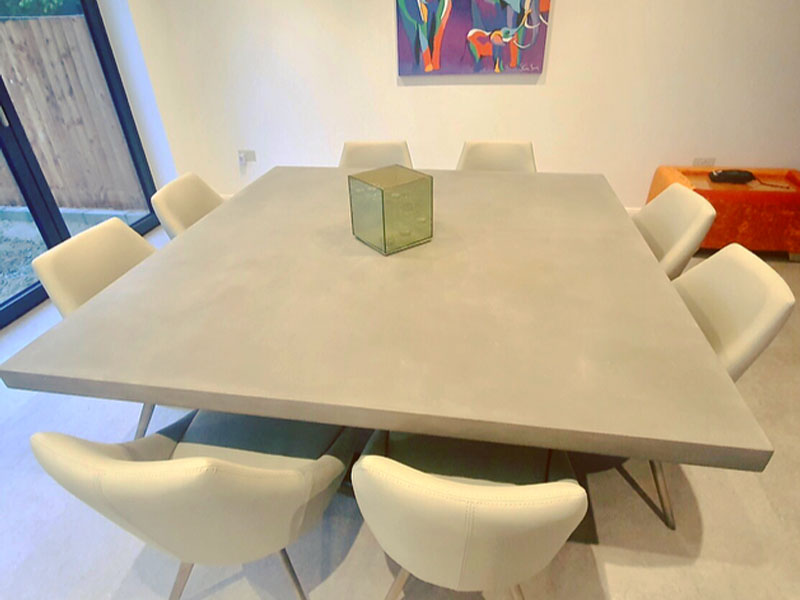
You can see this in the growing appetite for monolithic tops, bold pedestal bases and designs that read almost like built-in architecture. In open-plan spaces especially, the dining table is often visible from the kitchen, sitting area and hallway all at once. It needs to look resolved from every angle. A well-made table with clean lines and a substantial top gives a room gravitas without relying on ornament.
This is where material choice becomes central. Timber still has its place, particularly when warmth is the priority, but many buyers now want contrast – something cooler, more contemporary and less expected. Concrete, natural stone and mixed material combinations answer that brief well, especially when the finish is refined rather than raw.
Bespoke scale is replacing one-size-fits-all luxury
True luxury rarely feels generic. One of the defining luxury dining furniture trends is the move towards made-to-measure sizing and tailored specification. Homeowners are no longer willing to compromise on a table that is almost right. If the room needs 240cm rather than 220cm, or a narrower width to improve circulation around an island, bespoke matters.
This is particularly relevant in British homes, where room layouts can be awkward in the best possible way. A Victorian renovation, a contemporary extension and a barn conversion all ask for different proportions. Standard sizes work well for many spaces, but when a table is intended to be the centre piece of the room, precision changes everything. The right dimensions improve balance, comfort and flow.
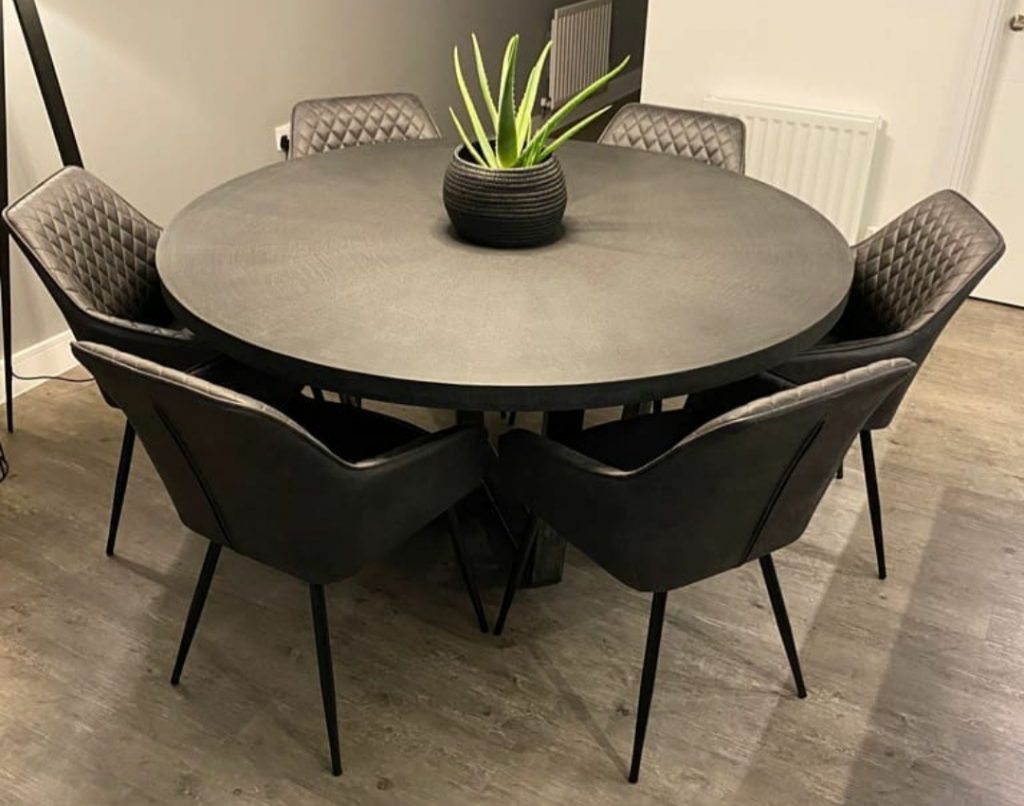
Shape is part of that conversation too. Rectangular tables remain the most popular for larger households, yet oval and racetrack forms are gaining ground because they soften angular rooms and make generous tables feel less formal. Round tables continue to suit compact dining areas, though they are often chosen now in larger diameters to create a more sociable feel. The best choice depends on the architecture, the number of seats needed and how the room is used day to day.
Tactile finishes are overtaking glossy perfection
Luxury has become more tactile. Rather than pursuing a high-shine, flawless showroom look, many buyers prefer surfaces with depth, texture and subtle variation. That does not mean rough or unfinished. It means hand-finished materials that show character without sacrificing refinement.
This is one reason polished concrete has found such a strong place in premium dining furniture. It offers a smooth, sophisticated surface with natural tonal movement and a distinctly architectural feel. No two pieces are exactly the same, which appeals to buyers who want originality rather than a mass-produced imitation of luxury.
There is also a wider move towards matte and low-sheen finishes across interiors. Kitchens are less glossy than they once were, wall colours are softer and more mineral, and dining furniture is following suit. A muted finish tends to sit more comfortably within a carefully designed room. It catches the light gently and allows the form of the table to do more of the work.
The practical side of luxury matters more than ever
A premium table still has to earn its keep. One of the more sensible luxury dining furniture trends is the refusal to separate beauty from performance. Families spending serious money want the statement piece, but they also want reassurance. Can it handle weekday breakfasts, homework, dinner parties and the odd dropped glass? Will it still look right in five or ten years?
That is why durability has become part of the design brief rather than an afterthought. Buyers are asking more informed questions about stain resistance, sealing, edge strength and long-term maintenance. Hard-wearing surfaces are especially attractive in open-plan homes where the dining table does heavy daily use rather than occasional entertaining.
This is where specialist craftsmanship tends to outperform trend-led retail. A handcrafted table made by a maker who understands the material, the base engineering and the finish system will usually offer better long-term confidence than something chosen for appearance alone. Luxury should feel reassuring, not precious.
Mixed materials are adding warmth and balance
While bold, sculptural tables are on the rise, the most successful schemes rarely rely on one note. Another strong direction in luxury dining furniture trends is the use of contrasting materials to create balance. A cool concrete top paired with a dark metal or timber base, for instance, can feel more layered and more at home in a lived-in interior than a matching set trying too hard to coordinate.
This matters because many premium homes now combine clean modern architecture with softer domestic touches. You might have polished plaster walls, oak flooring and a calm neutral palette, but still want a dining table with edge. Mixed materials help bridge those elements. They stop the room from becoming too stark while preserving the confidence of a contemporary scheme.
Chair selection is following a similar pattern. Fully matching dining sets feel less current than they once did. Upholstered chairs, textured fabrics and darker frames are often used to bring warmth around a more substantial table. The overall look is less showroom, more collected.
Bigger tables are returning, but with a lighter touch
Entertaining at home is still shaping furniture choices. Many clients are looking for 8, 10 and even 12 seater tables, especially in newly extended kitchens and family dining spaces. The difference now is that large-scale furniture is being designed with more elegance. Instead of oversized carved bases and overly formal detailing, the preference is for generous dimensions paired with clean profiles.
That lighter touch is important. A large dining table should feel impressive, but it should not overwhelm the room or make movement awkward. Careful edge profiles, considered leg placement and the right top thickness all affect how visually heavy a piece appears. This is another area where bespoke design pays off. The proportions can be tuned to the room rather than guessed from a product listing.
For households who host regularly, seat count is only one part of the equation. Comfort around corners, legroom at the ends and enough clearance for dining chairs all matter. Luxury is often found in those practical details.
Statement furniture is becoming more personal
Perhaps the most interesting shift is that statement design now feels less performative and more individual. Buyers are not simply chasing whatever is fashionable on social media. They want furniture that reflects their home, their taste and the way they live. That might mean a softer concrete tone to complement limewashed cabinetry, a custom leg design to echo other architectural details, or a table length chosen around a specific room axis.
This is where craft-led makers have a clear advantage. A consultation-led process allows for discussion around dimensions, finish, base style and use, so the final piece feels integrated rather than imposed. For a centre piece dining table, that difference is significant. It turns a strong design into the right design.
At Daniel Polished Concrete, that is often the point where a table stops being just another furniture purchase and becomes part of the home’s identity. The appeal is not only the visual impact. It is the knowledge that the piece has been made by hand, with care, for one specific space.
What these trends mean for buyers now
If you are investing in a premium dining table, the current direction is clear. Choose substance over novelty. Look for materials with depth, proportions that suit the room properly and finishes that are beautiful because they are honest, not because they are overworked. Think about how the table will look from across the kitchen, how it will perform on a busy Tuesday, and whether it still feels relevant once quick trends have passed.
The best luxury dining furniture trends are not really trends in the throwaway sense. They are signs that buyers are choosing better, more permanent pieces with character, durability and purpose. If your dining space is the heart of the home, it deserves furniture with the same level of thought built into it.