
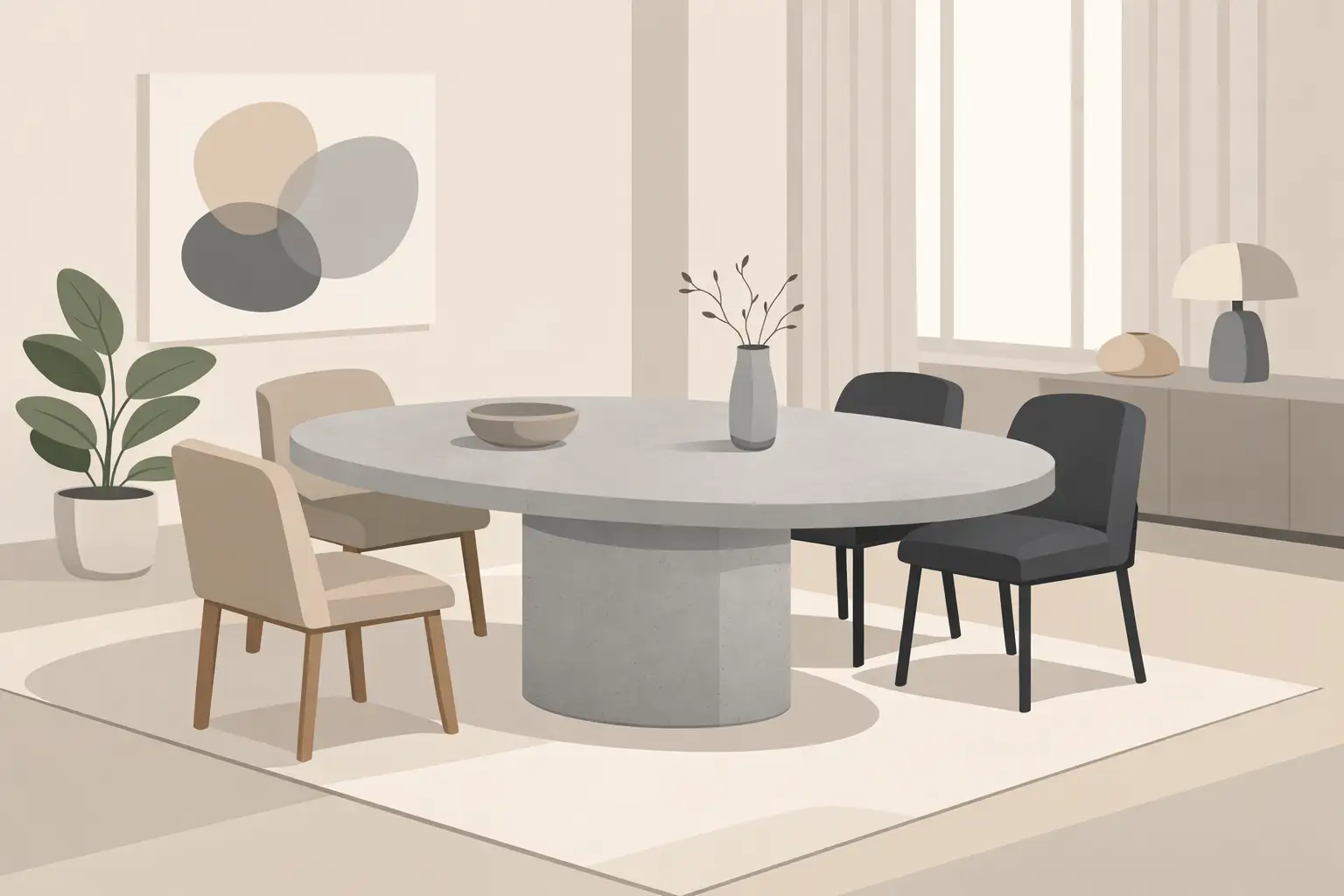
A rectangular table can feel a little strict in an open-plan room. A round one is sociable, but not always practical when you need to seat more people. An oval concrete dining table sits in that sweet spot – softer in profile, generous in use, and striking enough to anchor the whole space without shouting for attention.
For homeowners designing a forever kitchen or refining a large dining area, that balance matters. You want a piece with presence, but it still has to work on a Tuesday night with homework, plates, glasses and real family life. Concrete, when it is properly crafted and hand finished, offers exactly that mix of architectural character and day-to-day performance.
What makes an oval concrete dining table work so well?
The shape does a great deal of the heavy lifting. An oval table softens a room that might otherwise be full of straight runs – kitchen islands, bifold frames, cabinetry and long walls. It introduces movement and flow, which is especially useful in open-plan layouts where circulation around the table needs to feel easy rather than forced.
There is also a practical reason people are drawn to the oval form. You get more usable length than a round table, but without the sharper corners of a rectangle. In family homes, that can make the room feel calmer and safer. In design terms, it gives you a centre piece that looks sculptural from every angle.
Concrete adds another layer to that appeal. The material has depth, subtle variation and a tactile quality that mass-produced dining furniture struggles to replicate. It feels grounded and contemporary, but not cold when the finish is right. The best polished concrete tables have a richness to the surface – not flat, not overly glossy, and never trying to imitate stone or timber.
The appeal of concrete in a dining setting
Dining tables take more abuse than almost any other piece of furniture in the home. Hot plates get set down in a rush. Glasses leave rings. Children lean, draw, spill and drag things across the surface. A dining table has to earn its place.
That is where polished concrete stands apart. A well-made top is dense, hard-wearing and designed for regular use. Sealed correctly, it offers strong resistance to staining and everyday marks while retaining the material character that makes each piece unique. You are not buying something delicate that needs to be admired from a distance. You are investing in a table built to be lived with.
There is a trade-off, of course. Concrete is not a featherweight material, and that substance is part of its charm. It gives the table a reassuring permanence, but it also means proper planning around access, delivery and installation matters. In a specialist workshop, those factors are considered from the beginning, not treated as an afterthought.
Choosing the right size for your room
An oval concrete dining table can be surprisingly versatile, but proportion is everything. Too small, and it gets lost. Too large, and even a beautiful table will dominate the room in the wrong way.
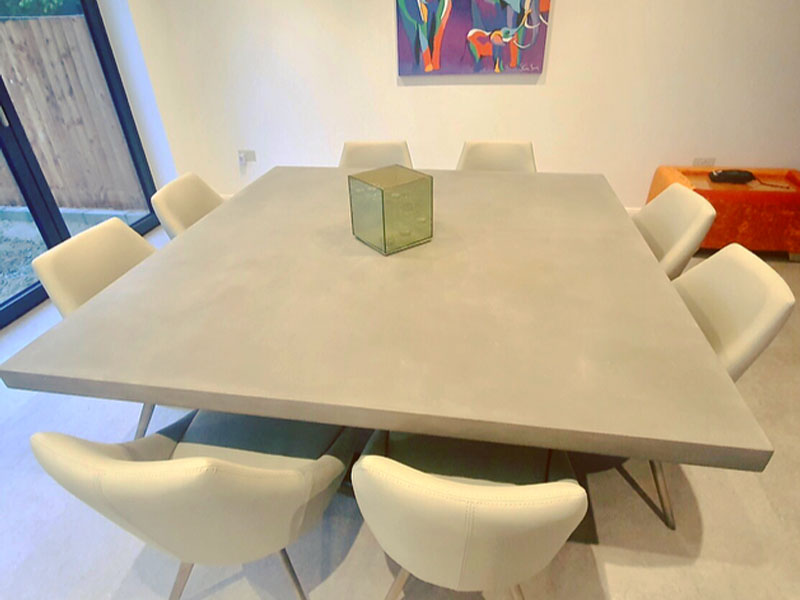
For many homes, the decision starts with seating. A 6 seater suits more compact dining zones and kitchen extensions where space around the perimeter is limited. An 8 seater often proves the most balanced option for family life – generous enough for guests, but still comfortable day to day. A 10 or 12 seater makes a real statement in a large room, especially where the dining area is part of a wider architectural scheme.
The advantage of the oval shape is that it often reads more lightly than a rectangle of similar length. Because the ends are curved, movement around the table feels more natural. That can make a larger top more forgiving in rooms where every inch counts.
It is worth thinking beyond chair numbers alone. Consider the sightlines from your kitchen, the walkway to garden doors, and how the table will relate to lighting above it. A dining table should feel integrated with the room, not simply placed within it.
Why bespoke often makes the difference
This is where many buyers hit a wall with off-the-shelf furniture. They find a shape they like, but the dimensions are wrong. Or the size works, but the base feels too bulky. Or the finish is close, yet not quite right for the flooring, cabinetry or overall palette.
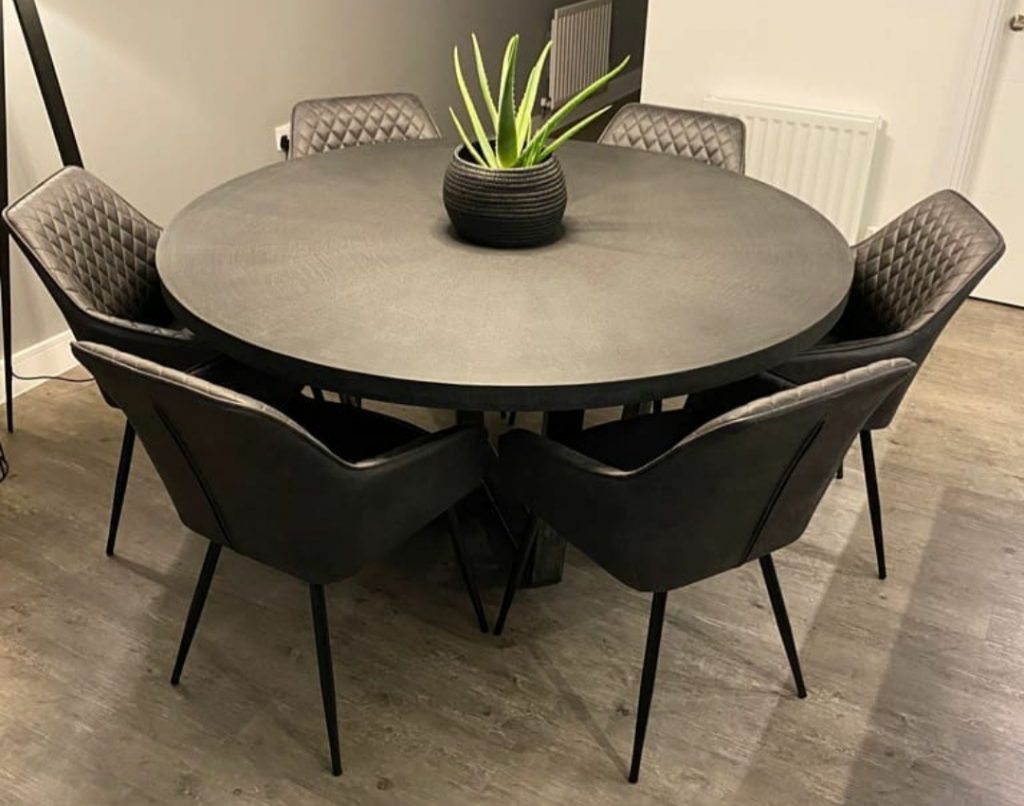
A bespoke oval concrete dining table solves those tensions cleanly. You can refine the length, width and edge profile to suit the room rather than compromise around standard retail sizing. You can choose a leg style that changes the character of the piece entirely – from minimal and architectural to warmer and more grounded. Colour and finish also matter more than people sometimes expect. A lighter concrete tone can lift a room, while deeper grey can bring drama and contrast.
What matters most is not customisation for its own sake, but purpose. A made-to-measure table should respond to the way you live. If you host often, need clearer end seating, or want a surface that lines up precisely with the geometry of the room, those details are worth getting right.
At Daniel Polished Concrete, that consultation-led approach is central to the process. It means the table is not only visually impressive, but proportioned and finished for the home it is actually going into.
Styling an oval concrete dining table at home
One of the strongest qualities of concrete is its flexibility. It can sit comfortably in a pared-back contemporary interior, but it also works beautifully in homes that mix materials and soften modern lines with texture.
If your kitchen has natural oak, warm brass or muted cabinetry, an oval concrete top can provide contrast without feeling stark. If the room leans more industrial, the table can reinforce that urban design language while still feeling refined. Upholstered dining chairs are often a particularly good partner because they bring softness against the crispness of the concrete surface.
Lighting deserves careful thought. An elongated pendant or a cluster positioned over the centre line of the table can emphasise the oval form and give the dining area a stronger sense of definition. In open-plan spaces, that helps the table feel like a destination rather than simply a functional zone.
Styling should remain restrained. Concrete already carries visual weight, so there is no need to overwork it. A simple arrangement of ceramics, a linen runner for occasional use, or a vase with seasonal stems is usually enough.
Everyday use and maintenance
There is still a lingering assumption that concrete is difficult to live with. In practice, a professionally finished dining table is straightforward to care for. Day-to-day cleaning is typically as simple as a soft cloth and a gentle cleaner suitable for sealed surfaces.
As with any premium dining furniture, good habits help. Wiping spills reasonably promptly, using placemats for very hot cookware, and avoiding harsh chemicals will preserve the finish over time. That is not high maintenance – it is common sense care for a hand-finished piece.
The upside is that concrete ages with character. Rather than looking tired after a few years, a well-made table tends to settle into the home more naturally. The material keeps its depth and presence, and the slight individuality in tone and texture remains part of its appeal.
Is an oval concrete dining table right for every home?
Not always, and that honesty matters. If you want furniture that can be moved frequently from room to room, concrete may not be the obvious fit. If your interior is extremely ornate or traditional, another material might feel more natural unless you are deliberately introducing contrast.
But for modern British homes – especially renovated kitchens, rear extensions and open-plan living spaces – it makes a great deal of sense. It brings softness through shape, strength through material, and a tailored look that feels far removed from showroom sameness.
The best dining tables do more than provide seating. They shape how a room works and how people gather within it. If you are looking for a piece with architectural presence, genuine durability and a made-for-you feel, an oval concrete dining table is not just a design choice. It is the sort of investment that quietly improves the room every single day.