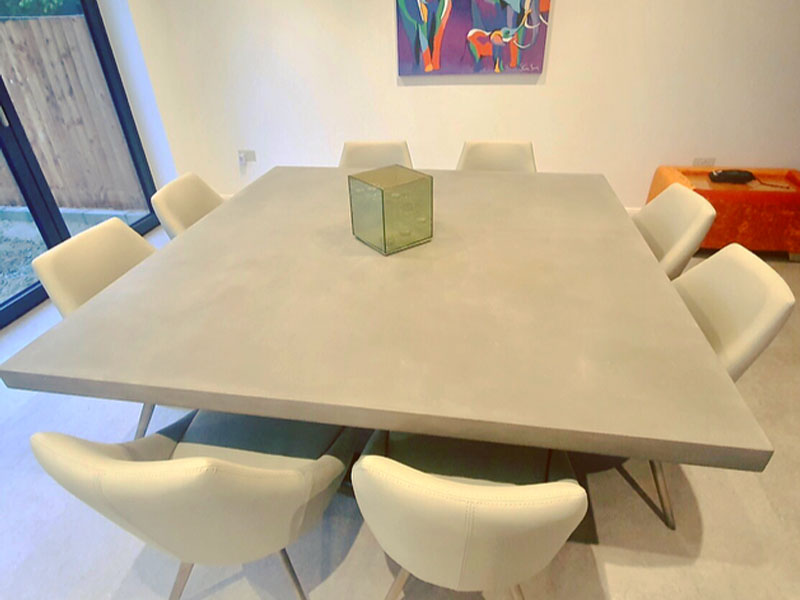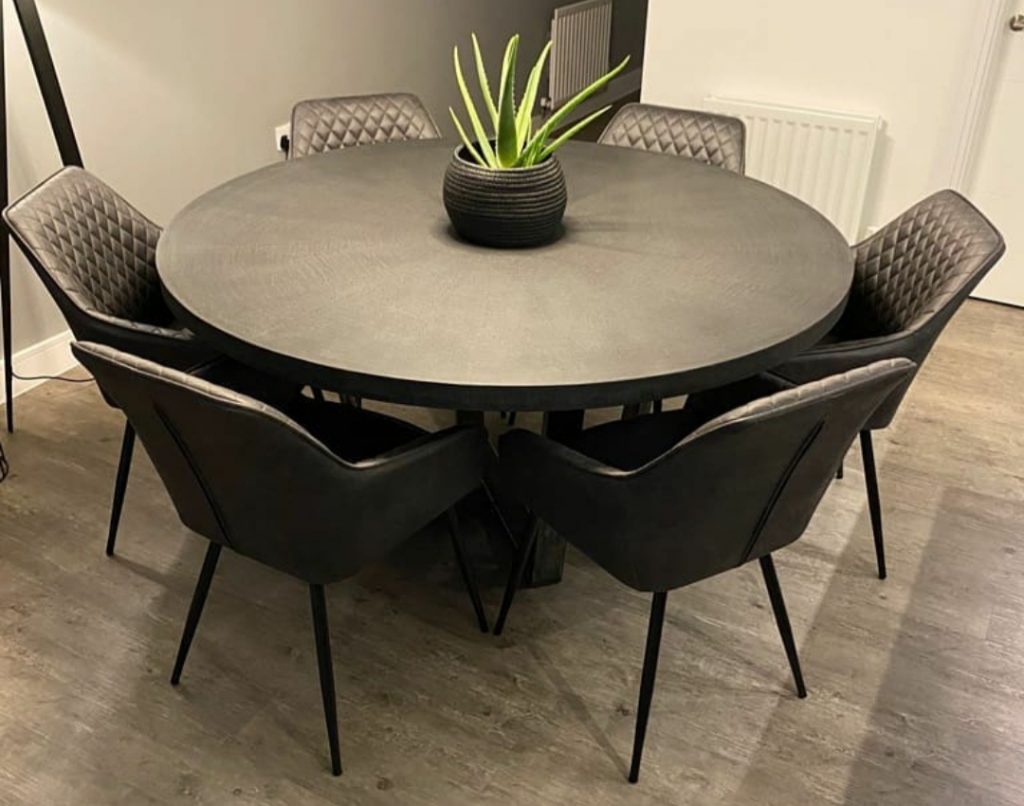

A concrete dining table earns its place through character: subtle movement in the surface, a hand-finished feel and the quiet confidence of a substantial centre piece. To seal a concrete tabletop properly is what lets that character work in a real home, where red wine, olive oil, children’s crafts and weekday suppers are all part of the picture.
A quality sealer does not turn concrete into plastic, nor should it disguise the natural variation that makes the material special. Its job is to reduce absorption, protect against stains and make day-to-day care straightforward, while retaining the tactile, architectural finish that drew you to concrete in the first place.
Why a concrete tabletop needs sealing
Concrete is made from cement, aggregates and water. Once cured, it is exceptionally strong, but it remains naturally porous at a microscopic level. Left unprotected, liquids can travel into that surface. Coffee, citrus juice, cooking oils and deeply coloured foods are the usual culprits, particularly if they are left sitting for a while.
Sealing creates a protective barrier within or across the top layer of the concrete. The right system gives a dining tabletop greater resistance to marks and moisture without removing its depth or individuality. It also makes wiping down after a meal far less of a concern.
There is a useful distinction here. A sealed concrete surface is stain resistant, not invincible. No premium material, whether timber, marble or concrete, benefits from a puddle of red wine left overnight. A little care protects the finish and keeps the table looking beautifully settled rather than prematurely worn.
Choose the right sealer for the finish you want
The sealer must suit both the intended use and the finish of the table. A dining surface needs more than a product chosen for a garage floor or an outdoor paving slab. It should be appropriate for interior furniture, fully cured before use and selected with everyday food and drink contact in mind.
Penetrating sealers absorb into the concrete and help repel water and oils while leaving the surface looking close to raw. They are a good option for those who want a dry, understated appearance and minimal visible build-up. Their protection can be excellent, though the degree of stain resistance varies between products and surface finishes.
Topical sealers sit closer to the surface and can offer stronger protection against spills. Depending on the system, they may provide a matt, satin or more polished sheen. A well-chosen matt or low-sheen finish can preserve the quiet look of honed concrete; a higher sheen brings a more formal, reflective quality. Neither is universally better. It depends on the room, the light and whether you want the table to feel soft and mineral-led or more refined and contemporary.
For a heavily used family dining table, a professionally specified multi-coat system is often the most reassuring choice. It is designed around the exact concrete mix, finish and intended use, rather than asking one off-the-shelf product to solve every problem.
Prepare the surface before you seal a concrete tabletop
Sealer magnifies preparation. If dust, grease or moisture are trapped beneath it, the finished surface can look patchy or fail to bond as intended. The tabletop should be fully cured, dry and free from wax, polish, silicone residue and cleaning products before any sealing begins.
Start with a gentle clean using a pH-neutral cleaner and a soft, non-abrasive cloth. Avoid harsh bleach, acidic limescale removers and scouring pads. These can etch the surface or leave residues that interfere with the sealer. Allow the table to dry completely, not simply until it feels dry to the touch.
If you are working with an existing tabletop, assess it honestly before proceeding. Darkened patches, rough areas, old sealer breakdown or visible scratches may need careful refinishing first. Applying fresh sealer over a compromised finish does not remove the underlying issue. On a valuable bespoke table, this is the point where professional advice is worthwhile.
Apply in thin, controlled coats
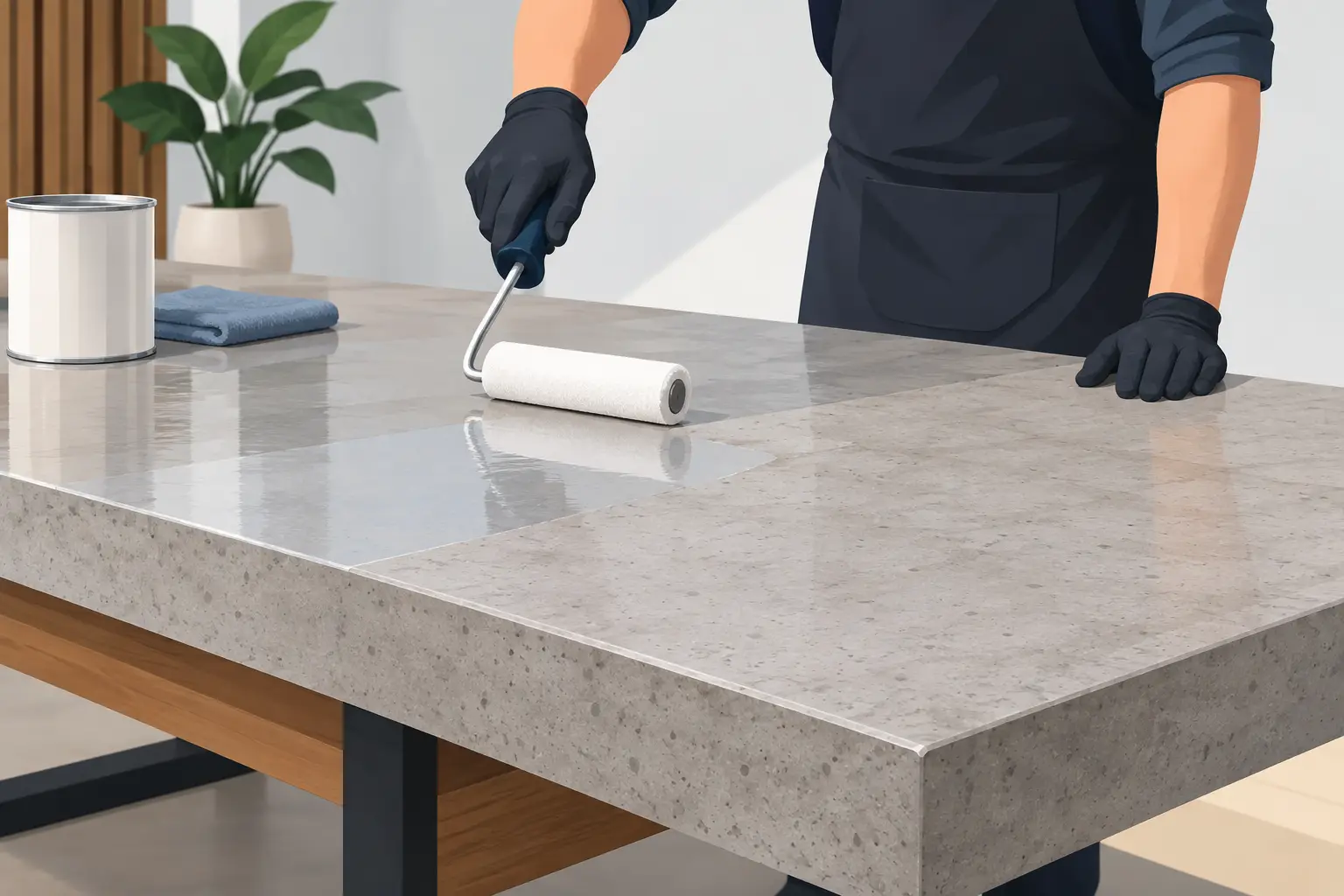
Always follow the chosen sealer manufacturer’s instructions, including the recommended applicator, temperature range and drying times. The broad principle is simple: apply thin, even coats rather than one heavy layer. Over-application can lead to streaks, cloudiness or a finish that feels artificial under the hand.
Use a clean, lint-free applicator and work methodically across the surface, keeping a wet edge where the product requires it. Pay particular attention to the perimeter and underside of the tabletop. Edges are vulnerable because they receive more knocks and can be exposed to splashes during cleaning.
Most furniture-grade systems require more than one coat, with a specified interval between applications. Do not rush this stage. A sealer that appears dry may not have cured enough to accept another coat, and forcing the process can compromise clarity and durability.
Once the final coat is applied, allow the table to cure for the full recommended period before putting it into regular service. This is where patience pays off. A surface may feel dry within hours but still need several days to reach its intended resistance. Avoid placing heavy objects, covering the top with plastic or hosting a dinner party before that curing window has passed.
Test protection before everyday use
After the full cure period, a simple water test offers useful reassurance. Place a few drops of water on an inconspicuous area and leave them briefly. If they remain beaded rather than darkening the concrete, the surface is repelling moisture as it should.
This is not a replacement for proper product guidance, especially with a newly finished table, but it is a practical habit. If water begins to soak in rather than bead, it may be time to inspect the finish and consider maintenance or resealing.
Do not use oil, wine or acidic liquids as a casual test. If a sealer needs attention, there is no reason to create a potential stain in order to prove it.
Everyday care keeps the finish looking its best
A sealed concrete tabletop is refreshingly easy to live with. Wipe spills promptly with a soft damp cloth, then dry the surface. For routine cleaning, use warm water or a mild pH-neutral cleaner. This is enough for everyday crumbs, fingerprints and food residue.
Use placemats or trivets for very hot cookware, particularly cast iron dishes and pans straight from the hob. Concrete handles heat well, but thermal shock, intense localised heat and repeated abrasion are not kind to any decorative furniture finish. Felt pads beneath ceramics and table decorations are equally sensible, especially on a polished or satin surface.
Avoid abrasive cleaners, wire wool, harsh degreasers and strong acidic or alkaline products. They can dull the sealer, alter the sheen or gradually weaken its protective qualities. If something sticky needs removing, soften it with warm water first rather than scraping hard at the surface.
When should you reseal a concrete dining table?
How often to reseal depends on the sealer, the finish and how the table is used. A quiet four-seat table may go years with only normal care. A large family table used for breakfast, homework, entertaining and weekend projects will naturally see more wear around favourite places and along the edges.
Look for changes rather than following an arbitrary calendar. Water that no longer beads, a surface that starts absorbing marks more readily, or local dullness in high-use areas can all suggest the protection needs refreshing. Minor maintenance carried out at the right time is simpler than waiting until staining has become established.
At Daniel Polished Concrete, every table is made with its intended home in mind, from the scale of the room to the finish that best suits how the family will use it. That same thoughtful approach matters when maintaining the surface: protect the material, but never erase the handmade details that make it yours.
The finish should support the design, not overpower it
The best sealed concrete tabletop still looks like concrete. You should see the gentle tonal shifts, feel the carefully refined surface and recognise the individual character created during the making process. Perfect uniformity is not the goal. A handcrafted concrete table has depth precisely because it is not a factory-made imitation stone slab.
Give the sealer time to cure, treat spills with the same common sense you would give any statement dining table, and choose maintenance products carefully. The reward is a surface that remains practical through busy everyday life while continuing to anchor the room with the calm, sculptural presence that only polished concrete can bring.