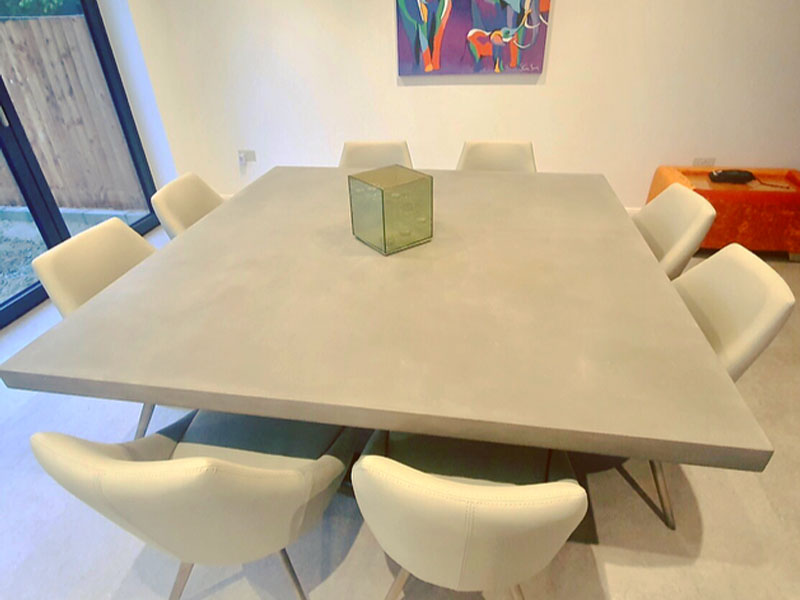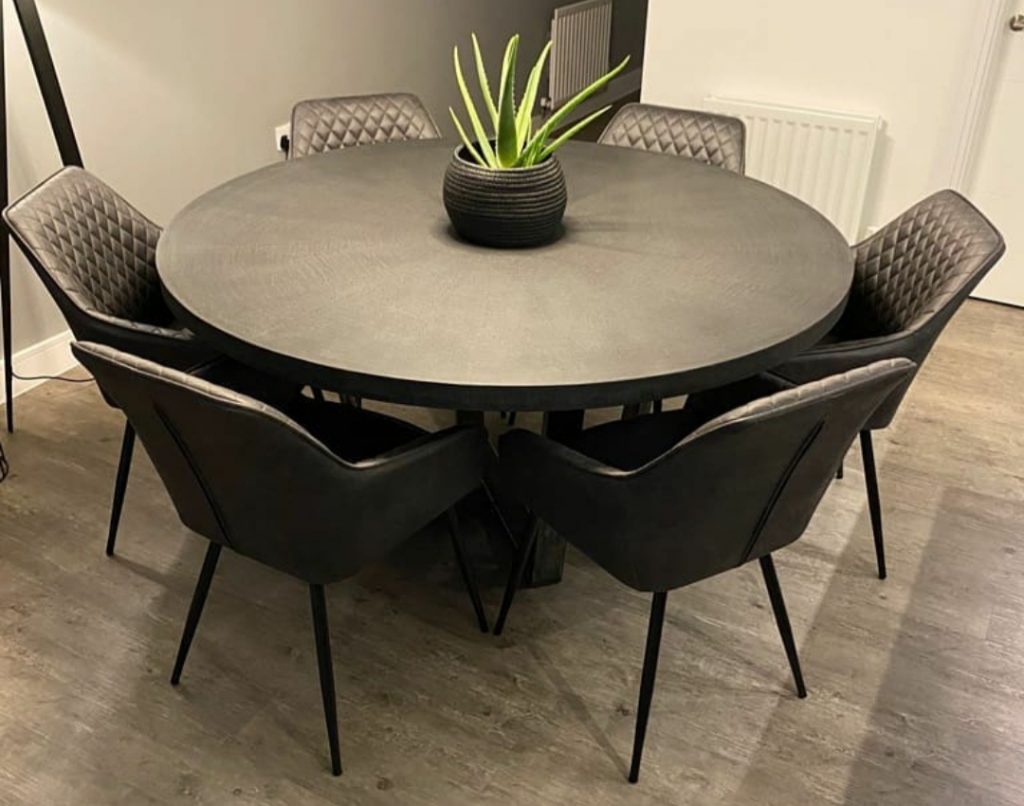


A dining table is asked to do far more than look good. It hosts everyday suppers, birthday cakes, homework, long conversations and the inevitable family gatherings where every chair is needed. Artisan concrete table craftsmanship gives that central piece a different kind of presence: architectural in appearance, made for real use and tailored to the proportions of your home.
Unlike mass-produced furniture, a polished concrete table is not simply selected from a catalogue and sent out unchanged. Its surface, shape, edge profile, base and finish can all be considered as part of one piece. The result is a stunning centre piece with the weight, texture and individuality that a busy kitchen-diner or open-plan living space deserves.
What artisan concrete table craftsmanship really means
Concrete has a reputation for being hard, industrial and impersonal. In the hands of a specialist furniture maker, it becomes something much more considered. The material is carefully mixed, cast, cured, refined and sealed to create a dining surface that feels calm and tactile rather than rough or cold.
The artisan element lies in the decisions made at every stage. A maker considers the intended size and shape, how the table will sit within the room, the balance between the top and its legs, and how much movement or natural variation should remain visible in the finished surface. These are not incidental details. They determine whether a large dining table feels beautifully grounded or visually overwhelming.
Every concrete surface develops its own subtle character. Gentle tonal shifts, fine markings and the occasional pinhole can be part of its appeal, much like the grain in timber or veining in natural stone. A hand-finished table should never be confused with a printed imitation of concrete. Its material honesty is precisely what makes it distinctive.
From raw material to polished dining table
A well-made concrete table begins long before the pour. The design must work structurally as well as visually. A slim, elegant profile may be possible, but it has to be engineered appropriately for its span, chosen base and intended use. Larger 10 or 12 seater tables need particular care, because they must remain composed and practical without losing their sense of lightness.
Designing for the room, not just the measurements
The best starting point is the dining space itself. A table needs enough room for chairs to pull out comfortably and for people to move around it without turning every meal into an obstacle course. In a narrow extension, a softened rectangle or oval may make better use of the footprint. In a generous open-plan kitchen, a long rectangular table can create a confident anchor between cooking and living areas.
Bespoke work allows those proportions to be tuned. Length, width and height can be adjusted, while edge details and leg styles can be chosen to suit the wider scheme. A darker charcoal finish can sit confidently with black-framed glazing and walnut cabinetry. A lighter grey can bring softness to pale oak floors, plaster walls and a more relaxed contemporary interior.
There is also a place for a well-proportioned standard design. For homeowners who know that a six, eight or 10 seater configuration will suit their room, a Classic Collection table offers a more straightforward route to the same material character. Bespoke is ideal when the room, brief or vision calls for it; a standardised size is often the more efficient choice when it does not.
Casting, curing and refining the surface
The casting stage is where technique and patience meet. The concrete is prepared for a consistent finish, placed into the mould and worked with care. Reinforcement and internal support are considered where required, helping the finished top perform as furniture rather than as a simple slab of building material.
Concrete cannot be hurried. Proper curing allows the material to gain strength and stabilise before the next stages begin. Once released from its mould, the table is refined by hand. This may involve careful sanding and polishing to reveal a smooth, sophisticated surface while retaining the quiet depth that gives polished concrete its character.
A sealer is then applied to help protect the table from day-to-day spills and marks. This is a crucial finishing stage, not an afterthought. A quality seal makes the surface far more suited to dining life, while allowing the natural appearance of the concrete to remain front and centre.
Why hand-finishing matters
Hand-finishing is what prevents a concrete table from feeling factory-made. It gives the maker the opportunity to respond to the individual cast rather than forcing every surface to look identical. The aim is not a sterile, perfectly uniform grey plane. It is a refined finish with depth, softness and a sense of material authenticity.
This is also where craftsmanship supports longevity. Edges are eased and polished, surfaces are checked closely and the overall piece is assessed for visual balance. On a table of this scale, small details are noticeable. An awkward junction between top and base, an edge that feels too sharp or a finish that looks flat can undermine an otherwise impressive design.
At Daniel Polished Concrete, the focus is on making these choices with the customer’s room and lifestyle in mind. That direct, consultation-led approach matters when a table will become the focal point of a forever home rather than a temporary purchase.
A statement piece that works every day
A concrete dining table earns its place through performance as well as appearance. When properly made and sealed, polished concrete is hard-wearing and well suited to regular family use. It is not precious furniture that has to be covered at the first sign of a glass of red wine.
That said, concrete is not maintenance-free, and honest advice is better than overpromising. Wipe spills promptly, particularly acidic liquids such as wine, citrus juice or vinegar. Use placemats or trivets for very hot cookware, and avoid harsh abrasive cleaners. A gentle clean with a soft cloth is normally all that is needed for everyday care.
Over time, a well-loved table may gain the lightest signs of use. For many owners, this is part of the appeal: a surface with a life of its own, rather than one that remains artificially untouched. If you prefer absolute visual uniformity with no natural variation, a different material may be more suitable. But if you value patina, permanence and a finish that feels individual, concrete offers something few dining materials can match.
Choosing the details that change the whole table
The table top is only one part of the composition. Its base has a major influence on both style and practicality. A sculptural pedestal can create a clean, contemporary look and make it easier to position chairs around the table. Slim metal legs can bring an urban design edge, while a more substantial base gives a large top a grounded, monolithic feel.
Shape changes how people gather, too. Rectangular tables are naturally efficient for bigger groups and suit long rooms. Round tables encourage conversation and work especially well where circulation is needed on all sides. Oval forms soften a generous table length, often making them an excellent answer for family homes where a statement piece still needs to feel welcoming.
Finish is equally personal. The right shade should relate to the materials already in the room, not compete with them. Samples, images of previous work and a proper conversation about your kitchen, flooring and lighting can make this decision much easier. Daylight matters: a finish that reads warm and soft in one room may appear cooler in another.
Delivery is part of the craftsmanship
A large concrete table needs a sensible plan for getting it into place. Access through doorways, hallways, staircases and garden routes should be considered early, especially in period homes or upper-floor flats. This is not a reason to compromise on the table you want; it is a reason to make sure delivery and installation are planned around the property.
A specialist maker understands that the final fitting is part of the experience. The table should arrive ready to take its place, with the base positioned accurately and the top handled with the respect a hand-finished piece requires. That care protects both the furniture and the home it is being delivered into.
The most successful concrete dining tables begin with a simple question: how do you want your home to feel when everyone is gathered around it? Start there, then let the dimensions, finish and craftsmanship follow.