
The best family dining rooms are rarely pristine for long. One minute it is homework, the next it is a birthday tea, Sunday roast or a late glass of wine once the children are in bed. That is exactly why the best dining tables for family homes need to do more than look impressive. They have to earn their place every day.
For a family house, the dining table is not a decorative extra. It is one of the hardest-working pieces in the room, often sitting at the centre of an open-plan kitchen or dining space where life happens in full view. The right choice should feel substantial, suit the architecture of the room and stand up to constant use without losing its character.
What makes the best dining tables for family homes?
A good family dining table strikes a balance between beauty and resilience. It needs enough presence to anchor the room, but it also has to cope with daily traffic, shifting routines and the occasional bit of chaos. That means size, shape, material and finish matter just as much as style.
There is no single perfect answer for every household. A family with young children may prioritise wipe-clean surfaces and softer corners, while a household with teenagers might care more about generous seating and a table that still feels refined when entertaining adults. The smartest choice is the one that suits how you actually live, not just how the room looks in a staged photograph.
Start with scale, not style
Most mistakes happen before material even enters the conversation. People fall for a table on looks alone, then discover it dominates the room or leaves too little space to move around comfortably.
In family homes, circulation matters. You need room to pull chairs out, walk around the table with plates in hand and live in the space without feeling boxed in. As a rule, leaving around 90cm to 100cm between the table edge and walls or cabinetry creates a far more practical layout. In open-plan rooms, that breathing space also helps the dining area feel deliberate rather than squeezed in.
Think carefully about how many people you need to seat on an ordinary weekday, then how many you want to host on weekends or at Christmas. A six-seater can be ample for a smaller family, but many renovated kitchen diners in the UK are better suited to eight or ten seats, particularly in forever homes where entertaining becomes part of the brief.
Why larger tables often work better in family spaces
A larger table is not only about more chairs. It gives the room a stronger focal point and allows the table to perform multiple roles at once. Children can spread out schoolbooks at one end while dinner is prepped at the other. Guests can gather without everyone feeling crammed in.
That said, bigger is only better if the proportions are right. An oversized top with clumsy legs can make a room feel heavy. A well-made large table should still have visual clarity, with a base design that keeps the silhouette clean and seating comfortable.
Shape changes how a room feels
Rectangular tables remain the most practical choice for many family homes, especially in long kitchen diners and open-plan extensions. They make efficient use of space, seat larger numbers comfortably and suit the linear architecture common in contemporary British homes.
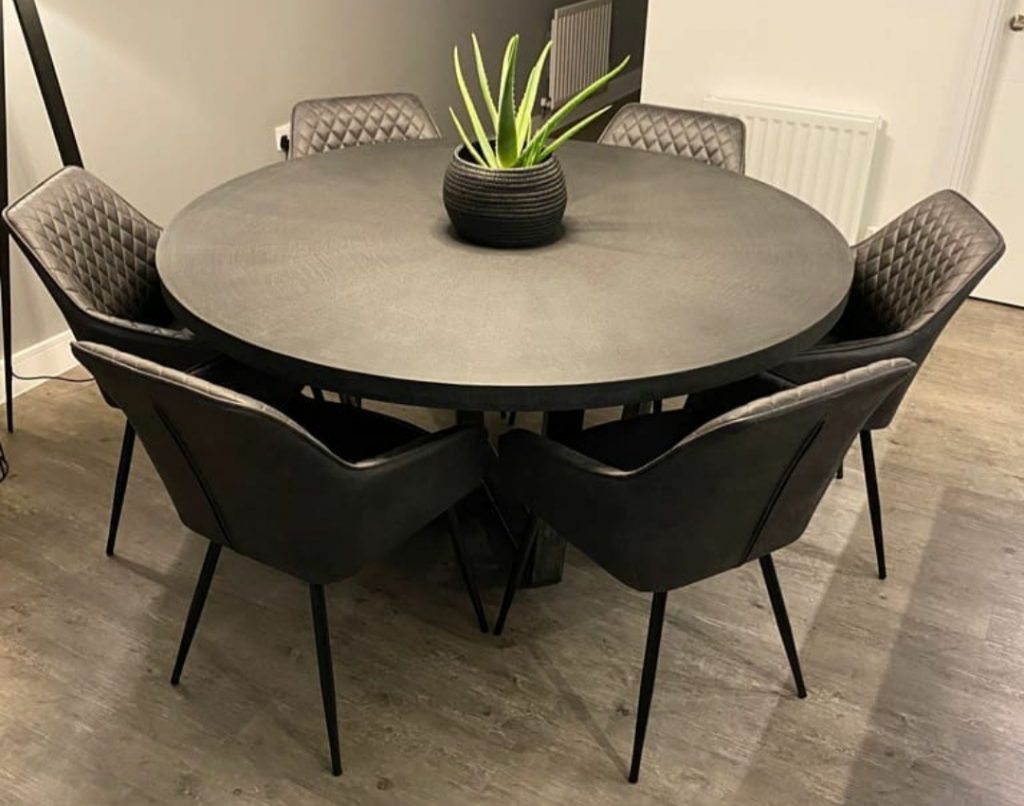
Round tables create a softer, more sociable feel and work particularly well where the dining area sits within a square room. They are excellent for conversation and can be friendlier for younger children, but once you need to seat eight or more, they require considerable floor space.
Oval shapes can offer the best of both. They soften the overall look while still giving you the length needed for family meals and entertaining. If your interior has lots of straight lines, cabinetry and glazing, an oval table can introduce just enough contrast.
Material matters more than trend
Families ask a lot from a dining table. Hot plates, spilled drinks, school projects, elbows, bags and everyday wear all take their toll. That is why material choice should be grounded in long-term performance, not just fashion.
Wood is a familiar option and can bring warmth, but softer timbers mark easily and some finishes show every scratch. Glass looks light and airy, yet fingerprints and smudges quickly become tiresome in a busy home. Marble has undeniable luxury, but it can be porous and high-maintenance depending on the finish.
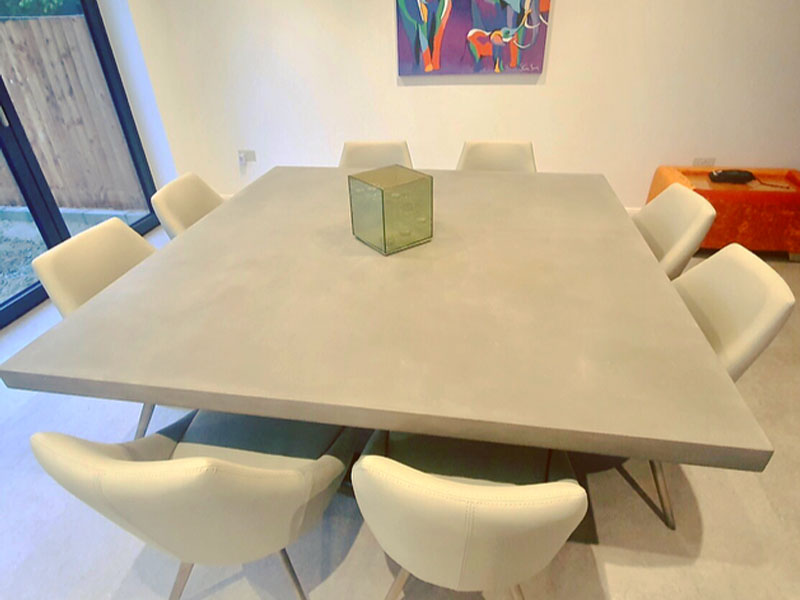
This is where polished concrete has become such a compelling option for design-led family interiors. It offers an architectural look with real substance, but it is also remarkably practical when properly made and sealed. A hand-finished concrete dining table has weight, presence and a tactile quality that feels far removed from mass-produced furniture. It stands as a stunning centre piece, yet it is built for genuine use.
Why polished concrete suits modern family life
Concrete works particularly well in family homes because it combines visual impact with hard-wearing performance. It is inherently durable, and when professionally sealed, it offers strong resistance to staining and daily wear. For households that want a distinctive statement piece without tiptoeing around it, that matters.
There is also something reassuring about a surface with natural variation. The subtle movement, tonal shifts and hand-finished texture give it character, so it does not rely on looking factory-perfect. Minor signs of life feel more at home on a material with depth and honesty than on a surface that is meant to remain pristine.
For interiors with an urban design sensibility, polished concrete pairs beautifully with timber floors, soft upholstery, black-framed glazing and contemporary kitchens. It can look bold and sculptural, but with the right finish and base, it is equally at ease in warm, lived-in spaces.
The base matters as much as the top
People often focus on the tabletop and forget how much the base affects everyday comfort. In family use, awkward leg placement becomes annoying very quickly. Corner legs may restrict chairs. Bulky central supports can interfere with knees and foot space.
A well-designed base should support the scale and weight of the top without making seating feel compromised. This is especially important with eight, ten or twelve-seater tables, where every place setting needs to feel usable. Clean metal leg designs tend to work well in contemporary schemes, but proportions must be right. If the base is too slight, the table can feel visually unbalanced. Too heavy, and the whole piece loses elegance.
Bespoke often makes more sense than off-the-shelf
Family homes are rarely standard. Extensions, bay windows, kitchen islands and bifold layouts all create dimensions that can be surprisingly specific. That is where bespoke design becomes far more than a luxury.
A made-to-measure table allows you to get the proportions exactly right for your room and your routine. You can tailor the length, width, shape, finish and leg style so the piece sits naturally within the architecture. This is especially valuable when you need to seat a larger family without overwhelming the space.
There is also the question of individuality. If you are investing in a premium dining table for a long-term home, choosing something handcrafted for your interior has a very different feel from selecting a generic piece from a showroom floor. It becomes part of the house rather than just another item in it.
For some households, a standardised collection in six, eight or ten-seater sizes offers the right balance of speed and value. For others, a bespoke build is worth it because the room demands a more precise response. Neither route is automatically better. It depends on whether convenience or exact customisation matters more to you.
Practical details worth getting right
The best dining tables for family homes succeed because they handle the small practicalities well. Surface finish is one. A beautiful material still needs proper protection if it is going to cope with red wine, pasta sauce and day-to-day cleaning.
Chair compatibility is another. Make sure the depth of the apron or frame leaves comfortable leg room, and check how many chairs genuinely fit without everyone knocking elbows. If younger children are part of the household, edge profile can also make a difference. Slightly softened corners often feel more forgiving in busy spaces.
Delivery and installation should not be an afterthought either, particularly with substantial materials such as concrete. Access through hallways, doorways and extensions needs considering early, and professional installation offers peace of mind for larger statement pieces.
Choosing a table that still feels right in five years
The strongest choices are usually the least trend-led. Instead of asking what is fashionable now, ask what will still suit the room once tastes evolve and family life shifts. A dining table should have enough design confidence to hold the space, but enough restraint to age well.
That is why craftsmanship matters. A well-made table has clarity in its proportions, quality in its finish and a sense of permanence that flat-pack furniture cannot replicate. For households investing seriously in their interiors, that difference is visible every day.
At Daniel Polished Concrete, we see this with clients who want a table that feels architectural and distinctive, but also entirely usable. The best pieces are the ones that manage both without compromise.
If you are choosing for a family home, look beyond the quick decision. Think about the room, the rhythm of the house and the kind of life the table will witness. The right one will not just fill the space – it will quietly shape how that space is used for years to come.