
A concrete dining table can look extraordinary in a showroom and still be completely wrong for your home. The piece that works is the one that suits your room, your daily routine and the way you actually gather around it. If you are wondering how to choose concrete dining table designs that feel striking but live well day to day, start with proportion before style.
How to choose concrete dining table size for your room
The most common mistake is choosing by seat count alone. A six seater in one room can feel generous, while the same table in another can make the whole space feel pinched. In open-plan kitchens and dining areas especially, the table needs to hold its own visually without interrupting movement around islands, doors or glazing.
As a rule, you want enough clearance around the table for chairs to pull out comfortably and for people to pass behind them without that constant sideways shuffle. The right size is not simply the largest top you can physically fit. It is the one that gives the room balance.
This is where bespoke sizing earns its place. Standard dimensions work beautifully in many homes, particularly if you want a faster route to a finished piece. But if your room has awkward proportions, a banquette on one side, or a very specific circulation path, made-to-measure dimensions can make the difference between a table that looks impressive and one that feels as though it was always meant to be there.
Think beyond the tabletop
The footprint is shaped by more than length and width. Leg position affects how many people can sit comfortably at the ends, how easily chairs tuck in, and whether the table feels visually light or more architectural. A generous top with the wrong base can reduce usable seating, while a well-considered leg design can make a large table feel easier to live with.
Choose the right shape for the way you dine
Rectangular concrete dining tables are often the natural choice for larger rooms and family homes. They suit long spaces, seat bigger groups with ease and create a strong architectural line through open-plan interiors. If you entertain regularly or want an eight or ten seater to become the anchor of the room, a rectangle often makes the most sense.
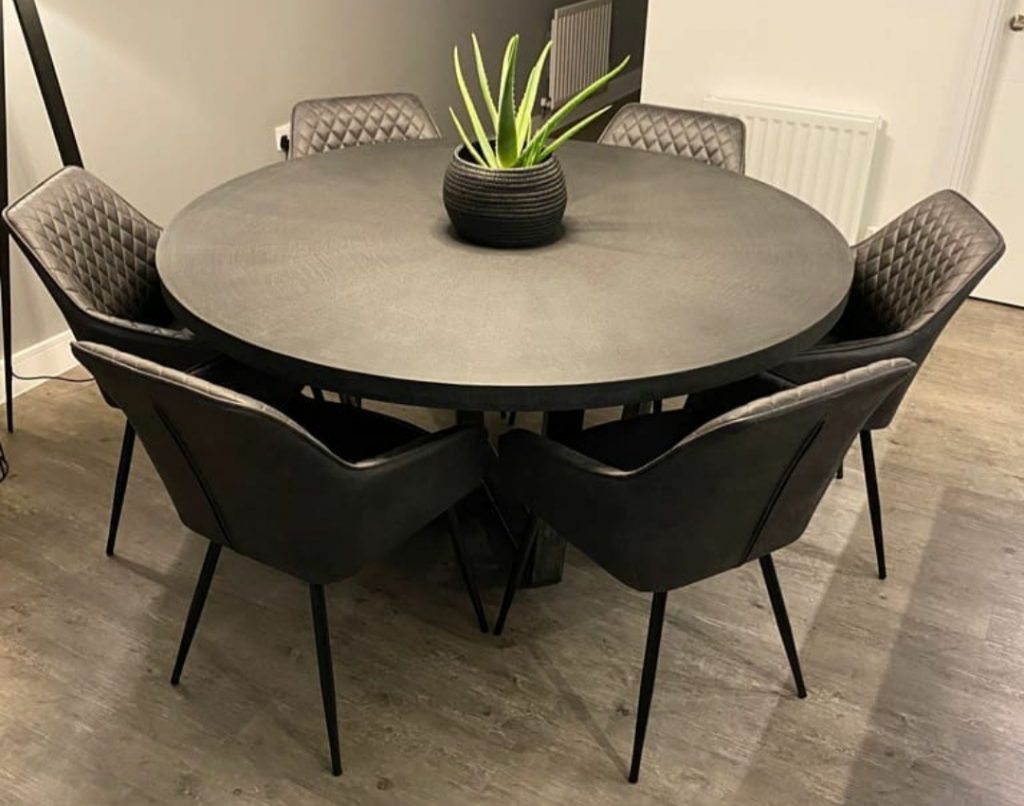
That said, it depends on the atmosphere you want. Round and oval tables create a softer feel and can work brilliantly where you want conversation to flow more evenly. They are also useful in rooms where hard edges already dominate through cabinetry, glazing and flooring lines. A softer shape can calm the whole scheme.
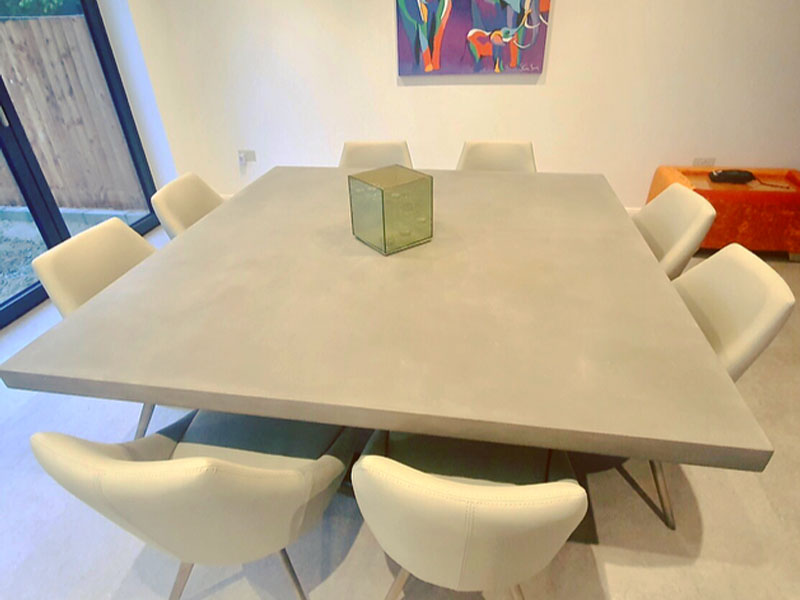
Square tables can be striking, but they are more space-hungry than many buyers expect. They need room around them to avoid feeling heavy. In a compact dining zone, a rectangular or oval top usually gives you better usability.
Let the room lead
If the room is narrow, do not fight it with a deep, oversized top. If the room is broad and open, a table with more presence can help define the dining area properly. The best concrete tables feel integrated with the architecture, not dropped into it as an afterthought.
Finish and colour matter more than people expect
One of the reasons polished concrete has such appeal is that it is not flat or lifeless. It has movement, depth and subtle tonal variation. That character is part of what makes each piece feel handcrafted rather than mass produced. But it also means the finish should be chosen in relation to the rest of your interior.
A lighter grey can feel calm, contemporary and easy to pair with oak, pale stone and soft neutral schemes. Darker charcoal tones bring drama and contrast, especially against warm timber, brushed brass or black-framed glazing. If your kitchen already has a strong material palette, the table should complement it rather than compete with it.
Surface sheen also changes the feel of the piece. A highly refined polished finish reads sleek and design-led. A softer, more understated finish can feel quieter and more natural in a family setting. Neither is universally better. The right choice depends on whether you want the table to shout a little or sit with more restraint.
Do not ignore daily life
A dining table is not just for special occasions. It ends up hosting breakfasts, homework, laptops, birthday cakes, dropped cutlery and the odd enthusiastic glass of red. That is why practical performance matters every bit as much as appearance.
Well-made polished concrete is hard-wearing and well suited to everyday use, but buyers should still ask sensible questions about sealing, maintenance and expected ageing. A specialist maker should be clear about how the surface is protected, how to clean it and what to avoid. Reassurance matters here, especially if you have children or entertain often.
Concrete also develops character over time. For many homeowners, that is part of the attraction. It is a material with presence, not something anonymous and factory perfect. If you want a table with warmth and individuality, that is a strength. If you want a completely uniform, static surface forever, another material may suit you better.
The base is not a minor detail
People tend to fixate on the concrete top, but the leg style does a great deal of visual and practical work. The base influences stability, legroom and the overall mood of the table.
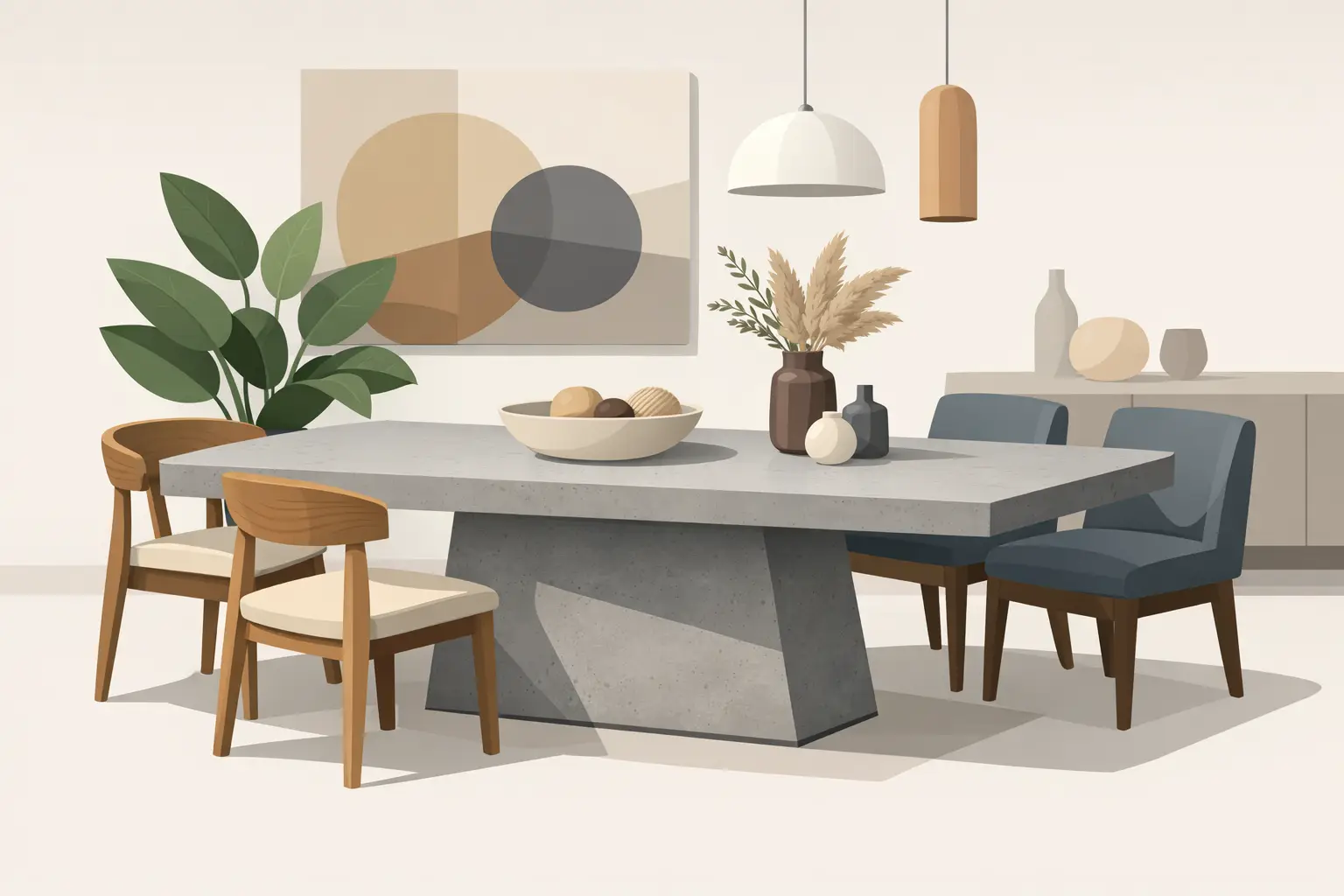
Metal legs can give a more industrial or urban edge and often suit modern kitchens with clean lines. Timber introduces warmth and can soften the weight of concrete beautifully. More sculptural bases turn the table into a true centrepiece, though they need to be considered carefully in relation to chair placement.
This is one of those areas where samples and photographs help, but experienced guidance helps more. A specialist can usually tell quite quickly whether a base will enhance the top or fight against it.
How to choose concrete dining table options: standard or bespoke
There is no virtue in bespoke for its own sake. If a standard six, eight or ten seater suits your room perfectly, that can be the smartest route. It tends to be more price-efficient and faster to produce, while still giving you the material quality and visual impact you are after.
Bespoke becomes valuable when your needs are specific. Perhaps you need a narrower table to preserve circulation in a renovated kitchen. Perhaps you want a ten seater with a different leg arrangement, a custom tone to match cabinetry, or a particular edge profile to sharpen the overall look. In those cases, tailoring the build is not indulgence. It is good design.
For many clients, the ideal route is somewhere in the middle: a proven table format adapted just enough to fit the room precisely. That often gives you the confidence of a tried-and-tested design with the benefit of a made-for-you result.
Ask about delivery and installation early
A concrete dining table is a serious piece of furniture. That is part of its appeal, but it also means logistics should be part of the decision, not an afterthought once you have fallen in love with a design.
Check access into the property, stair widths, tight turns and flooring conditions. In period homes and renovated spaces, this matters even more. A reputable maker will talk you through the realities of delivery and installation so there are no surprises on the day.
This is also a good moment to think about where the table will sit long term. If you are planning further building work or a kitchen refit, timing can make a real difference.
Choose the maker as carefully as the table
When you invest in handcrafted concrete furniture, you are not just choosing an object. You are choosing the people shaping it. Look for depth of specialisation, consistency of finish and a body of work that shows more than one hero image. You want evidence that the maker understands proportion, finish, usability and the practical side of getting a heavy, beautiful piece safely into a lived-in home.
A consultation-led approach is often a very good sign. It suggests you are not being pushed towards a generic product, but guided towards the right build for your room. That is particularly important with concrete, because the best results come from balancing craftsmanship with technical understanding.
At Daniel Polished Concrete, that conversation often starts with the room itself – how you live, how many you seat, what atmosphere you want to create and what dimensions will truly work. That is usually where the right table reveals itself.
The best concrete dining table is not simply the boldest one. It is the piece that fits your space with confidence, earns its place every day and still feels special when the house is full.