
A ten seater table looks generous on paper. In a real kitchen-diner, it can either feel beautifully balanced or far too dominant. That is why ten seater dining table dimensions matter so much. The right size does more than fit ten people – it sets the tone for how the room works day to day, how comfortable guests feel, and whether the table becomes a stunning centre piece or an obstacle you end up walking around.
What are standard ten seater dining table dimensions?
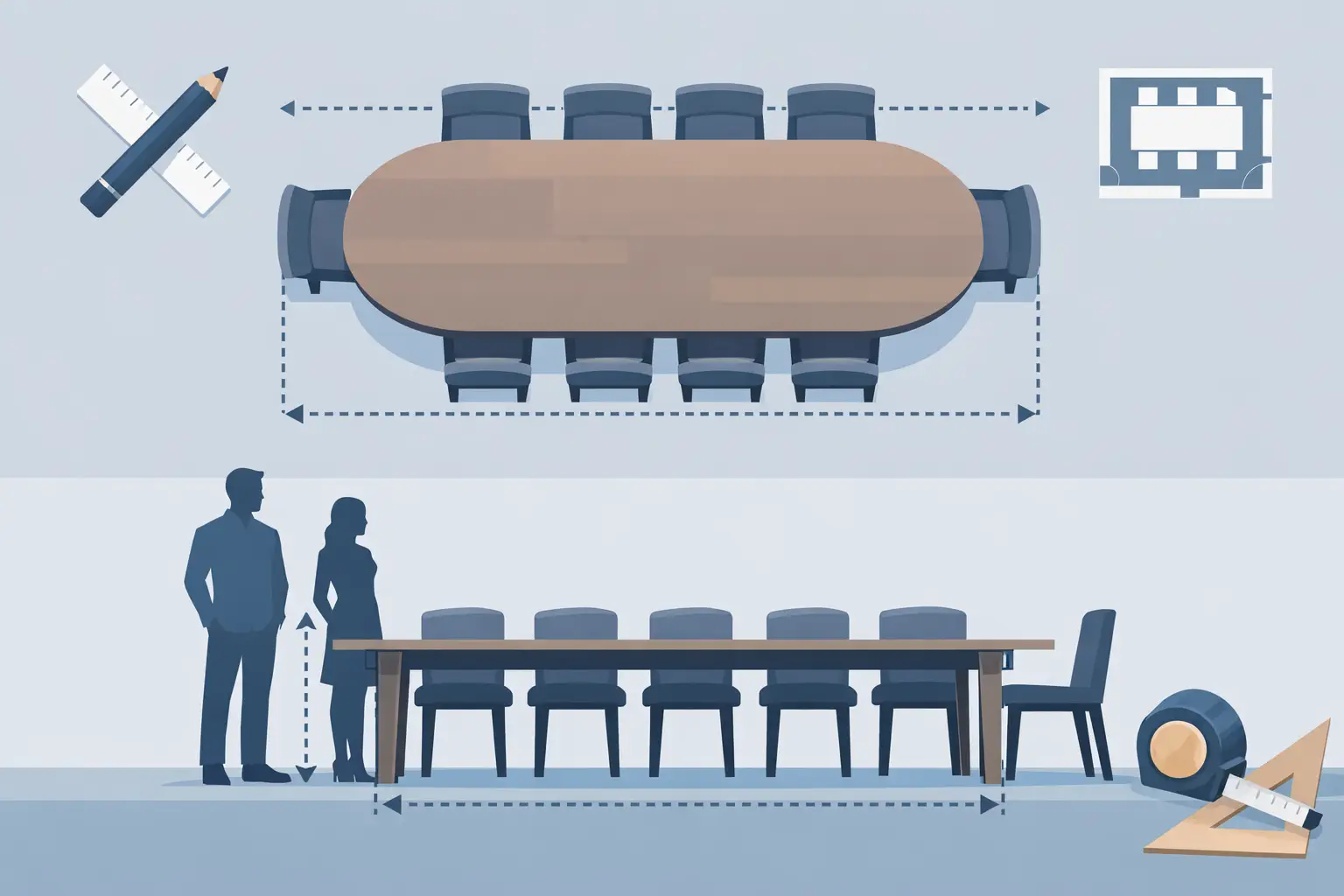
For most rectangular designs, ten seater dining table dimensions usually sit around 2400mm to 3000mm long and 1000mm to 1200mm wide. That range gives enough room for three people along each side and one at each end without everyone feeling elbow-to-elbow.
A common sweet spot is 2800mm x 1100mm. In practical terms, that suits many open-plan homes because it feels substantial without pushing too far into oversized territory. If you entertain regularly and prefer broader place settings, serving dishes in the middle, or statement chairs with arms, moving closer to 3000mm in length can make a real difference.
Width matters just as much as length. A table that is too narrow may technically seat ten, but it will not feel relaxed once plates, glasses and shared food are on the surface. Too wide, and conversation across the table starts to feel slightly distant. For most households, 1000mm to 1100mm offers the best balance between presence and practicality.
How much space does each person need?
As a rule, allow around 600mm of width per person. For a more comfortable layout, especially in a premium dining setting, 650mm to 700mm per person feels better. On a ten seater rectangular table, that usually means six seats along the long sides and two on the ends.
This is where standard sizing can be slightly misleading. A table might be marketed as a ten seater, but if the legs are bulky, the ends are heavily curved, or the base interrupts chair placement, the usable seating can shrink quickly. With bespoke furniture, the exact leg design and top overhang have a direct effect on how many people can sit comfortably.
If you are furnishing a forever home, it is worth planning for real use rather than brochure use. Ten adults for Christmas dinner need a different amount of personal space than six family members and four children on a Sunday afternoon. The number may be the same, but the dimensions that feel right are not always identical.
Ten seater dining table dimensions and room size
The table is only half the measurement. The room around it matters just as much.
For comfortable movement, allow at least 900mm between the edge of the table and the wall or any large piece of furniture. If that space is a main walkway, 1000mm to 1200mm is more realistic. This gives enough room to pull chairs out and still move around the table without the room feeling pinched.
So if your table is 2800mm x 1100mm, the room should ideally be at least 4600mm x 2900mm at a bare minimum, and more generous than that if the space is heavily used. In open-plan layouts, there is often more flexibility because sightlines remain open, but circulation still needs proper thought. A large table can look magnificent in a kitchen extension, yet still interrupt the route to sliding doors, islands or garden access if the footprint has not been planned properly.
This is often where made-to-measure sizing proves its value. Trimming or increasing a table by even 100mm to 200mm can completely change how the room feels.
Rectangular, oval or round?
Rectangular tables are the most efficient shape for ten seats. They make the best use of floor space, suit longer rooms and give a clean architectural look that works especially well in contemporary interiors.
Oval tables soften that footprint. They are often a very good choice if you want ten seats but the room has hard lines elsewhere, such as large glazing, kitchen runs and squared-off islands. The absence of corners can also make movement easier in family spaces. You still need similar overall dimensions to a rectangle, but the table may feel less formal and slightly lighter in the room.
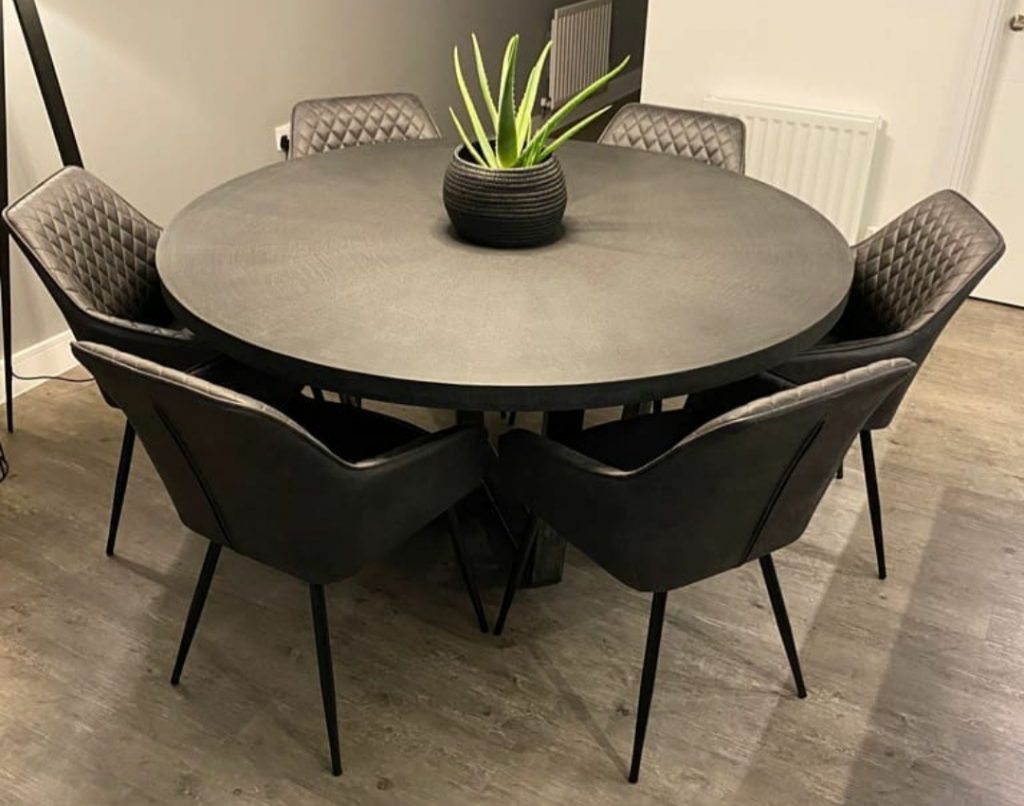
Round tables for ten require a very large diameter, usually around 1800mm to 2200mm depending on the base design. They can be sociable and impressive, but they demand a much bigger room. In many UK homes, a rectangular or oval design is the more practical answer.
Why table base design changes the dimensions that work
The top size is only part of the story. Where the legs sit affects seat count, comfort and visual weight.
Four corner legs can work well, but on a large ten seater table they need careful positioning so they do not interfere with chairs at the ends. Pedestal or panel-style bases free up more seating flexibility, which can be especially useful when ten seats are needed regularly rather than occasionally.
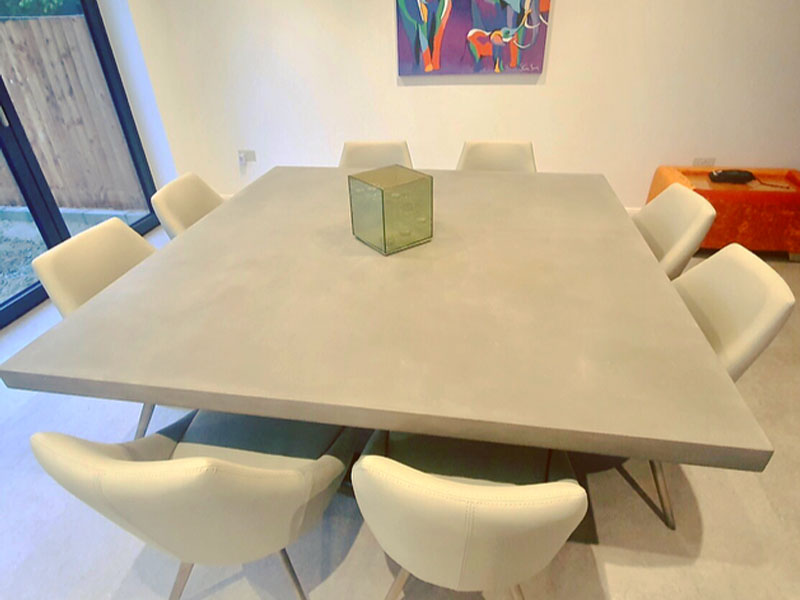
With polished concrete tables, proportion is particularly important. The material has a confident, sculptural quality, so the relationship between top thickness, length, width and base style needs to feel resolved. A table that is too narrow for its length can look mean. Too chunky, and it can overpower the room. The best pieces balance visual strength with enough refinement to sit comfortably in a domestic interior.
Choosing the right width for everyday living
Many buyers focus first on length, but width often has a bigger impact on everyday use. A width of 1000mm works well for most homes and keeps the table easy to reach across. At 1100mm or 1200mm, the table starts to feel more grand and better suited to elaborate hosting, but it also asks more of the room.
Think about how you actually live. If the dining table doubles as a workspace, homework zone or social hub beside the kitchen, a little extra width can be useful. If the room is elegant but not enormous, a slimmer width may preserve the calm, spacious feel that made you invest in the space in the first place.
Material also plays a part. A polished concrete surface has real presence, so it does not need exaggerated dimensions to make an impact. In many settings, a well-proportioned table feels more luxurious than one that is simply larger.
A practical guide to measuring before you buy
Start with the room, not the table. Mark out the proposed footprint on the floor using masking tape, including the chair pull-out zone. Live with that outline for a few days. Walk around it with cupboard doors open, imagine people seated, and check sightlines from the kitchen, hallway and garden doors.
Then consider the chairs you want to pair with it. Upholstered dining chairs with arms need more width per person than compact armless designs. If you already own chairs you love, measure them properly. If you are choosing everything from scratch, make sure the chair scale suits the table rather than fighting against it.
Finally, think about the occasions when the table needs to perform at its fullest. Daily family use is one thing. Christmas, birthdays and long dinner parties are another. The best dimensions are not just those that fit the room on a plan, but those that still feel effortless when the table is doing its real job.
When bespoke ten seater dining table dimensions make sense
Standard sizes are useful because they give you a reliable starting point. But unusual rooms, large open-plan extensions and design-led interiors often benefit from a tailored approach.
A bespoke table allows you to adjust the length by small increments, refine the width, choose a shape that suits the architecture, and pair the top with a leg style that preserves comfortable seating. That level of control matters when you are investing in a statement piece rather than a stop-gap purchase.
For households looking at polished concrete in particular, the finish, edge profile and base all contribute to how the table sits in the room. The result should feel personal and grounded in the space, not merely selected from a standard list. That is where specialist makers such as Daniel Polished Concrete can offer something more considered than an off-the-shelf answer.
A ten seater table should feel generous, calm and inviting every time you walk into the room. If you begin with the right dimensions, the design has every chance of becoming the anchor point the space deserves.