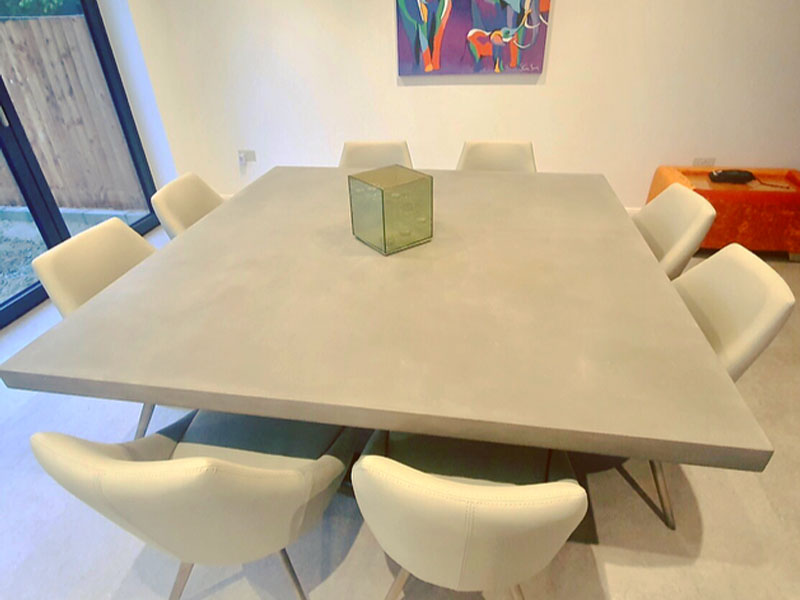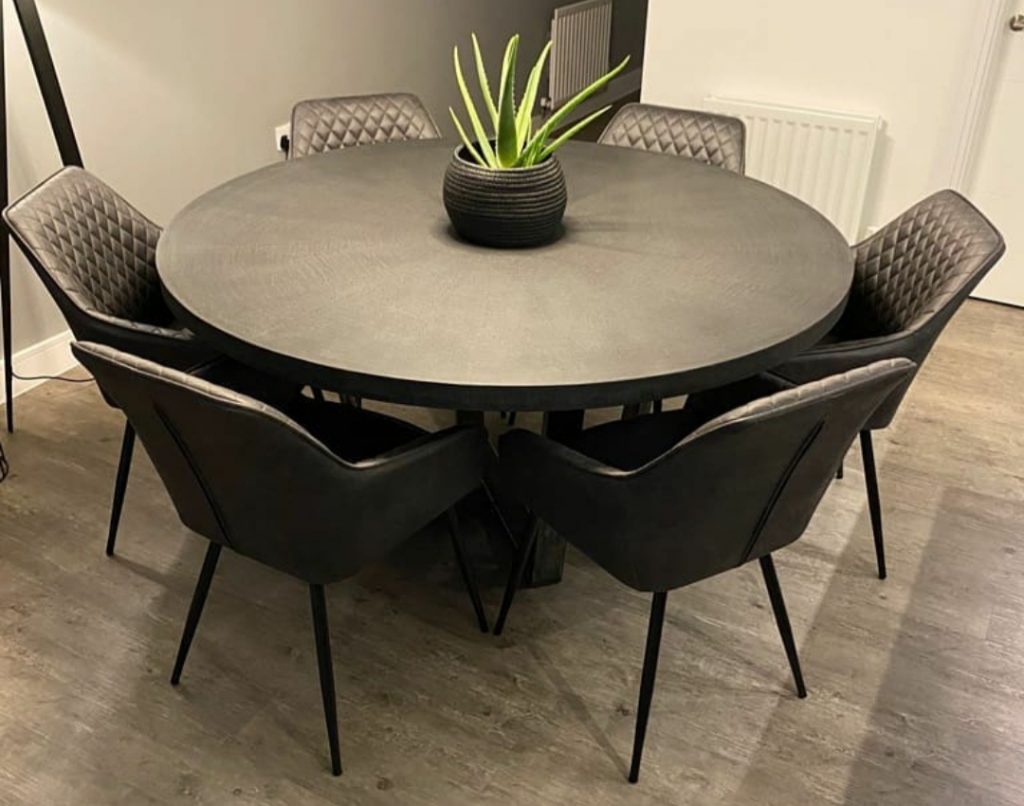


A dining table can look perfectly proportioned in a photograph, then leave too little room to pull out a chair once it reaches your kitchen. That is why knowing how to order bespoke dining furniture starts with the space around the table, not simply the table itself. A made-to-measure piece should make everyday meals, busy family gatherings and long evenings with friends feel easier, while becoming a stunning centre piece within the room.
For a polished concrete dining table, the process also gives you the opportunity to balance scale, shape, colour and base design with the material’s distinctive hand-finished character. The result is not an off-the-shelf compromise. It is furniture made for the way you live.
Start with the room, not the seat count
The most common starting point is, understandably, the question: “How many people do we need to seat?” It is useful, but it is not enough. An eight-seater table may suit your family on paper, yet still feel oversized if it blocks a route to the garden, crowds an island or prevents chairs from being used comfortably.
Measure the full dining area, including nearby doors, radiators, kitchen units and walkways. Then mark out the proposed tabletop on the floor with masking tape, cardboard or sheets of paper. This simple exercise reveals far more than a plan view. Walk around it, open doors and pull dining chairs into position as if guests were sitting down.
As a practical guide, allow around 90cm from the edge of the table to a wall or fixed unit where possible. In a tighter room, 75cm can work for occasional use, but daily circulation will feel more restricted. If people need to walk behind occupied chairs, more clearance is worth protecting.
Seat width matters too. Allow approximately 60cm per diner for a comfortable place setting, particularly if you use generous upholstered chairs. A narrower allowance may suit a bench or compact chair, but it can make a large dinner feel cramped.
Choose a shape that works with your layout
Bespoke dining furniture gives you the freedom to choose a shape based on the room rather than being limited by a standard range. Each option has a different effect on both circulation and atmosphere.
A rectangular dining table is often the natural choice for long, open-plan rooms and larger households. It offers clear seating positions and makes efficient use of a linear space. For homes that regularly host eight, ten or twelve people, a longer rectangular top can create the generous, sociable setting that a smaller round table cannot.
Round tables are excellent in square rooms or areas where movement around the table is important. With no corners to navigate, they soften a kitchen-diner and encourage conversation across the whole table. Their trade-off is that they can need a surprisingly large footprint once chairs are included.
Oval and racetrack shapes bring the best qualities of both. They retain the length needed for larger gatherings while easing movement around the ends. A softened rectangular profile can also sit beautifully beside contemporary glazing, curved joinery or an architectural kitchen island.
For particularly awkward layouts, a bespoke shape may be the answer: a narrowed end near a doorway, a subtly curved edge to follow a bay window, or dimensions designed precisely around a pendant light and seating arrangement.
Decide what needs to be bespoke
A commission does not need to mean reinventing every detail. Sometimes a proven table design with adjusted dimensions is the most sensible route. It retains a well-resolved proportion while ensuring the finished piece fits your space properly.
It is worth deciding where customisation will make the greatest difference. Usually, that means the tabletop length and width, shape, concrete colour or finish, and the leg style. The base is not just a visual choice. It affects where chairs can sit, how easily people can tuck their knees under the table and how much visual weight the table carries in the room.
A central pedestal or sculptural base can give diners greater flexibility at the ends and corners. Angular legs may suit an urban, industrial scheme and create a stronger architectural statement. More discreet leg positions can make a heavy-looking material appear lighter. The right answer depends on your chairs, your room and how the table will be used.
If your requirements are close to a standard six, eight or ten-seater format, consider whether a Classic Collection size meets the brief. A standardised configuration can offer faster fulfilment and stronger price efficiency. Bespoke is most valuable when a standard table leaves a genuine compromise in size, shape, finish or detailing.
Bring the material into the decision early
Polished concrete has a presence that is difficult to replicate. It is tactile, substantial and naturally varied, with a depth of tone that works especially well in modern extensions, open-plan kitchens and interiors where timber, steel, stone and textured plaster sit together.
It is also a hand-finished material. That means gentle movement in shade, fine marks and variation are part of its character, rather than defects to be eliminated. Samples and photographs are helpful, but a bespoke commission should begin with an appreciation that no two concrete surfaces are identical.
Think about the colours already fixed in your room. A pale concrete top can lift darker cabinetry and warm timber flooring. Mid-grey offers a balanced, architectural look, while deeper tones can create drama against lighter walls. The base can either blend into the scheme or provide contrast, depending on whether you want the table to recede or take centre stage.
For everyday use, ask how the surface is sealed and what care it needs. Quality polished concrete dining furniture is designed to be durable and stain resistant, but it should still be treated as a crafted surface. Use mats for very hot cookware, wipe spills in good time and avoid harsh abrasive cleaners. Honest care advice is more useful than a promise that any natural material is entirely maintenance-free.
Share the details that prevent expensive surprises
Before approving a design, provide accurate information about access. Concrete tables are substantial pieces of furniture, and delivery needs to be planned with the same care as the design. Measure front doors, hallways, tight turns, staircases, lifts and any external steps. If access is limited, the maker can advise on practical options before the table is in production.
It is also sensible to consider flooring and floor structure, especially in upper-floor flats or older properties. A specialist maker can confirm the expected weight of the chosen design, allowing you to make an informed decision. This is not a reason to avoid concrete. It is simply part of ordering it properly.
When requesting a quote or beginning a conversation, have the following to hand:
- Room measurements and a few photographs showing the wider layout
- Your preferred seating number, chair style and whether benches will be used
- Ideas on tabletop shape, finish, colour and base design
- Delivery access details, including stairs, parking and any tight corners
These details give the maker a clearer starting point and reduce the risk of revising the design later.
Ask for a design you can properly approve
A bespoke table should not move into production based on a vague description. Ask for the confirmed dimensions, shape, finish, base specification and expected delivery timescale in writing. If a drawing, visual or sample is available, use it to test the design against the room and your existing furniture.
Pay close attention to tabletop thickness, overhang and leg placement. A beautifully proportioned table can feel wrong if the legs interfere with the chairs you already own. If you are choosing new chairs too, establish their width, arm height and whether they will tuck beneath the tabletop.
This is also the moment to be candid about how you live. A household with young children, frequent entertaining and daily homework around the table has different needs from a formal dining room used at weekends. The finish, dimensions and seating plan should be shaped by real life, not just an aspirational image.
Build in time for craftsmanship and delivery
Bespoke furniture takes time because it is made in stages. Design approval, mould preparation, casting, curing, finishing, sealing and arranging delivery each have a place in the process. A rushed timescale can limit choices or create unnecessary pressure around a renovation deadline.
Where possible, begin the conversation before your kitchen is fully finished. You do not need every decorative decision finalised, but knowing the room dimensions, flooring level and kitchen layout early allows the table to be designed with confidence. Arrange delivery after the dusty work is complete and access routes are clear.
Daniel Polished Concrete approaches each commission as a conversation, not a transaction. The most successful projects begin with a clear understanding of the room, then allow the material and craftsmanship to do what they do best: create a table with real presence and a purpose-built place in the home.
A bespoke dining table earns its place through years of ordinary moments as much as special occasions. Measure carefully, ask direct questions and choose the details that support the way your household gathers. The right piece will feel as though the room was always waiting for it.