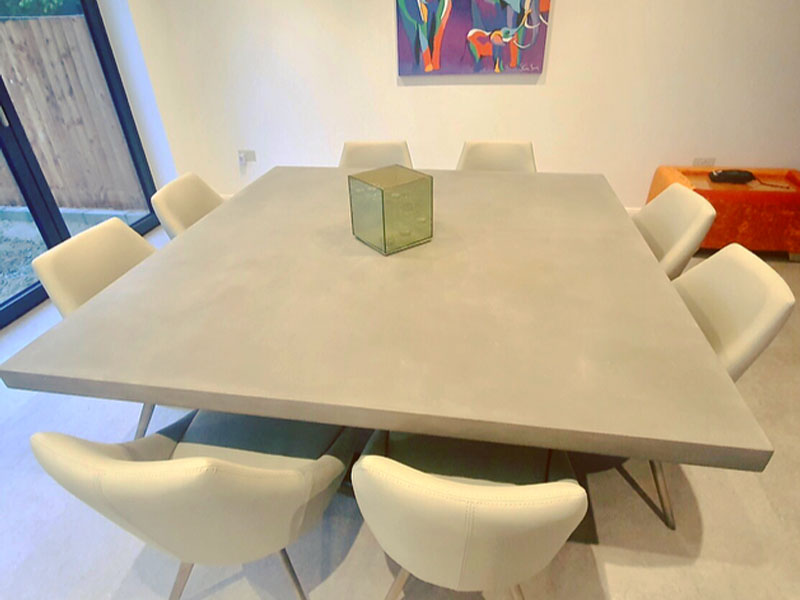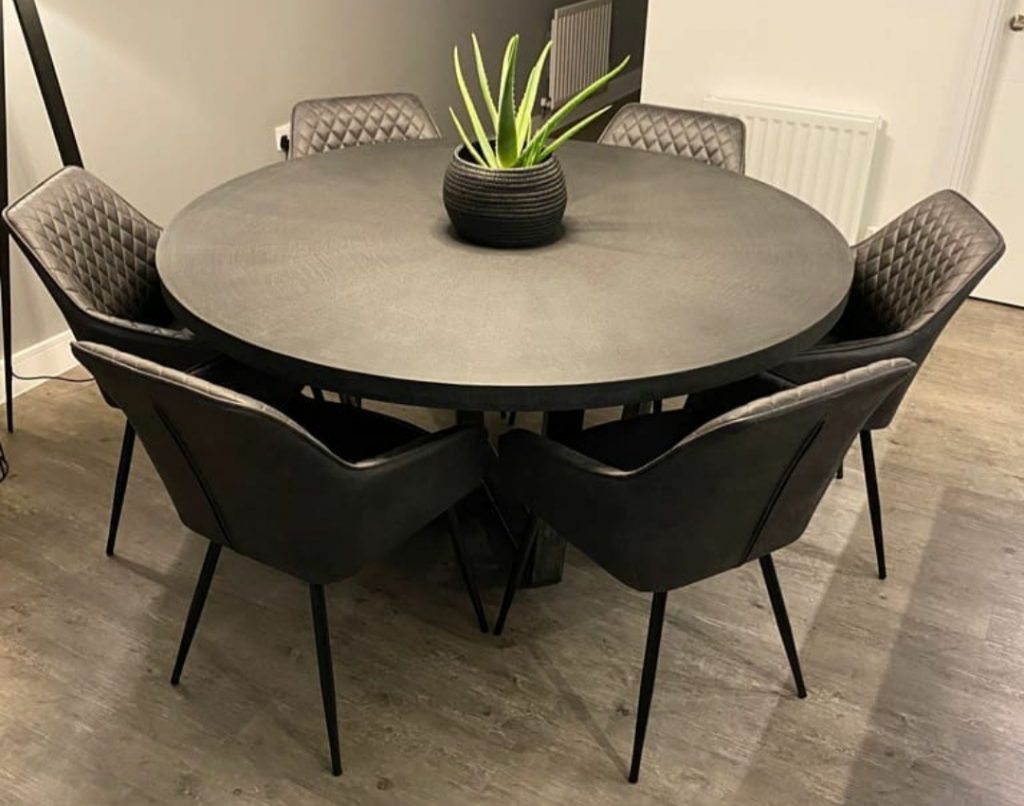

A polished concrete dining table is made to be lived around: family suppers, red wine on a Friday, homework, flowers, and the occasional enthusiastic craft project. Knowing how to clean a polished concrete table properly keeps that distinctive hand-finished surface looking its best without stripping away the protective finish that makes everyday use so easy.
The good news is that polished concrete is not a high-maintenance material. It does, however, reward a gentler approach than many people expect. Treat it like a finely finished piece of furniture rather than a patio slab, and it will retain its depth, subtle movement and architectural character for years.
Start with the finish, not the concrete
A dining table is not left as raw, untreated concrete. Quality polished concrete furniture is carefully sealed to help resist moisture, food stains and daily wear while preserving the natural variation within the material. That seal is the part you are cleaning and protecting most often.
This matters because concrete surfaces vary. A table may have a softly matt finish, a deeper sheen, visible aggregate or a more uniform contemporary appearance. Different makers can also use different sealing systems. If your table came with care guidance, follow that first, especially where a particular product has been recommended.
For most sealed polished concrete tables, the reliable rule is simple: use a soft cloth, warm water and a mild, pH-neutral cleaner. Avoid anything abrasive, strongly acidic or highly alkaline.
How to clean polished concrete table surfaces day to day
For everyday cleaning, wipe the table after use with a soft microfibre cloth lightly dampened with warm water. This removes crumbs, food residue and fingerprints without leaving a rough texture behind. If the surface only has dry dust or loose debris, use a dry microfibre cloth first rather than dragging grit across the finish.
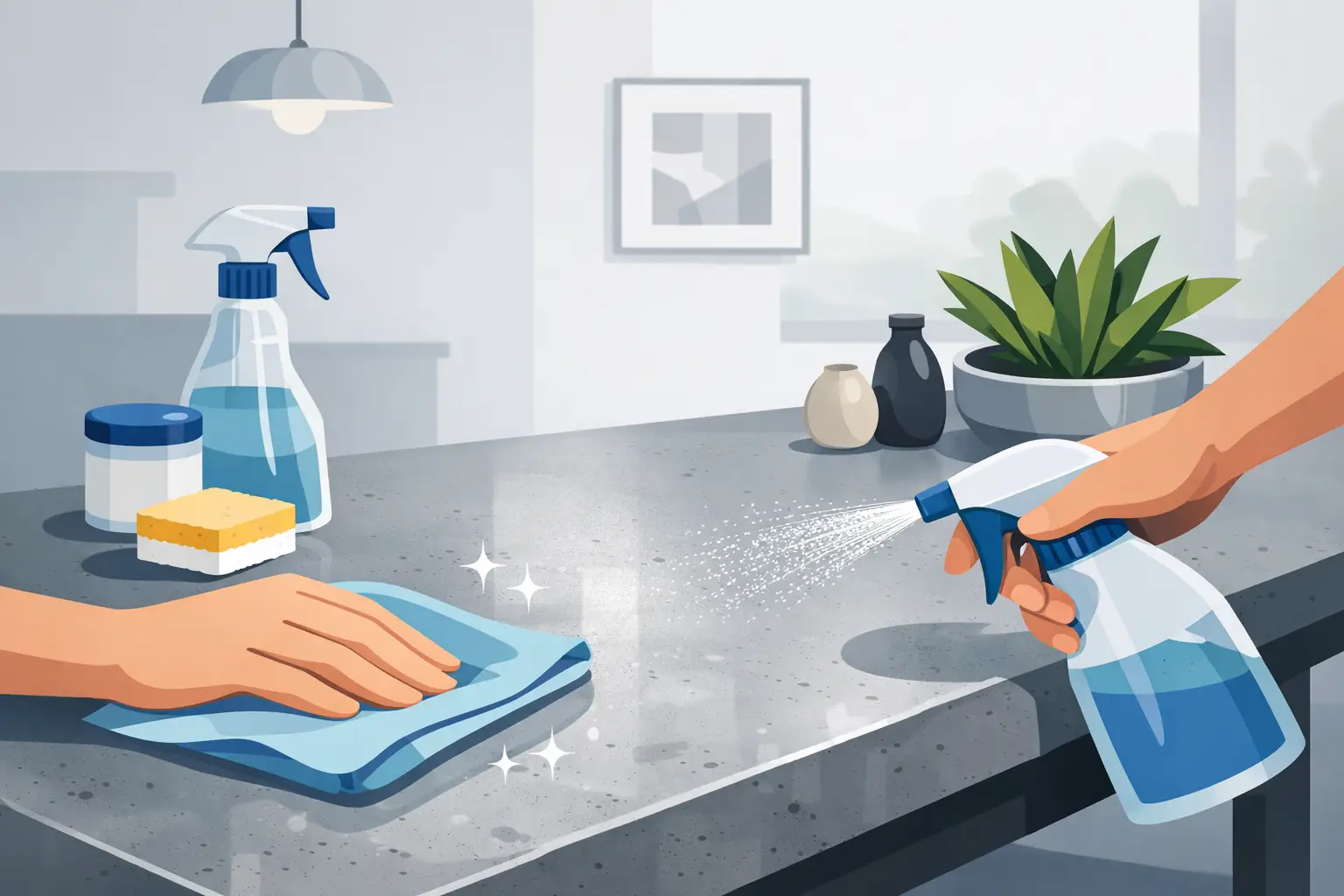
For a more thorough clean, add a very small amount of pH-neutral washing-up liquid to warm water. Dampen the cloth rather than soaking it, wipe the surface in broad overlapping strokes, then use a separate clean damp cloth to remove any soap residue. Finish by drying with a soft towel or microfibre cloth.
Drying is a small but worthwhile final step. It prevents water marks, particularly in hard-water areas, and leaves the table ready for its next gathering. There is no need to scrub or polish aggressively. The character of a concrete table comes from its hand-worked finish, not from a glossy coating applied at home.
Clean spills while they are fresh
The protective sealer gives you useful time to deal with spills, but it is not a reason to leave them sitting overnight. Blot wine, oil, coffee, fruit juice and sauces as soon as practical, then wipe with a damp cloth and mild pH-neutral cleaner if needed.
Blot rather than rub. Rubbing a spill can spread it across a larger area and push coloured liquid into fine surface texture. This is particularly relevant with red wine, turmeric, balsamic vinegar and oily dressings – the sort of things that make a dining table feel properly used.
Use coasters for very wet glasses and placemats or trivets beneath hot serving dishes. A sealed concrete table is wonderfully capable in a busy kitchen-diner, but these simple habits reduce the risk of marks and protect the finish from sustained heat and moisture.
What not to use on a polished concrete table
The wrong cleaner can dull the surface, damage the sealer or leave a residue that attracts more dirt. Household products are often designed for ceramic, stainless steel or plastic, not a hand-finished concrete furniture surface.
Avoid the following:
- Bleach, ammonia and harsh disinfectants
- Limescale removers, vinegar, lemon juice and other acidic cleaners
- Oven cleaners and strong degreasers
- Scouring pads, steel wool and abrasive powders
- Furniture polish, waxes or silicone sprays unless specifically approved for your table finish
Vinegar is a common suggestion for general household cleaning, but it is not suitable here. Its acidity can compromise certain sealers over time. Equally, a heavily perfumed multi-surface spray may leave a film that makes a beautifully tactile table feel slightly sticky or streaky.
If you want to disinfect the surface after preparing food, first check the guidance supplied with your table. Where no specific advice is available, use the mildest suitable product sparingly, avoid prolonged contact and wipe it away with clean water afterwards. Over-cleaning with powerful chemicals is usually more damaging than everyday household use.
Removing marks without overreacting
Not every change in appearance is a stain. Polished concrete has natural tonal variation, pinholes and movement created during making. These are part of its material honesty, and they are one reason every table feels individual. A pale cloud, a darker patch or a faint ring may be residue on the surface, but it may also be moisture temporarily affecting the finish.
Start with the gentle method: warm water, pH-neutral cleaner and a soft cloth. Clean the full affected area rather than only the centre of the mark, then dry it completely. A light residue will often lift with this approach.
For greasy marks, place a little mild washing-up liquid in warm water and clean gently. Do not use a concentrated degreaser or try to abrade the patch away. If a mark remains after cleaning, give it time to dry fully before judging it. Some moisture-related darkening can lessen as the surface dries.
When a stain needs professional advice
Persistent stains, scratches, chips or areas where the finish seems worn should be assessed before you try a repair product. DIY stone polishes and concrete sealers can alter the sheen or colour, creating a more noticeable patch than the original issue.
This is one area where it pays to speak to the maker, particularly with a bespoke piece. A specialist can identify the likely finish and advise whether the surface needs a careful local repair, a reseal or simply a more appropriate cleaning method. The aim is to preserve the table’s consistent hand-finished appearance, not to make one small area look newly coated.
Protect the table during real life
Cleaning is only part of caring for a concrete dining table. A few everyday choices make a meaningful difference, especially in a family home or entertaining space.
Do not cut directly on the surface. Knives can damage the protective finish and leave fine scratches, even if the concrete beneath is exceptionally durable. Use a chopping board, and use felt pads beneath decorative objects, lamps and heavy centrepieces that may be moved regularly.
Be mindful of heat. Serving bowls and plates are generally part of normal table life, but cookware taken directly from the hob or oven should sit on a trivet. Sudden, concentrated heat is rarely kind to any dining-table finish, whether it is concrete, timber or stone.
If the table is in strong, uninterrupted sunlight, consider the wider interior setting too. UV exposure does not usually create a dramatic overnight change, but curtains, blinds or filtered light can help keep the overall look of a carefully designed dining space balanced over the long term.
How often should you clean it?
Wipe up spills immediately, give the table a quick wipe after meals when needed, and carry out a gentle full clean once a week or so in a busy household. A table used less frequently may only need a proper clean before guests arrive or when it begins to show fingerprints and food residue.
More cleaning is not always better. Repeated use of unsuitable products is far more likely to affect the finish than a few missed daily wipes. The best routine is a simple one that fits naturally around the way you use the table.
A polished concrete table should never feel precious. Its surface will develop a lived-in presence, while the hand-finished texture and subtle variation continue to make it a stunning centre piece. Care for it with a light hand, clear spills promptly and let the material do what it was made to do: bring lasting character to the everyday moments gathered around it.