
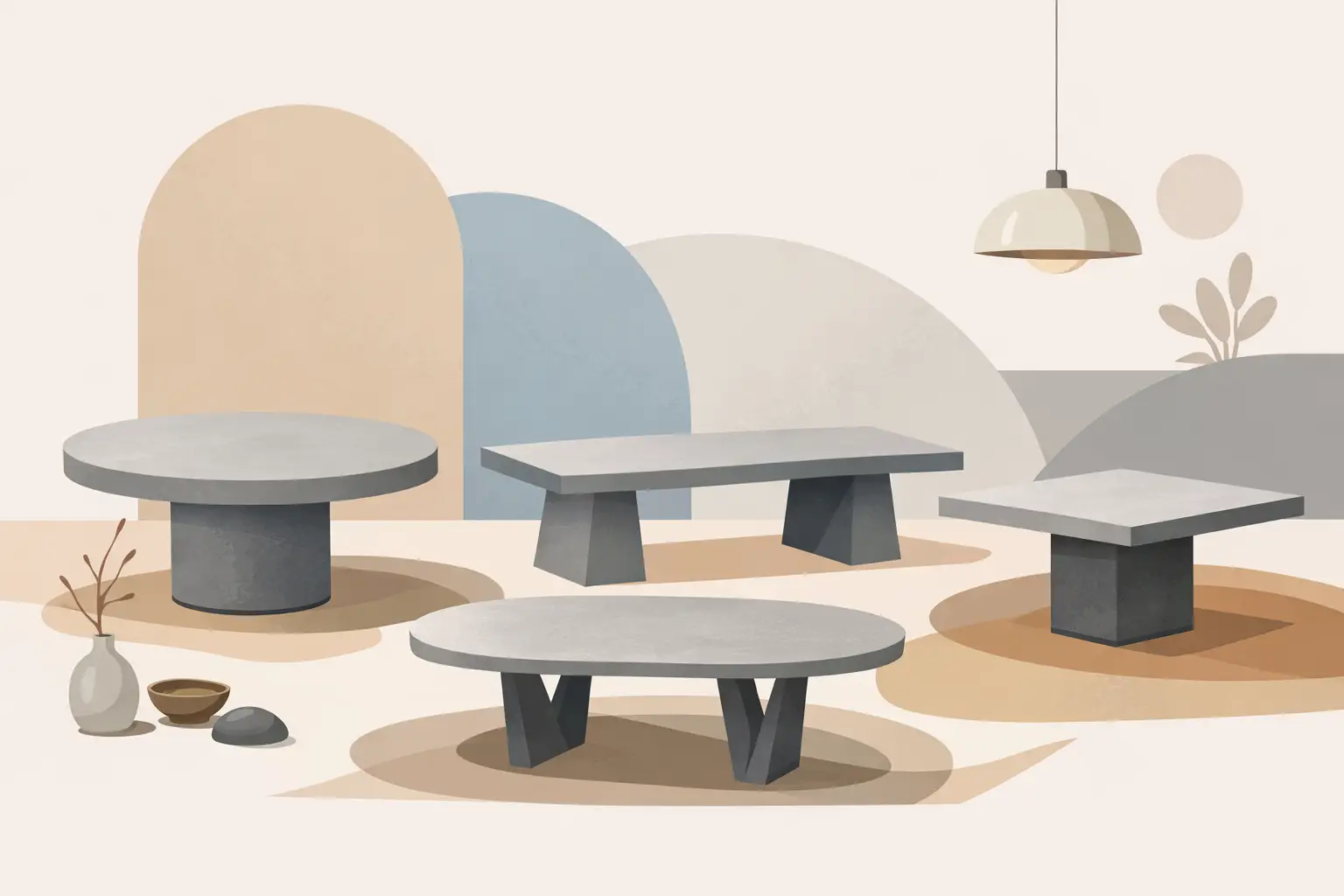
A dining table can make a beautiful kitchen extension feel either perfectly resolved or slightly awkward. The difference is often not the finish or the chairs, but the outline of the top. This guide to concrete dining table shapes will help you choose a design that suits how you live, how your room flows and the kind of statement you want at its centre.
Polished concrete brings a calm, architectural presence to a dining space. Its subtle movement, hand-finished texture and depth of colour give each table its own character. Choosing the right shape makes sure that character works hard for your home, whether you are planning relaxed family suppers, generous weekend hosting or a striking centrepiece for an open-plan room.
Start with the room, not the seat count
It is tempting to begin with the question, “How many people do we need to seat?” That matters, but the footprint of the room matters first. A table needs breathing space around it for chairs to be pulled out, people to pass behind them and the room to feel comfortable rather than crowded.
As a useful starting point, allow around 900mm between the table edge and a wall, kitchen island or sideboard. More is better where the dining route is regularly used. In a compact room, a smaller table with a softer shape can often seat the same number more comfortably than a large rectangular design with hard corners.
Also consider the visual lines already present. A long island, roof lantern or run of glazing may call for a rectangular table that follows the architecture. A square kitchen-diner with a central pendant can feel more balanced with a round or square top. The best shape does not simply fit the room on paper. It makes movement feel natural and gives the space a clear focal point.
Rectangular concrete dining tables
A rectangular concrete dining table is the natural choice for many larger dining rooms and open-plan kitchens. It offers clear places at the sides, works beautifully beneath a linear pendant light and makes the most efficient use of a long room.
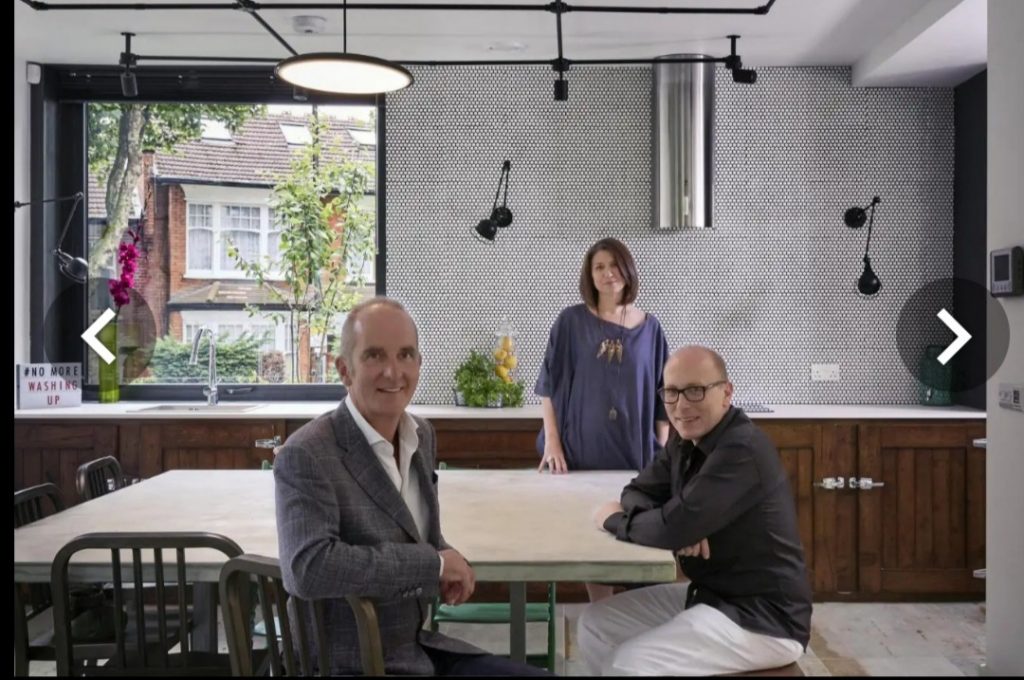
For families and frequent hosts, this is usually the most practical option. A 6, 8 or 10 seater rectangular table provides predictable seating and leaves room for serving dishes through the centre. It also gives a strong, grounded look beside a kitchen island, particularly when the table length relates thoughtfully to the island rather than competing with it.
The trade-off is the corner. In a narrow space, square corners can interrupt circulation, especially if the table is close to a doorway or the end of an island. This is where a rectangular top with rounded corners or a gentler radius can transform the way the room feels without losing the generous seating plan.
Best for long rooms and generous entertaining
A rectangle is ideal when your priority is capacity, symmetry and a confident architectural silhouette. It is also the most adaptable shape for a bespoke commission: length, width, corner radius, concrete colour and leg position can all be tailored around the room and your preferred chairs.
Round concrete dining tables
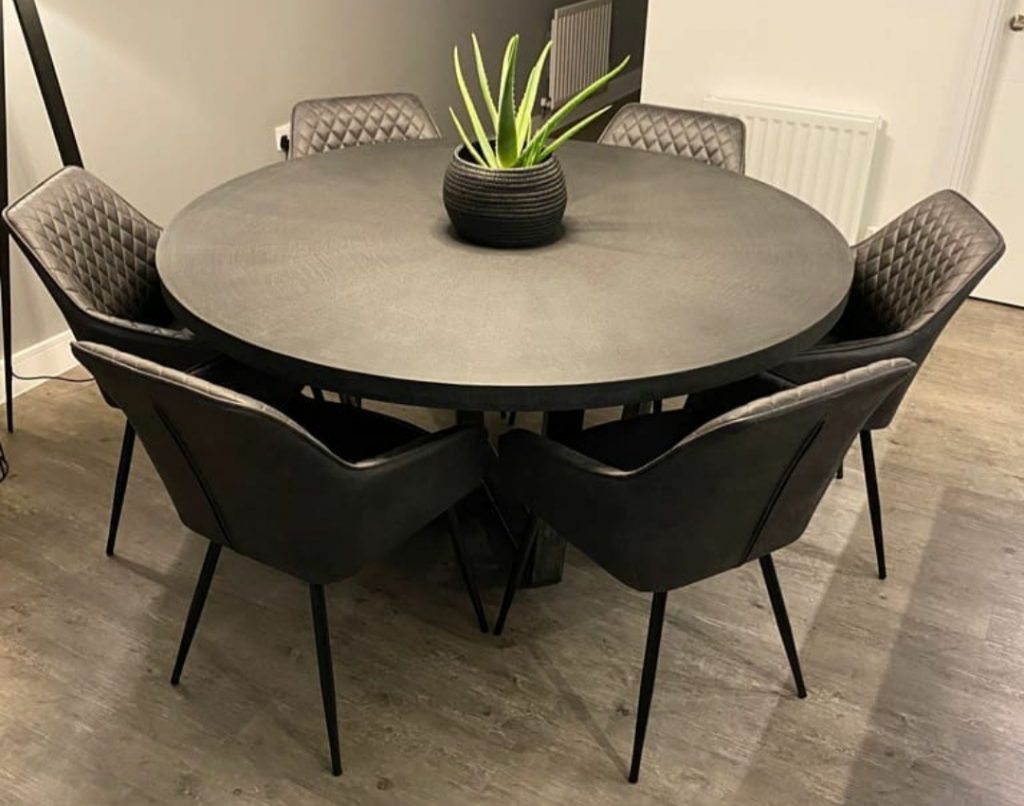
Round tables bring people together naturally. There is no head of the table, every guest is within easy conversation range and the absence of corners creates an easy route around the dining area. For sociable homes, that sense of connection is a real advantage.
A round polished concrete top can be especially effective in a square room, a bay-window dining area or an open-plan kitchen where a softer form is needed to balance the straight lines of cabinetry. It has a sculptural quality from every angle, making it a particularly strong choice where the table will be seen from the lounge as well as the kitchen.
Seating around a round table is less fixed than on a rectangle. That can be useful for flexible entertaining, but it means chair size and pedestal or leg design need careful thought. A central base keeps the perimeter clear, while a four-leg design may limit where chairs can sit. Larger diameters can also make it harder to reach shared dishes in the middle, so a round table is not always the best answer for very large dinner parties.
Best for sociable, compact and square spaces
Choose round when conversation and circulation are more important than fitting the maximum number of guests into a narrow footprint. It is a beautiful way to soften a contemporary kitchen while retaining the material presence of concrete.
Oval concrete dining tables
An oval is often the answer when a room needs the length and seating capacity of a rectangle but the gentler movement of a round table. It carries the eye along the room without the abrupt stop of a corner, creating a relaxed, elegant feel that is particularly suited to family homes.
The curved ends make an oval easier to live around in tighter circulation areas. There is less chance of catching a hip on the corner during breakfast rushes, and chairs at the ends can feel more integrated than they do with a traditional rectangle. The shape also works well in an open-plan space, where its softer outline can make a substantial table feel less imposing.
An oval requires careful proportion. If it is too narrow, it can look stretched; too wide, and it begins to lose the advantage of its flowing form. This is one of the occasions where made-to-measure design is valuable. The right length-to-width relationship will depend on your room, dining chairs and how many people you expect to seat day to day.
Best for busy family routes
An oval concrete table suits homes that want a large, practical dining surface without sharp corners. It offers a refined, contemporary alternative to the conventional rectangle and looks at home in both pared-back and warmly layered interiors.
Square concrete dining tables
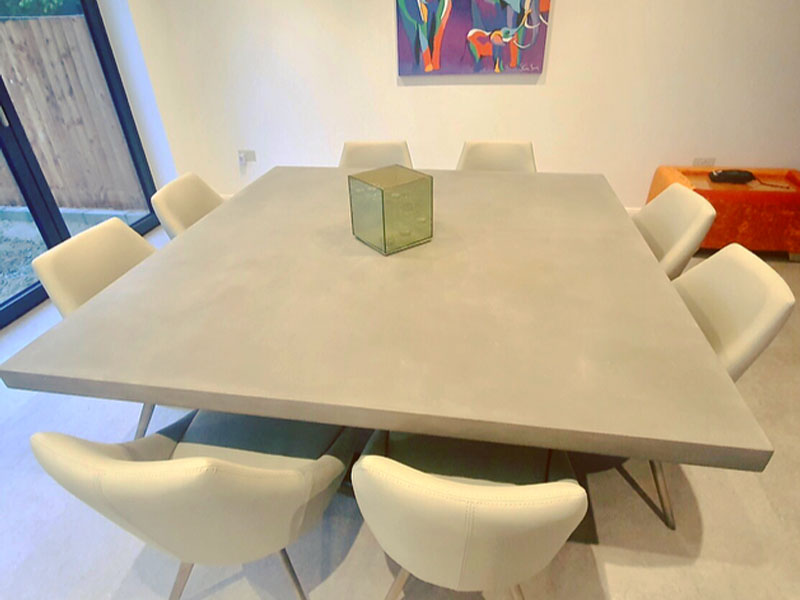
Square dining tables create a more intimate gathering than long rectangular designs. Everyone faces one another easily, which makes them well suited to four, six or occasionally eight people where the room has enough width. They can look exceptional beneath a single central pendant or in a room with a strong symmetrical layout.
This shape has a bold, monolithic quality in polished concrete. A square top paired with a carefully chosen base can feel like a piece of architectural furniture rather than simply a place to eat. It works particularly well in contemporary extensions with large-format flooring, steel-framed doors or clean-lined joinery.
The limitation is space efficiency. A square table occupies more width than many homeowners expect, and it can dominate a narrow kitchen-diner. If you need to seat eight regularly but the room is more rectangular than square, an oval or softened rectangle will usually give you better circulation.
Consider the base as part of the shape
The table top is only half the decision. A concrete dining table has visual weight, so the base should support both the structure and the overall feel of the design. A central pedestal gives a round or square table a clean, uninterrupted seating edge. Timber or steel legs can introduce warmth or contrast, while inset legs keep the ends free for guests.
Leg placement also affects comfort. If you regularly use armchairs, benches or wider upholstered dining chairs, confirm the usable space between the legs rather than relying on the overall table length. For a bespoke table, this is a small detail that makes a significant difference every day.
Let everyday use guide the final choice
Concrete is hard-wearing and sealed for everyday dining, but a handcrafted table should never be selected purely as an image on a mood board. Think about where children will sit, whether you use a bench, how often you host and where platters, flowers or homework tend to gather. A table that feels generous on a quiet Tuesday will also be a pleasure when the house is full.
At Daniel Polished Concrete, each top is hand-finished, so dimensions, curves, colour and leg style can be considered together rather than chosen in isolation. The aim is not simply to fill a space, but to create a stunning centre piece with the right proportions for the life around it.
If you are torn between two shapes, mark the footprints on the floor with masking tape and place chairs around them. Walk past, sit down and imagine the room on an ordinary morning as well as a full dinner party. The right concrete dining table shape will feel considered before it is made, then quietly become the place where your home comes together.