
A dining table can have the most beautiful polished concrete top in the room, yet still feel wrong if the base does not suit the space, the seating or the way your family gathers. This guide to choosing table base styles starts where good bespoke design should: with the life happening around the table, not simply the view of it in a photograph.
A base changes more than the silhouette. It determines where chairs can go, how easily guests move around the table, whether knees meet a leg at every seat and how substantial the whole piece feels. With a concrete dining table, it also needs to be engineered with real care. The top has presence and weight, so its support should look considered, balanced and entirely at home beneath it.
Begin with the Table Shape and Seating Plan
Before choosing leg styles, establish the table’s shape, size and usual number of diners. A six-seater used for weekday meals asks different questions from a ten or twelve-seater built for long Sunday lunches and celebrations.
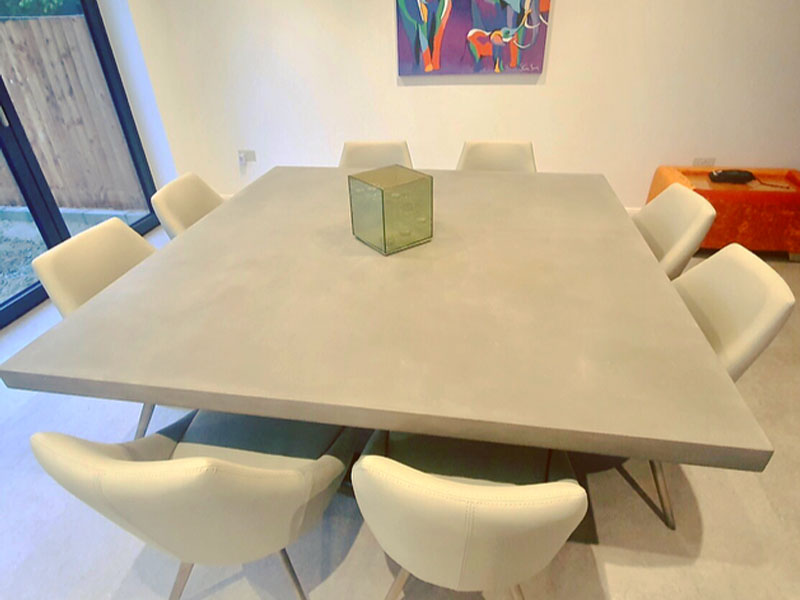
A rectangular table generally gives the widest choice. It works beautifully with two end legs, a central trestle arrangement, U-shaped frames or an architectural pedestal base. The critical detail is leg placement. Bases set too close to the corners can restrict the people sitting at either end, while bases positioned thoughtfully in from the ends leave room for chairs and give a long concrete top a calmer, more deliberate profile.
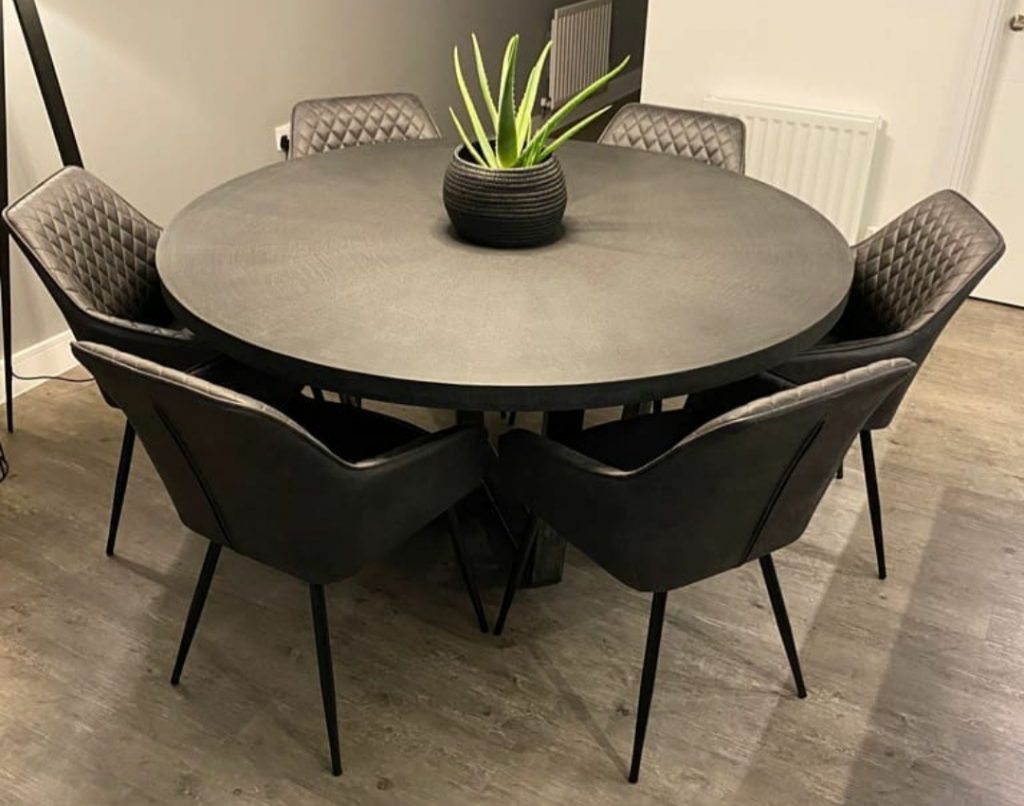
Round and oval tables benefit particularly from a central base. With no corners to define seating positions, a pedestal lets guests sit wherever they please without negotiating table legs. This is often the most elegant solution in a compact dining area, where every inch of circulation matters. For a large round table, however, the pedestal must have enough visual and structural weight to support the overhang without appearing undersized.
Think honestly about your maximum seating, rather than only everyday numbers. If you want eight people around a table at Christmas, make sure each guest can pull in a chair without straddling a frame or knocking knees with the person opposite. A good base should support sociable dining, not dictate it.
Guide to Choosing Table Base Styles by Look and Use
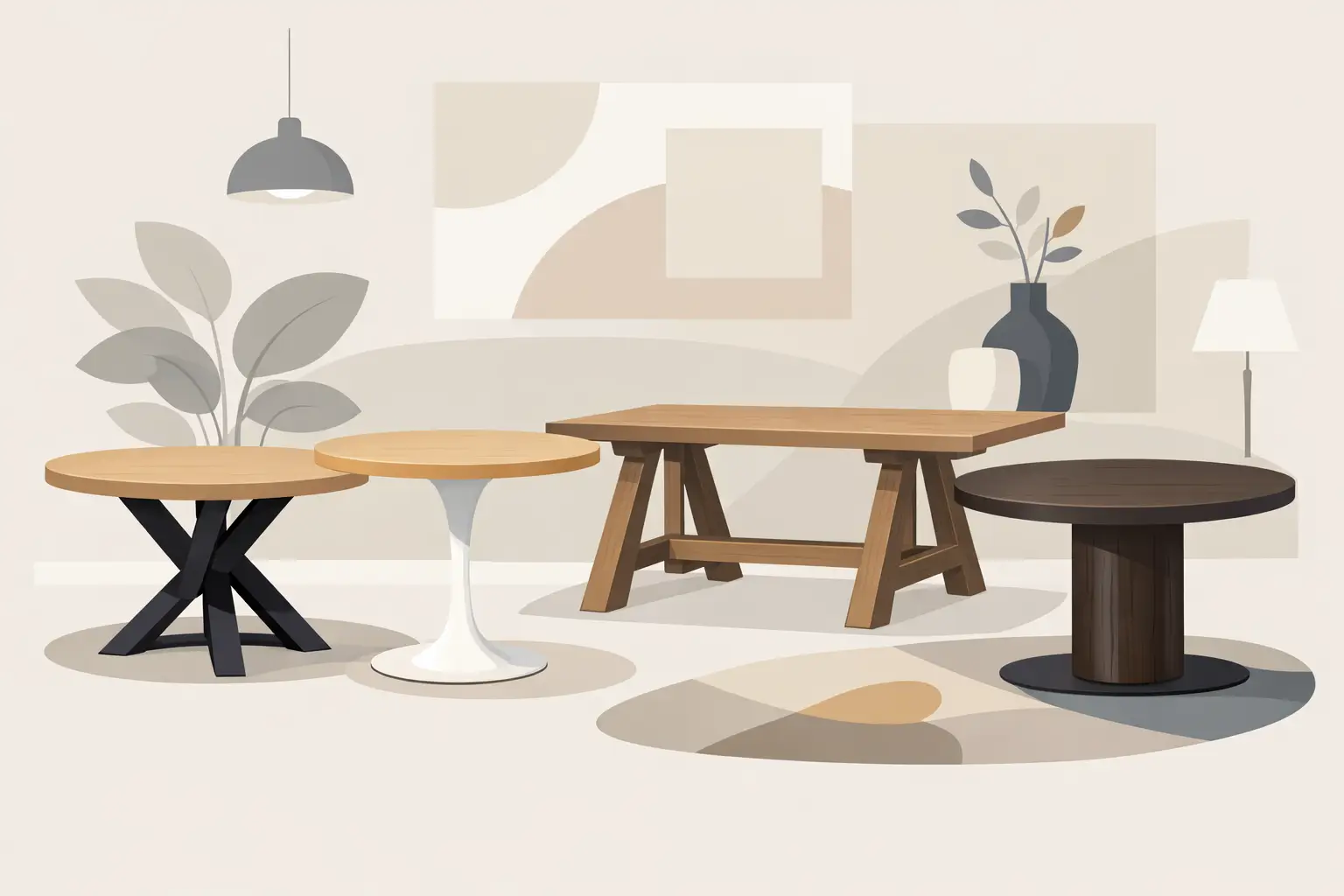
There is no single best table base style. The right choice depends on whether you want the table to feel light, industrial, sculptural, relaxed or formally architectural. These are the principal directions worth considering.
Pedestal bases for open, sociable seating
A pedestal base sits beneath the centre of the tabletop, either as a single substantial form or a paired central structure. It is an excellent choice for round, oval and softer-edged dining tables because it creates uninterrupted space around the perimeter.
Visually, a pedestal can make a concrete table feel almost sculptural. A curved, faceted or clean-lined central base turns the table into a genuine centrepiece, particularly in an open-plan kitchen with generous sightlines. It also keeps the floor beneath the edge of the top open, which can make a room feel less crowded.
The trade-off is engineering. Larger tops require a base with the correct footprint and internal support, particularly where the concrete has a generous overhang. This is not a place for a light-looking base chosen only for aesthetics. The best designs create that sense of effortlessness because the structure has been resolved properly behind the scenes.
Trestle bases for generous, flexible tables
A trestle base usually uses two supports joined by a central beam. It has a confident, workshop-inspired character that suits long rectangular dining tables, especially eight and ten-seater formats. In black steel, it offers an urban design edge beneath polished concrete; in timber, it can soften the material and bring warmth to a room with oak flooring or painted joinery.
Trestles are naturally well suited to substantial tops, making them a reassuring option for family tables. They also leave the long sides comparatively clear, so diners can be spaced along the table with less interruption than they might find with several individual legs.
Their limitation is at the ends. Depending on the position and width of the supports, end seating may be less comfortable. A bespoke build allows this to be addressed by setting the trestles inboard or adjusting the overall proportions, but it is always worth planning chairs before finalising the design.
U-shaped and A-frame legs for a clean architectural line
Steel U-shaped legs are a favourite for modern kitchens, extensions and loft-inspired interiors. Their simple geometry complements the natural movement and hand-finished character of polished concrete without competing with it. Two substantial U frames can make a long dining table feel crisp, grounded and contemporary.
A-frame bases bring a little more visual movement. The angled profile feels purposeful and can echo pitched ceiling lines, black-framed glazing or other architectural details in the room. Both styles work especially well when you want the tabletop to remain the hero.
With either option, consider chair width and where people sit. The frames should be placed far enough from the table ends to give diners room, while still supporting the top correctly. Slimmer steel can look refined, but it needs sufficient strength for the scale of a concrete tabletop. Strong proportions will always age better than a base that looks too slight.
X-frame bases for a stronger industrial statement
An X-frame gives the table a bolder, more distinctive stance. It suits homes where steel is already part of the interior language: exposed beams, crittall-style doors, brickwork or darker cabinetry. Beneath a concrete top, it can create a confident industrial look without losing the warmth that comes from a hand-finished surface.
The crossed profile does occupy more visual space than a U-frame or simple trestle, so it is often best in larger rooms with breathing space around the table. It can also affect legroom at particular seating positions. For that reason, an X-frame is often most successful when designed around a specific table length and chair layout rather than treated as a standard add-on.
X-frame bases for a stronger industrial statement
An X-frame gives the table a bolder, more distinctive stance. It suits homes where steel is already part of the interior language: exposed beams, crittall-style doors, brickwork or darker cabinetry. Beneath a concrete top, it can create a confident industrial look without losing the warmth that comes from a hand-finished surface.
The crossed profile does occupy more visual space than a U-frame or simple trestle, so it is often best in larger rooms with breathing space around the table. It can also affect legroom at particular seating positions. For that reason, an X-frame is often most successful when designed around a specific table length and chair layout rather than treated as a standard add-on.
Plinth bases for a sculptural centrepiece
A plinth base is a solid, continuous support, usually set back from the edge of the tabletop. It gives a dining table a gallery-like presence and is particularly striking in minimal, design-led spaces. A plinth in a complementary finish can make the table read as one composed object rather than a top placed on legs.
This style is ideal when the table is intended to anchor a large kitchen-diner. It feels substantial, considered and calm. The setback is essential: it preserves toe room, helps the table appear to float slightly and stops the base from becoming a bulky obstacle under the dining edge.
A plinth is less suited to a very tight room, where a more open base may allow better visual flow. It is also worth considering how it meets the flooring. On a textured timber floor, stone-look porcelain or polished concrete floor, the proportions and finish need to be chosen carefully so the table feels integrated rather than overly heavy.
Match the Base Material to the Interior
The base should not be an afterthought to the concrete colour and finish. Black powder-coated steel gives definition and works naturally with charcoal, grey and lighter concrete tones. It is practical, durable and particularly effective where black hardware, window frames or pendant lights already appear in the scheme.
Timber bases introduce contrast. Oak can bring warmth to a cooler grey concrete top and connect the table to existing flooring, shelving or kitchen details. The result is less overtly industrial and often more relaxed, while still retaining the distinctive presence of concrete.
For a quieter, monolithic effect, a concrete or plaster-like plinth can make the whole table feel architectural. This approach needs balance. Matching everything too closely can make a large table visually dense, whereas a subtle change in tone or texture gives the form definition.
Consider the Room from Every Angle
Dining tables are rarely seen only from the head of the table. In an open-plan home, the base may be visible from the kitchen island, the sofa and the entrance. Walk through the room mentally and ask what the table needs to do from each viewpoint.
An open steel frame can keep a compact extension feeling airy. A pedestal can make a round table more inviting from all sides. A broad plinth or X-frame can become a deliberate focal point in a spacious room. None is universally better. The successful choice is the one that works with your room’s scale, sightlines and daily habits.
Also allow proper clearance around the table. As a useful starting point, aim for around 90 cm between the table edge and a wall or fixed furniture where possible, with more space desirable behind frequently used chairs. A beautiful base cannot compensate for a dining area that feels difficult to move through.
Let the Base Be Designed with the Top
The strongest bespoke tables are not assembled from separate choices. The tabletop thickness, edge profile, concrete colour, base finish, leg position and seating plan all inform one another. This is especially true with polished concrete, where the material has a tactile depth and individual character that deserves a base designed to support it properly.
At Daniel Polished Concrete, each commission can be shaped around the dimensions of the room and the people who will use it. Bring measurements, photographs of the space and, if possible, the dimensions of your preferred dining chairs. The right base will not merely hold up the table. It will give your table the confidence to belong there for years to come.