
Ten place settings look generous on paper. In a real room, they can feel either beautifully balanced or awkwardly cramped, and the difference usually comes down to proportion. If you are asking what table size seats ten, the short answer is that most rectangular tables need to be around 240 to 300cm long, while round tables usually start at about 180cm in diameter. The better answer is slightly more nuanced, because comfort depends on chair width, leg placement, table shape and how much space you have to move around it.
A ten-seater is rarely a casual purchase. It is often going into a renovated kitchen, an open-plan dining area or a forever home where the table needs to work hard every day and still feel special when the house is full. That is why sizing matters just as much as style.
What table size seats ten in practice?
For most homes, a rectangular dining table is the easiest and most efficient way to seat ten. As a rule, you want to allow around 60cm of width per person. That gives each guest enough elbow room to eat comfortably without feeling squeezed into the next chair.
A rectangular 10-seater therefore tends to sit within these dimensions:
- 240 x 100cm for a tighter but workable layout
- 260 x 100cm as a comfortable everyday size
- 280 x 100cm or 300 x 110cm for a more generous feel
At 240cm long, you are usually seating three people along each side and one at each end. It works, but it is on the neater side, particularly if you prefer broader dining chairs or like to dress the table with serving platters and centrepieces. At 260 to 280cm, the table begins to feel more relaxed and visually settled in the room.
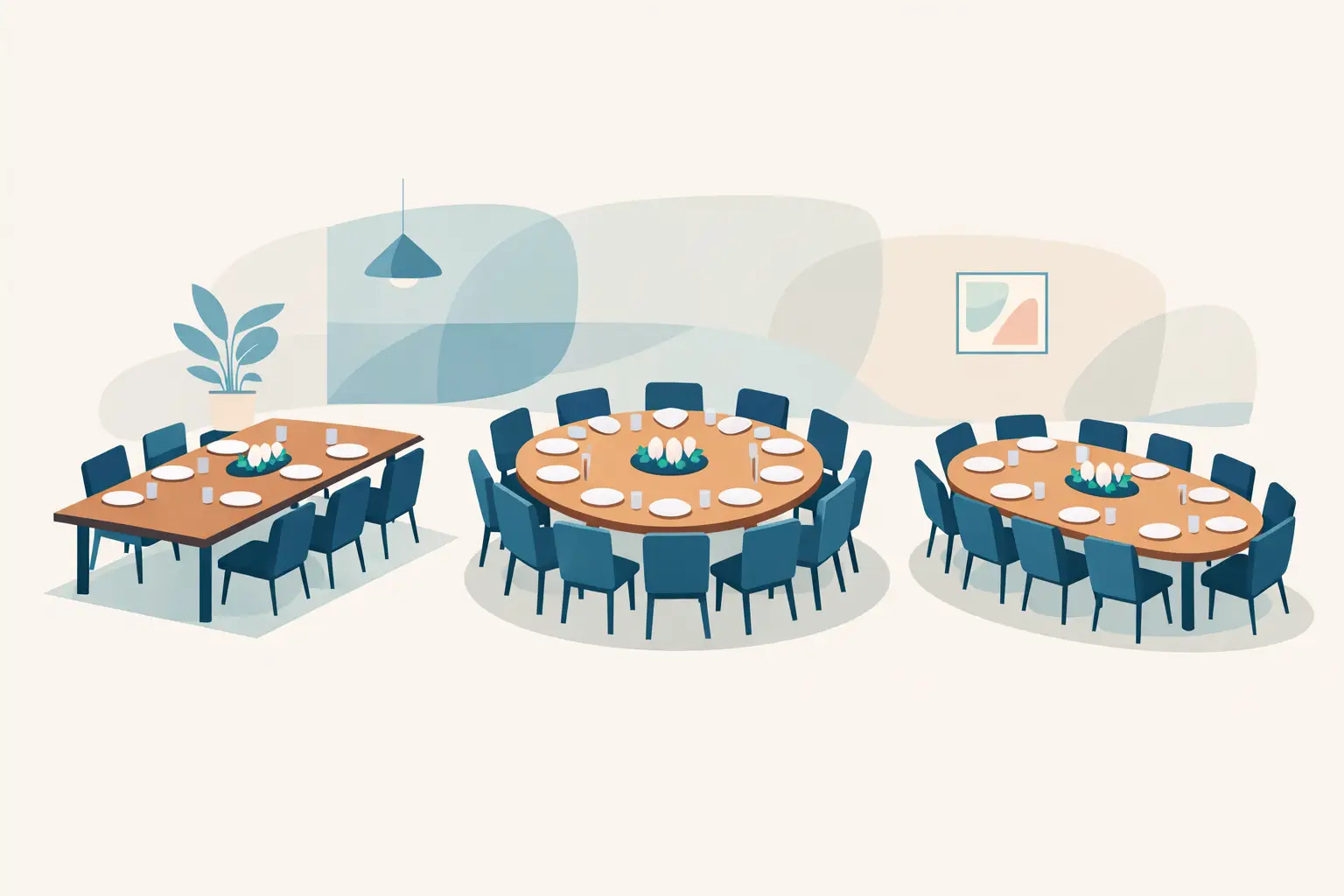
For round tables, a 180cm diameter is often the starting point for ten, although 190 to 200cm can feel more comfortable depending on the base design. Round tables are sociable and elegant, but they need more floor space than many people expect.
Oval tables sit somewhere in between. They soften the look of a long rectangular table and can be easier to move around in tighter layouts because there are no hard corners to navigate.
The best 10-seater table size depends on shape
Shape changes both the way a table feels and the way people use it.
Rectangular tables
If you want the clearest answer to what table size seats ten, rectangular is usually it. It is the most space-efficient option, especially in long open-plan rooms or extensions where the dining area sits alongside a kitchen island or lounge zone. A rectangular table also gives you defined head positions at each end, which helps when counting to ten.
For daily family life, this shape is often the most practical. It leaves good usable surface area in the middle for dishes, homework, flowers, laptops and all the other things dining tables end up holding.
Round tables
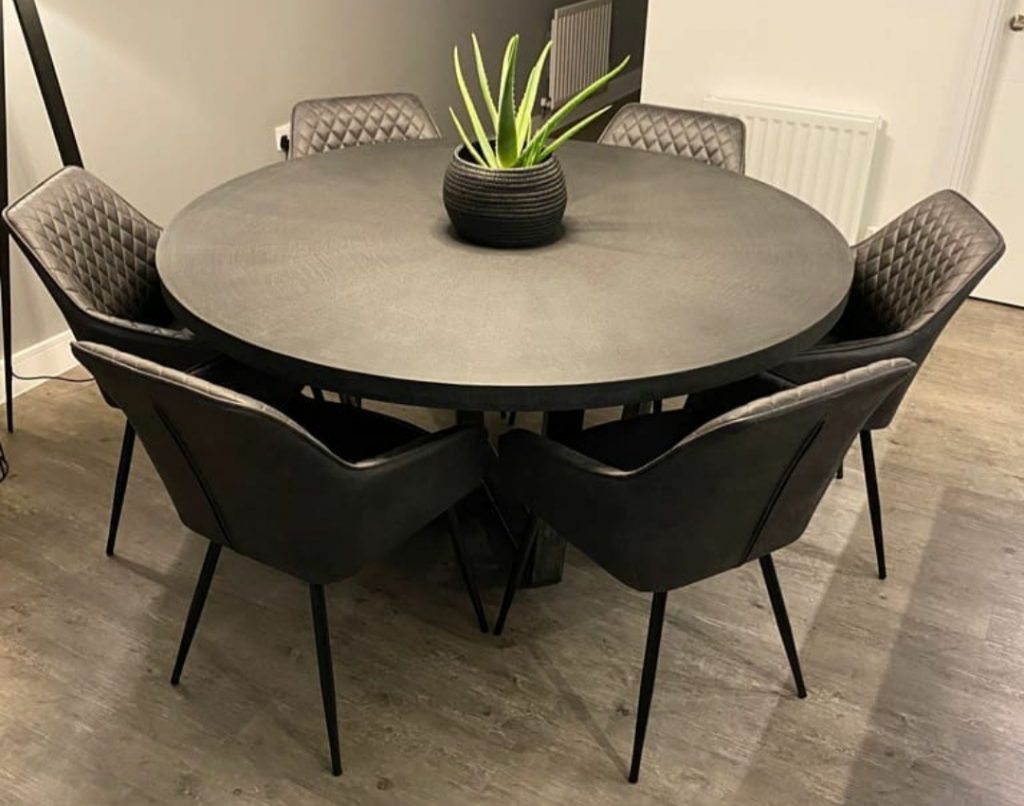
A round 10-seater makes a statement. It feels inclusive, conversational and more sculptural in a room. The trade-off is footprint. A 180cm round table needs generous circulation all the way around it, so it suits wider rooms better than narrow ones.
The base matters here as well. A central pedestal can make a round table far more comfortable for ten than four corner legs, because nobody is trying to negotiate table legs with their knees.
Oval tables
Oval tables are often overlooked, but they can be one of the smartest choices for ten. They soften the mass of a large table and make circulation easier, while still giving you much of the seating capacity of a rectangle. If your interior leans architectural but you want the room to feel inviting rather than severe, oval is worth considering.
Width matters more than many people realise
Length gets most of the attention, but width plays a big part in whether a large table feels luxurious or pinched. For ten people, 100cm is a strong starting point for a rectangular table. That gives enough room for plates, glassware and shared dishes without everything being pushed to the edges.
Go much narrower and the table may seat ten technically, but it can feel less comfortable once the table is actually in use. Go wider than 110cm and the table can become quite dominant, which may be perfect in a spacious room but less so in a tighter kitchen diner.
This is one of the reasons bespoke sizing is so useful. Standard dimensions suit many homes, but not all. Sometimes the right answer is not simply bigger. It is better proportioned.
Leave enough room around the table
A well-sized dining table is not only about how many people fit at it. It is also about how the room works around it. As a general guide, allow at least 90cm between the edge of the table and the wall or any other fixed furniture. If the route behind the chairs is a main walkway, closer to 100 to 120cm is more comfortable.
This is where people often get caught out. They measure the tabletop, see that it fits, and forget that chairs need to pull out and people need to pass behind them. A 280cm table can be perfect in one room and overwhelming in another, even if both rooms seem large at first glance.
If you are planning a built-in banquette on one side, you may be able to reduce clearance there. If you have full dining chairs all the way around, be more generous.
Chair style changes the answer
When clients ask what table size seats ten, the next question should always be, what chairs are you using? Slim dining chairs with open frames take up less visual and physical space than generously upholstered armchairs. That sounds obvious, but it has a direct effect on the right table length.
If your chairs are around 45 to 50cm wide, a 240 to 260cm table can often work. If they are broader or have arms, you may be happier at 280cm. The table base also matters. Thick corner legs can steal valuable knee room, while a well-designed central or inset leg arrangement gives every seat more freedom.
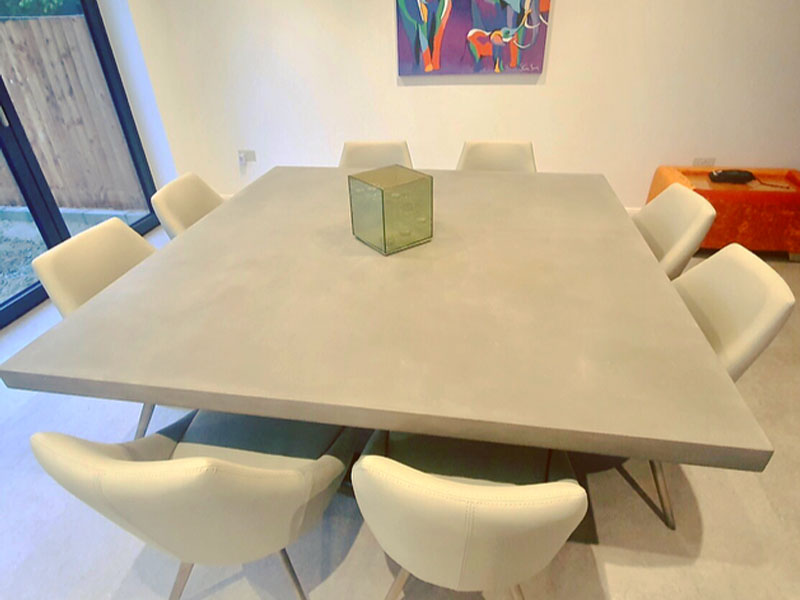
This is particularly important with polished concrete tables, where the top has a strong architectural presence. The base needs to support that weight beautifully without making the seating awkward.
Standard sizes versus bespoke sizing
There is a reason standard 10-seater tables often land around 260 or 280cm long. Those dimensions work well in many British homes and tend to strike a sensible balance between capacity and comfort. If you want a faster route and clear pricing, a standard configuration can be ideal.
But large dining tables are rarely one-size-fits-all. Room shape, glazing lines, pendant positions, flooring joints and traffic flow all affect what will feel right once the table is installed. Bespoke sizing comes into its own when you want the table to sit with real precision in the space rather than simply fit within it.
That is often the difference between a large table that looks bought and one that looks commissioned. With a made-to-measure piece, you can refine not just the length and width but also the top profile, finish, base style and overall visual weight. For a material like polished concrete, that level of control is especially valuable because the table is not just furniture. It is a centre piece.
Choosing a 10-seater for everyday life
A ten-seater should not feel like it only comes alive at Christmas. The best ones still work on an ordinary Tuesday evening when only four people are sitting down. That means thinking beyond maximum capacity.
If your household is smaller but you host often, a 260 x 100cm table is often a very comfortable middle ground. It has presence without swallowing the room. If you regularly entertain, have older children, or simply love a more generous layout, 280cm and above may be the better fit.
Material matters here too. A substantial polished concrete dining table brings depth, texture and permanence to a room. It suits modern extensions, pared-back interiors and homes where the dining area needs to feel anchored rather than temporary. It also offers reassuring practicality for family life, provided it is properly made and finished.
A simple rule of thumb before you decide
If you want the quick version, start here. For a rectangular table that seats ten comfortably, look at 260 to 280cm long and around 100cm wide. For a round table, start at 180cm diameter. Then check the chair widths, the table base and the clearance around the room before settling on a final size.
Good dining spaces are never just about squeezing in one more seat. They are about making everyone want to stay a little longer. If you are planning a table for ten, aim for the size that gives the room confidence, comfort and enough breathing space to let the piece do its job properly.