
A family dining table for 12 is not simply a larger version of an everyday table. It becomes the working heart of a generous kitchen-diner: the place for Sunday roasts, noisy birthday lunches, homework sessions, late dinners and the friends who always stay for one more glass of wine. Getting the proportions right matters just as much as choosing a material that can live confidently with real family life.
For a table of this scale, polished concrete offers a compelling balance. Its calm, architectural surface gives a large dining space presence without relying on fussy detailing, while its hand-finished character means the finished piece still feels personal rather than mass-produced.
Start with the room, not the seat count
Twelve places sounds straightforward, but comfortable seating depends on more than the number of chairs around the edge. Each guest needs enough elbow room to eat, move and settle in for the evening without feeling as though they are dining in a row.
As a useful starting point, allow around 60cm per person along the table edge. A rectangular table seating five people on each long side, with one at either end, generally needs to be around 300cm long. For particularly generous chairs, broad-shouldered guests or regular entertaining, 320cm to 340cm will feel more relaxed. A width of 100cm to 120cm leaves enough space for serving dishes, candles and a centrepiece while allowing guests to talk across the table comfortably.
The room around the table is equally important. Aim for at least 90cm between the table edge and a wall, kitchen island or sideboard, and ideally 110cm to 120cm where people need to walk behind seated diners. In an open-plan room, this circulation space prevents a substantial table from making the layout feel crowded.
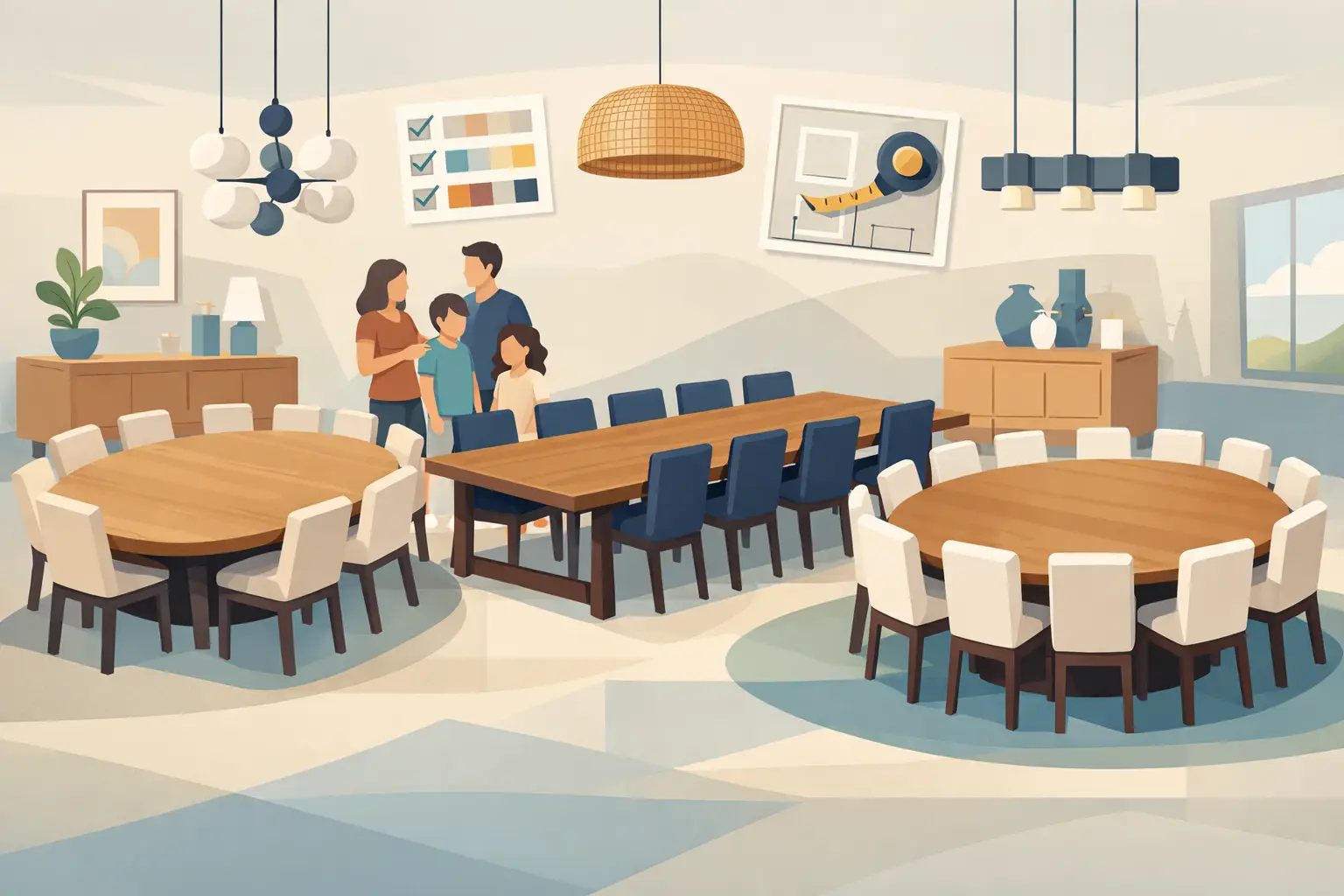
Before choosing a final size, mark the proposed footprint on the floor with masking tape. Place chairs around it and walk through the room. It is a simple exercise, but it reveals whether a beautiful 320cm table will genuinely work with the doors, island, glazing and daily route through the space.
Choosing the right shape for a family dining table for 12
A long rectangular table is the natural choice for many larger households. It makes the most efficient use of a narrow or elongated room, works well beside a kitchen island and creates a strong visual line through an open-plan interior. It also gives you clear options for styling, from a row of pendant lights above to a single sculptural arrangement running along the centre.
However, a rectangle is not the only answer. An oval table is often a better fit where circulation is tight, because its curved ends are easier to move around. It softens a room filled with clean architectural lines and gives every place setting a more sociable feel. A racetrack shape – essentially a rectangle with rounded ends – combines the seating efficiency of a rectangular top with the gentler movement of an oval.
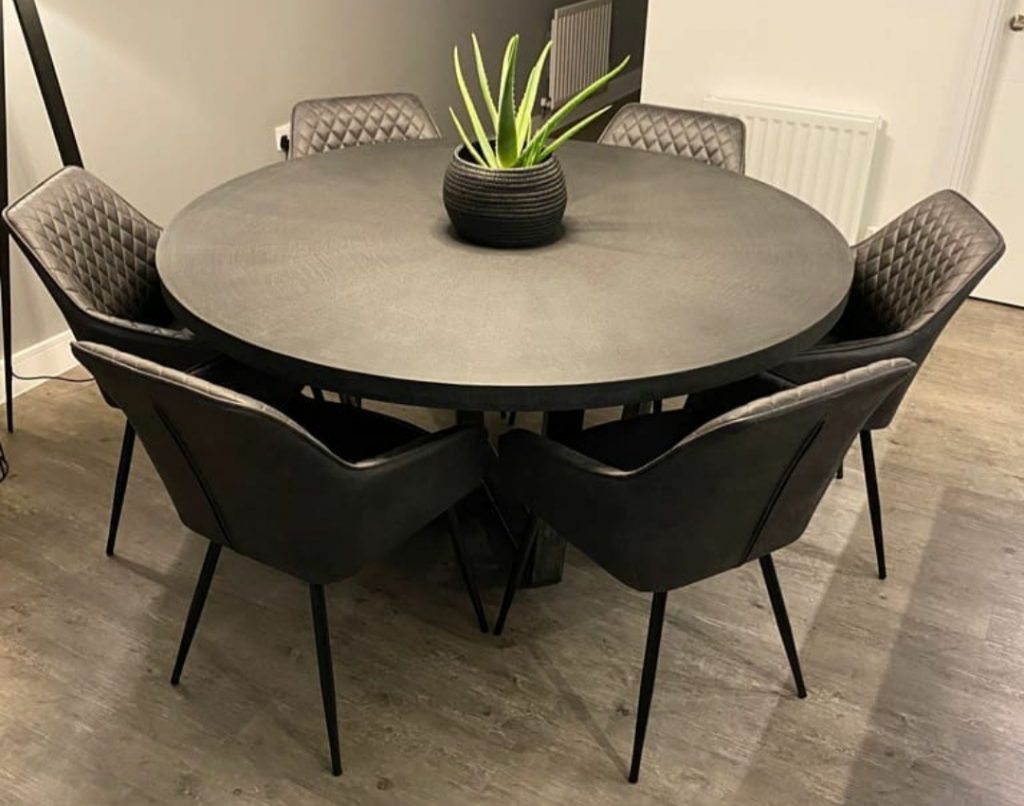
A round table can be wonderfully convivial, but seating 12 comfortably requires a considerable diameter, typically around 220cm to 240cm. This only works where the room is genuinely broad, with plenty of clear floor surrounding it. In the wrong space, a large round table can dominate rather than draw people together.
Bespoke design is particularly valuable at this size. A table can be made to suit an awkward alcove, a long gallery-style kitchen or a room where a standard dimension would block the flow. The difference between 300cm and 315cm may sound modest on paper, yet it can be the difference between a room that functions beautifully and one that constantly feels compromised.
Why polished concrete works for a busy dining room
A twelve-seater is expected to work hard. It needs to look considered for a dinner party, but it also has to stand up to cereal bowls, craft projects, serving platters and the occasional dropped cutlery. That is where a properly sealed polished concrete surface earns its place.
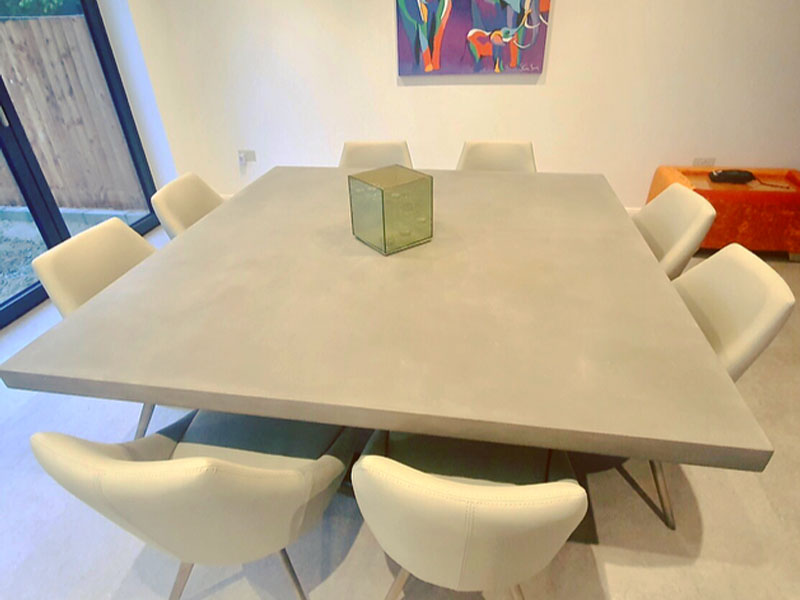
Polished concrete has a tactile, mineral quality that suits contemporary extensions, converted barns and modernised period homes alike. It has more depth than a flat grey surface: subtle movement, tonal variation and small marks from the hand-finishing process are part of its character. No two tables are identical, which is exactly the appeal for homeowners looking for a true centrepiece rather than an off-the-shelf dining set.
Its visual weight is worth considering. Concrete is a substantial material, and a large top should be designed with a base that feels balanced rather than bulky. Slim black steel legs can bring an urban design edge; a central pedestal can improve leg room; and carefully positioned trestle-style bases offer a more grounded, architectural look. The best choice depends on where chairs need to sit and how you want the room to feel.
The surface is sealed for everyday stain resistance and straightforward care. Wipe spills promptly with a soft damp cloth and avoid harsh abrasive cleaners. As with any premium dining surface, hot pans should sit on trivets and sharp objects should not be dragged across it. These small habits preserve the finish and allow the natural material to develop gracefully over years of family use.
Make room for chairs, serving and everyday life
The chairs can change the required table size more than people expect. A slim dining chair may need only 55cm of table edge, while a wide upholstered chair with arms can require 65cm or more. If your preferred chairs are already in the room, measure them before finalising the build. If they are not, decide whether comfort or maximum capacity is the priority.
For regular twelve-person meals, a pedestal or inset base can be practical because it avoids legs at the corners and gives diners more freedom to position their chairs. For a long rectangular table, two well-spaced pedestal bases or considered metal frames can offer both stability and a clean silhouette. The supporting structure should be planned alongside the seating layout, not treated as an afterthought.
Think, too, about how the table will be used between gatherings. A 12-seater often becomes the main work surface in a family home. It may host laptop days, school projects and informal buffets, so a generous clear top is a benefit rather than an indulgence. If daily dining is usually for four or six, keep the centre uncluttered and choose lighting that makes the full length feel intentional rather than empty.
Select a finish that belongs in your home
Concrete does not have to mean one shade of grey. Depending on the surrounding scheme, a softer light grey can lift a room with oak joinery and warm plaster, while charcoal or deeper tones can create contrast against pale flooring and expansive glazing. Warm, stone-like hues often sit beautifully in homes that combine contemporary architecture with natural materials.
Finish also affects the mood. A refined polished surface reflects light softly and feels smart enough for formal entertaining, while a more matte appearance can suit an understated, relaxed interior. Sample pieces are useful because concrete responds differently to natural light throughout the day. Hold samples beside flooring, cabinetry and fabrics rather than judging them in isolation.
At Daniel Polished Concrete, bespoke commissions make it possible to specify the dimensions, shape, colour, finish and leg style around the way your household actually lives. That personal process is especially reassuring for a table this large, where a standard size rarely answers every practical question.
Plan delivery before the table is made
A substantial concrete dining table needs a clear route into the property. Measure external gates, hallways, turns, staircases and door openings early, especially in period homes or properties with restricted access. Ground-floor installation through wide doors may be straightforward; upper-floor flats, tight entrances and rural sites may need more careful planning.
It is also sensible to consider the finished floor. A large table distributes weight through its base, but the location and floor construction should be assessed where there are concerns about uneven boards or delicate finishes. Discussing access, installation and placement before production allows the design to be tailored with confidence.
A table for twelve should never feel like a piece bought merely to fill a large room. When its shape, seating, base and finish are chosen around the life that happens there, it becomes the place people naturally gather. Start with the room, be honest about how you entertain, and create a table with enough presence to make every extra place setting feel welcome.