
A dining table earns its place differently from almost any other piece of furniture. It is where weekday suppers become long conversations, where children spread out homework, and where a renovated kitchen finally feels finished. The best dining tables do more than fill an allocated spot on a floor plan: they give the room a centre of gravity and stand up to the life happening around them.
For a forever home or a design-led open-plan space, this is rarely a purchase to rush. Size, shape, surface and base all affect how the table looks, how it feels to use, and whether it will still suit the room after the first season of entertaining.
Start with the space, not the seat count
It is tempting to begin with the number of people you would like to seat. In practice, the room should lead the decision. A table needs enough clearance for chairs to be pulled out comfortably and for people to move behind them without turning every meal into a careful shuffle.
As a useful starting point, allow around 90cm between the edge of the table and a wall, kitchen island or sideboard. More is welcome in a busy family kitchen. This does not mean every dining area needs to feel generous and empty. A well-proportioned table can make a compact room feel intentional, while an oversized one can make even a substantial space feel constrained.
Measure the usable dining area rather than the whole room. Include radiator projections, doors that swing open, island seating and routes to the garden. Then mark the proposed footprint on the floor with masking tape or newspaper. It is a simple test, but it quickly reveals whether a 10-seater table will feel magnificent or merely inconvenient.
Allow room for real chairs
Chair dimensions matter as much as the tabletop. Upholstered dining chairs, armchairs and statement designs often need more width than expected. As a guide, each diner generally needs 60cm of table edge, although slim chairs can work with slightly less and generous armchairs need more.
A 200cm table may seat eight for a relaxed dinner with narrow chairs, but it may feel more comfortable as a six-seater for everyday use. There is no single correct answer. The right capacity depends on how you entertain, how often every place is used, and whether you want the table to feel sociable rather than tightly packed.
Choosing the right shape for dining tables
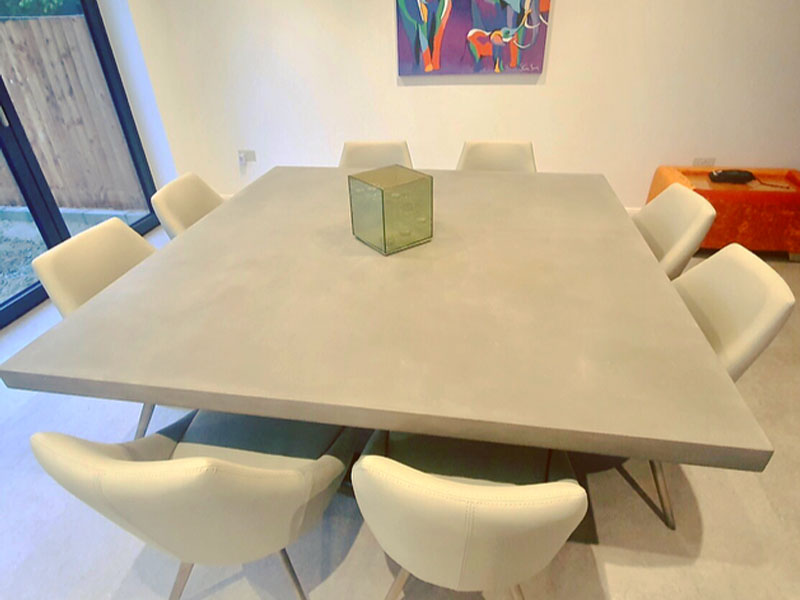
Shape changes both the visual language of a room and the way guests interact. Rectangular dining tables remain a strong choice for long rooms, large kitchen-diners and families who need generous surface area. They suit 8, 10 and 12-seat configurations particularly well, and their clear lines complement contemporary cabinetry and architectural interiors.
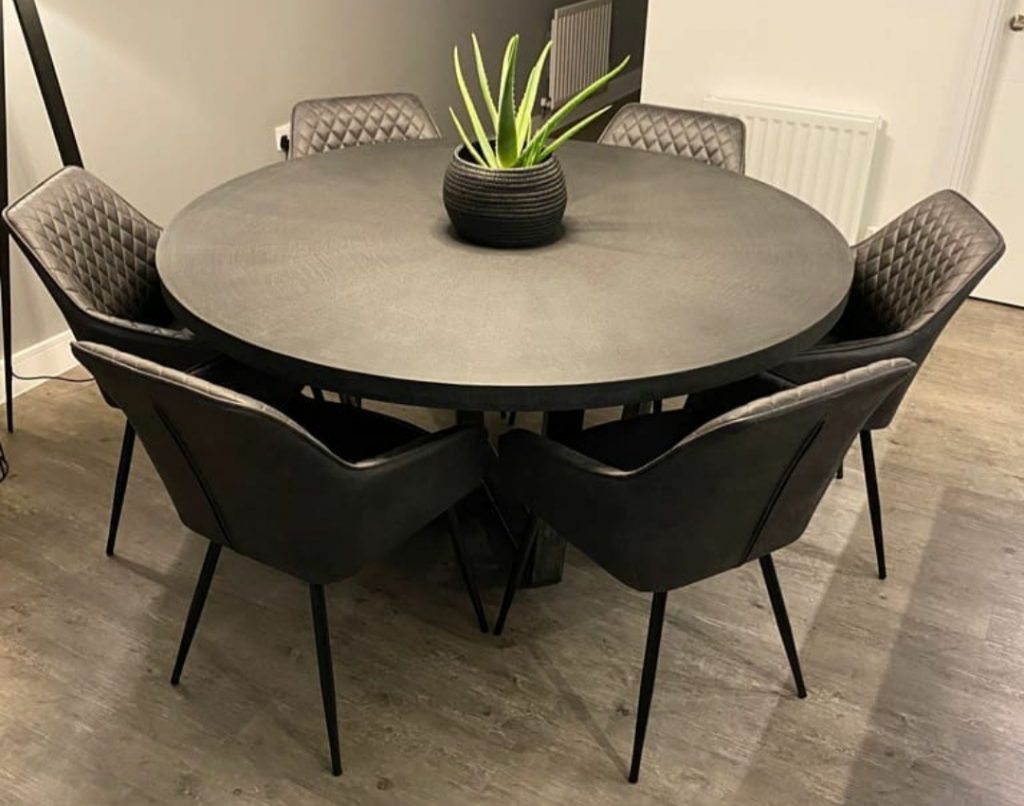
A round table softens a square room and makes conversation easy because everyone faces towards the centre. It is often an excellent option where there is no obvious head of the table. The trade-off is that a large round top needs a surprisingly broad floor area, especially once chairs are in place.
Oval and racetrack-shaped tables offer a useful middle ground. Their curved ends make circulation easier in narrower spaces, while retaining much of the seating capacity of a rectangle. They can also bring a more relaxed, sculptural feel to interiors with hard edges, glazed extensions and linear kitchen layouts.
For an unusual floor plan, a bespoke shape can be the difference between a table that simply fits and one that looks made for the room. A softened corner may improve a walkway; a tapered end can answer an awkward architectural detail. These decisions are subtle, yet they have a lasting effect on daily use.
Why polished concrete changes the character of a room
Polished concrete has an honest, tactile quality that is difficult to imitate. It carries natural movement, gentle tonal variation and small surface characteristics created during the making process. These are not mass-produced imperfections. They are part of the material’s character, giving each hand-finished table an individual presence.
In an interior scheme, concrete offers a confident contrast to warm timber, soft linen, brushed metal and painted cabinetry. A pale grey table can bring calm to a light-filled extension, while a deeper charcoal tone gives an urban design edge to a large open-plan kitchen. With the right base, it can feel monolithic and architectural or surprisingly light and refined.
The appeal is not only visual. A properly made and sealed polished concrete dining table is designed for regular living. It provides a hard-wearing surface for meals, celebrations and the everyday clutter of family life, while retaining the considered finish expected of a statement piece. Like natural stone or timber, it benefits from sensible care: wipe spills promptly, use mats for very hot dishes and avoid aggressive cleaning products.
Concrete is substantial, and that is part of its appeal. A large table has reassuring permanence rather than the hollow feel of lightweight furniture. It does, however, need proper planning for access. Staircases, tight turns, lift sizes and delivery routes should be considered early, particularly for a table intended for an upper-floor flat or a newly built extension with restricted entry.
The base is as important as the top
A beautiful top needs a base that supports both the design and the way the table will be used. The base determines where knees and chairs can sit, how many people fit comfortably at each side, and whether the overall profile feels delicate or bold.
Pedestal bases are particularly useful for round and oval tables because they keep the perimeter clear of legs. They allow more flexibility when an extra guest arrives, and they create a clean, sculptural silhouette. A central base must be engineered for stability, especially with a substantial concrete top, so this is not an area for compromise.
Trestle and angled leg designs work well with long rectangular tables, creating a strong architectural rhythm beneath the surface. Their placement needs careful thought: legs set too far in may affect stability, while legs too close to the corners can interfere with chairs. Steel bases in black, bronze-toned or lighter finishes can either contrast with the concrete or blend quietly into the scheme.
For families, consider the realities of the table at full use. Can someone sit comfortably at the ends? Will the base obstruct a high chair? Is there space for bench seating on one side? These practical questions are best resolved during the design stage, not after delivery.
Standard sizes or a made-to-measure table?
A well-designed standard configuration is often the sensible route when the room suits it. Classic 6, 8 and 10-seater dining tables offer proven proportions, a clearer starting price and a faster path from decision to installation. They are ideal when you know the preferred size, want a confident contemporary design and do not need to solve an unusual layout.
Bespoke work comes into its own when the room has a particular demand. Perhaps the table must align precisely with an island, seat twelve without blocking a glazed door, or match a chosen palette of stone, metal and joinery. Dimensions, edge profiles, concrete colour, shape and leg style can then be considered as one design rather than separate choices.
This is also where samples and conversation matter. Concrete can appear different under cool north light, warm pendant lighting or bright sunlight through roof glazing. Seeing finish options alongside cabinet doors, flooring and fabrics gives the final piece a more considered connection to the home.
Make a statement, but keep it liveable
The most successful dining room is not a showroom. It is a space that invites people to sit down, linger and use it without anxiety. That may mean choosing a softly rounded shape around young children, selecting a larger top for regular Sunday lunches, or leaving a little more circulation space than the plan first suggests.
At Daniel Polished Concrete, every table begins with this balance between visual impact and everyday function. The goal is not simply to make a striking object, but to create a hand-finished centre piece that belongs to the room and becomes more familiar with every gathering.
Before committing, stand in the space with your measurements, imagine chairs pulled back and picture the table set for the people you actually welcome. A dining table should look exceptional on arrival, but its real value is in how naturally it becomes part of home life.