

A dining table can look exceptional in a carefully styled photograph and still be wrong for the way a family lives. The most useful concrete table owner feedback comes after the first dinner party, the school-night homework, the hot serving dishes and the inevitable red-wine near miss. For homeowners choosing a centre piece for a renovated kitchen or open-plan dining room, the real question is not whether polished concrete makes an impression. It is whether that impression holds up to everyday life.
Polished concrete has a particular appeal because it does not try to imitate timber, marble or ceramic. It has its own calm, architectural character: tactile, substantial and quietly individual. Owners tend to value that character more over time, especially when the table has been made to fit the room, the number of seats and the way the household gathers.
Concrete table owner feedback on daily living
The response heard most often from owners is that a concrete table feels far more liveable than they expected. There can be an assumption that concrete is cold, precious or difficult to maintain because it is associated with floors, worktops and urban architecture. A well-made polished concrete dining table is different. Its surface is hand-finished, sealed and designed for regular use, while its visual weight brings a reassuring permanence to the room.
For busy homes, that sense of permanence matters. A large dining table is rarely used only for formal meals. It becomes a landing place for bags, a project table for children, a desk between meetings and the setting for long Sunday lunches. Owners appreciate having a surface that looks composed without requiring constant worry. The material is hard-wearing and stain resistant when properly sealed, yet it retains a natural, hand-crafted quality rather than looking manufactured or overly uniform.
The finish also changes the way people see small marks. With high-gloss materials, every fingerprint and fine scratch can demand attention. Polished concrete has more visual depth. Subtle movement in the surface, tiny variations in tone and the occasional pinhole are part of its material identity. This is not a table for someone seeking a flawless, factory-perfect slab. It is for someone who likes the evidence of making and wants a piece with presence.
The qualities owners notice after delivery
Many buyers begin with the appearance: a pale grey surface beneath pendant lights, a dark charcoal table grounding a dramatic kitchen, or a warmer custom colour that works with oak cabinetry and soft plaster walls. After installation, however, practical details become just as memorable.
First is stability. A concrete table has genuine visual and physical substance. It does not shift when someone leans on it, and that solidity suits family dining rooms and generous entertaining spaces. The trade-off is clear: this is not a piece to move on a whim. Access needs considering before the build begins, including door widths, stairways, turning points and the final route into the room. Professional delivery and installation are part of making the experience feel straightforward rather than stressful.
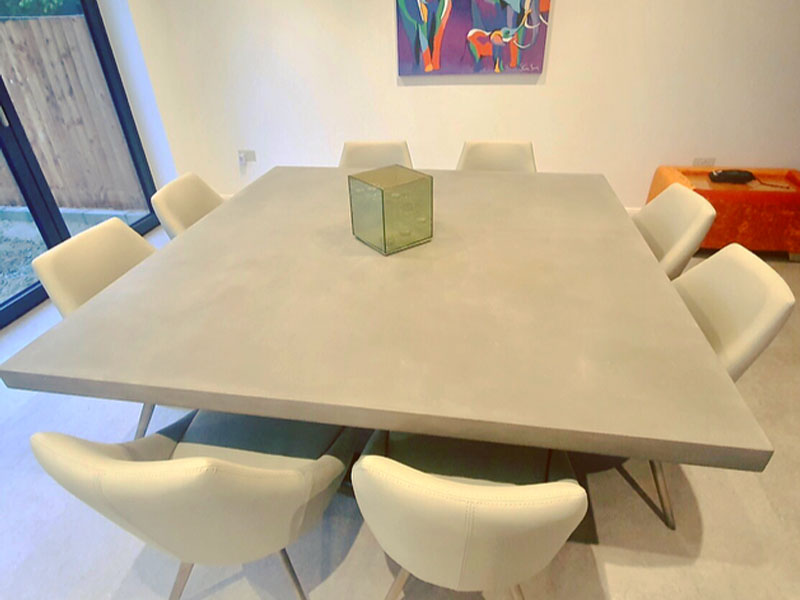
Second is scale. Owners of 8, 10 and 12 seater tables often say the table has changed how they use their home. A properly proportioned piece encourages people to stay at the table, rather than treating dinner as a quick stop between kitchen and sitting room. In an open-plan setting, it can define the dining zone without adding visual clutter. The broad, uninterrupted top has the sculptural confidence to hold a large room together.
Third is the ease of cleaning. Day-to-day care is refreshingly simple: wipe spills promptly with a soft cloth and use gentle, pH-neutral cleaning products. Avoid harsh chemicals, abrasive pads and anything that could compromise the protective sealer. Owners who follow this straightforward routine find that the table remains easy to live with, even through regular meals and entertaining.
Heat, spills and the realities of family use
Concrete is durable, but it is not indestructible, and honest feedback should make room for that distinction. Placemats, coasters and trivets are sensible habits, particularly with very hot cookware, acidic liquids and heavily coloured foods. A sealed surface gives good protection, but no premium dining table benefits from being treated as a kitchen workbench.
Parents often value the balance. The table is capable of handling the noise and mess of family life, yet it still asks for a little care. That is not a drawback so much as the normal responsibility of owning a hand-finished piece of furniture. The aim is longevity, not a surface that looks disposable.
Why bespoke sizing makes the difference
A common theme in concrete table owner feedback is relief at not having compromised on dimensions. Standard furniture can force awkward decisions: a table that seats six comfortably but eight only occasionally, a top that looks undersized in a large extension, or a shape that interrupts the flow around an island.
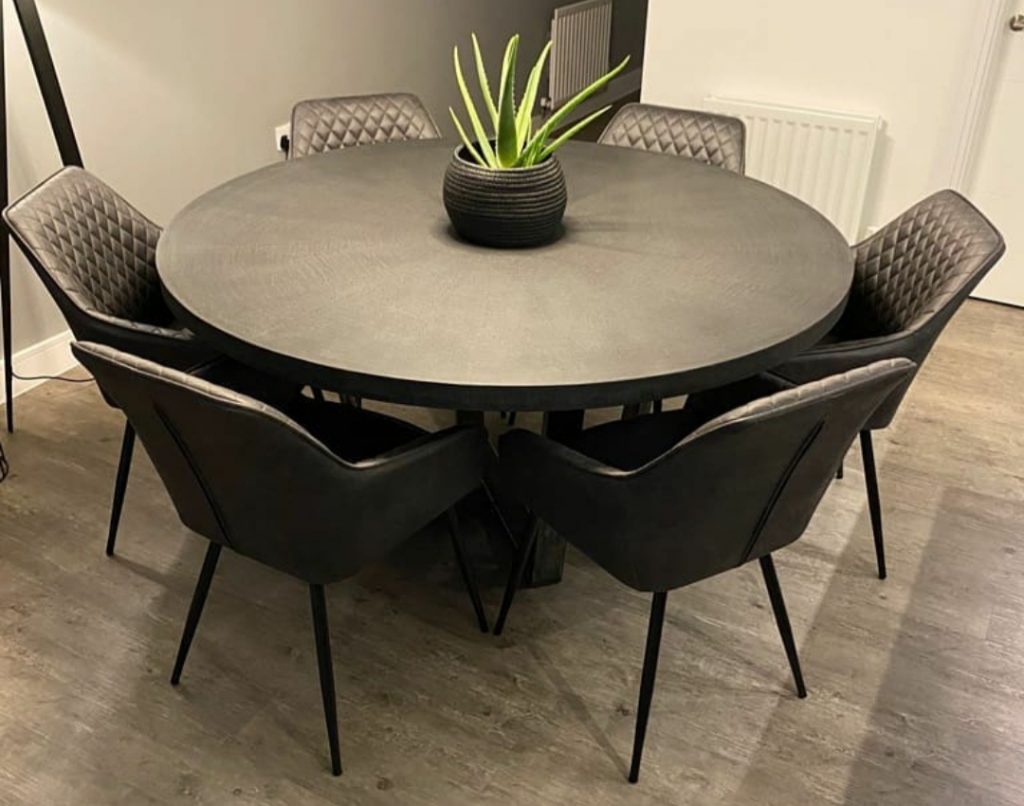
A bespoke concrete table can be designed around the room rather than squeezed into it. Length, width, thickness, shape, colour and leg style all influence how it performs. A rectangular table may suit a long kitchen-diner and create clear places at each end. A round or softly curved design can improve circulation where chairs need to move freely. A slimmer profile can keep the visual weight refined, while a more substantial top creates a bolder architectural statement.
There is no single best specification. A household that hosts large gatherings may prioritise generous elbow room and a longer table. A couple furnishing a compact extension may choose a smaller footprint with a carefully considered base that keeps leg room open. The right decision comes from measuring the space properly, allowing for chairs in use and thinking about how people actually walk through the room.
At Daniel Polished Concrete, that conversation is central to the build. The result is not simply a table in a chosen finish, but a piece made around the way its owners want to live.
Character is part of the ownership experience
Concrete does not repeat itself exactly. Even where the colour and finish are specified, each hand-finished table carries slight variations in movement, texture and tone. For design-conscious owners, this individuality is often the point. It prevents a large dining table from feeling like a standard catalogue purchase and gives the room a focal point with genuine material character.
This can be especially effective in interiors that risk becoming too polished. Against sleek cabinetry, large-format tiles or clean-lined glazing, concrete adds texture without introducing fuss. It works naturally with oak, walnut, blackened steel, linen, leather and soft upholstery. Owners also find that it adapts well when the room evolves. New dining chairs, a different pendant fitting or a repaint need not make the table feel dated, because its appeal is grounded in material rather than a passing trend.
That said, concrete is a confident choice. If the room already contains several dominant stone patterns, highly figured timber and statement metalwork, a quieter finish and simpler base may be the wiser route. The best tables feel intentional, not competitive.
What prospective owners should ask before commissioning
Before choosing a concrete dining table, focus on the details that will shape ownership over the next decade. Ask how the top is sealed, what everyday care is recommended and how the finish will respond to normal use. Confirm the exact finished dimensions, including the base and overhang, rather than visualising only the tabletop. Discuss access early, particularly for upper-floor rooms, narrow hallways and properties with tight turns.
It is also worth considering seating before the table is finalised. Chairs with arms require more width; upholstered chairs may need a little more space; benches change both capacity and the visual rhythm of the room. A good maker will talk through these practicalities rather than treating them as an afterthought.
Finally, choose the table you will enjoy using, not merely admiring. A darker finish can feel dramatic but may show crumbs more readily in bright daylight. A very pale surface can make a room feel open and calm, but its tone should sit well with surrounding flooring and worktops. The most successful choices are led by the room, the household and the desired atmosphere.
A polished concrete table earns its place when it becomes the familiar setting for ordinary moments as well as special occasions. Give the design, proportion and finish the attention they deserve, and the table will have every chance of becoming the piece people remember when they remember your home.