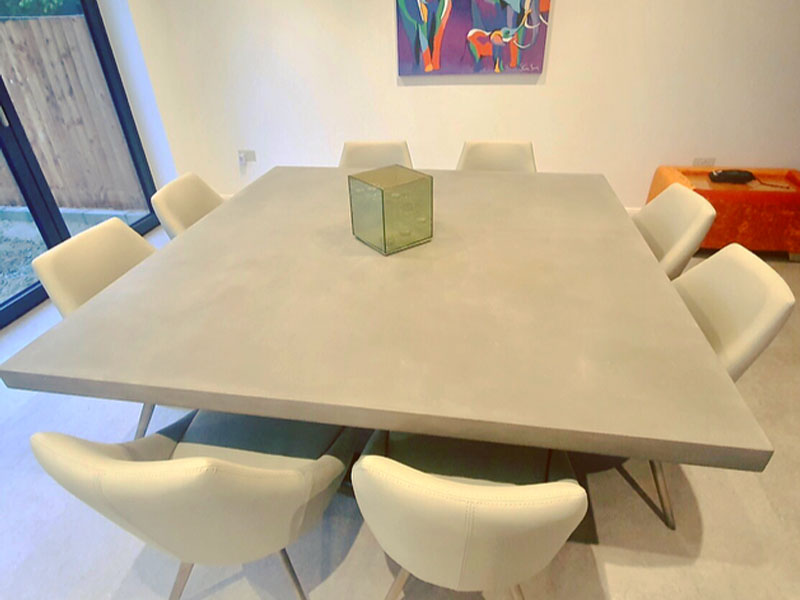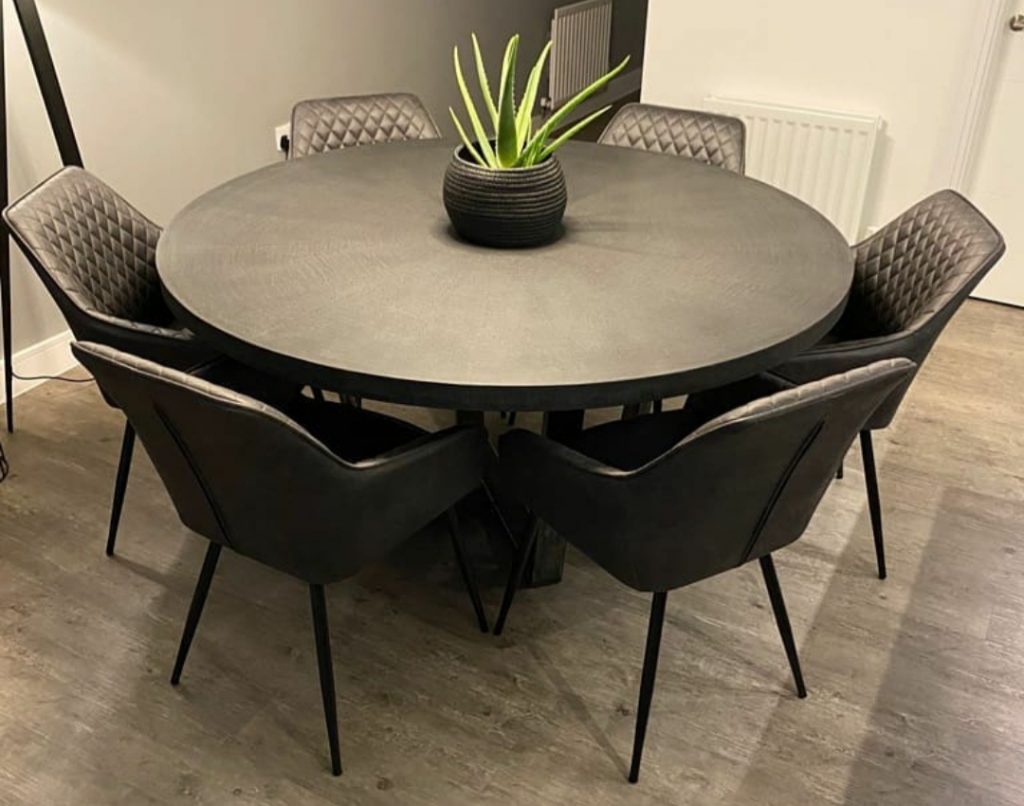


A polished concrete dining table may look calm and effortless once it is in place, but its finished surface is the result of many carefully judged decisions. The concrete table manufacturing process combines precise mould making, material knowledge and patient hand-finishing to create a table that feels architectural yet works for real family life.
For a dining table, concrete cannot simply be treated like a patio slab poured into a rectangular form. It must be strong without becoming unnecessarily heavy, flat enough for place settings and glasses, and refined enough to earn its place at the heart of a kitchen or dining room. Every stage affects the final character, from the first conversation about dimensions to the last coat of protective sealer.
It begins with the room, not the concrete
A successful table starts with proportion. Before a mould is made, the size of the room, the number of people around the table and the clearance needed behind each chair all need consideration. A large 10-seater can create a stunning centre piece in an open-plan space, but only when there is enough circulation around it to make the room feel generous rather than crowded.
This is where a bespoke commission differs from an off-the-shelf table. Length, width, thickness, edge profile and leg position can all be adjusted to suit the setting. A narrow room may call for a slimmer top; a family kitchen may benefit from softened corners; a dramatic island-style dining space may suit a longer, more sculptural form.
The base matters just as much. Steel, timber and concrete legs each bring a different visual weight, while the placement of the legs determines how comfortably guests can sit at the ends and sides. The design must also account for the practical reality of moving and installing a substantial piece of furniture.
Concrete table manufacturing process: creating the mould
Once the specification is agreed, the table is translated into a mould. This is the negative form that gives the concrete top its shape, dimensions and edge detail. The accuracy of this stage is fundamental. A tiny inconsistency in a mould can become visible across a long polished surface.
The mould is built on a perfectly level base and sealed carefully to prevent unwanted marks or leakage. Any details that will become part of the finished table are set at this point. That may include a crisp square edge, a gentle chamfer, a rounded profile or discreet recesses for a particular base design.
For bespoke tables, this is also the stage where unusual shapes become possible. Oval, racetrack, circular and softly organic forms require more planning than a straightforward rectangle, but they can transform the feel of a room. Curves often make a large table easier to move around, while a rectangular format usually offers the most efficient seating capacity.
Mixing for strength, colour and character
Furniture-grade concrete is a carefully controlled material. The mix is designed for performance and finish, rather than simply using a standard building mix. Cement, fine aggregates, water, pigments and specialist additives are measured to achieve the required strength, workability and colour.
A lower water content generally helps produce a denser, stronger surface, but it also makes the material less forgiving to work with. Additives allow the concrete to flow and compact properly without flooding the mix with water. Reinforcement is incorporated to help control cracking and support the table through handling, transport and years of everyday use.
Colour is created within the concrete itself, not painted onto the surface. From warm greys and pale stone tones to deeper charcoal shades, pigment is mixed through the material so the finish retains depth even after polishing. Exact colour matching is never an entirely mechanical exercise, however. Concrete is a natural, hand-worked material, and subtle tonal movement is part of its appeal.
Small variations, occasional pinholes and gentle clouding are not faults to be hidden. They are signs that the table has been made rather than manufactured as an imitation of something else. The key is control: enough variation for character, with a finish that still feels considered and refined.
Pouring and reinforcing the table top
The concrete is placed into the mould in stages and compacted to remove trapped air. This is one of the most skilled points in the making process. Poor compaction can leave excessive voids, while overworking the material can disturb the surface or affect the consistency of the finish.
Reinforcement is positioned within the table top rather than sitting too close to the polished face. Depending on the design, this may include fibres and other structural reinforcement arranged to provide support where it is needed most. Large formats, slim profiles and projecting edges all require their own approach.
At this stage, the maker is balancing competing demands. A thinner top can look beautifully light and contemporary, but it requires careful engineering. A thicker top adds visual presence and can suit a more monumental interior, though it also increases weight. There is no single right answer – the best choice depends on the table’s span, base design and the look the room needs.
Curing: where patience protects the finish
Concrete does not simply dry. It cures through a chemical process, gradually gaining strength as the cement reacts with water. The table remains in its mould while this happens, protected from rapid moisture loss and sudden temperature changes that could affect the finished piece.
Rushing this stage is one of the quickest ways to compromise quality. A top may look ready on the surface while still needing time to develop the strength required for demoulding, finishing and transport. Controlled curing helps reduce the risk of cracking and supports a more consistent final appearance.
Once the concrete has reached the appropriate strength, the table can be carefully released from its mould. This is a revealing moment: the first full view of the cast surface, edge detail and the individual markings that will shape the table’s personality.
Grinding and polishing by hand
The raw cast top is only part way through its journey. Grinding begins with coarser diamond tools to level the surface and reveal the chosen amount of aggregate or natural movement. The process then moves through progressively finer stages, refining the surface until it reaches the intended sheen.
A polished concrete table does not have to be mirror-bright. Many interiors benefit from a softer satin finish that feels tactile and understated, while still reflecting light across the room. The right level of polish depends on the desired urban design, the surrounding materials and how the table will be used.
Hand-finishing is where experience becomes especially visible. The maker reads the surface as it develops, responding to its individual character rather than forcing every table into an identical finish. A concrete top should feel smooth enough for a dinner party, yet retain the depth and honest material quality that make it distinctive.
Sealing for everyday dining
Concrete is naturally porous, so sealing is essential for a dining table. A high-quality protective system helps resist staining from everyday spills such as red wine, coffee, olive oil and sauces, while preserving the look and feel of the polished surface.
A sealer is not a licence to leave spills sitting overnight. Like timber, natural stone or any premium furniture finish, concrete benefits from sensible care. Wiping up spills promptly, using placemats for very hot pans and avoiding harsh abrasive cleaners will keep the surface looking its best.
The aim is not to make concrete look coated in plastic. A well-finished seal should offer practical protection while allowing the material’s colour, texture and subtle variation to remain visible. Over time, the table develops a lived-in quality that suits a well-used home.
Final checks, fitting and delivery
Before a table leaves the workshop, the top, base and fixings are checked together. The underside is finished, the base is aligned, and any protective pads or adjustable feet are fitted so the table can sit correctly on the floor. A large concrete top needs thoughtful handling from workshop to home, particularly where access involves tight turns, stairs or narrow doorways.
Delivery and installation should be planned early, not treated as an afterthought. Accurate access information helps determine the safest route into the property and ensures the team, equipment and timing are right for the job. It is a small piece of planning that protects both the table and the home.
At Daniel Polished Concrete, each table is made with the understanding that it will host weekday meals, long lunches, homework, celebrations and everything in between. If you are planning a dining space, begin with the room’s measurements and how you want people to gather around the table – the best design decisions usually follow from there.