

A dining table usually gets chosen with the eyes first and the reality later. It looks perfect in the showroom or on a mood board, then six months on you start noticing the marks, the movement, the maintenance or the fact it never quite suited the room. That is why concrete dining table vs wood is not a simple style decision. It is really about how you want your home to look, feel and function every day.
For some households, timber is the obvious answer – warm, familiar and full of natural grain. For others, polished concrete delivers the cleaner architectural line, greater individuality and hard-wearing performance that a busy kitchen-diner demands. The right choice depends on your interior, your lifestyle and whether you want your table to blend in quietly or anchor the whole space as a true centre piece.
Concrete dining table vs wood: the design difference
Wood has an immediate warmth that people instinctively understand. It softens a space, works beautifully with traditional cabinetry and can sit comfortably in everything from a country kitchen to a Scandi-style dining room. Oak, walnut and ash all bring their own character, and for many buyers that familiar natural texture is the appeal.
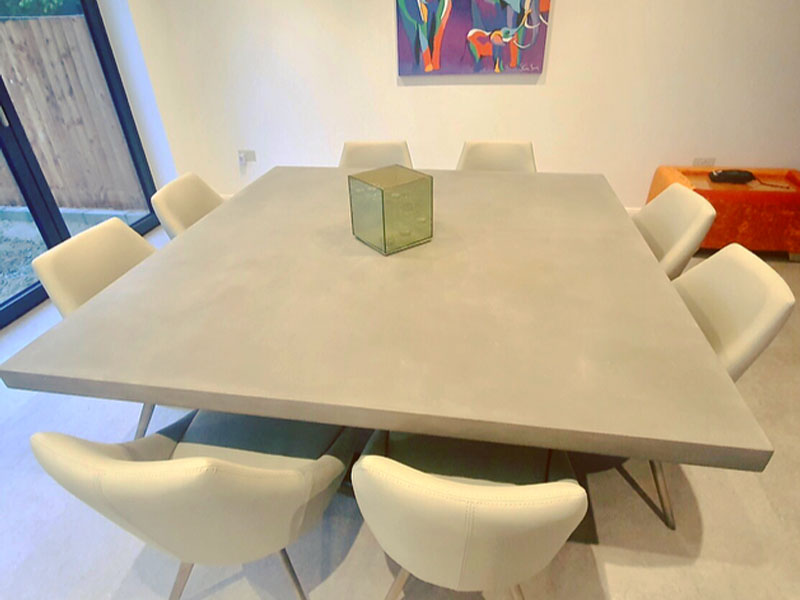
Concrete creates a different effect altogether. A polished concrete dining table feels more architectural, more deliberate and often more striking. It brings a crisp, contemporary presence that suits open-plan extensions, modern renovations and interiors with steel, glass, stone and muted tones. In the right setting, concrete does not just fill the room – it defines it.
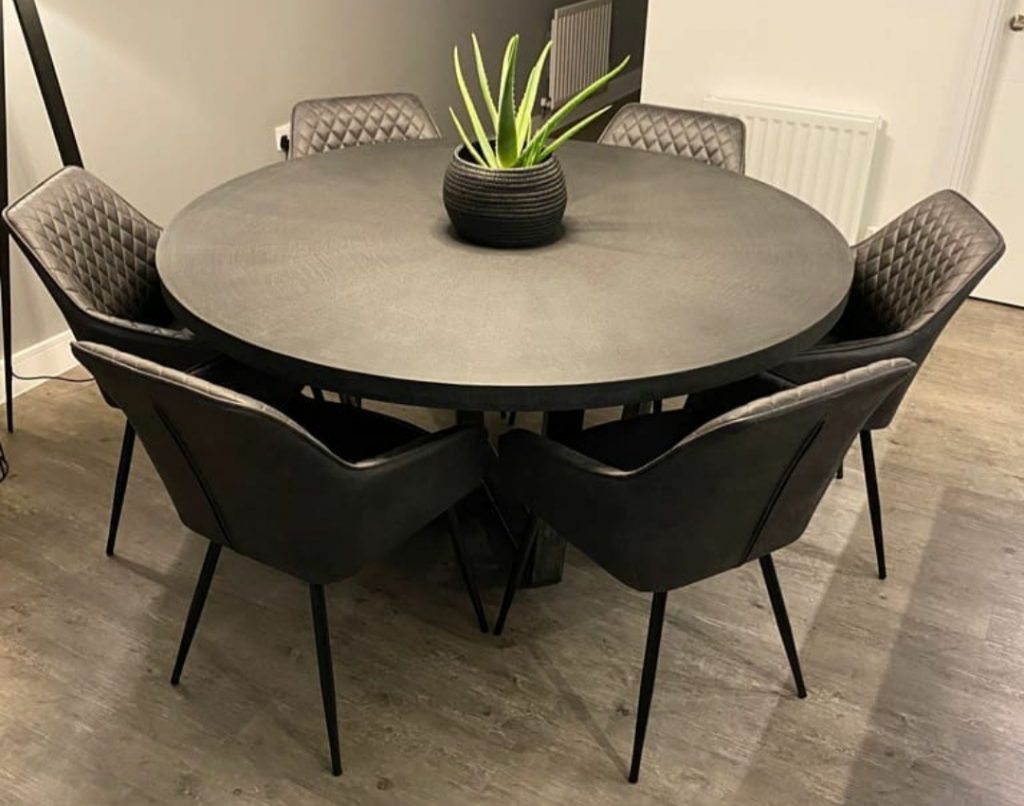
That does not mean concrete only suits stark minimal schemes. A hand-finished concrete top paired with the right base can work just as well with warm timber floors, upholstered dining chairs and softer lighting. The contrast is often what makes it interesting. Wood tends to harmonise. Concrete tends to stand out.
How each material behaves over time
This is where the conversation becomes more practical. Wood is a living material. That is part of its charm, but also part of its compromise. Depending on the species, finish and environment, timber can expand and contract with temperature and humidity changes. It can pick up scratches, dents, water rings and fading, especially in a heavily used family dining space.
Some homeowners love that evolving patina. Others find it frustrating, particularly when they have invested in a premium piece and want it to stay looking sharp. A wooden table can certainly last for years, but it may need more acceptance of wear or occasional refinishing to keep it at its best.
Polished concrete offers a more stable, substantial feel. A well-made concrete dining table is designed to cope with daily use and brings a reassuring sense of permanence. When properly sealed and professionally finished, it is highly resistant to the knocks and demands of modern family life. It is not indestructible – no honest maker should claim otherwise – but it is exceptionally robust and far less prone to the sort of visible wear that can quickly date a softer timber surface.
Maintenance and everyday use
If your dining table is used for everything from weeknight meals and homework to entertaining at weekends, maintenance matters. This is often the point where concrete dining table vs wood becomes much clearer.
Wood can be straightforward to care for, but it does require a little vigilance. Spillages may need wiping quickly. Hot dishes can leave marks if protection is not used. Depending on the finish, some woods are more forgiving than others, but timber generally rewards careful ownership.
Concrete is often assumed to be high-maintenance, but that is usually based on confusion with untreated industrial concrete rather than polished furniture-grade concrete. A properly sealed polished concrete table is designed for real use. Day-to-day care is simple, and the surface is made to stand up well to dining, entertaining and family life. For many homeowners, that balance of visual impact and practicality is exactly the point.
The trade-off is that concrete should be made by a specialist who understands sealing, finishing and structural design. A concrete table is only as good as the craftsmanship behind it. The same can be said of wood, of course, but with concrete the maker’s experience is especially important.
Weight, feel and presence
A wooden dining table can range from light and pared-back to large and substantial, but it typically feels more flexible in terms of rearranging a room. If you like to move furniture around or foresee taking a table up awkward staircases, that matters.
Concrete has more physical presence. It feels grounded, solid and confident. In many homes, that is exactly the attraction. A large polished concrete table has a sculptural quality that suits expansive kitchens and open-plan spaces particularly well. It can hold its own against oversized islands, wide-format flooring and dramatic lighting schemes without looking apologetic.
That said, weight is a practical consideration. A concrete dining table should be delivered and installed properly, especially in larger sizes. For buyers furnishing a forever home or a long-term renovation, this is rarely a drawback. It is simply part of owning a piece with more permanence.
Cost and perceived value
There is no single answer on price because both wood and concrete vary enormously depending on size, craftsmanship and whether the table is mass-produced or made to order.
A standard wooden dining table from a retailer may come in at a lower price point than a bespoke concrete piece. But that is not really the fairest comparison. The more relevant comparison is between a handcrafted, premium wood table and a handcrafted polished concrete table. At that level, both are investment purchases.
Concrete often offers stronger value when you want a statement piece built to exact dimensions and tailored to your room. Shape, colour, edge profile and leg design can all have a major impact on the final look. For households that have spent seriously on a kitchen renovation, extension or interior scheme, a bespoke dining table is not just furniture. It is part of the architecture of the room.
Wood still makes sense if your priority is classic familiarity or if you want a piece that can lean more traditional. But if your goal is individuality, scale and a finish that feels less off-the-shelf, concrete tends to offer something rarer.
Which suits your interior best?
Choose wood if you want softness and familiarity
Wood usually suits period homes, classic kitchens and interiors where texture and warmth are doing most of the work. It pairs naturally with shaker cabinetry, heritage tones and a more relaxed aesthetic. If you want your dining area to feel welcoming, understated and timeless in a conventional way, timber often gets you there.
Choose concrete if you want a stunning centre piece
Concrete suits design-led homes where the dining table is meant to do more than serve a function. It works especially well in contemporary renovations, large kitchen extensions and open-plan layouts where there is room to appreciate scale. If you want clean lines, urban design and a table that feels made specifically for your space, polished concrete has a clear advantage.
Concrete dining table vs wood for family life
Family homes need realism. Children lean on edges, guests put down glasses without coasters, and the dining table ends up hosting far more than dinner. This is where polished concrete becomes especially compelling.
A concrete table brings durability without looking purely utilitarian. It can be elegant, refined and hand-finished while still being genuinely hard-wearing. That combination is difficult to find. Wood can absolutely work in a family home, but the signs of everyday life tend to appear faster, and whether that feels charming or irritating depends entirely on your temperament.
For larger households, size also matters. Eight, ten and even twelve-seater layouts need a table that can command the room without feeling flimsy. Concrete has a natural confidence at those scales. It looks intentional rather than overstretched.
The real question to ask before you choose
Do you want a table that feels comforting and familiar, or one that feels distinctive and architectural? That question usually gets to the heart of it faster than any specification sheet.
If you love grain, organic variation and a softer visual language, wood remains a beautiful choice. If you want a statement piece with strong material character, excellent everyday performance and a made-for-you feel, polished concrete is hard to overlook. That is why so many design-conscious homeowners now see the dining table not as a background item, but as one of the defining pieces in the home.
At Daniel Polished Concrete, that is exactly how we see it too. The best dining table should not merely fit the room. It should elevate it, earn its place through daily use and still feel special every time you walk in.