
A dining table should feel settled in a room, not simply placed there. Concrete dining table legs give a table that sense of permanence: a grounded, architectural base with enough character to hold its own in a large kitchen, open-plan extension or carefully considered dining room. They are not a decorative afterthought. Their shape, position and finish determine how a table looks, how it feels to sit around and how comfortably it works every day.
For a family table, a generous 10-seater or a made-to-measure centrepiece, the right leg design brings visual confidence without compromising the practical details that make people want to gather around it.
Why concrete dining table legs change the whole design
Concrete has a natural visual weight that timber and metal cannot quite replicate. Even when polished to a smooth, refined surface, it retains subtle movement, pinholes and tonal variation. This is part of its appeal. Each hand-finished leg has its own material character, which gives the finished table a quiet sense of individuality rather than a factory-made uniformity.
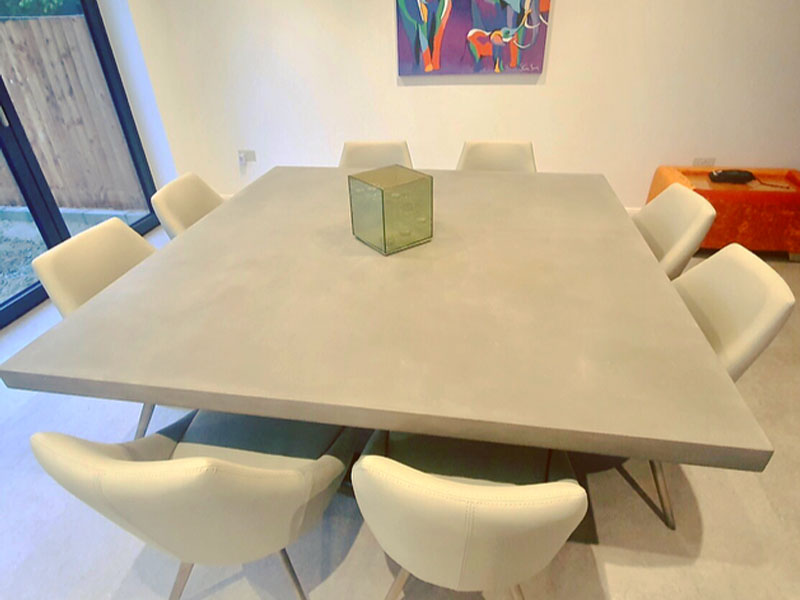
A concrete base also allows the table top to appear more sculptural. Paired with a polished concrete top, the legs can create a continuous monolithic form. Combined with timber, glass or stone, they provide a striking contrast between warm and cool, delicate and substantial. The result suits urban design schemes particularly well, but it can be equally effective in a soft, natural interior where linen, oak and plaster finishes need one strong focal point.
The practical appeal is just as compelling. Properly made and sealed polished concrete is hard-wearing, stain resistant and suited to real family life. Legs are built to support the top securely, while their mass helps create a table that does not shift or feel flimsy when someone leans on it. That reassuring solidity is one of the things clients notice immediately.
Choosing a leg style for your space
There is no single best answer. A leg design should respond to the table’s length and shape, the number of diners, the room’s circulation and the look you want to achieve. The most successful bespoke tables consider all four from the outset.
Central pedestal bases
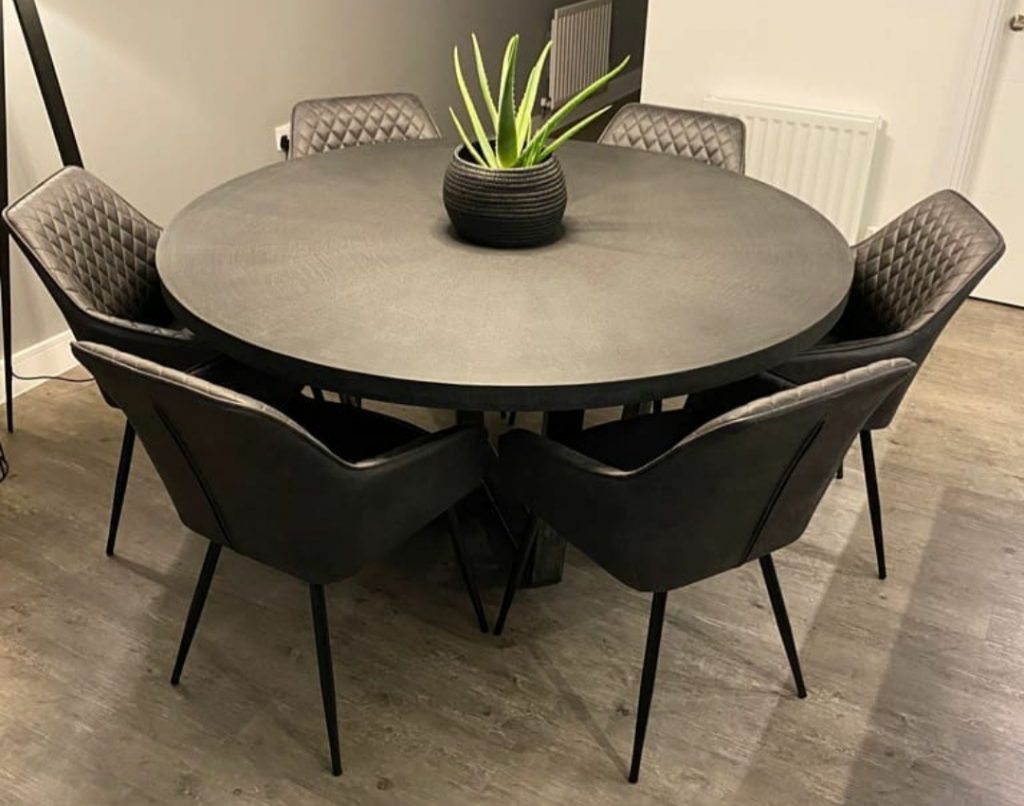
A central pedestal is often the most practical choice for a round or oval dining table. With no corner legs to negotiate, diners can pull up chairs wherever there is space around the edge. It is particularly useful where a round table needs to seat six to eight people comfortably without visual clutter beneath the top.
A concrete pedestal can be crisp and cylindrical, gently tapered or formed as a broad sculptural plinth. A wider base offers impressive presence and stable support, although it needs to be proportioned carefully so feet and dining chairs still sit naturally beneath the table. For compact rooms, a pedestal can make the floor area feel clearer than four individual legs.
End plinths and slab legs
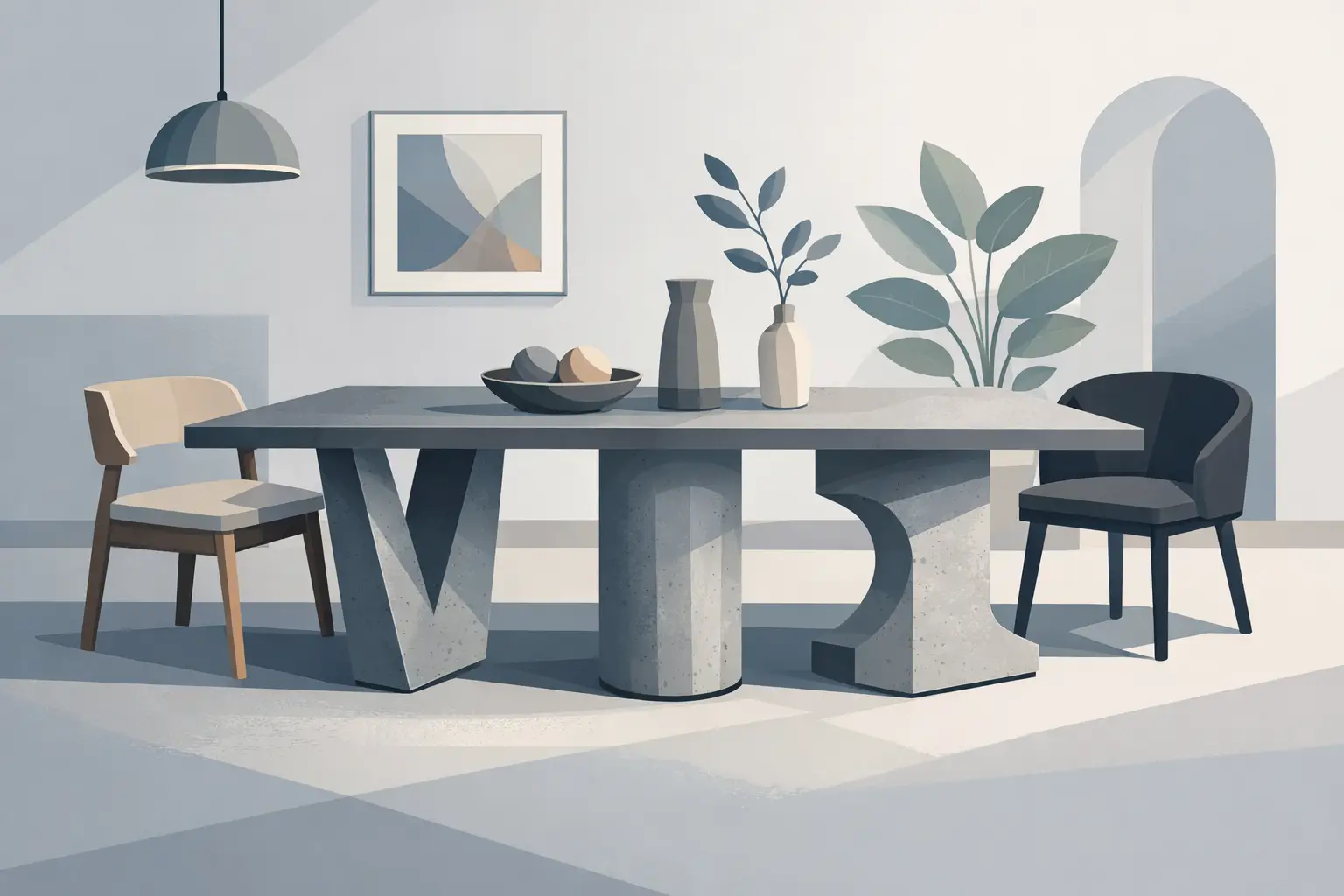
For rectangular tables, solid end plinths or slab legs make a powerful statement. They work beautifully on large 8, 10 and 12-seater tables, where the length of the top calls for a base with real visual authority. A pair of substantial concrete forms can make even a long table feel intentional rather than oversized.
The trade-off is seating position. Plinths need to sit far enough in from each end that diners do not knock their knees, and wide bases may limit where chairs can be placed. This is where bespoke sizing matters. A few centimetres can make the difference between a dramatic profile and a frustrating one.
Angled and architectural legs
Angled legs introduce movement to a weighty material. They can soften the appearance of concrete and give a table a more contemporary, design-led silhouette. The angle may be subtle, with a slight outward stance, or more pronounced for a bolder piece inspired by architectural furniture.
This style is ideal when the table needs to feel lighter in an airy extension. It still has the presence of concrete, but with more shadow lines and a greater sense of lift from the floor. The engineering must be considered from the start, particularly on wide tops, so the finished piece remains stable and balanced.
Concrete and steel combinations
Some designs combine concrete legs with a discreet steel support structure. This can allow for slimmer concrete elements, longer spans and a more refined edge profile while retaining the tactile, hand-finished quality of the material. The steel is often set back or integrated so it supports the design rather than competing with it.
A mixed-material base can be a sensible choice when a customer loves the look of concrete but wants a particularly slim table top or generous overhang. It is not about making the table look industrial for the sake of it. Done well, it is a practical construction decision that preserves the clean, sculptural result.
Proportion matters more than scale
Concrete dining table legs need to look right from every angle, but they also need to earn their place structurally. A thick, deeply textured base beneath a thin top can feel top-heavy. Equally, slender legs beneath an expansive 3-metre table may look elegant in a drawing but lack the confidence the piece needs in a real home.
Proportion starts with the top. Its length, width, thickness, edge detail and material all influence the base. A 6-seater rectangular table may suit a relatively light pair of angled legs, while a substantial 10-seater polished concrete table often benefits from wider plinths or a carefully engineered central support. Round tables need special attention because every seat creates a different sightline to the pedestal.
Chair selection also matters. Dining chairs with broad arms or deep upholstered seats take up more room than a slim timber chair. Before finalising leg positions, it is worth considering not only how many people the table seats, but how they enter and leave their seats. A beautiful table should never make a dinner party feel like an obstacle course.
Finish, colour and the beauty of variation
Polished concrete does not have to mean flat grey. From soft off-white and warm stone tones to charcoal and deeper bespoke colours, the finish can be selected to complement the room rather than dominate it. A paler base can lift darker flooring, while a darker concrete leg may anchor a light, airy kitchen.
The level of polish changes the mood too. A smooth, gently reflective surface feels refined and contemporary. A more honed finish has a quieter, tactile quality and can sit comfortably alongside natural oak, aged brass and textured fabrics. Small air marks, tonal shifts and fine aggregate detail may remain visible. These are not faults to be hidden. They are signs of a material that has been cast, cured and finished by hand.
Sealing helps protect the surface from everyday spills and makes cleaning straightforward. Usually, a soft cloth, warm water and a mild cleaner are all that is needed. As with any premium furniture, avoiding harsh chemicals and allowing spills to sit for long periods will keep the finish looking its best.
The details that make a heavy table easy to live with
A concrete dining table is substantial, so delivery and installation should be part of the design conversation, not left until the final week. Access through doorways, stairs, lifts, tight turns and finished flooring all need to be assessed. For some homes, the table is made in sections and assembled professionally on site; for others, a single-piece installation is entirely achievable with the right preparation.
Floor protection is equally important. A well-made base should include appropriate, discreet feet or pads to protect timber, tile or polished floors and allow for accurate levelling. Older properties in particular can have slight variations in the floor, and a dining table needs to feel stable even when the room is not perfectly level.
It is also worth thinking beyond the table itself. Concrete legs create a strong focal point, so the surrounding lighting should do them justice. A pendant positioned centrally above the top, with enough spread to illuminate the whole surface, turns an everyday dining area into a genuine entertaining space.
A base made for your table, not adapted to it
Standard configurations are an excellent route to a beautifully made table with clear dimensions and efficient lead times. But where a room has an unusual footprint, a specific seating requirement or a design detail that matters deeply, a bespoke base comes into its own. The right concrete dining table legs can be sized, shaped and finished to support the way you actually live, from weekday breakfasts to a full house at Christmas.
At Daniel Polished Concrete, each commission begins with the table’s intended setting, not a pre-set solution. Bring measurements, photographs and the ideas you have gathered, then let the material guide the final form. The most memorable tables are not merely heavy or impressive. They feel as though they were always meant to stand exactly where they do.