

A dining table can look perfect in a showroom and still feel wrong once it reaches your kitchen. Perhaps it leaves too little room to pull out a chair, looks undersized beneath a vaulted ceiling, or introduces a finish that fights with the rest of the room. That is the real question behind bespoke furniture vs ready made: not simply what costs less or arrives first, but which choice will genuinely work in the space where life happens.
For a renovation, a large open-plan kitchen or a forever home, the table is rarely just another purchase. It is the place for busy breakfasts, long Sunday lunches, schoolwork, celebrations and the occasional glass of red wine that misses its mark. Choosing well means balancing proportion, material, lead time and budget with the feeling you want the room to have.
Bespoke furniture vs ready made: the essential difference
Ready made furniture is designed around a fixed specification. The dimensions, shape, materials and base are decided before you arrive. That brings clarity: you can see what you are buying, compare prices easily and, depending on stock, take delivery relatively quickly. A well-made standard table can be an excellent decision when its proportions happen to suit your room and your requirements are straightforward.
Bespoke furniture begins with the room, not a product code. The dimensions are built around circulation space, seating numbers and the architecture of the home. You can choose a softer oval for a narrow dining area, a generous rounded rectangle for family gatherings, or a long statement table that gives an open-plan space the presence it needs. Details such as concrete colour, polish level and leg style become part of a considered scheme rather than compromises made after the fact.
Neither route is automatically better. Ready made furniture offers speed and predictability. Bespoke work offers control and individuality. The right answer depends on how exacting the room is, how long you intend to live with the piece and how much value you place on owning something made specifically for you.
When ready made furniture is the sensible choice
There is no virtue in commissioning a custom piece if a standard design already solves the brief beautifully. Ready made tables are often the sensible route for a first flat, a temporary home, a tight deadline or a room with conventional proportions. They are also useful when you have seen a particular design in person and know its size, finish and seating arrangement suit your needs.
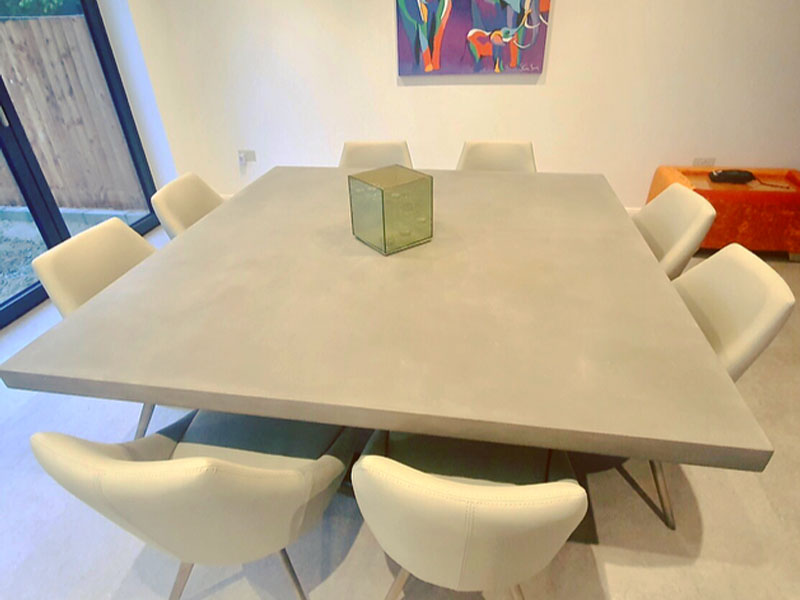
A standardised collection can offer some of the best of both worlds. Fixed 6, 8 and 10 seater configurations are more efficient to produce than a fully custom build, yet they still carry the quality and visual impact of a specialist maker. This approach is particularly appealing when you want a substantial polished concrete table without needing to alter every detail.
The limitation is that furniture dimensions on a webpage do not show how a table will behave in your home. A 240cm table may technically fit between two walls, for example, but if chairs cannot slide back comfortably or guests have to squeeze past the end, it is not truly functional. Before choosing ready made, measure the room carefully and mark the footprint on the floor. Include chairs, not just the tabletop.
Why bespoke earns its place in a finished home
Bespoke furniture is most valuable when the room has a specific demand. That may be an awkward bay, a large family that needs twelve places without overwhelming the kitchen, or an island and dining zone that need to sit in visual balance. In these situations, a few centimetres can make the difference between a room that feels generous and one that feels crowded.
Proportion changes everything
A table should relate to its setting. In a compact dining room, a carefully sized oval can improve movement while still seating guests comfortably. In a spacious extension with high ceilings, a small off-the-shelf table can disappear, leaving the room feeling unfinished. A made-to-measure piece gives you the opportunity to set the length, width and profile according to the scale of the architecture.
This is especially relevant for concrete. Polished concrete has a calm, weighty presence that works brilliantly with timber cabinetry, steel-framed glazing, brick and pale plaster. Its architectural character deserves enough space around it. Selecting the correct proportion allows the table to become a stunning centre piece without turning it into an obstacle.
Material and finish can be made part of the scheme
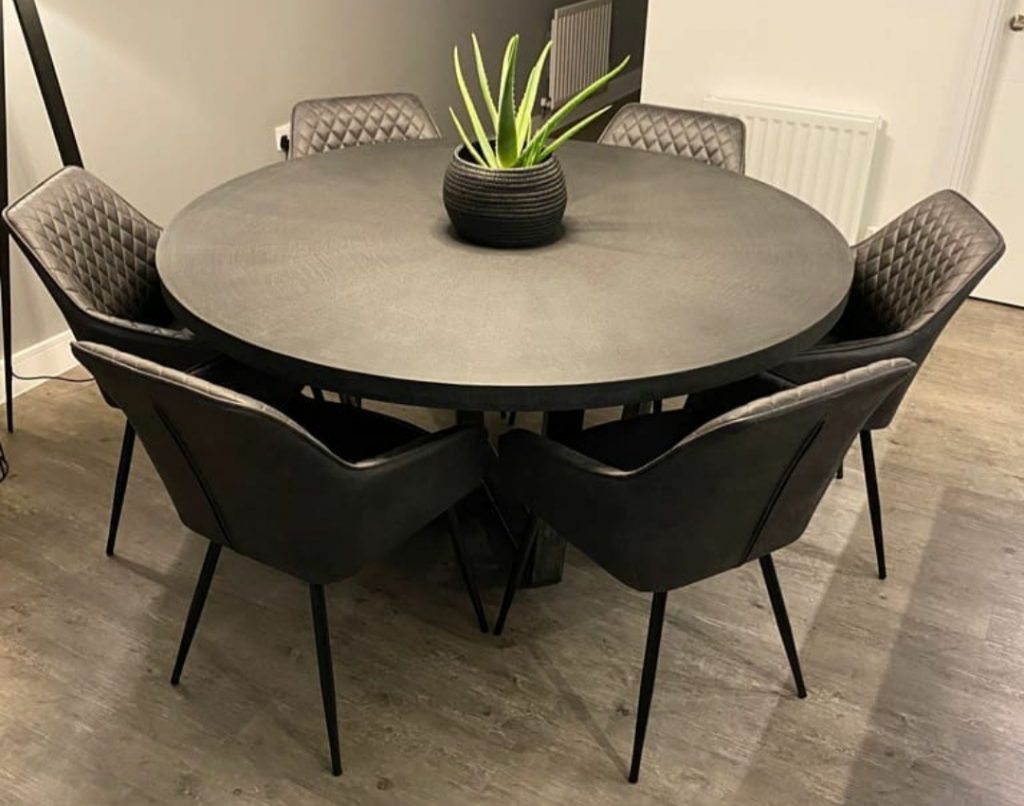
With ready made furniture, you usually choose from a small group of finishes. Bespoke commissions allow a more considered response to your interior. A warmer concrete tone can sit comfortably alongside oak and brass. A cooler grey can sharpen a monochrome kitchen. The leg design can introduce a lighter, more sculptural feel or reinforce the strong urban design of the tabletop.
Hand-finishing also gives a bespoke piece its own character. Concrete is not printed to look uniform. It has subtle tonal movement and variation, which is part of its appeal. The aim is not a factory-perfect imitation of stone, but a refined surface with depth and a finish that feels individual to the home.
Everyday durability needs to be designed in
A premium dining table must be more than photogenic. It needs to handle plates, laptops, children’s art projects and frequent entertaining without demanding a precious way of life. Properly finished polished concrete is hard-wearing and stain resistant, making it a practical choice for a table used every day.
That does not mean it is indestructible, and no honest maker should suggest otherwise. Use mats for very hot cookware, clean spills in good time and avoid dragging abrasive objects across any refined surface. The benefit of a specialist build is that the material, finish and base are selected with real use in mind, rather than simply designed for a catalogue photograph.
The cost question: price now or value over time?
Ready made furniture often has the lower entry price because the design, tooling and production process are repeated. Bespoke furniture costs more because it involves design decisions, tailored fabrication and a greater degree of hands-on work. The important comparison is not only the ticket price, but the lifespan of the decision.
A table that is slightly too small, poorly suited to the room or made from a finish you tire of may be replaced sooner than expected. A commissioned piece can represent stronger long-term value when it is planned for the home you are building, renovating or settling into for years. It can also remove the expensive frustration of trying to make several off-the-shelf purchases work around a problem that one properly sized table would solve.
Set a realistic budget early, but be clear about what it includes. For a large concrete dining table, practicalities such as access, delivery and installation matter. A table may be perfectly suited to the dining room but need thoughtful planning for stairs, tight hallways or a first-floor space. Discussing these details before a build begins protects both the investment and the experience of receiving it.
Lead times, confidence and the buying experience
Speed is the strongest argument for ready made furniture. If you are moving in next month or need to complete a commercial interior quickly, stock availability can be decisive. Bespoke work takes longer because each stage is made for a particular commission. That lead time is not wasted time, however. It is the period in which dimensions are confirmed, design choices are resolved and the piece is crafted and finished.
The best bespoke process should still feel straightforward. You should be able to share room dimensions, seating needs, inspiration images and practical concerns, then receive clear guidance on what will work. At Daniel Polished Concrete, that conversation is central to the build: a table is not treated as a generic item to dispatch, but as a permanent part of a client’s home.
Ask direct questions before committing. How many people will the table seat day to day and at its fullest? What clearance is recommended around it? How will the finish look in your natural light? What access is required for delivery? A maker who answers clearly is helping you make a design decision with confidence, not simply selling a surface.
A practical way to decide
Choose ready made when you have a straightforward room, a firm deadline and have found a design whose measurements genuinely fit. It is also a strong option when a standard 6, 8 or 10 seater configuration gives you exactly the result you want.
Choose bespoke when the table needs to resolve a particular spatial challenge, seat a precise number of people, complement a carefully planned renovation or become the defining feature of the room. It is the stronger route when settling for “nearly right” would be noticeable every time you sit down.
Start with the life you want the table to support, rather than the product you first see online. Measure the room, imagine the chairs pulled out, consider the people you gather around it and choose the piece that will still feel right long after the renovation dust has settled.