
A dining table is rarely just a surface for supper. In a renovated kitchen, an open-plan extension or a carefully considered forever home, it becomes the place where the whole room gathers. These bespoke dining table project examples show how a polished concrete table can be shaped around real spaces, real routines and a client’s individual sense of style.
Polished concrete brings a particular confidence to a dining room. It has an architectural presence, yet its hand-finished surface has warmth, movement and depth that cannot be repeated exactly. The right commission does more than fill a gap in a floor plan. It gives the room a centrepiece with a clear purpose.
What makes a bespoke table project work?
The strongest projects begin with proportion, not a product photograph. A table may look generous in a large gallery-style kitchen but feel overpowering in a narrower room once chairs, walkways and cabinetry are taken into account. Equally, choosing a table that is too small can leave a grand extension feeling under-furnished.
This is where made-to-measure design earns its place. Dimensions can be adjusted to suit the room, the number of people regularly dining and the way the table will be used. A family who hosts Sunday lunches may need comfortable seating for ten, while a couple may prefer a more compact daily table that extends the visual line of an island.
The form matters just as much. Rectangular tables make excellent use of long rooms and provide clear seating positions. Round and oval designs soften a square kitchen-diner, improve circulation and encourage conversation. A polished concrete top can then be paired with leg styles that feel quiet and refined or deliberately sculptural.
Bespoke dining table project examples for real homes
A long family table for an open-plan kitchen
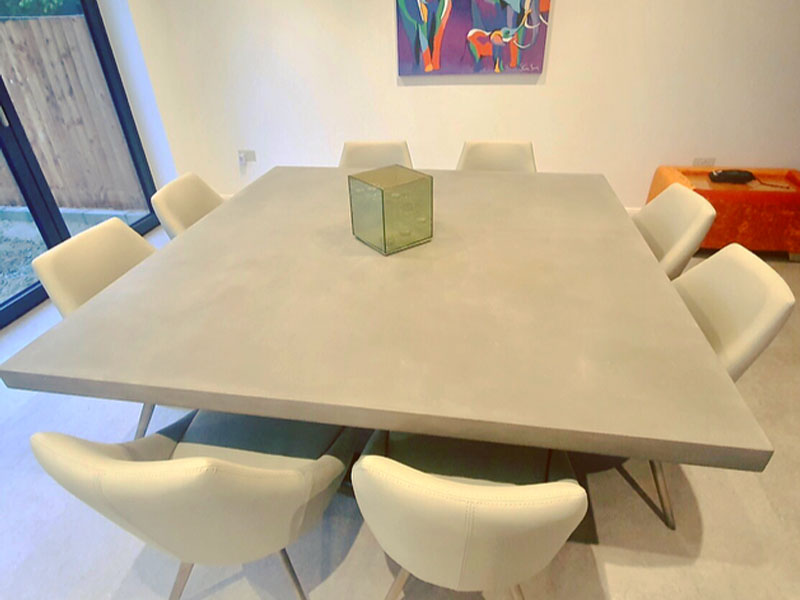
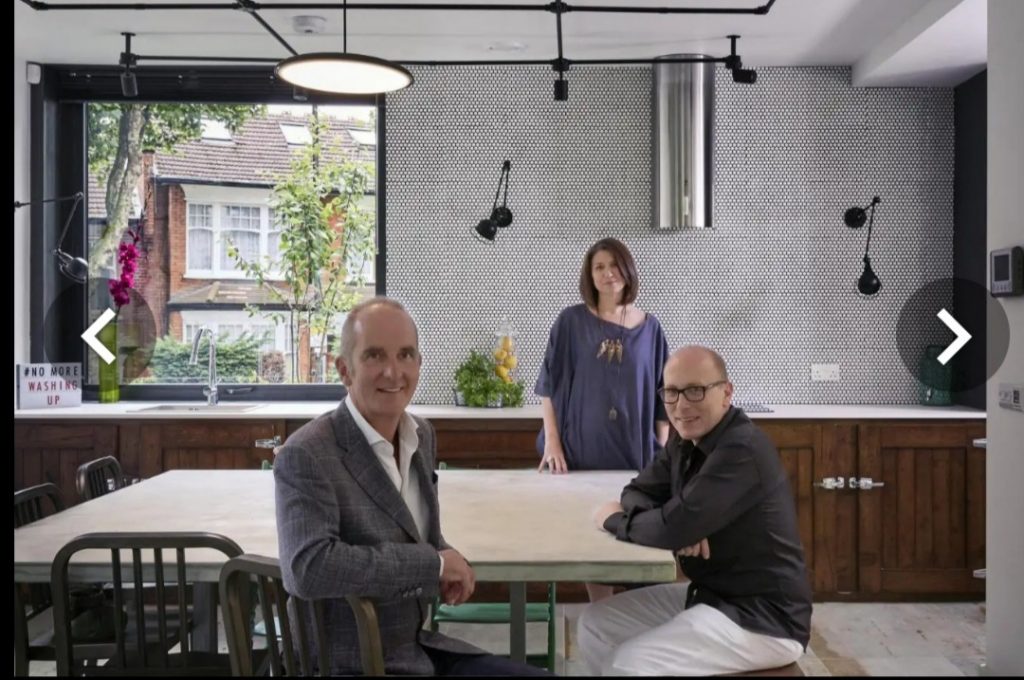
One of the most popular briefs is a large rectangular dining table for a kitchen extension. Picture a room with broad rooflights, a long island and sliding doors opening on to the garden. The table needs enough presence to hold its own against the scale of the architecture, without making the room feel formal or precious.
A substantial polished concrete top in a soft grey finish is particularly effective here. Its natural tonal variation works beautifully with timber cabinetry, black-framed glazing and brushed metal details. For a family of six who regularly entertain, a length of around 2.4 to 3 metres can comfortably accommodate eight to ten people, depending on chair width and the desired amount of elbow room.
The practical appeal is as important as the appearance. A properly sealed polished concrete surface is designed for everyday living, including busy breakfasts, homework, serving dishes and the occasional enthusiastic craft project. It is not indestructible, and it should be treated with the respect given to any premium handmade piece, but it offers a reassuringly hard-wearing alternative to materials that mark easily or demand constant polishing.
For this kind of project, the base is often a key design decision. A central pedestal can make seating more flexible, especially at the ends, while strong steel legs set back from the corners create a lighter visual profile. The choice depends on where diners will sit most often and whether benches form part of the arrangement.
A round concrete table that improves flow
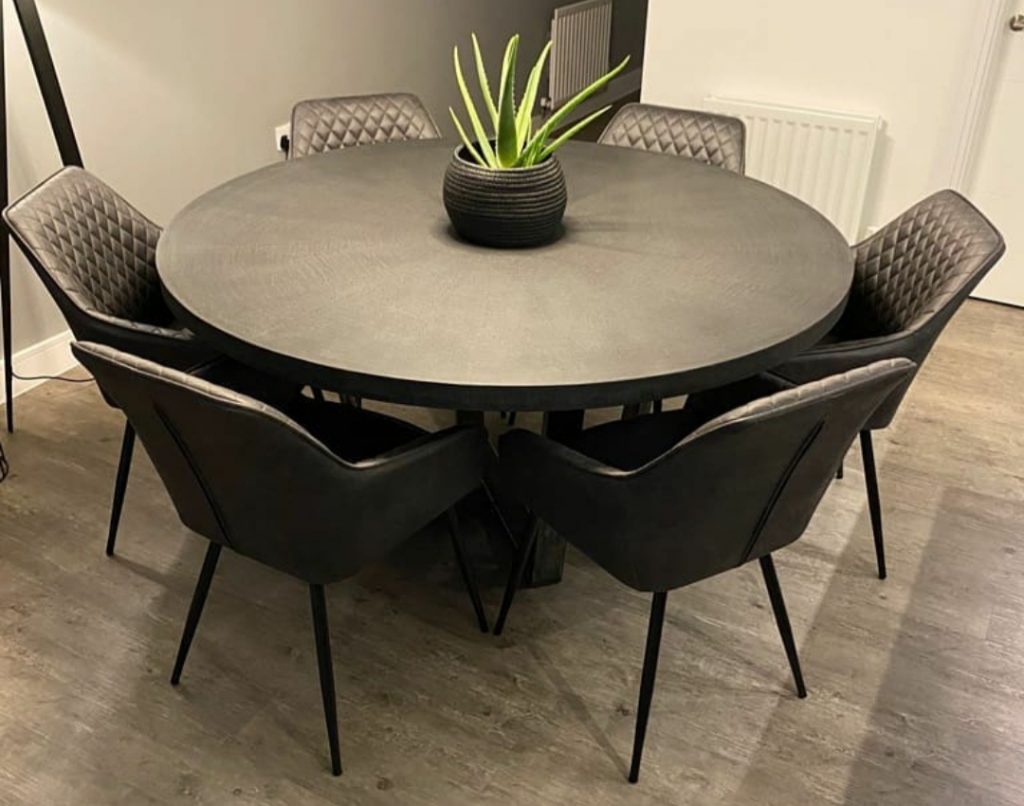
Not every dining space benefits from a long rectangle. In a square kitchen or a room where the route to the garden passes close to the dining area, a round table can be the more elegant answer. There are no sharp corners to navigate, and the form creates a natural focal point beneath a pendant light.
A 1.5 to 1.7 metre round polished concrete table can provide generous space for six, with a more sociable feel than a conventional six-seater rectangle. Everyone faces into the conversation, and the table feels purposeful rather than squeezed into a corner.
This type of commission often suits clients who want a softer counterpoint to a contemporary interior. A warm off-white, pale stone or lightly mottled concrete finish can sit beautifully alongside oak, limewash walls and textured upholstery. A darker charcoal finish makes a bolder statement, particularly when paired with a simple black base and restrained lighting.
There is a trade-off. Round tables use floor area differently, so the diameter must be considered alongside the space needed for chairs to pull back. In a compact room, an oval may offer a useful middle ground, retaining gentle lines while making better use of the available length.
An oval statement table for a considered dining room
An oval table is often chosen for its balance. It has the ceremony and scale of a large dining table, but avoids the hard geometry of a rectangle. This makes it especially suited to period homes where original features meet a contemporary renovation, or to dining rooms that need a statement piece without an overly industrial feel.
Imagine a 10-seater oval polished concrete table beneath a plaster ceiling rose, surrounded by upholstered dining chairs. The concrete provides contrast to softer materials and traditional detailing, while the curved edge keeps the overall scheme relaxed. Rather than appearing cold, the hand-finished surface brings a calm, mineral quality into the room.
The finish should be selected with the wider palette in mind. Mid-grey is a versatile choice, but it is not the only route. Warmer concrete tones can complement walnut, brass and earthy fabrics. Darker finishes heighten drama in a room with plentiful daylight, while lighter tones can prevent a substantial table from feeling too visually heavy.
For a table of this scale, delivery and installation deserve early attention. Access routes, door widths, staircases and floor levels can all influence how the project is planned. Discussing these details before production allows the table to arrive as confidently as it was designed.
A compact table with a made-for-the-room feel
Bespoke does not only mean bigger. Some of the most satisfying commissions solve an awkward space: a bay window dining area, a narrow kitchen, or a city flat where every centimetre matters. A smaller table can still have the same sculptural quality when its dimensions and base are carefully considered.
A slim rectangular polished concrete table for four might be designed with softened corners and a narrower depth, leaving comfortable passage around it. A pedestal base can reduce visual clutter and make it easier to tuck chairs in neatly. In a smaller setting, choosing a lighter concrete tone may also help the table reflect light rather than dominate the room.
This is a good example of why standard sizes are not always the answer. A Classic Collection table can offer excellent value and faster fulfilment when its proportions suit the space. But where a room has a particular constraint, a bespoke build gives the freedom to refine the length, width, thickness, edge profile, colour and leg position until the piece feels as though it belongs there.
Choosing details that will still feel right in years to come
The most successful commissions are not driven by a passing trend alone. They consider how the household lives now and how it may change. A couple planning regular family gatherings may wish to size up. A home with young children may benefit from softened edges and a forgiving layout. Those who love hosting might prioritise end seating and space for serving platters over the smallest possible footprint.
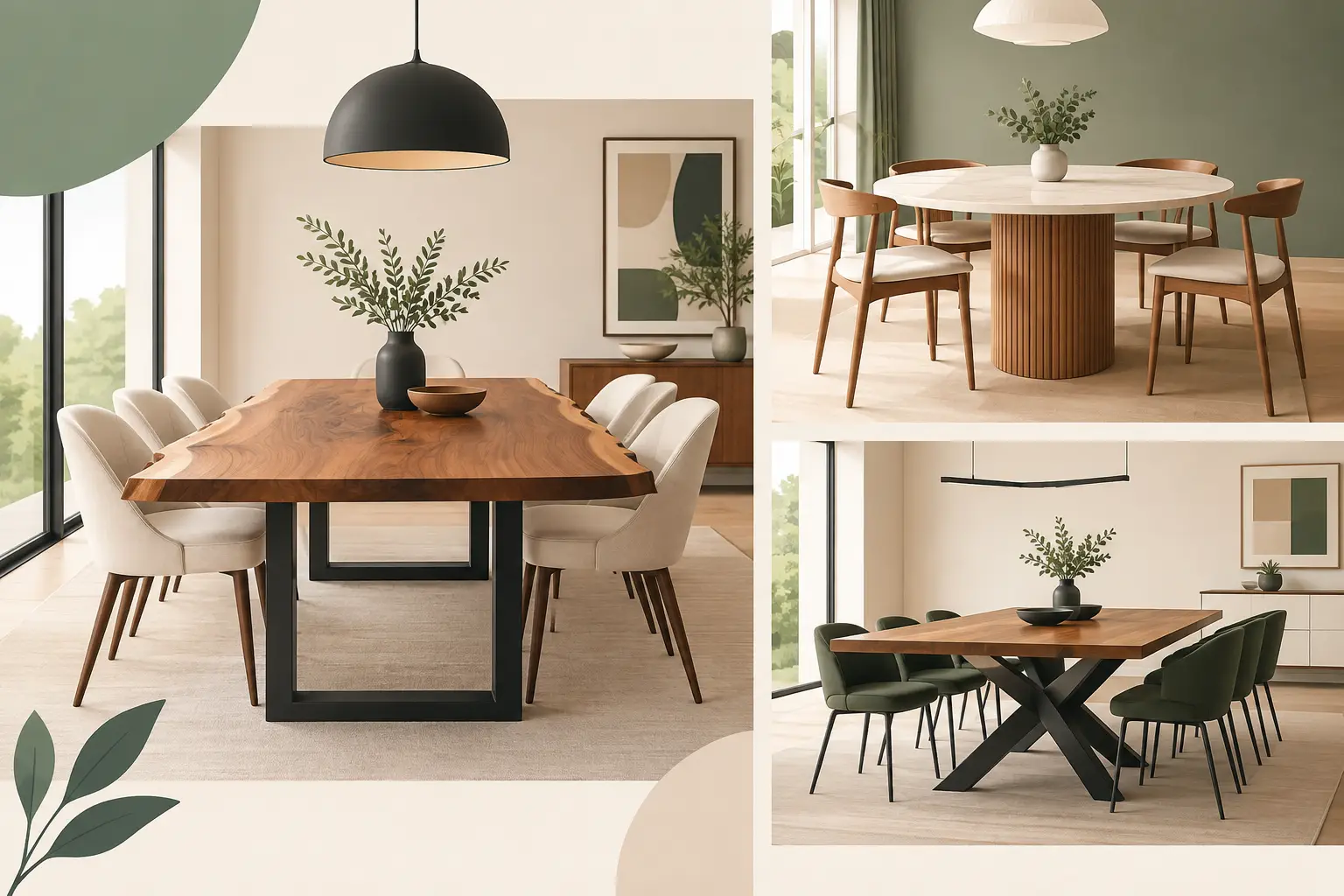
It is also worth thinking about contrast. Concrete does not need an all-industrial setting to work. It can look striking with natural oak, linen, boucle, colourful artwork or a traditional parquet floor. The material is distinctive, but it is remarkably adaptable when the finish and base are chosen with care.
A bespoke polished concrete dining table should feel substantial, not cumbersome; expressive, not decorative for its own sake. That balance comes from looking closely at the room, the light, the seating and the life that will happen around it.
If you are collecting ideas from bespoke dining table project examples, start with the way you want your home to feel when people gather. Then bring measurements, photographs and inspiration to the conversation. Daniel Polished Concrete can help turn that starting point into a hand-finished table made for your space, your style and the years ahead.