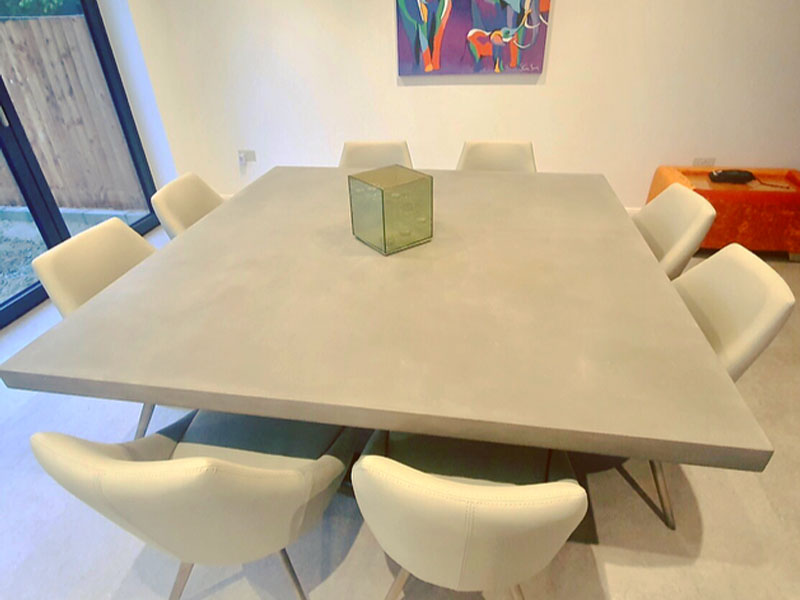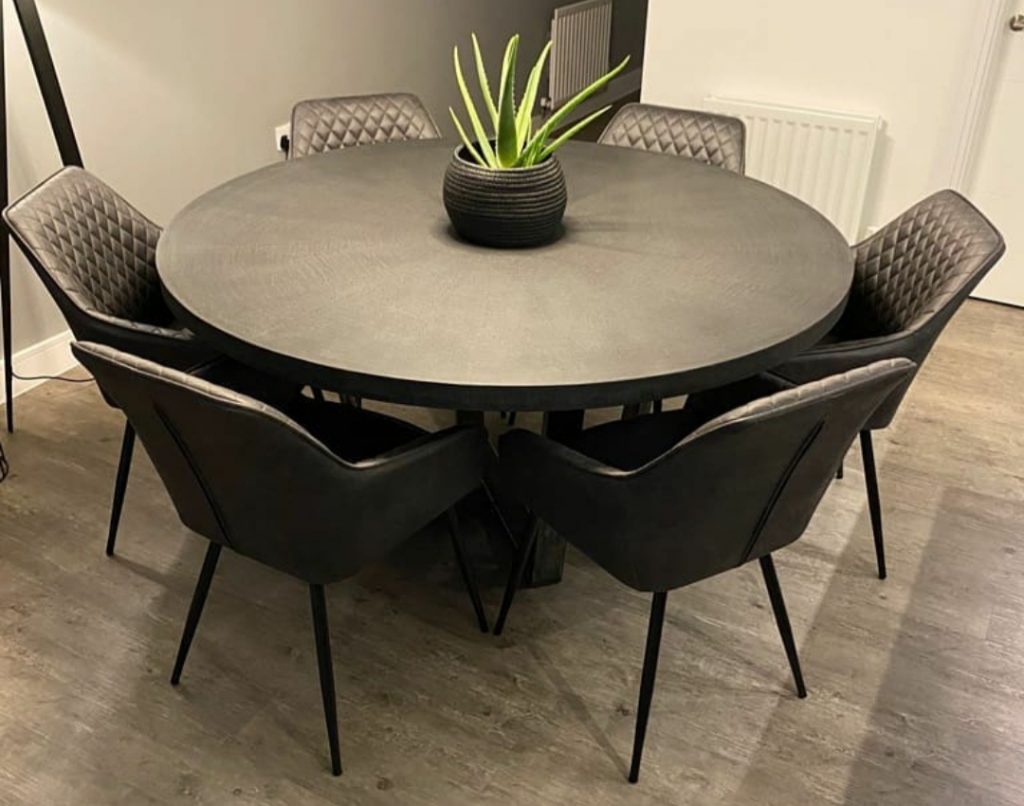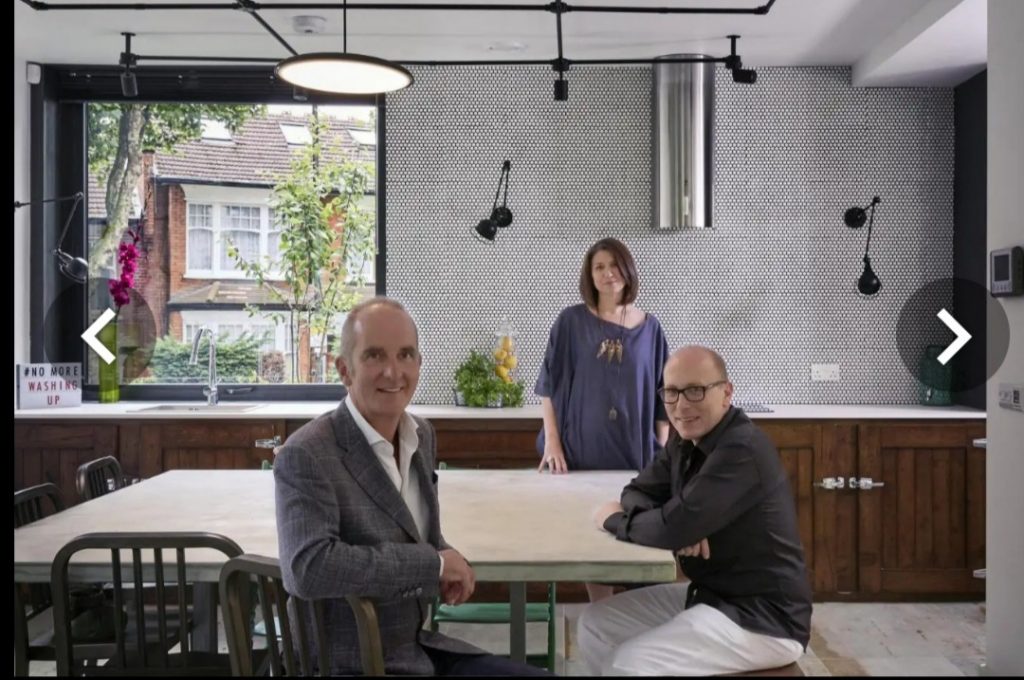


A polished concrete dining table can look wonderfully simple: a calm, sculptural surface, clean lines and a finish that sits beautifully in a modern kitchen or open-plan dining room. Yet behind that apparent simplicity is a considerable amount of skilled work. If you are wondering why concrete tables cost more, the answer is not simply the material. It is the design, engineering, hand-finishing and careful handling needed to turn concrete into a refined piece of furniture for everyday life.
A well-made concrete table is not cast like a paving slab, nor is it an off-the-shelf furniture item lifted from a warehouse shelf. It is a substantial, made-to-order centre piece built around your room, your seating requirements and the way you want the space to feel.
Concrete is only the starting point
Concrete has a familiar reputation for strength, but furniture-grade polished concrete is a far more considered material than the concrete used in a driveway or building foundation. The mix must be formulated for a slimmer profile, a smooth finish and long-term performance within a home.
This often means carefully balancing cement, fine aggregates, pigments, fibres and specialist additives. Each component affects the final look and behaviour of the table: its colour, density, polish, weight and resistance to daily spills. The material needs to be strong enough to span a large dining area while remaining elegant rather than unnecessarily bulky.
The raw ingredients are not the largest part of the cost, but choosing and working with the right ones matters. Cheap mixes can be more prone to inconsistency, excessive porosity or a finish that does not feel at home in a considered interior.
Why concrete tables cost more to make
The true value is found in the process. A polished concrete table takes time at almost every stage, and much of that time is hands-on.
First comes the design work. A dining table needs to be proportioned correctly for both the room and the people using it. A six-seater table has different demands from a generous ten or twelve-seater designed for family gatherings. The top thickness, base design and overall dimensions all need to work together, visually and structurally.
A bespoke commission may also involve a custom oval, round-ended or organic shape, a particular concrete colour, a softer edge profile or legs selected to complement a kitchen island, floor or lighting scheme. Those decisions are not cosmetic extras. They influence mould-making, reinforcement and how the finished table will be supported.
The mould itself is a key part of the craftsmanship. It has to produce crisp lines, accurate dimensions and a surface suitable for polishing. For a bespoke table, it may be created or adapted specifically for that project. Unlike mass-produced furniture, there is no production line spreading this preparation across thousands of identical pieces.
After casting, concrete must cure properly. Rushing this stage can compromise the result, so a maker has to allow the material the time it needs. Once cured, the surface is refined through a sequence of sanding and polishing stages. This is where the table starts to reveal its character: subtle movement in the material, occasional pinholes and the quiet variation that makes each piece individual.
A polished concrete finish should feel smooth and considered, not plasticky or artificially perfect. It takes an experienced eye to know when the surface has reached the right balance of natural character and refined furniture quality.
Reinforcement and engineering are part of the price
A large concrete table cannot rely on appearance alone. The internal structure must be designed to support the span, minimise flex and make sure the top performs as intended over years of use.
This is especially relevant for long dining tables, slim profiles and designs with more open leg arrangements. Reinforcement, support points and fixing methods need to be planned before the table is cast. A striking, minimal base can demand more engineering than a visibly heavy one.
Weight also changes the conversation. Concrete is naturally substantial, which is part of its reassuring permanence, but it means every practical detail has to be thought through. The base needs to be stable. Floors and access routes may need consideration. The table must be transported, carried and installed without damage to the piece or the home.
This is one reason a well-built concrete table can cost more than a similarly sized timber or veneer table. You are paying for a piece that has been engineered as furniture, rather than simply made from a heavy material.
The finish is what makes it practical at home
Many people love concrete visually but ask a sensible question: will it cope with red wine, family meals, hot mugs and everyday use? The answer depends heavily on the finish and aftercare guidance.
A quality polished concrete dining table is sealed to help resist stains and make cleaning straightforward. Sealing is not a single, careless coating applied at the end. It is part of the finishing process and needs to suit the material and intended use. The aim is to retain the tactile, mineral quality of concrete while giving the surface the protection expected from a dining table.
Concrete is still a natural, hand-finished material. Like timber, stone or leather, it has its own character and benefits from sensible care. Wiping spills promptly and using placemats for very hot dishes is good practice. In return, you gain a surface that feels architectural, durable and far less ordinary than a factory-finished alternative.
Bespoke work carries a different kind of value
Standard sizes are generally the most price-efficient route because the design and process have already been refined. A Classic Collection table in a six, eight or ten-seater configuration can offer the same material quality and craftsmanship with fewer one-off decisions.
Bespoke work costs more because it is built around details that cannot be automated: perhaps your room needs a 2.7-metre top rather than a standard length, or an oval shape to improve the flow around a kitchen extension. You might need a precise warm grey to sit alongside oak cabinetry, or a particular leg design that gives comfortable knee clearance along both sides.
For the right space, that flexibility is not an indulgence. It is the difference between a table that merely fits and one that anchors the whole room. The best result often comes from considering chairs, circulation space, pendant lighting and sightlines before finalising the design.
Delivery and installation are more involved than they appear
A concrete table does not arrive flat-packed with an instruction sheet. Its weight and finish demand specialist packing, transport and a careful delivery plan.
Access is discussed early for good reason. Staircases, narrow hallways, tight turns, parking restrictions and upper-floor rooms can all affect how a table is delivered. In some homes, the top and base can be handled separately and assembled in place; in others, the route determines the practical maximum size.
Professional delivery and installation protect your investment. They also offer peace of mind when a substantial table is being brought through a newly renovated home with finished floors, painted walls and carefully chosen joinery.
It is not always the most expensive option
Concrete tables are premium furniture, but price should be viewed against the scale and longevity of the piece. A large dining table is used daily, seen from every angle and often becomes the natural gathering point for a home. Choosing a standard configuration, a straightforward shape and a proven base style can keep the budget focused while still delivering the distinctive polished concrete look.
Equally, a heavily customised table will naturally sit at a different price point. Larger spans, complex forms, unusual colours and challenging access all require more labour and planning. The honest answer is that it depends on the build, but the cost should always relate to visible craftsmanship and a clear purpose for the design.
A concrete dining table is for people who want more than a surface to eat from. It is a lasting, hand-finished object made to hold its own in a beautiful room. If you have a particular space in mind, starting with its dimensions, seating needs and access will make it much easier to create a table that feels made for the life around it.