
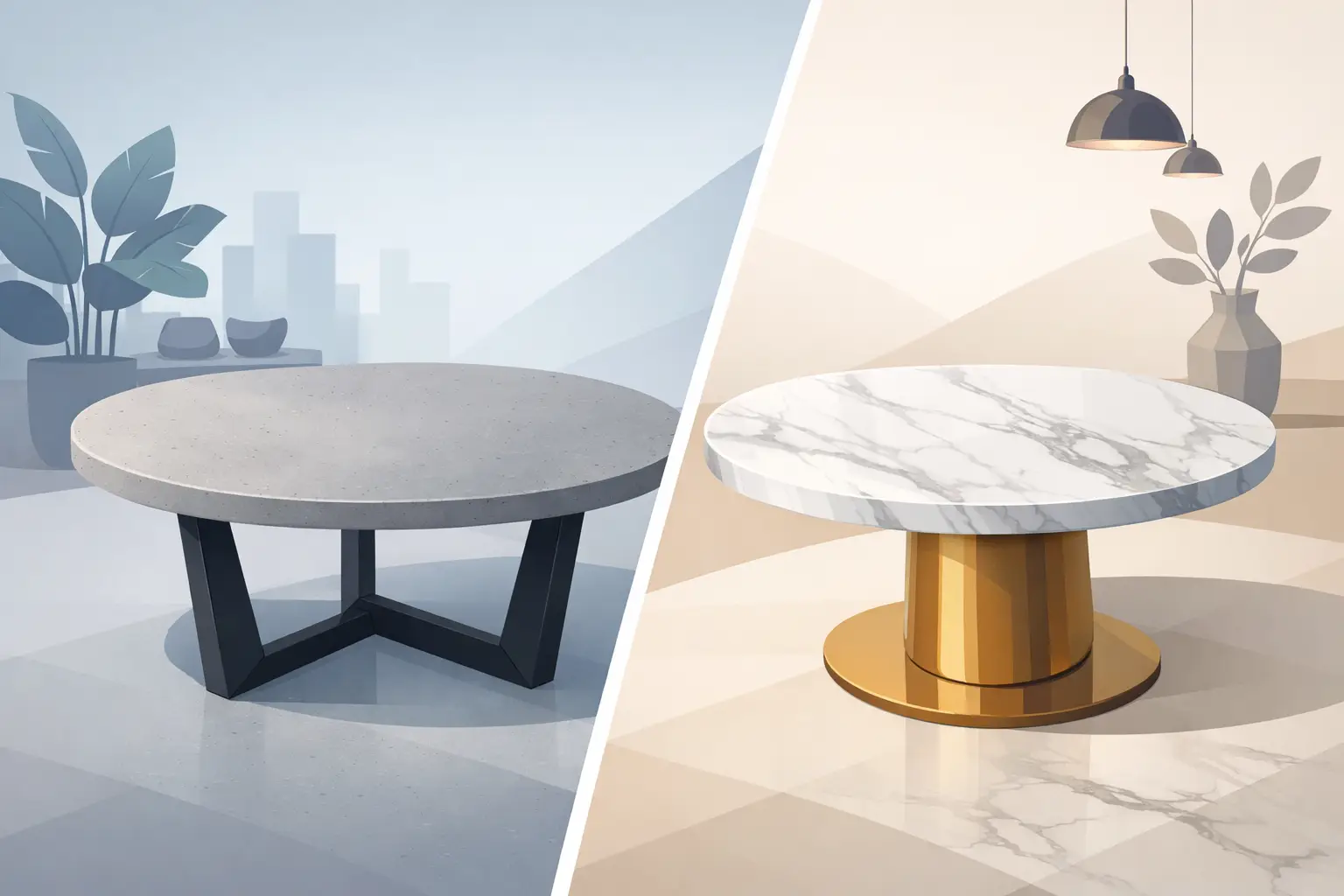
A dining table has to earn its place every day. It hosts hurried breakfasts, homework, Sunday lunches and the kind of long evenings that leave wine glasses and serving dishes scattered across the surface. When considering a polished concrete vs marble table, the question is not simply which material looks more luxurious. It is which one suits the way your household lives, the architecture of your room and the level of care you are happy to give it.
Both materials can create a stunning centrepiece. Marble brings natural movement and classic refinement; polished concrete offers a calmer, more architectural presence with a hand-finished character all of its own. The right choice depends on whether you want a table to remain pristine through careful use or develop confidence as part of a busy home.
Polished concrete vs marble table: the visual difference
Marble is instantly recognisable. Its veining, formed over millions of years, ranges from soft and cloud-like to bold and dramatic. A white Carrara-style marble can brighten a traditional kitchen, while darker green, brown or black marbles bring a more theatrical feel. No two slabs are alike, which is a genuine part of the appeal.
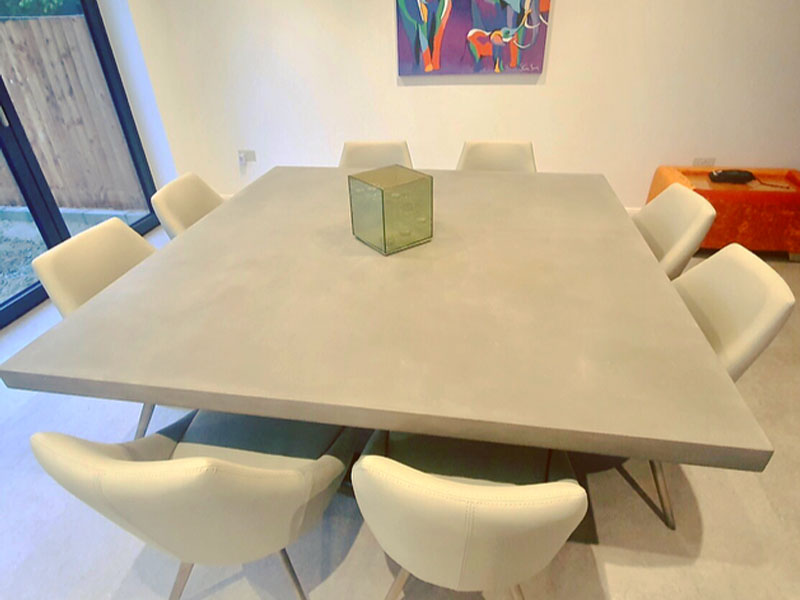
A polished concrete table is equally individual, but its character is more restrained. It has depth rather than high gloss, subtle tonal variation rather than pronounced veins, and a refined mineral finish that works particularly well alongside oak cabinetry, steel-framed glazing, exposed brick and contemporary plaster walls. It is a natural fit for urban design schemes, but it should not be limited to industrial interiors. In a country home, a warm grey or softer earthy concrete finish can ground a room without making it feel severe.
There is also a difference in how each surface reflects light. Marble often has a livelier polish and can feel visually busy, especially in a kitchen already featuring veined worktops or patterned flooring. Polished concrete is typically more matt-satin in appearance. It absorbs the visual noise around it and lets the proportion, shape and base design of the table do more of the talking.
Everyday durability is where the choice becomes personal
Both marble and concrete are substantial materials, and both need to be treated with respect. Neither is indestructible. Yet their vulnerabilities are different.
Marble is calcium-based and reacts with acidic liquids. Lemon juice, vinegar, prosecco, tomato sauce and some cleaning products can leave dull marks known as etching. These are not always stains – they are changes to the surface itself. A sealant can slow absorption and help with staining, but it cannot make marble immune to acid. For some owners, these marks become part of the table’s lived-in patina. For others, they become a source of constant caution.
Polished concrete is porous by nature, but a properly made dining table is sealed to give it practical stain resistance. The quality of the finishing process matters enormously here. A hand-applied seal system helps protect the surface from everyday spills while retaining the tactile, natural look that makes concrete so appealing. Wipe up red wine, oil or coffee promptly, use placemats for very hot dishes, and the table is designed to cope with real family life.
Concrete can still mark or scratch if it is abused, just as timber, marble and most premium finishes can. The advantage is that its quieter, variegated appearance is often more forgiving. A small sign of use tends to disappear into the material’s natural character rather than standing out against a crisp white ground.
Heat, weight and daily use
A marble tabletop can feel cool and beautifully smooth, but it is not a surface for placing hot pans directly from the hob. Thermal shock can cause damage, particularly at vulnerable points. Polished concrete also benefits from heat protection. Trivets and table mats are a sensible habit with any handcrafted dining table, preserving the finish and avoiding unnecessary risk.
Weight deserves consideration too. Both are heavy, but a concrete table is often built as a purpose-designed furniture piece, with the top, legs and internal support considered together. For larger 8-, 10- or 12-seater tables, that structural planning is essential. Before ordering either material, measure access routes, turns on staircases, lift sizes and the final position in the room. A table should feel permanent once installed, not become a delivery-day puzzle.
Care requirements: relaxed or meticulous?
If you prefer a table that asks for a little care but does not dictate the rhythm of your home, polished concrete is usually the easier choice. Day-to-day cleaning is straightforward: use a soft cloth, warm water and a mild pH-neutral cleaner when needed. Avoid abrasive pads, bleach and harsh degreasers, which can compromise a protective finish over time.
Marble needs a more watchful approach. It should also be cleaned with pH-neutral products, but its sensitivity to acidic food and drink means coasters, mats and quick wipe-downs matter more. In a formal dining room used occasionally, that may be entirely manageable. In an open-plan kitchen where children are painting, someone is slicing lemons and dinner is served directly from the oven, it can feel demanding.
Neither material should be judged solely on a showroom-perfect surface. Ask yourself what you will feel when the first mark appears. If you will see history and character, marble may reward you for decades. If you want a hard-wearing statement piece with a more relaxed relationship to daily life, concrete has a compelling advantage.
Bespoke proportions make concrete especially versatile
Marble tables are often selected from available slab sizes, which can place limits on dimensions, edge profiles and shapes. Bespoke stone work is possible, of course, but it can become expensive and technically restrictive, particularly when creating very large tops or unusually shaped tables.
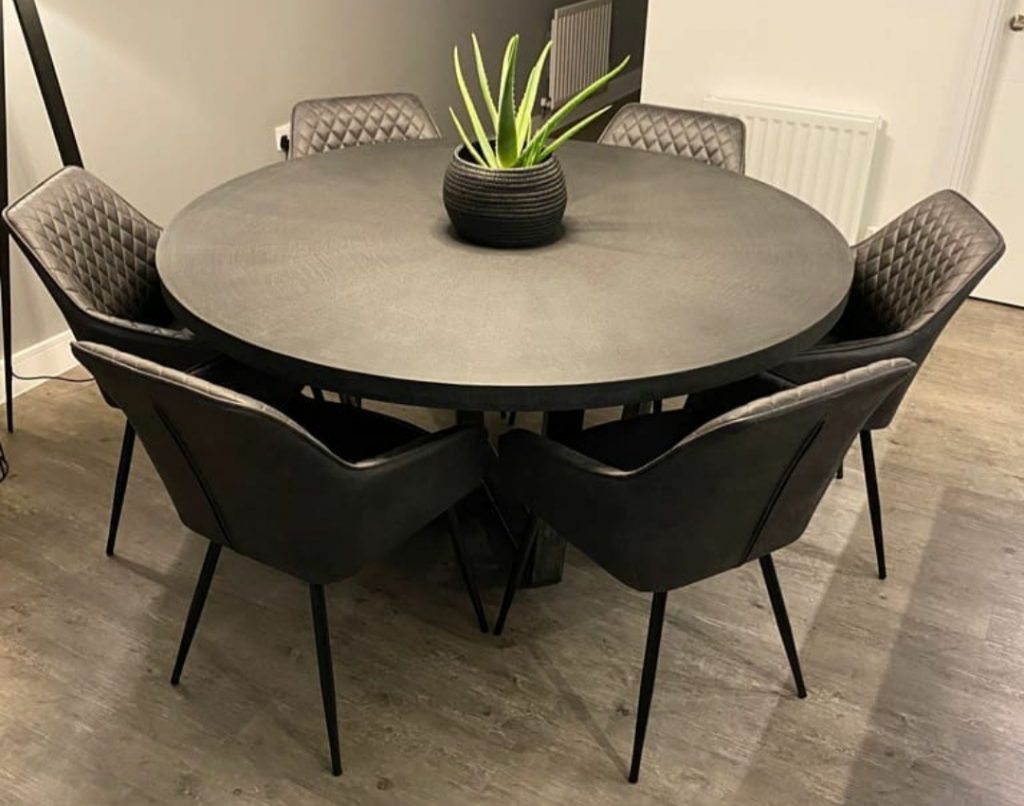
Concrete is exceptionally adaptable for made-to-measure furniture. A long, slim rectangle can make the most of a kitchen extension. A generous oval improves circulation in a room with bifold doors. A softly rounded rectangle gives a family table a more welcoming feel while still seating a crowd. Colour can be adjusted from pale stone-inspired tones to deep charcoal, while leg styles can be chosen to complement the rest of the scheme.
This is where a specialist maker adds real value. The table is not simply a top on a generic base. Its thickness, overhang, seating clearances and overall visual weight can be considered for your exact space. At Daniel Polished Concrete, that process is centred on creating a piece that feels designed into the room rather than delivered into it.
Choosing the right scale
A table can be visually striking and still be comfortable to use. Allow enough room for chairs to pull back, for guests to pass behind one another, and for the table to breathe within the plan. In many homes, a large concrete top looks surprisingly balanced because its neutral surface does not compete with everything around it. Marble can create a more immediate focal point, which is wonderful in a restrained room but may overpower a compact or already richly finished space.
For busy family dining, consider rounded corners, a base that leaves clear knee room and a finish that works with the daylight in your room. A sample viewed by a window, not only under a showroom light, will tell you far more about the final effect.
Cost is about more than the initial quote
Marble is often associated with luxury, and rare slabs or complex fabrication can command a significant price. The cost varies widely according to origin, grade, thickness, finish and the amount of waste created when cutting around veins. It is worth comparing like for like: a mass-produced marble-effect table is not comparable with a genuine, fabricated stone top.
A bespoke polished concrete dining table is also an investment. Its price reflects the mould-making, reinforcement, curing, finishing, sealing and skilled labour involved in producing a substantial piece by hand. However, it can offer stronger design freedom at large sizes, especially when you want a particular footprint, colour or leg arrangement rather than an off-the-shelf format.
Think beyond purchase price. A table that fits the room precisely, accommodates the people you regularly host and continues to look at home after a kitchen refresh is often the better long-term value. The most economical table is not necessarily the least expensive one. It is the one you will not be replacing in five years.
Which table belongs in your home?
Choose marble if you are drawn to expressive natural veining, enjoy a more formal sense of luxury and are comfortable protecting a sensitive surface from acidic spills. It can be magnificent in a calm, considered interior where the table is allowed to be the star.
Choose polished concrete if you want sculptural presence with a more understated finish, practical stain resistance and the freedom to tailor the table to your household. It is particularly convincing in open-plan spaces, renovated kitchens and homes where a dining table is used properly rather than kept for occasions.
The best material is the one that makes you want to gather around it. Start with the dimensions of your room, the number of people you want to seat and the reality of your everyday routine, then choose the surface whose character will still feel right after the first hundred meals.