

A dining table can look perfect in a showroom and still feel wrong the moment it arrives at home. The proportions are slightly off, the finish fights with the floor, or the base lands exactly where someone wants to put their legs. That is usually the moment people start asking how to customise a dining table properly – not just to make it different, but to make it truly right for the room and the way they live.
For most homes, the dining table is doing far more than hosting Sunday lunch. It becomes a work surface, a homework station, a place to gather with friends, and often the visual anchor of an open-plan kitchen or dining room. If you are investing in a statement piece, customisation should never be treated as a decorative extra. It is how you make sure the table belongs in the space from day one.
How to customise a dining table for your space
The first decision is not colour or leg style. It is size. A beautiful table that is too large will make the room feel cramped, while one that is too small can disappear and leave the space feeling unresolved.
Start with the footprint of the room and the clearance around the table. In most cases, you want enough space to pull chairs out comfortably and move around the table without feeling squeezed. In open-plan layouts, this matters even more because the table often sits between kitchen cabinetry, island units and circulation routes. A made-to-measure table allows you to work with the actual dimensions of the room rather than trying to force a standard size to fit.
Seating capacity should be considered honestly. Many buyers say they need an eight-seater when in reality they host eight people three times a year. Others buy for six and quickly realise they regularly have family over. There is no single correct answer here. It depends on whether the table is primarily for everyday family life, frequent entertaining, or both. If you want a table that feels generous every day and impressive when guests arrive, custom dimensions can help strike that balance.
Choosing the right shape
Shape changes the feel of a room more than most people expect. Rectangular tables are the natural choice for longer spaces and larger seating numbers. They feel structured, architectural and practical. In many renovated kitchens and dining extensions, they also echo the lines of cabinetry and glazing beautifully.
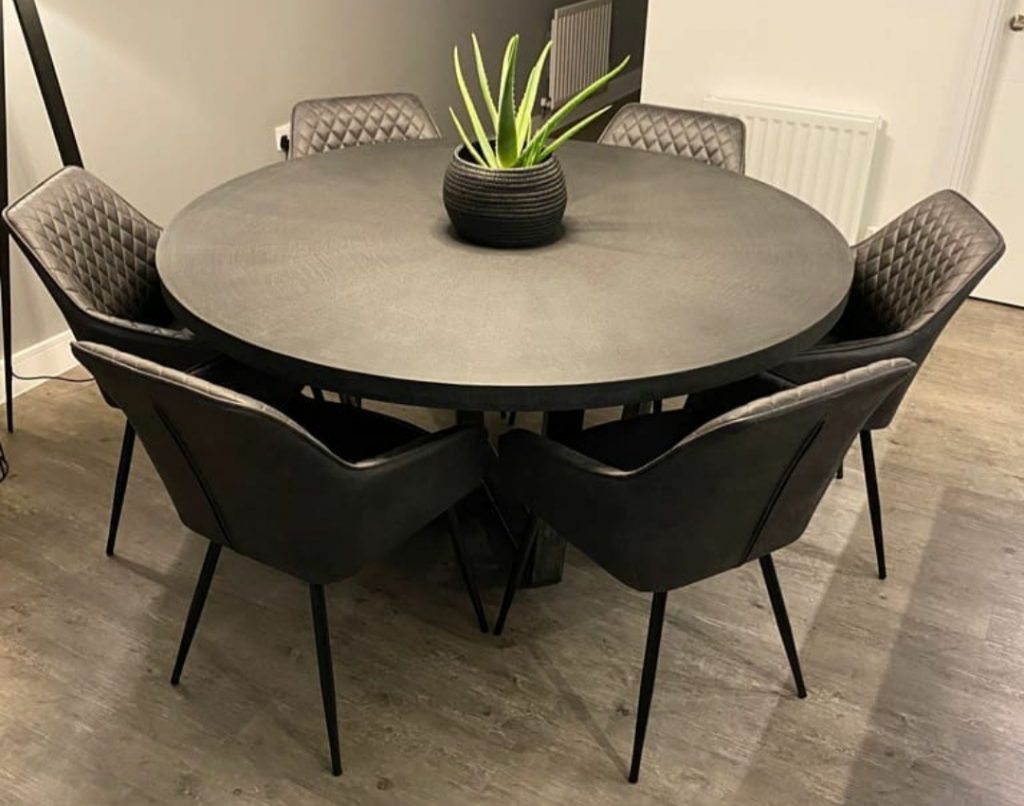
Round tables create a softer atmosphere and encourage conversation, but they need more surrounding space than people sometimes realise. They work particularly well in square rooms or where you want the table to feel less formal. Oval tops sit somewhere in the middle. They offer the sociability of a round table with the seating efficiency of a rectangle, and they can be a clever solution where circulation needs to stay fluid.
If the room has strong geometry, a softer shape can bring balance. If the interior already has lots of curves, a crisp rectangular top may ground the scheme. This is where customisation becomes a design decision, not simply a practical one.
Material and finish matter as much as size
Once the proportions are right, the surface becomes the real character of the table. This is where many off-the-shelf options fall short. They may offer one or two standard finishes, but they rarely let you tune the look to the architecture of your home.
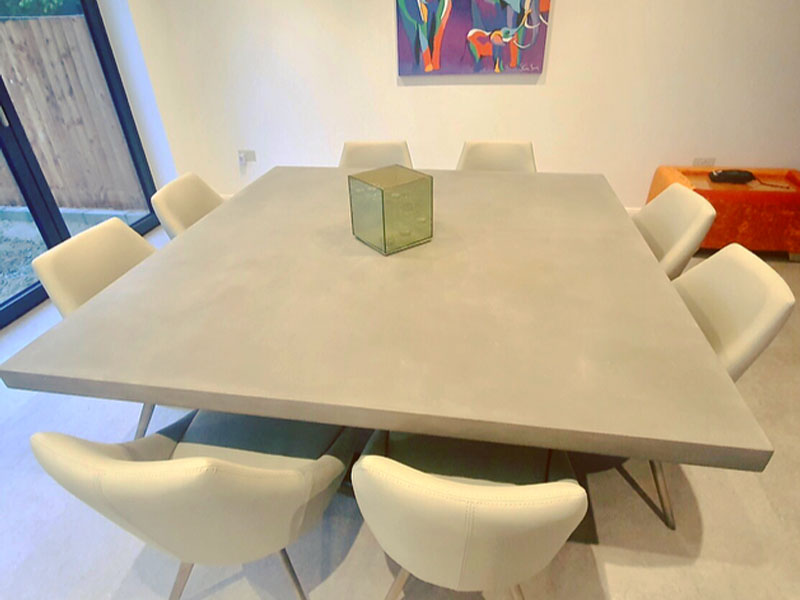
With polished concrete, the appeal is not only visual. It has weight, depth and a hand-finished quality that gives the table presence. It suits modern interiors naturally, but it can also work beautifully in period homes where a more contemporary centrepiece is wanted. The key is choosing the right finish and tone.
Picking the right concrete colour
Grey is not just grey. Some tones are cooler and sharper, others warmer and softer. In a north-facing room, a cold concrete tone can feel overly stark. In a bright kitchen with timber flooring and warm brass details, a slightly warmer grey often sits more comfortably. Darker tones can look dramatic and refined, but they will create a stronger visual block in the room. Lighter tones feel airier, though they may not deliver the same contrast.
A custom finish lets you respond to the rest of the scheme – cabinetry, flooring, wall colours and even the amount of natural light. That is often the difference between a table that looks impressive on its own and one that feels completely at home in the room.
Texture, sheen and edge detail
Not every polished concrete table should have the same surface character. Some clients want a smoother, cleaner finish for a more minimal look. Others prefer subtle movement and natural variation that show the hand-finished quality of the material. Neither approach is better. It depends on whether you want the table to feel crisp and refined or slightly more organic.
Edge detail also deserves attention. A slimmer visual profile can make a substantial table feel lighter and more contemporary. A thicker edge gives more mass and drama. In a large open-plan space, that extra weight can be exactly what the room needs. In a tighter dining area, a cleaner, finer edge can stop the table feeling too dominant.
The base changes both style and comfort
People often focus on the top and treat the legs as a secondary decision. In practice, the base affects how the table sits visually and how comfortable it is to use.
A central pedestal or sculptural base can make a table feel more design-led and free up seating flexibility. Trestle or angled legs may create a more industrial or architectural look. Straight legs can feel restrained and timeless. The right option depends on the balance you want between statement and simplicity.
There is also a practical side. If you regularly seat larger groups, leg placement matters. End seats need proper knee room, and corner seating should not feel compromised. A bespoke table gives you the chance to solve these details before the piece is made rather than living with an awkward layout afterwards.
Matching the base to the interior
Metal bases in black or darker finishes work well if you want a sharper urban design feel. They complement concrete naturally and create a strong silhouette. Lighter or softer-toned bases can reduce visual weight and may suit interiors where you want the table to feel substantial without becoming severe.
The smartest combinations usually take cues from the room without copying everything in it. If your kitchen already has black framed doors and dark lighting, a black base can tie the scheme together. If the room needs contrast, changing the base finish can stop the table blending in too quietly.
How to customise a dining table for everyday life
Design matters, but so does reality. If you have children, entertain regularly or simply want a table that can cope with daily use, practicality should be part of the brief from the start.
That means being honest about how the table will be used. A family table needs to handle spills, movement and constant use without becoming precious. A polished concrete dining table, when properly sealed and finished, offers the hard-wearing performance many households are looking for. It gives you the confidence of a robust surface without losing the visual impact of a handcrafted piece.
There are still choices within that. A darker finish may disguise minor marks better, while a lighter tone can make the room feel more open. A very large table may look spectacular, but if it overwhelms daily meals for a smaller household, it can feel less inviting than a design with tighter proportions. Good customisation always balances drama with usability.
Bespoke versus standard sizes
Not every project needs a fully bespoke route. Standardised sizes can offer better price efficiency and shorter lead times, especially if your room suits common six, eight or ten seater proportions. For some homes, that is the sensible answer.
But bespoke becomes worthwhile when the room has specific constraints or when you want a piece that could not be bought off the shelf. That might mean an unusual width, a special shape, a particular leg style or a finish chosen to work with a wider interior scheme. If the dining table is intended to be the stunning centre piece of the room, those details are rarely minor. They are the whole point.
A specialist maker will usually guide this process far better than a general furniture retailer because the conversation starts with your room and your priorities, not with a fixed stock list. That is where a consultation-led approach proves its value. At Daniel Polished Concrete, that process is centred on creating a table that feels tailored in every sense, from dimensions to finish to final installation.
Customisation works best when it is thoughtful rather than excessive. The aim is not to add options for the sake of it. The aim is to create a dining table that looks exceptional, fits beautifully and earns its place in the home every single day. If you begin with the room, the way you live and the character you want the piece to bring, the right design decisions tend to become much clearer. And when they do, the result is not just a customised table, but one that feels as if it was always meant to be there.