
A dining table can disappear into a room, or it can set the whole direction of it. This polished concrete dining table review is for homeowners who want the latter: a substantial, hand-finished table with an architectural presence, but one that still earns its place through weekday suppers, homework, entertaining and long Sunday lunches.
Polished concrete is not a mass-produced look applied to a standard table. It is a material with movement, tonal variation and a character that develops through the making process. For the right kitchen or dining room, it creates a stunning centre piece that feels considered rather than over-styled. The question is whether its distinctive appearance, weight and price make sense for the way you live.
What a polished concrete dining table brings to a room
Concrete has a calm confidence that works particularly well in open-plan spaces. Its mineral surface can ground a room full of glass, pale cabinetry and clean-lined joinery, while softening the sharpness of more industrial schemes. It sits just as comfortably alongside warm oak, upholstered dining chairs and textured linens as it does with black steel, microcement floors and statement lighting.
Unlike a high-gloss surface, polished concrete does not aim for visual perfection. Fine pinholes, gentle marbling and small shifts in shade are part of the appeal. Each top is hand-finished, so no two tables are precisely alike. That individuality is often the deciding factor for buyers who have spent time creating a home with real material depth rather than filling it with matching furniture.
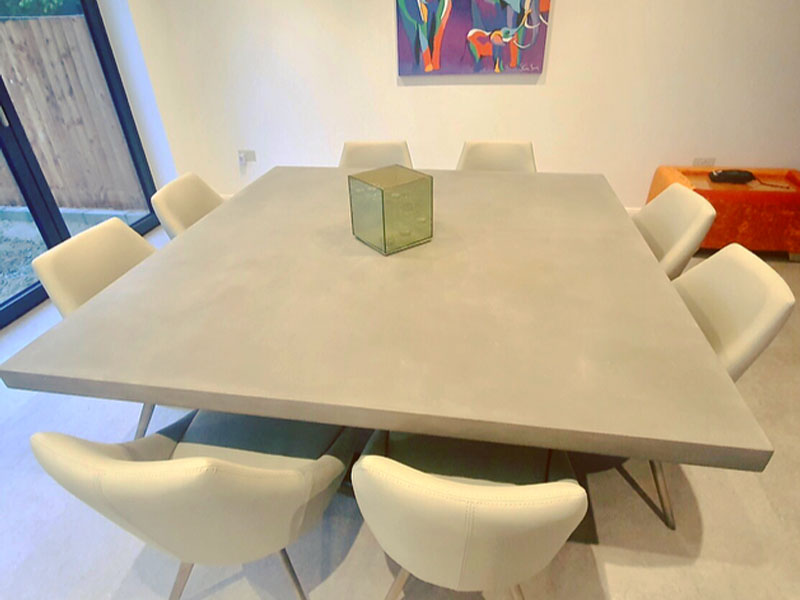
There is also a useful visual balance to concrete. A large 8, 10 or 12 seater table can be imposing by nature, yet a refined concrete top can feel quieter than heavily figured timber or patterned stone. The surface has presence, but it does not compete with every other detail in the room.
Polished concrete dining table review: the practical reality
The practical case is stronger than many people expect, but it needs an honest explanation. A properly made and sealed polished concrete dining table is designed for regular use. It is hard-wearing, easy to wipe down and well suited to the knocks of family life. Spilled tea, wine and food should be dealt with promptly, as they would on any premium dining surface, but daily maintenance is straightforward.
Use a soft cloth with warm water and a mild, pH-neutral cleaner where needed. Avoid abrasive pads, harsh bleach-based products and aggressive degreasers, as these can dull or compromise the protective finish. Placemats and coasters are sensible for hot pans, ceramic dishes and condensation-heavy glasses. This is not fussy living; it is simply good care for a handcrafted surface.
A common concern is staining. Concrete is naturally porous, which is why professional sealing matters. The sealant helps resist the everyday marks associated with dining, but it does not make a table indestructible or immune to neglect. Leaving red wine, lemon juice or oily food sitting on any surface for hours is never a good idea. The difference is that a well-sealed concrete top is built to make normal life manageable, not fragile.
Another concern is scratching. Concrete has a reassuring solidity, though cutlery, grit beneath a vase or dragged ceramic accessories can mark almost any table. The material is not trying to imitate plastic laminate, where every surface looks identical forever. Its beauty lies in a tactile, genuine finish that can acquire a little more personality over time.
Is it comfortable to eat at?
Yes, provided the design is resolved properly. The dining experience depends as much on table thickness, edge detailing, leg position and chair clearance as it does on the top material. A polished finish feels smooth rather than rough, and a thoughtfully profiled edge prevents the table from feeling visually or physically heavy.
For families and regular hosts, leg placement deserves serious attention. A pedestal or carefully positioned leg design can make it easier to seat extra guests at the ends or along the sides. If you are specifying a bespoke table, consider not only the number of chairs you own now, but the way people naturally gather in your home. A table that seats eight comfortably is more valuable than one that technically accommodates ten with everyone knocking knees.
The weight question: strength needs planning
Concrete is substantial, and that is part of its appeal. It gives a dining table an anchored, sculptural quality that lighter materials cannot always match. It also means delivery and installation should be planned from the outset.
Before choosing a size, measure access routes carefully: doorways, hallways, stairwells, turns, lifts and any tight external approach. Ground-floor kitchen extensions are usually straightforward, but upper-floor rooms, period properties and restricted access require a more considered delivery plan. A specialist maker will discuss this early, rather than treating it as an afterthought once the table is ready.
The floor beneath the table is worth considering too. Most modern homes can accommodate a well-designed concrete dining table without issue, but unusual structures, raised floors or flats with specific building restrictions may call for extra checks. It is better to resolve those details before a build begins than to compromise on the table you really want.
Bespoke versus a standard size
The right choice depends on whether speed, value or exact fit matters most. A standardised collection offers proven proportions and clearer pricing, making it an excellent route for homeowners who know they need a six, eight or ten seater table and want a more efficient lead time. The design is already resolved, which removes much of the decision-making without losing the material impact.
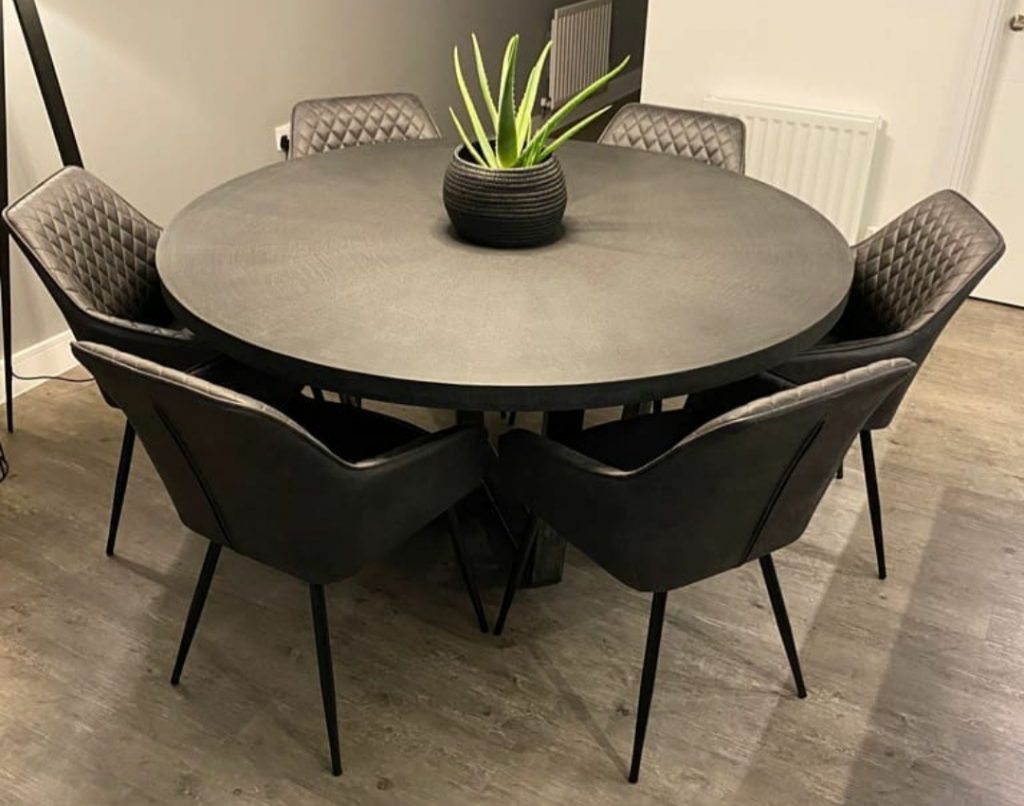
Bespoke is where polished concrete becomes especially compelling. In a long, narrow kitchen, a softened rectangular or oval table may improve circulation dramatically. In a square dining space, a round table can create a more social layout. A made-to-measure top allows the dimensions to respond to an island, a banquette, a view, a pendant arrangement or the exact distance needed behind each chair.
Finish and colour should be considered in the same way. Pale greys can make a room feel calm and contemporary; deeper charcoal tones create more drama; warmer shades can sit beautifully with timber, brass and earthy textiles. Samples are useful, but look at them in the actual room where possible. Natural light, flooring and wall colour can alter the way concrete reads throughout the day.
The cost is in the craftsmanship
A polished concrete dining table is an investment piece, not a quick replacement for a disposable dining set. The price reflects the work behind the finished surface: casting, curing, reinforcement, polishing, sealing, hand-finishing and the practical design required to make a large concrete top perform beautifully in a home.
The most useful comparison is not with a flat-pack table that may be replaced within a few years. Compare it with other statement furniture made for the long term, such as solid timber, natural stone or a commissioned joinery piece. Then consider the value of getting the proportions right for your room first time.
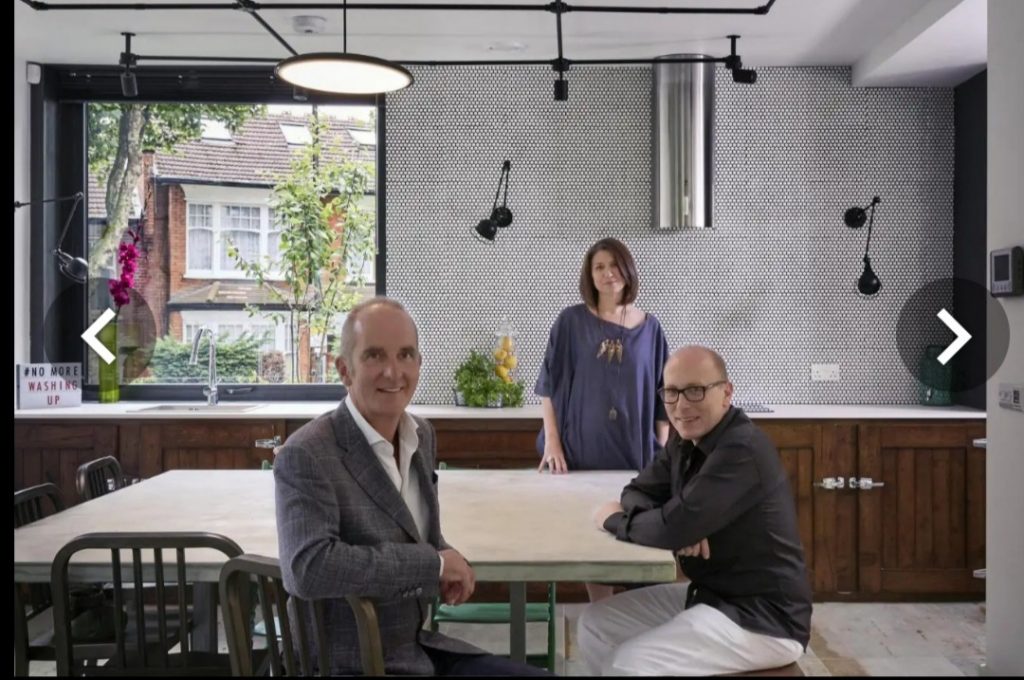
Daniel Polished Concrete has completed more than 2,500 bespoke projects across the UK and Europe, and that specialist experience matters when a table must look refined while handling the realities of size, support, access and daily use.
Who will love one, and who may not
A polished concrete dining table suits homeowners who enjoy material character and want their dining area to feel intentional. It is especially effective in renovated kitchens, contemporary extensions and homes where the table is visible from several living spaces. It works for busy households too, provided everyone is happy with sensible care rather than expecting a surface that can be ignored entirely.
It may not be the best fit if you prefer a very light, easily moved piece of furniture, want an immaculate uniform finish, or expect to relocate frequently. Equally, if your room is compact and access is restricted, the ideal answer may be a smaller bespoke table rather than forcing an oversized statement piece into the space.
The best polished concrete tables feel neither cold nor overly industrial. They feel permanent, personal and made for the room around them. Start with how you want people to gather, measure the space honestly, and choose a design with enough presence to become part of the home’s story for years to come.