
A dining room becomes memorable when the table feels chosen for the house, rather than simply placed in it. It is the piece that gathers family, frames celebrations and gives an open-plan kitchen its sense of purpose. If you are considering how to design a statement dining room, begin with the element that does the hardest work: a table with enough presence to anchor the whole scheme.
A statement does not have to mean loud. In the most successful rooms, it comes from confident proportion, tactile materials and a clear point of view. A beautifully made concrete dining table can bring all three, offering a sculptural centre piece that is equally at home with weekday suppers, schoolwork and a table full of guests.
Start with the table, not the accessories
It is tempting to choose dining chairs, pendant lights and paint colours first. Yet a statement room needs a visual anchor. Start with the table and let its scale, shape and finish guide the rest of the decisions.
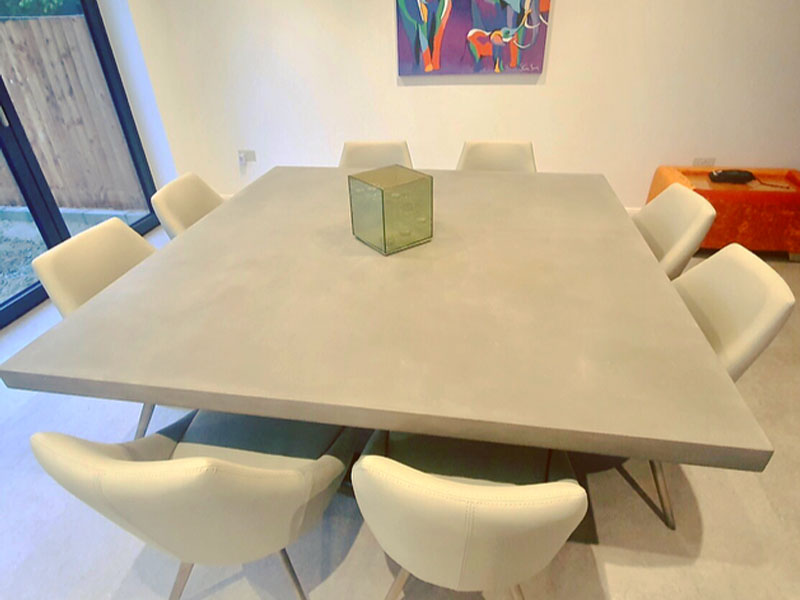
Polished concrete has a calm architectural quality that gives a room instant weight. Its hand-finished surface has movement and character, rather than the repeated pattern of a factory-made material. In a contemporary extension with large glazing, it can prevent the space from feeling cold or unfinished. In a period home, it introduces a considered contrast against timber floors, original brickwork or plaster walls.
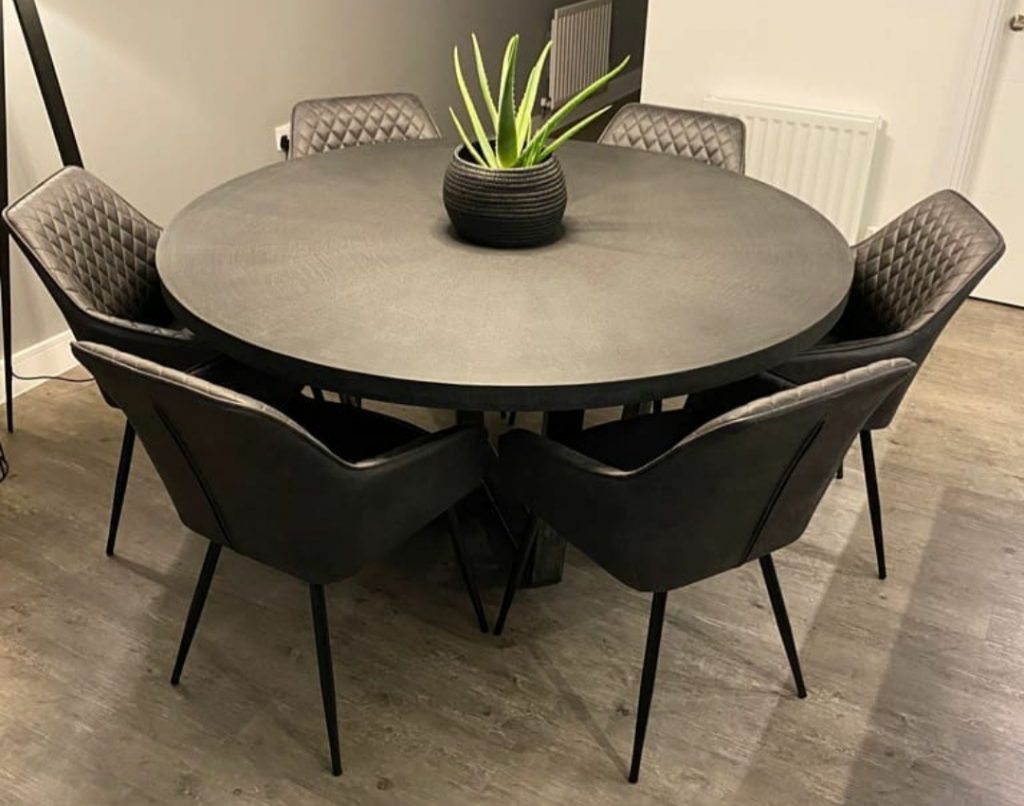
Think about the atmosphere you want before settling on a finish. A pale concrete top can feel light and gallery-like, particularly beside oak, linen and soft stone tones. Charcoal or darker grey creates a more dramatic urban design, working particularly well with black-framed doors, deep wall colours and leather seating. The right choice depends on light levels, flooring and how much contrast you want the table to create.
Get the proportions right before choosing a shape
A large table only feels luxurious when people can move around it comfortably. Measure the room, then mark the proposed tabletop on the floor with masking tape or newspaper. This simple exercise quickly reveals whether the dining area has the generous circulation a statement piece deserves.
As a useful guide, allow around 90cm between the table edge and a wall, radiator or fixed furniture where possible. This gives diners room to pull out a chair and allows people to pass behind them. In tighter rooms, 75cm may work, but it will feel more intimate and is better suited to a smaller household than frequent entertaining.
Do not measure only for the number of chairs you own today. Consider the way you actually live. A family that regularly hosts Sunday lunch may need an eight or ten seater even if the table is used by four people most days. Conversely, an oversized table can make a compact dining zone feel crowded and leave no space for the room to breathe.
Rectangular, round or oval?
A rectangular table is the natural choice for long rooms, kitchen diners and larger gatherings. It offers a strong linear presence and works well beneath a row of pendants. A generous 8, 10 or 12 seater can become the defining architectural feature of an open-plan space.
Round tables encourage conversation because every guest is equally connected. They suit square rooms and can soften interiors with lots of straight lines, such as a modern kitchen with tall cabinetry. The trade-off is that a round tabletop requires more width, so it may not be the best use of a narrow room.
An oval table offers a useful middle ground. It has the sociable feel and easy movement of a round design, while giving more seating length. Its softer silhouette can be particularly effective in family homes, where sharp corners are less appealing and the dining space needs to feel relaxed rather than formal.
Build a material palette with contrast and restraint
Concrete is expressive enough to lead the room. The supporting materials should add warmth, texture and contrast without competing for attention. This is where a dining room shifts from a collection of attractive items to a coherent interior.
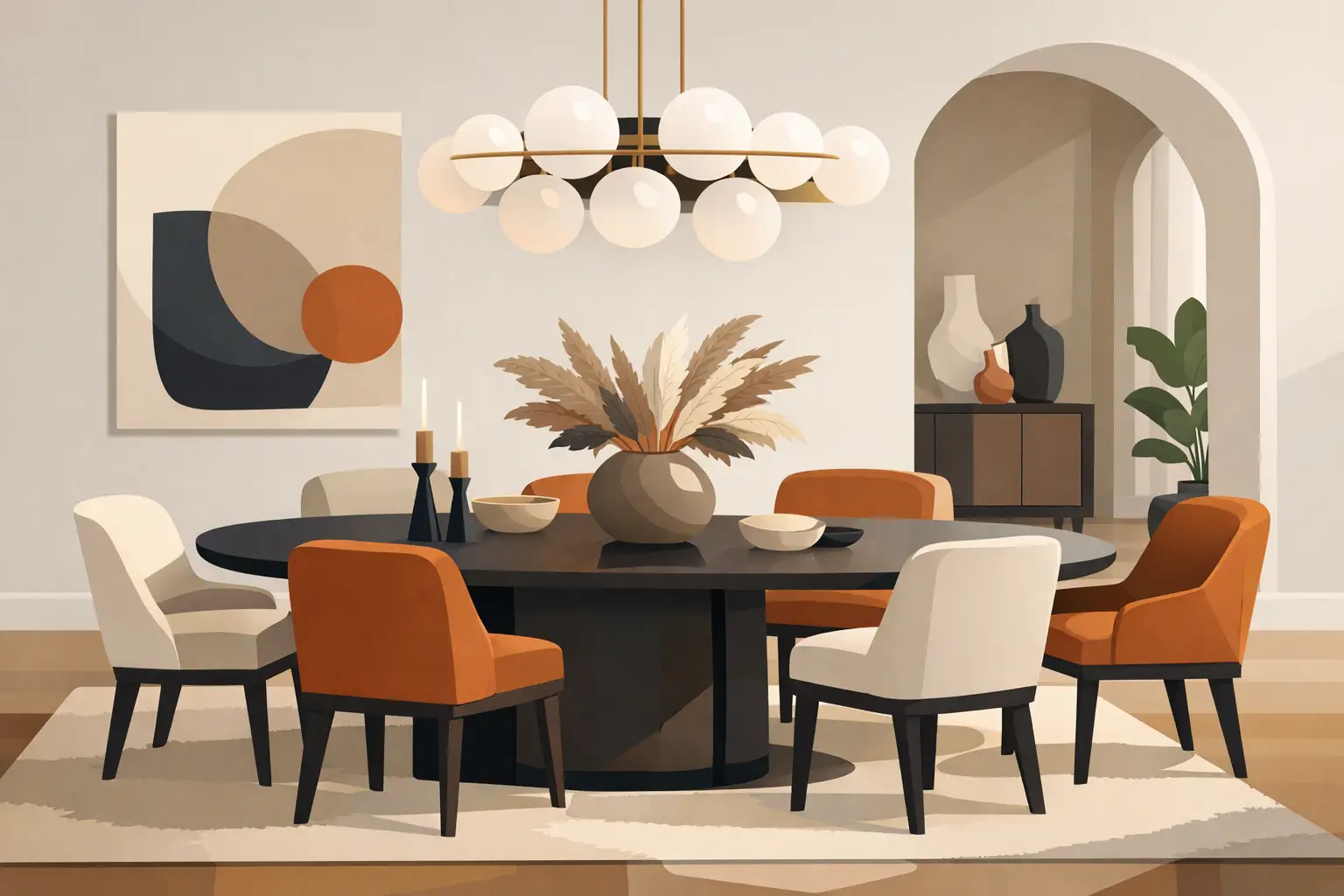
Timber is a natural companion. Oak chairs, a timber bench or slatted joinery bring warmth to the mineral surface of polished concrete. For a more tailored look, pair the table with upholstered chairs in bouclé, wool or a hard-wearing woven fabric. Leather can add depth and practicality, especially in busy homes, although it will create a more masculine, industrial feel than fabric.
Metal details can repeat the language of the table base. Black powder-coated legs may be echoed in a pendant fitting, window frames or slim shelving. Keep those repetitions measured. If every item is black and angular, the room can become severe. A timber floor, textured rug, soft curtains or a large piece of artwork will restore balance.
There is no need to match every finish exactly. A statement dining room is more convincing when it has material tension: smooth concrete against natural grain, tailored upholstery beside raw plaster, a refined tabletop under an informal ceramic pendant. The aim is contrast with intention, not a showroom set.
Use lighting to make the dining table feel like the destination
A table can look impressive in daylight and disappear after dark if its lighting is an afterthought. The pendant above it should define the dining zone, especially in open-plan rooms where the kitchen, living area and dining space need their own identities.
Choose a fitting that reflects the table’s scale. One small pendant above a three-metre table will look lost. A linear fitting, a pair of substantial pendants or a cluster with enough visual width will usually feel more proportionate. As a starting point, hang pendants around 75cm to 90cm above the tabletop, then adjust according to ceiling height and sightlines.
Warm lighting is essential. Look for bulbs around 2700K to create a flattering, inviting glow over food and faces. Put dining lighting on a dimmer if possible. Bright light is useful for homework, board games and clearing up, while lower light makes the same room ready for a relaxed dinner.
Avoid placing a beautiful pendant without considering glare. Glass shades and exposed bulbs can be striking, but they may become uncomfortable when guests are seated beneath them. It depends on the fitting and the height of the ceiling, so view it from chair level before making the final decision.
Give the table space to be seen
A statement table needs visual breathing room. This does not mean leaving the room bare. It means choosing fewer, more deliberate elements around it.
A large rug can establish the dining zone and soften acoustics in open-plan homes. Select one that extends beyond the chairs when they are pulled out, otherwise chair legs will catch on the edge. In homes with young children, pets or plenty of entertaining, a low-pile, easy-clean option is often more practical than a delicate natural fibre.
On the table itself, keep styling simple enough for daily use. A low bowl, sculptural vase or seasonal branches can add life without blocking conversation. Reserve tall arrangements and layered tableware for special occasions. The surface should still feel available, because a dining table earns its place by being used.
Wall art works particularly well when it is generous in scale. One large canvas, framed photograph or textured artwork is often stronger than several small pieces scattered around the room. If the table has a distinctive concrete finish, choose art that complements its mood rather than attempting to match its colour exactly.
Make a statement room work for everyday life
The most successful dining interiors are not precious. They are designed for coffee rings, family meals, homework, birthdays and guests who linger long after dinner. This is where material performance matters as much as appearance.
A properly sealed polished concrete table is hard-wearing and stain resistant, but it should still be treated with the care given to any handcrafted surface. Wipe spills promptly, use placemats for very hot dishes and avoid harsh or abrasive cleaners. The benefit is a table with real material character that can withstand everyday use, rather than a delicate centre piece that is admired from a distance.
Consider seating honestly too. Benches can look striking and fit more people along one side, but they are not always the most comfortable choice for long meals or older relatives. A mix can work well: upholstered chairs at the ends, a bench along the wall side and comfortable dining chairs where people are likely to sit for longer.
For unusual layouts, large families or a table designed around a particular view, bespoke dimensions are often worth considering. Daniel Polished Concrete creates made-to-measure tables with choices of shape, colour, finish and leg style, allowing the centre piece to suit the room rather than asking the room to accommodate an off-the-shelf size.
A statement dining room should feel settled, not staged. Choose the table that makes you want to gather people around it, give it the light and space it deserves, then let the marks of daily life prove it belongs there.