
A dining table finish is not a small final detail. It changes how a table catches morning light, how it sits against cabinetry and flooring, and how relaxed you feel when children are doing homework, friends are sharing supper or red wine reaches the surface. Knowing how to choose table finish means looking beyond a colour chart and considering the room, the material and the way your household actually lives.
For a polished concrete dining table, the finish is part of its character. Each top is hand-finished, with gentle variation in tone, movement and texture that makes the piece feel architectural rather than factory-made. The right choice should make your table a stunning centre piece, while still being practical enough to use every day.
How to choose table finish: start with the room
Before choosing a shade or surface sheen, look carefully at the space around the table. A finish that looks exceptional in a bright showroom can feel very different in a north-facing kitchen or an open-plan room with dark flooring.
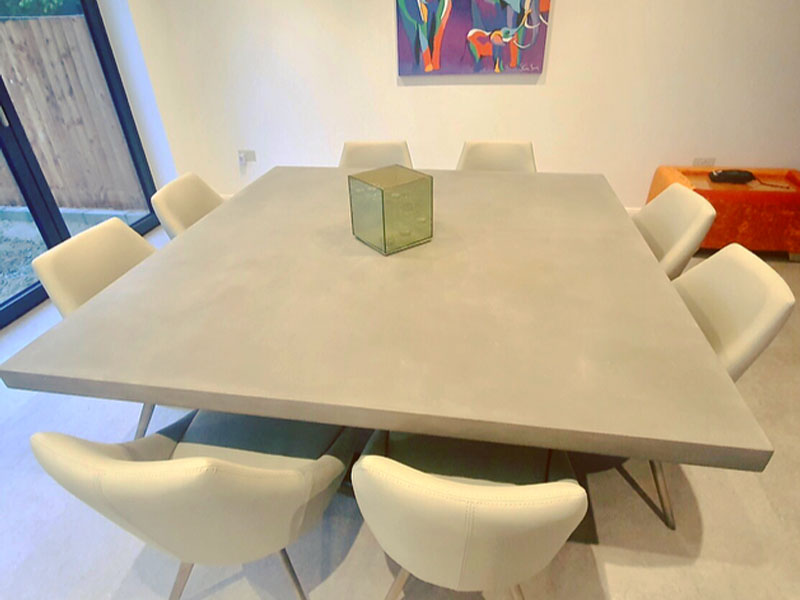
Natural light is the first consideration. Pale concrete finishes help lift rooms that receive softer daylight and can create a calm, spacious feel alongside oak, limestone and light painted joinery. Mid-grey finishes tend to be wonderfully versatile, bringing depth without making the table appear heavy. Deeper charcoal tones give a confident, urban design feel, particularly in generous rooms with plenty of glazing, pale walls or warm timber to balance them.
Artificial lighting matters just as much after dusk. Warm pendant lights can bring out the softer, warmer notes within concrete, while cooler lighting may make grey finishes read more blue. If your dining room is being renovated, decide on the lighting scheme before making the final finish decision where possible. A sample viewed in your own home, at different times of day, is far more useful than a photograph viewed on a mobile phone.
Also consider what the table will be seen beside. The most successful interiors do not necessarily match every grey tone exactly. In fact, a little contrast often looks more considered. A soft, light concrete top can sit beautifully with black-framed doors, while a darker table can provide a grounded focal point against pale cabinetry and plaster walls.
Choose a finish that supports your interior style
Concrete is naturally adaptable, but its finish should still have a clear relationship with the wider scheme. Think of the dining table as furniture and sculpture in equal measure. It should belong in the room without disappearing into it.
For warm contemporary kitchens
If your kitchen includes oak cabinetry, brass details, clay tiles or soft neutral paint, a warm light grey or greige concrete finish often feels most at home. It keeps the clean-lined, contemporary look while avoiding an overly stark result. Pairing this with timber legs can introduce warmth and make a large 8 or 10 seater table feel inviting rather than imposing.
For an architectural, industrial look
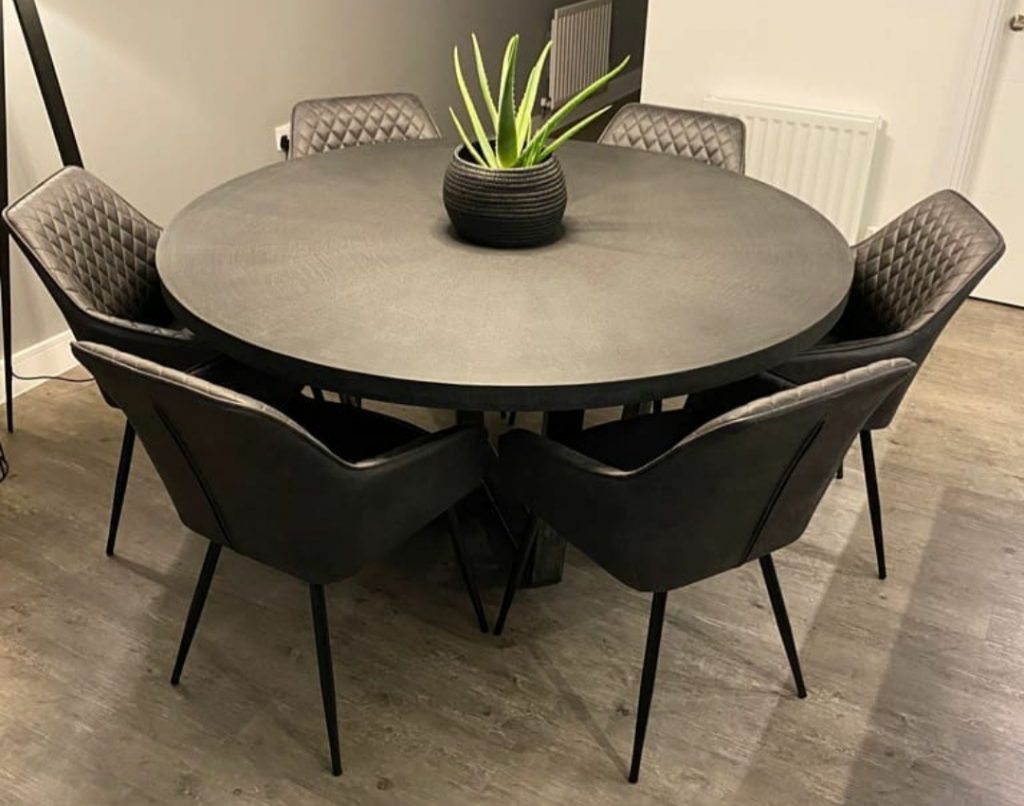
Darker grey and charcoal finishes suit spaces with steel, exposed brick, polished plaster, black metal or expansive glazing. Here, concrete can become the visual anchor of the room. The trade-off is that a very dark surface can show pale dust or crumbs more readily in strong daylight, so it may need a quick wipe more often in a busy family kitchen.
For softer, timeless interiors
A refined, pale finish works well where the aim is understated luxury rather than a heavily industrial statement. It complements natural fibres, upholstered dining chairs and gentle tonal layers. This can be a particularly good route for a forever home, because it gives you scope to change wall colours, artwork and soft furnishings over the years without replacing the table.
Decide how much natural character you want to see
One of the pleasures of polished concrete is that it does not pretend to be perfectly uniform. Hand-finishing can reveal delicate clouding, subtle tonal changes and the occasional natural marking. These are not faults. They are part of the material’s individual character, much like grain in timber or veining in stone.
The question is how visible you want that character to be. Some clients prefer a quieter, more consistent appearance that lets the table shape and base take centre stage. Others want stronger movement and variation, especially on a large bespoke top where the surface becomes a real feature of the space.
Neither approach is more correct, but expectations need to be right from the start. If you are drawn to images of hand-finished concrete, choose a finish because you appreciate its nuanced, lived-in quality, not because you expect an identical replica of a printed swatch. Every table develops its own visual identity during the making process.
Think about sheen and everyday use
The word polished can suggest a mirror-like shine, but polished concrete furniture is usually about a refined, smooth surface rather than a highly reflective one. A lower-sheen finish has a more understated, tactile appearance. It can suit relaxed, textural interiors and tends to keep reflections to a minimum.
A more refined sheen can make the colour appear richer and can catch light beautifully across a large dining surface. It is particularly effective in contemporary rooms where the table is intended to feel crisp and sculptural. However, stronger light reflections can make fingerprints, smudges and everyday dust more noticeable, depending on the tone selected.
This is where daily habits should guide the choice. A table used for formal entertaining a few evenings a month can be selected almost entirely for visual impact. A table at the heart of family life needs visual impact and forgiveness. The best finish is rarely the one that asks you to change how you live. It is the one that continues to look handsome while life happens around it.
Balance finish with table size and shape
The larger the table, the more influence its finish has on the room. A dark 12 seater concrete table can look extraordinary in a substantial open-plan extension, but the same finish may dominate a compact dining area. Conversely, a pale finish can help a long table feel lighter and less visually dense.
Shape changes this balance too. A round or oval table softens the presence of concrete, making deeper finishes easier to introduce in spaces where straight lines already feature strongly. Rectangular tables have a more architectural silhouette, particularly with slim, linear bases. On these designs, a quieter finish can allow the proportions to speak, while a bolder concrete tone creates a deliberate statement.
Leg style plays its part. Timber bases warm up cooler greys and connect the table to other natural materials. Black steel or dark powder-coated legs heighten the urban character. A finish should not be chosen in isolation from the base – the top and legs need to read as one considered piece.
Do not chase a trend that will date your room
Interior trends are useful for inspiration, but a dining table is a long-term purchase. It will be there through changing paint colours, new chairs and the gradual evolution of your home. Rather than choosing a finish simply because it is appearing frequently on social media, ask whether it works with the fixed elements you are unlikely to change: flooring, kitchen cabinetry, window frames and the amount of natural light.
Neutral does not have to mean bland. A well-chosen grey concrete finish has depth, texture and a quiet confidence that works across many styles. If you want more drama, consider introducing it through the scale of the table, the shape, the base design or the chairs around it. That often gives a more enduring result than selecting the darkest or most unusual finish available.
Ask for a finish that is made for your project
With a bespoke dining table, the most valuable part of choosing a finish is the conversation behind it. Share photographs of the room, samples of cabinetry or flooring, your preferred chair fabric and the dimensions you are working with. These details allow the finish to be considered as part of the whole interior rather than as an isolated product decision.
At Daniel Polished Concrete, tables are made to order, so the process can account for the atmosphere you want to create as well as the practical demands of the space. A young family may prioritise a mid-tone, easy-going surface with a forgiving look. A design-led renovation may call for a darker, more dramatic top sized precisely around a statement pendant and a bank of glazing.
Do ask practical questions before confirming the finish: how it is sealed, what routine care it needs, and what is realistic to expect from a hand-finished surface. Quality sealing and sensible day-to-day care make polished concrete a hard-wearing choice for dining, but no premium material benefits from being treated carelessly. Use mats for very hot items, wipe spills in good time and avoid harsh abrasive cleaners.
A table finish should make you want to pull up a chair, not worry about protecting it from every meal. Choose the one that feels right in your light, works with your materials and has enough character to become more familiar and more loved with every gathering.