

A table can look perfect in a showroom image and still feel wrong the moment it arrives in your home. The issue is rarely the finish or the size alone. More often, it is the shape. If you are working out how to choose bespoke table shape, the right answer sits between architecture, movement, seating and how you actually live day to day.
With a bespoke dining table, shape is not a styling extra. It determines how the room flows, how many people you can seat comfortably, and whether the piece feels calm and considered or slightly awkward every time you walk past it. In polished concrete especially, shape matters because the material has presence. A concrete top brings weight, texture and a strong architectural line, so the silhouette needs to work hard as well as look stunning.
How to choose bespoke table shape for your room
The best place to start is not with a Pinterest board. It is with the room itself. Look at the proportions, the route through the space, where the light falls, and where people naturally pause or pass through.
In a long rectangular kitchen-diner, a rectangular table often feels like the most natural fit because it echoes the architecture already there. It gives a sense of order and makes the room feel intentional rather than interrupted. If your space is more square, however, a round or square table can sit more comfortably and avoid the feeling that one dimension is being stretched too far.
Open-plan rooms need a little more thought. Here, the dining table often acts as a visual anchor between kitchen and living zones. A rectangular or oval shape can help define that dining area clearly. A round shape can soften the scheme, especially if the room includes lots of cabinetry, glazing and straight-edged joinery.
It also helps to think beyond footprint. A shape may fit on paper and still feel too dominant once chairs are in place and people are moving around it. Bespoke design allows you to adjust dimensions with far more precision, which is often the difference between a table that merely fits and one that feels made for the room.
Start with circulation, not seat count
Most people begin by asking how many people they want to seat. That matters, of course, but circulation should come first. You need enough room to pull chairs out, walk behind seated guests and move around the table without brushing past every edge.
This is where shape becomes practical. A rectangular table can maximise seating in a narrower room, but it needs enough clearance at each end and along the sides. A round table can improve movement because there are no corners to dodge, which makes it particularly useful in family kitchens or compact dining spaces where circulation is tight.
Oval tables sit somewhere in the middle. They offer the gentler flow of a round table while still giving some of the length and seating logic of a rectangle. For many renovated homes, especially those with softer contemporary interiors, an oval concrete table brings a strong centre piece quality without feeling too rigid.
There is always a trade-off. Rounded shapes improve flow, but rectangular forms usually seat more people within the same overall length. The right choice depends on whether your priority is hosting larger groups or making everyday use feel easier.
The character of each table shape
Rectangular
Rectangular tables are the classic choice for a reason. They are efficient, balanced and well suited to larger households or anyone who entertains regularly. In polished concrete, a rectangular top has real architectural strength. It looks grounded and confident, particularly with bold leg designs.
This shape works especially well in open-plan homes where the table needs to hold its own against a substantial kitchen island or a wide run of glazing. It also gives you the clearest seating arrangement, which families often prefer.
The watchpoint is softness. In some spaces, a rectangle can feel too formal or too linear, especially when the room already includes many hard lines.
Round
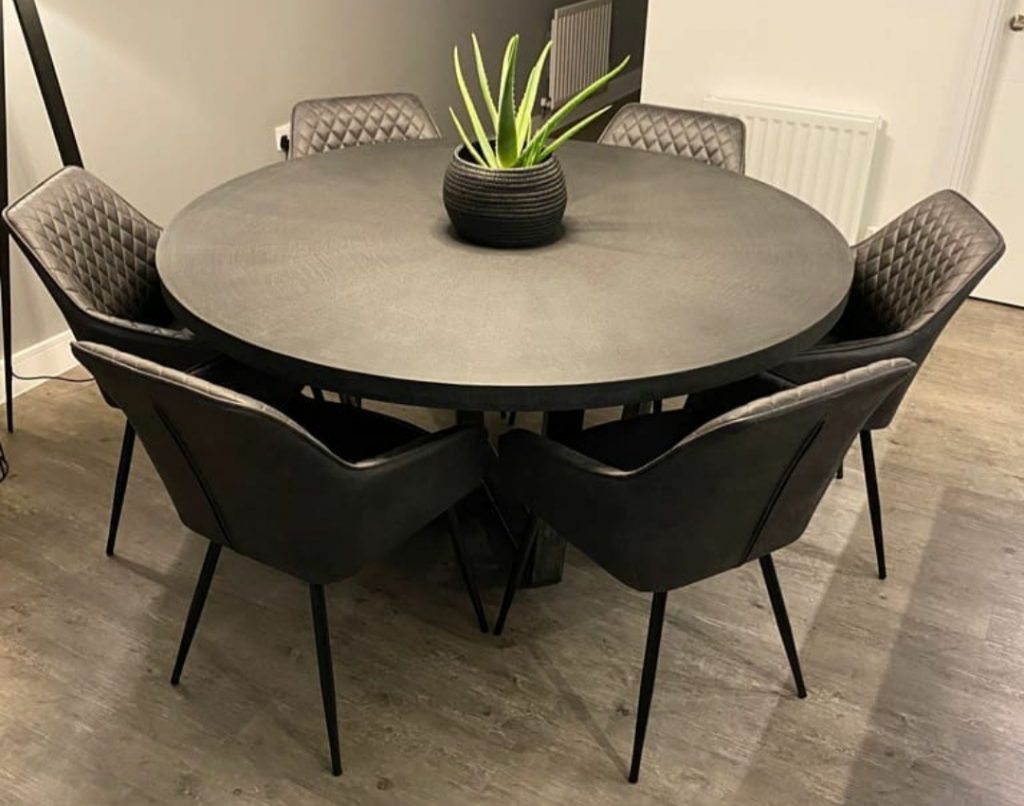
A round table changes the mood immediately. It feels more sociable because everyone faces inwards equally, and there is no head of table. For relaxed dinners, morning coffee and everyday family use, that can be a very appealing quality.
In visual terms, a round concrete top creates a striking contrast with angular architecture. It can soften a kitchen extension beautifully. It is also a sensible option where movement around the table matters, since curved edges are easier to navigate.
The limitation is capacity. Once you move beyond a certain size, a round table can become less practical in tighter rooms, and conversation across a very wide diameter becomes less intimate.
Oval
Oval is often the shape clients had not first considered but end up choosing. It keeps the elegance and clear presence of a long dining table while introducing softer ends and a more fluid outline.
For bespoke concrete tables, oval shapes work particularly well when you want a large statement piece that still feels welcoming. They suit family homes, design-led spaces and rooms where you want the table to look substantial without appearing severe.
Square
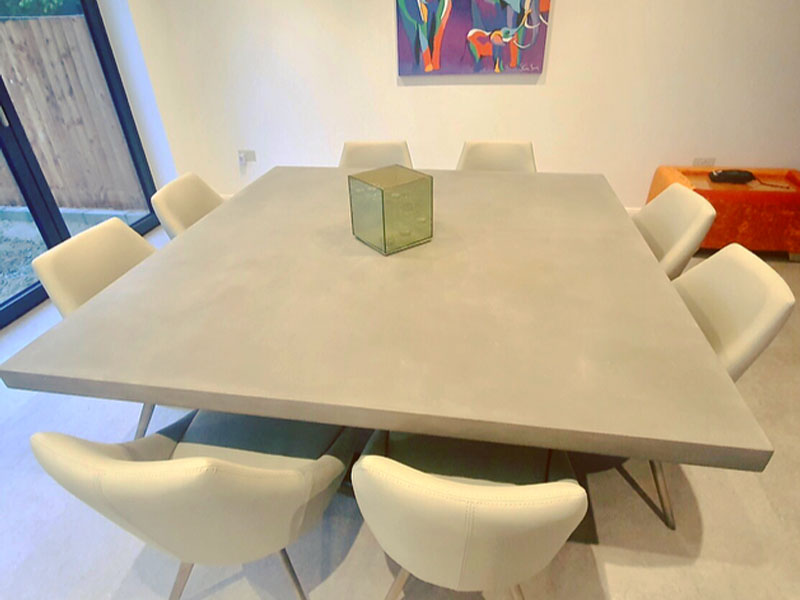
Square tables are less common in larger homes, but in the right setting they can be excellent. They create a balanced, intimate feel and work best in square rooms or smaller dining zones where symmetry is part of the appeal.
The challenge is scale. Once a square table gets too large, reaching the centre becomes awkward and the table can start to dominate the room disproportionately.
How your lifestyle should influence the shape
A bespoke table should reflect not only the room but the rhythm of your household. A couple who host dinner parties twice a month may need something very different from a busy family using the table for homework, weekday meals and weekend gatherings.
If the table is in constant daily use, rounded corners may be the more forgiving option, especially with children moving around the space. If you love formal entertaining and want visual drama, a long rectangular form can deliver that sense of occasion.
Think too about how often you extend seating beyond the core household. A shape that suits six beautifully may feel strained when you regularly try to squeeze in eight or ten. This is where bespoke dimensions become valuable. You are not forced into standard sizing, so the shape can be refined around your actual habits rather than a generic seating chart.
Material changes how shape feels
This is particularly true with polished concrete. The material has depth, a tactile finish and a sculptural quality that makes every line more noticeable. A rectangular oak table may read as familiar and understated. A rectangular concrete table feels bolder, more monolithic and more architectural.
That does not mean concrete only suits large dramatic rooms. It means proportion and shape need careful handling. Softer edges, rounded ends or an oval top can bring warmth and ease to a material that already has strong visual presence. Equally, if you want the table to act as a clear design statement, sharper geometry can be exactly the right move.
The base matters as well. A substantial pedestal can make a round or oval table feel beautifully grounded, while leg placement on a rectangular table affects both comfort and the visual weight of the whole piece.
How to choose bespoke table shape with confidence
If you are still deciding how to choose bespoke table shape, narrow the decision with three practical questions. First, what shape suits the room proportions? Second, how many people do you need to seat comfortably most of the time, not just at Christmas? Third, do you want the table to soften the space or strengthen its architectural lines?
Once those answers are clear, the right direction usually emerges quite quickly. The final refinements come from dimensions, edge profile, base style and finish. That is where bespoke design proves its worth. It allows the table to respond to your home rather than asking your home to adapt around a standard product.
At Daniel Polished Concrete, that is often the turning point in a project. Clients may begin with a rough idea of size, but shape is what brings the whole design into focus and turns a practical purchase into a piece with real presence.
A well-chosen table shape does more than fit the room. It changes how the room is used, how people gather, and how the space feels every day you walk into it. Choose the shape that supports your life as much as your layout, and the result will feel right long after trends have moved on.