
A dining table has a hard job in most homes. It hosts family dinners, homework, weekend coffee, celebrations and the everyday clutter of real life. That is exactly why concrete furniture benefits matter – not as a design trend, but as a practical answer for people who want a table to look exceptional and keep performing year after year.
For design-conscious households, concrete offers something many materials struggle to balance. It has presence, weight and architectural character, yet it can be refined enough for a polished kitchen extension or open-plan dining room. When made properly, it is not just striking to look at. It is dependable, tactile and built for daily use.
Why concrete furniture benefits stand out
The first thing people notice is usually the look. Concrete has a quiet confidence that suits contemporary interiors particularly well. It sits comfortably alongside timber flooring, painted cabinetry, steel-framed doors and soft upholstered seating, giving a space definition without feeling fussy.
What keeps people interested, though, is not appearance alone. Concrete furniture benefits include durability, stability and a level of individuality that off-the-shelf furniture rarely achieves. Each piece has subtle variation in tone and texture, so even when the design is clean and minimal, it still feels handmade rather than mass produced.
This is especially appealing in a forever home, where furniture needs to do more than fill a room. A well-made concrete table can become the visual anchor of the space – a genuine centre piece that still earns its keep every day.
Built for everyday durability
One of the strongest reasons people choose concrete furniture is resilience. Dining tables, coffee tables and benches all see repeated use, and softer materials can quickly show the strain. Concrete has an inherent toughness that makes it well suited to busy households, regular entertaining and family life.
That does not mean every concrete piece is indestructible. Quality matters. The mix, reinforcement, finishing process and sealing all affect performance. When those elements are handled by a specialist maker, the result is a surface designed to cope with normal daily use far better than many people expect.
For homeowners weighing up premium furniture, this matters financially as well as practically. Buying one exceptional table that lasts is often more satisfying than replacing lesser pieces every few years because they have warped, marked or simply dated too quickly.
A stable surface for larger tables
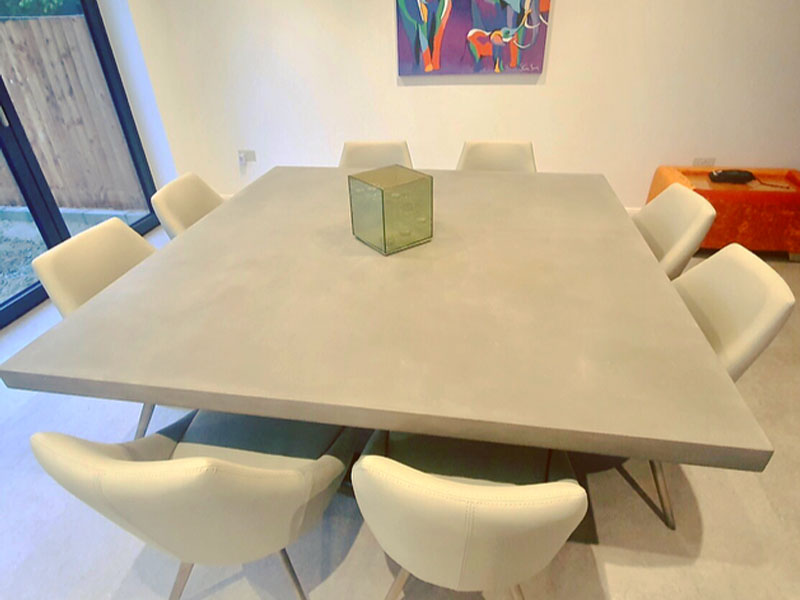
Concrete comes into its own in generous dining formats. In larger six, eight or ten seater tables, stability matters just as much as style. People want a table that feels grounded and substantial, not flimsy or under-scaled in a spacious kitchen-diner.
That visual and physical weight helps a room feel finished. In open-plan spaces especially, a concrete dining table can hold its own against large islands, expansive glazing and high ceilings. It looks intentional, not lost.
A distinctive architectural aesthetic
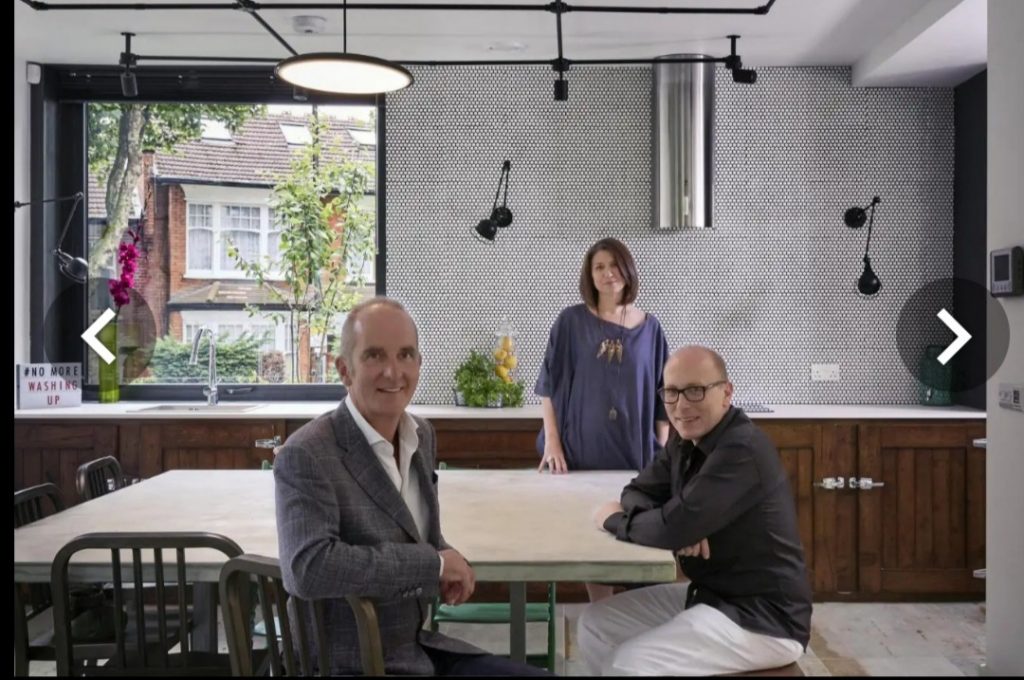
Some furniture blends in. Concrete does not, and that is part of its appeal. It brings a crisp, sculptural quality that suits modern British interiors, particularly those influenced by renovation design, industrial detailing and clean-lined architecture.
The material has depth without ornament. Its appeal comes from proportion, finish and surface character rather than decorative excess. That makes it easier to live with over time. Trends move on, but simple, well-shaped furniture in an honest material tends to keep its relevance.
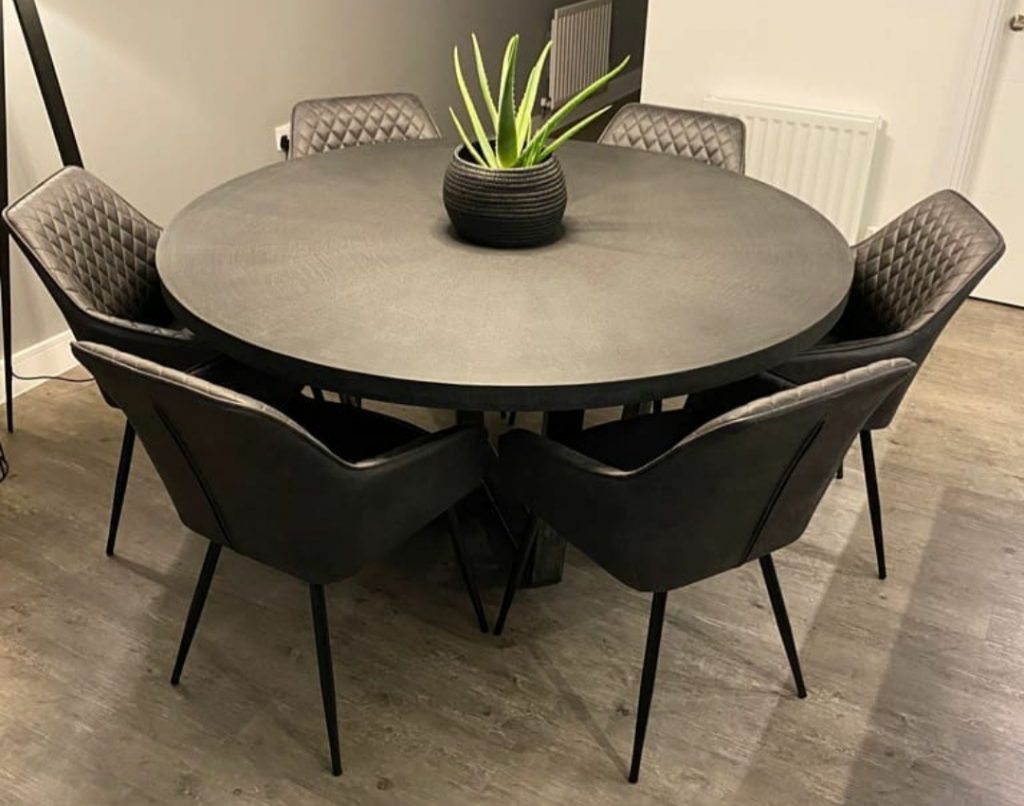
There is also a versatility to polished concrete that surprises many buyers. It can read cool and urban in one setting, then calm and understated in another. Pair it with black metal legs for a sharper contemporary edge, or combine it with warmer tones and softer textiles for a more relaxed feel.
Every piece has its own character
Part of the attraction is that no two tops are exactly identical. Slight tonal shifts, surface movement and hand-finished variation give concrete a natural individuality. For clients investing in a bespoke piece, that uniqueness is not a flaw. It is often the point.
A dining table should feel like it belongs specifically in your home, not as though it has been pulled from a warehouse shelf. Concrete supports that sense of authorship beautifully.
Bespoke design without compromise
For many households, size is the real challenge. Standard furniture often ends up almost right – slightly too narrow, too long, too small for the room or unable to seat everyone comfortably. One of the most valuable concrete furniture benefits is how well the material lends itself to made-to-measure design.
A bespoke concrete table can be tailored to the way a room actually works. That might mean a particular length for a rear extension, a specific width to maintain circulation around an island, or a custom shape that softens a more angular space. Finish, edge profile, colour tone and leg style can all influence the final look.
This flexibility matters because premium furniture should solve a layout problem as well as satisfy an aesthetic one. A beautiful table that is awkward to live with is still a compromise. Bespoke design removes much of that friction.
For clients who prefer a simpler route, standardised collections still offer clarity and efficiency. But the real strength of a specialist maker is the ability to adjust where needed, so the final piece feels resolved rather than merely acceptable.
Easier to maintain than many expect
A common hesitation is maintenance. People assume concrete will be difficult, delicate or prone to staining. In reality, a properly finished and sealed concrete surface is designed for normal domestic use and is straightforward to care for.
Day-to-day cleaning is typically simple – a soft cloth and a gentle cleaner are usually all that is needed. The polished finish gives the surface a refined feel, while the protective treatment helps guard against the spills and marks that come with everyday dining.
As with any premium furniture, a little care goes a long way. Coasters, placemats and sensible use are always worthwhile, whether the surface is concrete, timber, marble or ceramic. The difference is that concrete tends to offer a reassuring balance between visual impact and practical livability.
Well suited to family life and entertaining
Many statement tables look good in photographs but become stressful to own. That is not ideal for a home where the dining area is used constantly. Concrete works particularly well for people who want furniture with substance but do not want to tiptoe around it.
In family settings, that means a table capable of handling regular meals, visiting guests, children leaning on corners and the general rhythm of daily life. In entertaining spaces, it means a piece that sets the tone of the room immediately and gives gatherings a proper focal point.
There is also something reassuring about furniture that feels permanent. In a renovated kitchen or newly finished extension, a concrete dining table can make the whole scheme feel settled, as though the room has finally found the piece it was built around.
A material that rewards craftsmanship
Concrete is only as good as the people making it. This is not a shortcut material, and it is not one that benefits from a generic approach. The refinement of the mix, the quality of the polish, the detailing of the edges and the precision of the base all influence the finished result.
That is why specialist knowledge matters so much. An experienced maker understands how to balance visual elegance with structural performance, and how to produce a piece that feels considered from every angle. At Daniel Polished Concrete, that craft-led process is central to the appeal – the table is not just manufactured, but hand-finished with the intention of creating a lasting centre piece.
For buyers investing at this level, that human input makes a real difference. It brings confidence, but it also brings character. You are not choosing a generic product. You are commissioning something with presence, proportion and a clear point of view.
Is concrete right for every home?
Not always, and that honesty matters. Concrete has visual weight, so it may not suit every interior scheme. If a room is very small or the overall look leans heavily towards delicate traditional furniture, another material might sit more naturally.
It also helps to be realistic about expectations. Concrete is hand-finished and full of character, which means those subtle variations are part of the beauty. If someone wants a perfectly uniform, factory-flat appearance, they may prefer a different finish.
But for homeowners drawn to craftsmanship, durability and strong design, concrete offers a rare combination. It feels contemporary without being disposable, practical without being plain, and bespoke without becoming overcomplicated.
Choosing furniture for a main living space should feel exciting, not uncertain. If you want a table that can anchor the room, handle everyday life and still turn heads years from now, concrete is worth serious consideration.