
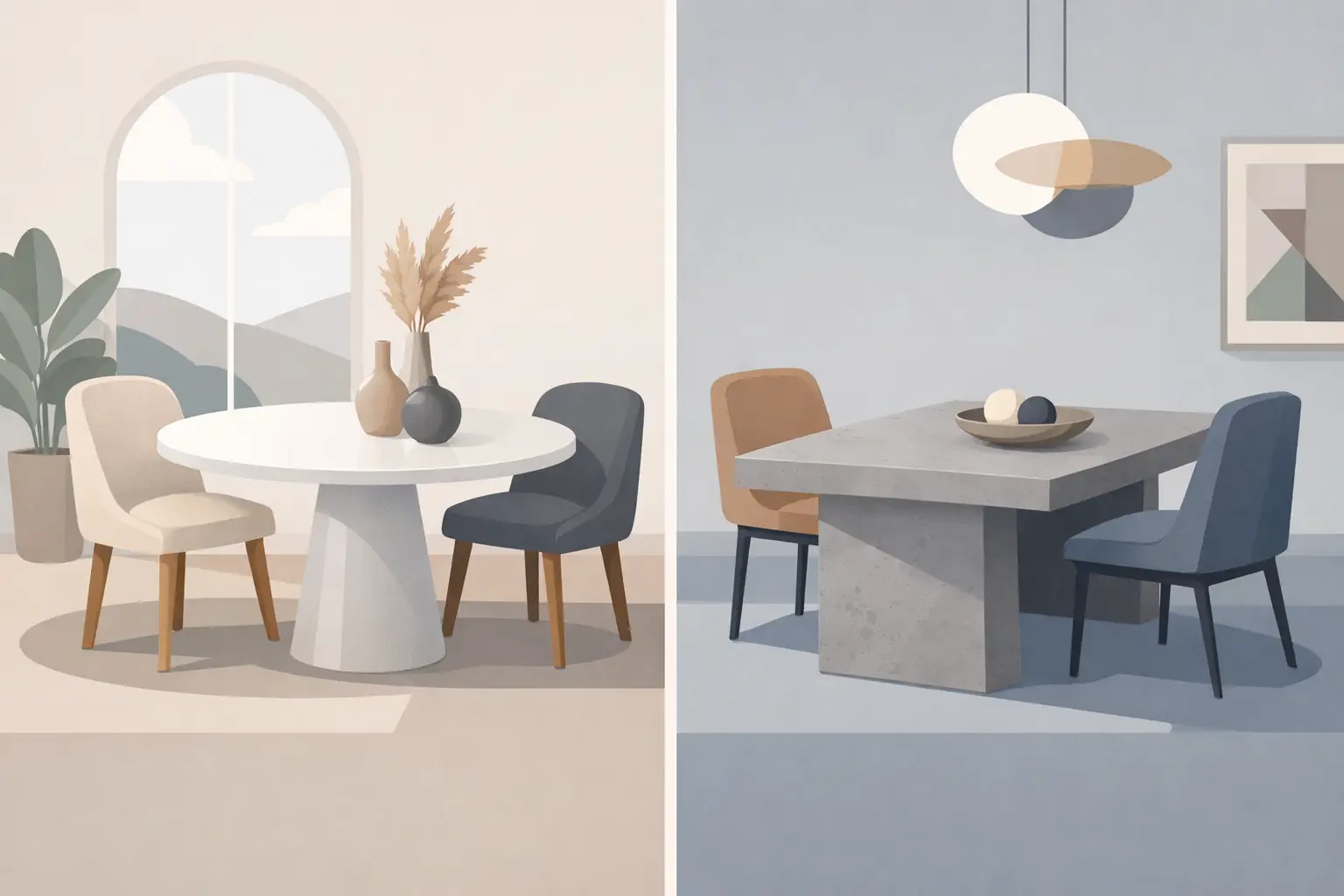
A ceramic or concrete dining table can both transform an open-plan kitchen into a room people want to linger in. The better choice is not simply the one that looks best in a showroom. It is the material whose scale, surface character and daily practicality suit the way your household actually lives.
Ceramic offers a crisp, refined finish with a familiar stone-like appearance. Polished concrete brings depth, subtle movement and a more architectural presence – a table that feels built into the character of the home rather than selected as an afterthought. For a forever home, the decision often comes down to whether you want precision or personality.
Ceramic or concrete dining table: the design difference
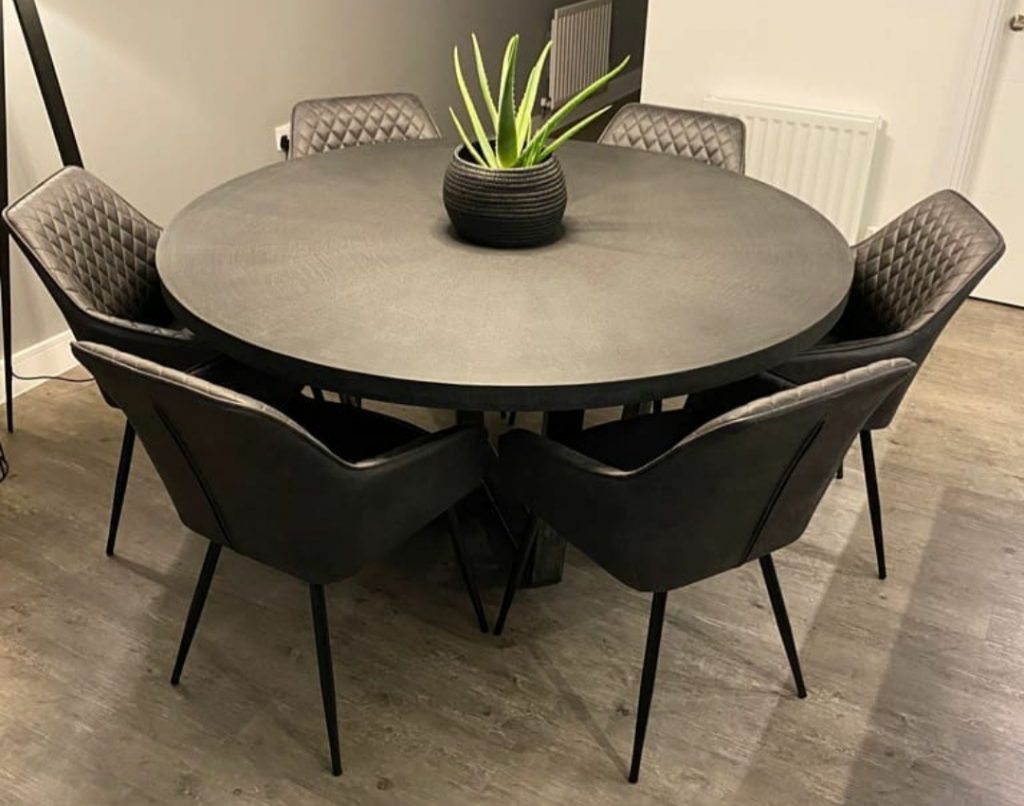
Ceramic dining tables tend to look clean, controlled and consistent. Their surfaces are manufactured in a wide range of marble, limestone and mineral-effect designs, making them easy to coordinate with contemporary cabinetry, pale oak flooring or a sleek kitchen island. If you are aiming for a restrained, polished scheme, ceramic can be an excellent fit.
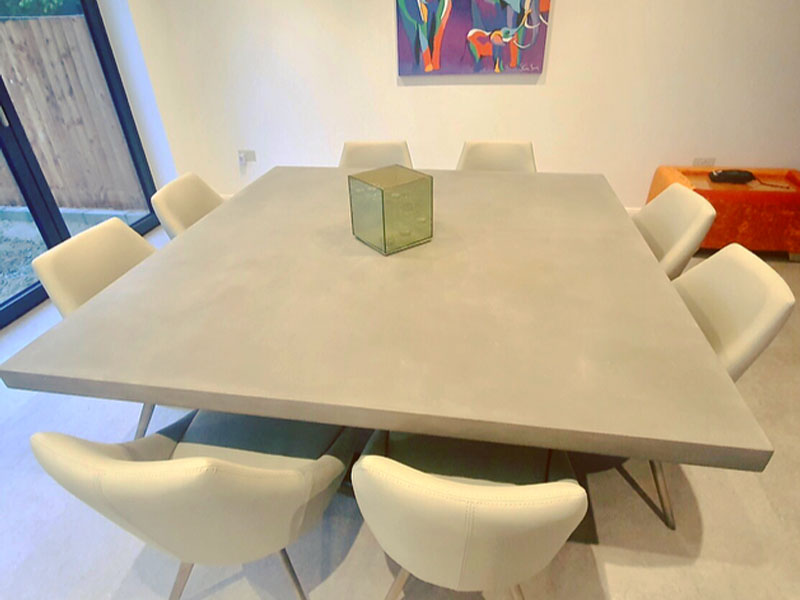
Concrete has a different visual language. Each hand-finished surface carries gentle tonal variation, fine mottling and the occasional trace of the making process. These are not flaws to be disguised; they are part of the material’s individuality. A polished concrete top has a calm, tactile quality that sits beautifully beside timber, black metal, aged brass and natural fabrics.
This distinction matters most in a large dining space. On a six-seater table, a uniform surface can feel understated and elegant. On an eight, ten or twelve-seater table, concrete has the scale to become a genuine stunning centre piece. It holds its own in a generous kitchen-diner without needing an overly elaborate base or decorative styling around it.
Everyday durability is more nuanced than it sounds
Both materials are well suited to busy homes when they are properly made and cared for. Neither should be treated as indestructible, and neither needs to make everyday family dining feel precious.
Ceramic is highly resistant to scratches, heat and staining. It is a practical choice for homes where meals, homework and entertaining all take place at the same table. The main vulnerability is impact, particularly around an exposed edge or corner. A dropped heavy pan or a forceful knock with a hard object can chip the surface. Repairs may be possible, but they rarely disappear as completely as a small mark on a more naturally varied material.
Polished concrete is extremely hard-wearing, but it needs the right finish. A professionally sealed dining table is designed to resist the spills and marks of normal life, from red wine and olive oil to a child’s felt-tip mishap. Wiping up spills promptly remains sensible, particularly with acidic foods and drinks, but the table should be used and enjoyed rather than guarded.
Concrete is also forgiving in a visual sense. Because its beauty lies in variation, tiny signs of life can settle into the character of the piece rather than interrupting a perfectly uniform pattern. For many families, that makes it a more relaxed luxury: substantial, refined and made for daily gathering.
Weight, access and the reality of installation
A concrete dining table is significantly heavier than a ceramic table, especially at larger bespoke sizes. That weight gives it reassuring permanence and allows for strong, sculptural proportions, but it also means delivery planning is part of the design process. Staircases, tight turns, lift access, parking and floor level all need consideration before the table is made.
For ground-floor kitchen extensions and open-plan homes, this is usually straightforward with an experienced delivery and installation team. For an upper-floor flat or a property with narrow access, the build may need to be designed in sections or the material choice reconsidered. A bespoke maker should ask these questions early, not on delivery day.
Ceramic is lighter at the surface level, although many ceramic dining tables use a substantial supporting frame and can still be awkward to manoeuvre. Its relative lightness can be helpful where access is difficult or where the table may be moved more often. Yet a dining table intended to anchor a permanent family space is rarely moved once it is in place. In that setting, concrete’s weight is less a compromise than part of its appeal.
The feel of the surface matters at dinner
Photographs cannot tell you everything. Ceramic often feels cool, smooth and very even to the touch. It has a sharp, contemporary finish that works particularly well with slim metal legs, upholstered dining chairs and interiors where clean lines are the priority.
Polished concrete is smooth but not sterile. Depending on the chosen finish, it can have a soft satin sheen or a more expressive polished surface. The material has visual warmth despite its mineral origins, especially when paired with a timber base or rich, textured seating. It brings an urban design edge without making the room feel cold.
There is also the question of sound. Plates and glasses can feel louder on any hard dining surface than they do on wood. Linen placemats, a runner or simple felt-backed accessories soften the experience on both ceramic and concrete, while adding a layer of colour and comfort to the table setting.
Shape and proportion can decide the answer
The best material is only part of the decision. Shape, edge detail and base design determine whether the table works comfortably in the room.
Ceramic tables are commonly available in standard rectangles, ovals and extending designs. This can be useful when a quick decision is needed or when you have a very specific footprint to work with. However, the available sizes and leg positions are often fixed by the product.
A bespoke concrete table can be designed around the room rather than forced into it. A long, slim rectangle can suit a narrow extension. A soft oval can ease circulation in an open-plan layout. A racetrack shape creates generous seating without the hard corners, while a carefully placed central pedestal gives every guest better legroom.
For larger households, allow enough room not only for chairs but for people to move behind them. A beautiful ten-seater that leaves no space to pass will soon feel less generous than a well-proportioned eight-seater. Measuring the room, including kitchen islands, doors and walkways, should happen before choosing a final table size.
Cost, longevity and what you are really buying
Ceramic can offer strong value where a standard size and finish meet your needs. It is widely available, often quicker to source and easy to compare across retailers. That makes it a sensible choice for a completed scheme with a clear budget and little need for alteration.
Concrete is usually a more considered investment because it is made to order. The price reflects not just material, but the casting, curing, hand-finishing, sealing and practical problem-solving involved in producing a table for a particular space. You can specify the dimensions, concrete colour, finish and leg style, creating a piece with no off-the-shelf equivalent.
That individuality has lasting value. Trends move quickly, but a table made with the right proportion and a material you genuinely connect with is less likely to be replaced when the room evolves. Concrete also works across changing interiors: it can sit beneath industrial pendants today, then look equally at home with softer joinery and natural textiles years later.
When ceramic is the right choice
Choose ceramic when you want a highly uniform look, a lighter table for challenging access, or a readily available size that already fits your room. It is particularly strong in sleek, pared-back interiors where the table should complement the architecture quietly.
Choose concrete when the dining table is intended to be the visual anchor of the room. It is the material for homeowners who value handcrafted detail, want a precise size or shape, and prefer a surface with depth rather than repetition. It is especially compelling in larger family spaces where the table must be hard-wearing enough for Tuesday night pasta and impressive enough for a full house at Christmas.
At Daniel Polished Concrete, every bespoke conversation begins with the room, the seating requirement and the way you want the table to feel in daily use. Bring measurements, photographs and the practical constraints to the first discussion. The right dining table should not merely fill the available space; it should make the whole room feel more considered every time people gather around it.