
A kitchen extension can make a home feel completely different, but its generous new footprint also creates a more exacting design question: what should sit at the heart of it? The best table shapes for extensions are not simply the ones that fill the available space. They are the shapes that give family and guests room to move, make everyday meals feel natural and hold their own within the architecture.
In a large open-plan room, a dining table has real visual responsibility. It connects the kitchen, glazing and living area, often becoming the one piece everyone sees first. With a hand-finished polished concrete table, shape is as important as finish or leg style. Get it right and the table feels grounded, sculptural and made for the room rather than placed in it.
Start with the space around the table
Before choosing between round, rectangular or oval, look at how the extension will actually be used. A table needs space not only for chairs, but for people to pull them out, pass behind seated diners and move between the kitchen and garden doors without turning dinner into an obstacle course.
As a practical starting point, allow around 90cm between the table edge and a wall, island or fixed furniture. Where this is a main route through the room, 100-120cm is more comfortable. These dimensions do not need to make the room feel empty. They make the table usable every day, particularly when several people are gathered around it.
Also consider the view into the extension. A long table can reinforce the length of a rear addition, while a circular design can soften a square room or a bank of sharp, contemporary lines. The right choice depends on proportion, not just floor area.
Rectangular tables for long kitchen extensions
For many British kitchen extensions, a rectangular dining table is the strongest and most practical choice. It works naturally with the familiar long, narrow footprint of a side-return or rear extension, particularly where the kitchen runs along one wall or around an island.
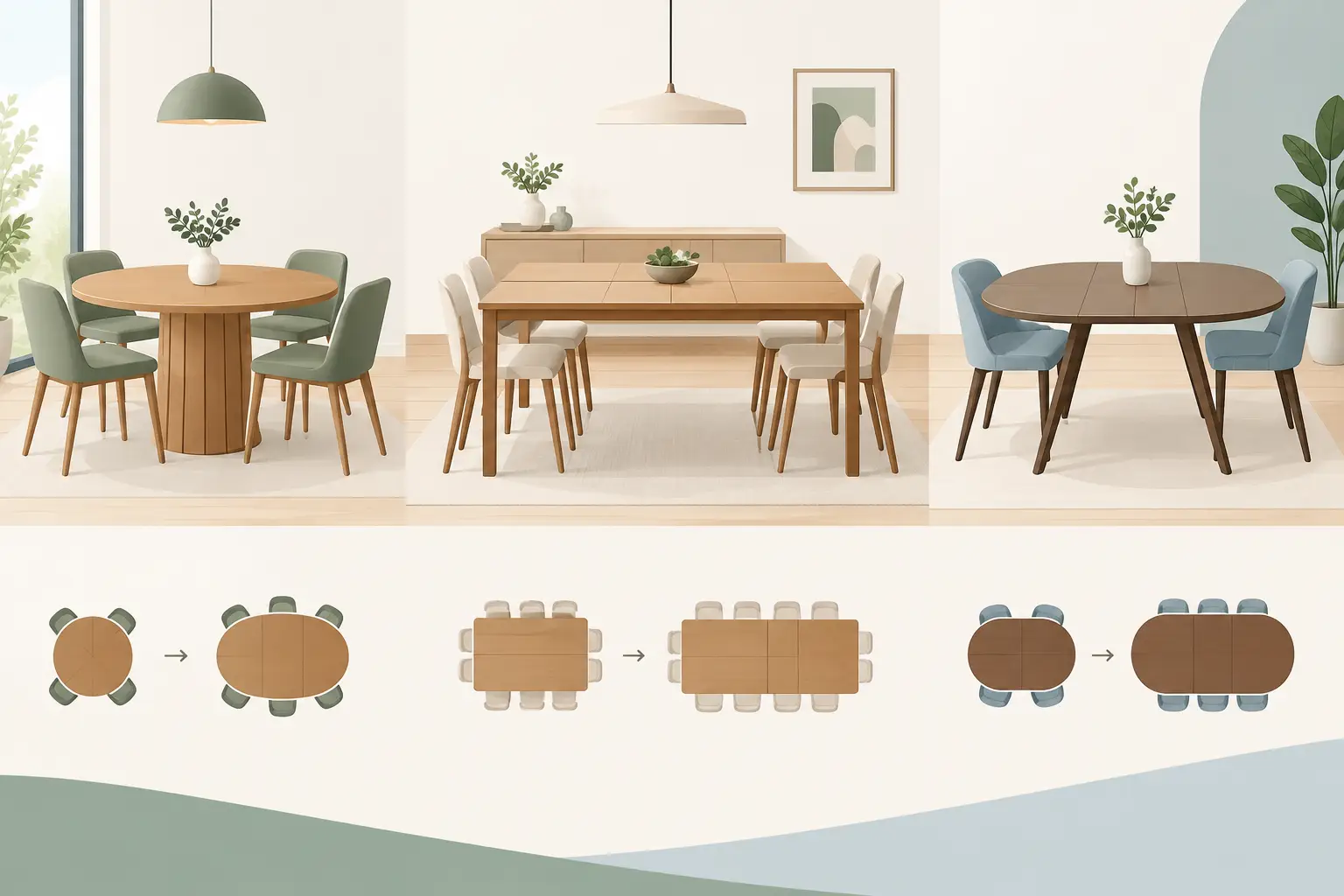
A rectangle offers predictable seating and makes excellent use of length. It is easy to position beneath linear pendant lighting, parallel to bi-fold or sliding doors, or between a kitchen island and a seating zone. For households that regularly host eight, ten or twelve people, it remains the most efficient format. Extra chairs can be added at either end when needed without altering the entire layout.
The trade-off is its footprint. Corners can feel intrusive where circulation is tight, and a very long table may make a compact extension look more corridor-like. The answer is not always to choose a smaller table. A bespoke proportion, perhaps slightly narrower with carefully considered legs, can preserve the generous seating you want while keeping the room open.
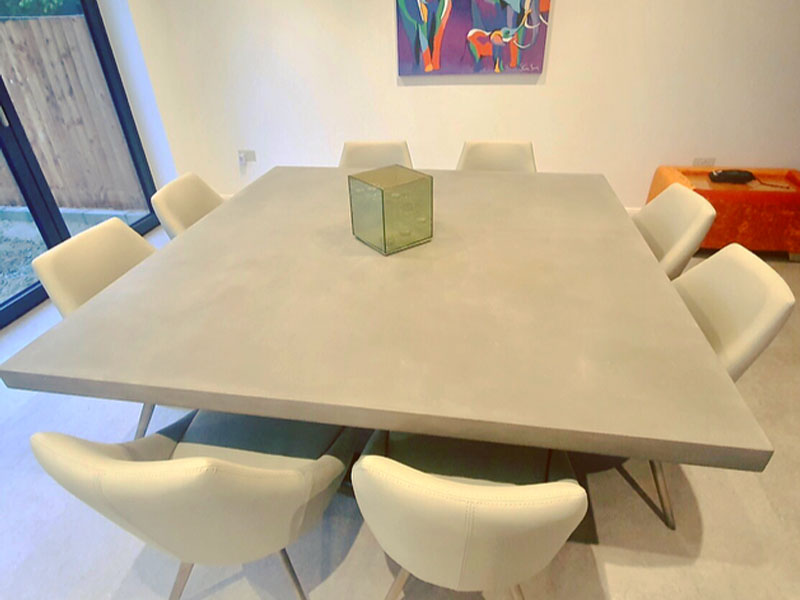
A polished concrete rectangular table has a particularly confident presence in an architectural extension. The clean geometry complements steel-framed glazing, timber cabinetry and natural stone flooring, while the hand-finished surface keeps the look warm rather than clinical.
When a rectangle is the right call
Choose a rectangular shape when your extension is longer than it is wide, you want clearly defined places for six or more people, or the table needs to visually anchor a large open-plan layout. It is also ideal for families who use the dining table for homework, working from home and generous weekend lunches as well as evening meals.
Oval tables for better flow
An oval table carries much of the seating capacity of a rectangle but removes the hard corners. This makes it one of the best table shapes for extensions where you want a substantial centrepiece but have a tighter route around one or both ends.
In practical terms, an oval can be easier to walk around, especially near a doorway or glazed corner. Visually, it brings welcome movement into extensions dominated by straight lines: kitchen units, rooflights, sliding doors and rectangular islands. The shape feels elegant without becoming overly formal.
An oval is especially successful in a medium-to-large extension where a round table would leave too much unused length, yet a conventional rectangle feels severe. It also encourages a more sociable arrangement. Everyone remains in closer conversation, rather than the people at the ends feeling removed from the centre of the table.
There is a small compromise in seat planning. Unlike a rectangle, an oval does not create obvious end positions, and chair spacing needs to be considered carefully. But when the dimensions are made for your room and your preferred number of diners, it can offer a beautifully relaxed balance of scale and circulation.
Round tables for sociable square rooms
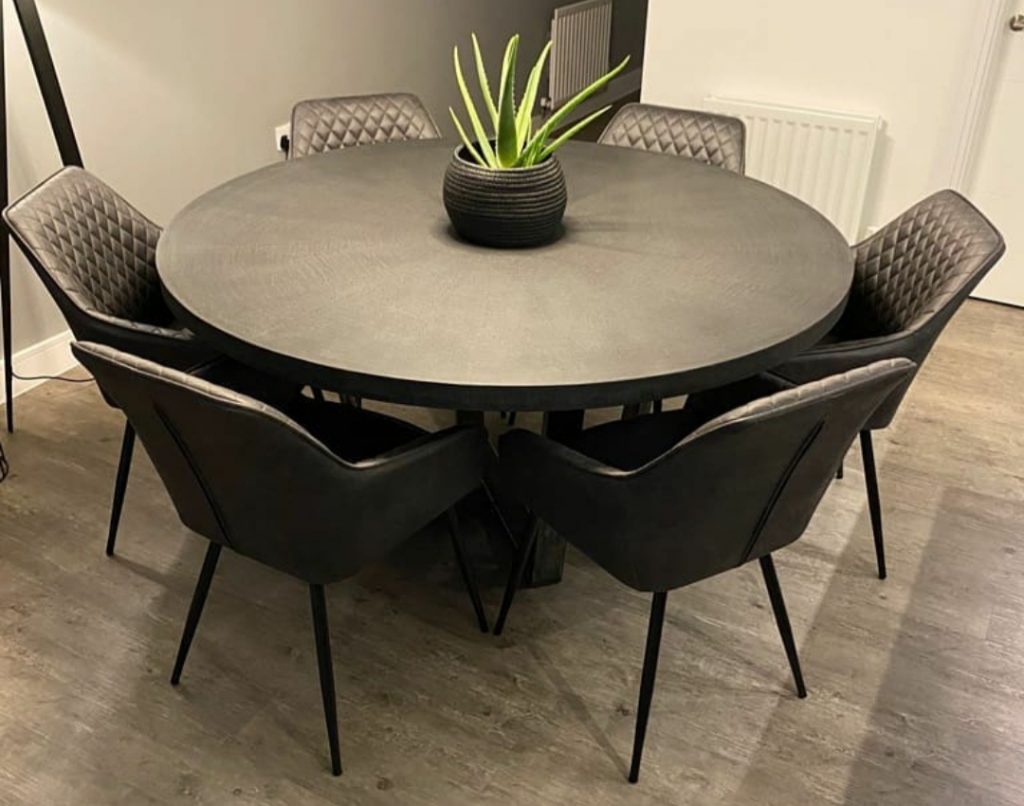
A round table changes the character of dining. Nobody is at the head, conversation travels easily, and the form invites people to linger. In a square extension, or in the dining zone of a wider open-plan room, a circular concrete table can create a compelling focal point without competing with the kitchen.
Round tables are remarkably good at using a central area that might otherwise feel vague. They suit rooms with a lantern rooflight above, curved architectural features or a view out to the garden from several angles. They also make a lovely choice for six-seat dining where the priority is intimacy rather than maximum capacity.
The limitation is diameter. Once a round table grows large enough for eight people, it requires a considerable amount of clear floor space and can be difficult for diners to reach shared dishes across the middle. A large circular table is a statement piece, but it needs room to breathe. In a narrow extension, it can interrupt the route between kitchen and garden more than expected.
For a family that entertains occasionally rather than every week, a round table may still be the better decision. It makes a room feel generous at everyday scale, even if it is not the most space-efficient way to seat a crowd.
Soft rectangles and boat shapes for a tailored answer
Some rooms do not suit a textbook shape. Perhaps the extension is long but opens into a wider original room, an island has an angled end, or a striking window line deserves a table with a softer silhouette. This is where a soft rectangular or boat-shaped design comes into its own.
A boat shape usually has straight-ish long sides that curve or taper gently towards each end. It retains the useful length and formal seating arrangement of a rectangle, while avoiding an overly rigid appearance. It can make a large ten-seater feel lighter and more inviting, particularly with a sculptural base that leaves the perimeter clear for chairs.
This is often the best route for homeowners who know a standard size will not do their room justice. Bespoke work allows the length, width, corner radius, edge profile, concrete colour and base design to be considered together. Rather than compromising around an awkward dimension, the table can be designed to solve it.
Match the base to the shape
The tabletop shape gets most of the attention, but the base determines how comfortably people can sit around it. A beautiful table should not leave someone straddling a leg or unable to tuck in a chair.
For rectangular and oval designs, inset pedestal bases or centrally positioned supports can offer more flexibility than legs placed at the corners. This matters on long tables, where accommodating an extra guest should be easy. A round table usually works well with a central pedestal, giving every diner equal legroom and strengthening the table’s sculptural quality.
With polished concrete, the base also affects the visual weight of the finished piece. A slimmer, darker steel base can make a substantial top appear to float. A more architectural concrete or timber form can create a stronger centrepiece. The right choice depends on the cabinetry, flooring and the mood you want from the extension.
Think beyond the dining setting
The most successful extension tables earn their place from morning to night. Consider how the surface will work for a quick breakfast, children’s projects, laptops, serving food and relaxed evenings with friends. Polished concrete is valued for exactly this combination of presence and everyday practicality: durable, sealed for stain resistance and full of subtle, hand-finished character.
A 6-seater may suit a couple or young family now, but a 8- or 10-seater can be a wiser fit for a forever home with regular guests. Equally, an oversized table chosen only for Christmas can make a room less comfortable for the rest of the year. There is no universal answer. The right size and shape come from how you genuinely live, not the maximum number of chairs you can fit on a plan.
At Daniel Polished Concrete, every bespoke commission begins with those real details: room dimensions, routes through the space, seating needs and the interior you are creating. A table should feel like it belongs there from the first day, not like an impressive object the room has had to accommodate.
Bring a simple floor plan, a few room photographs and your ideal guest count to the conversation. From there, the right shape usually becomes clear – and the finished table can become the centrepiece your extension was built for.