

A dining table usually becomes the busiest surface in the house long before it becomes the most admired. It hosts quick breakfasts, late dinners, homework, celebrations and everything in between. That is exactly why handmade concrete furniture UK homeowners choose tends to sit in a different category from ordinary off-the-shelf pieces – it has to look exceptional, but it also has to earn its place every day.
Concrete furniture has moved well beyond the industrial novelty it once was. In the right hands, it delivers a refined, architectural finish with real depth, subtle movement and a tactile quality that feels far more sophisticated than many people expect. For design-conscious households, especially those shaping open-plan kitchens and dining spaces, it offers something rare: a statement piece with genuine staying power.
Why handmade concrete furniture UK homes suits so well
British homes are often a mix of old structure and contemporary ambition. You might have period features alongside a new kitchen extension, or a barn conversion with clean glazing and exposed materials. Concrete works beautifully in these settings because it has presence without fuss. It can feel sharp and modern, but it also sits comfortably with timber, soft upholstery, warm metals and natural stone.
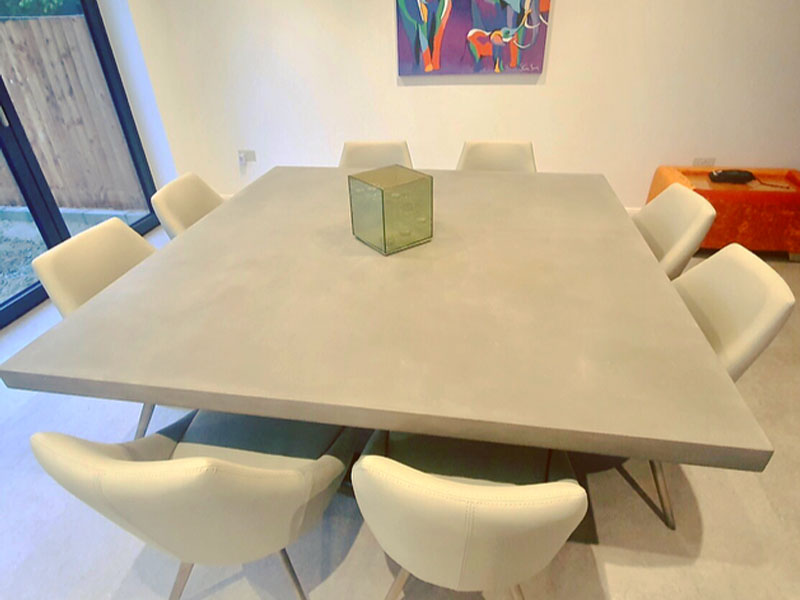
That balance is a big reason bespoke polished concrete dining tables have become so appealing. They are bold enough to anchor a room, yet restrained enough not to dominate it in the wrong way. The finish matters here. Handmade concrete should never look flat or crude. It should show the skill of the maker – carefully polished surfaces, considered edges, controlled colour variation and a finish that feels intentional rather than rough.
There is also a practical reason concrete furniture makes sense in family homes. A dining table is not a decorative extra. It needs to cope with regular use, shifting chairs, hot plates, spills and the general pace of everyday life. When properly made and sealed, polished concrete offers reassuring durability alongside its visual impact.
What makes handmade concrete furniture different
The word handmade gets used loosely in furniture, but with concrete it should mean something specific. A handmade piece is not simply cast and forgotten. It is shaped, refined and finished by people who understand the material’s behaviour – how it cures, how pigment settles, how polishing changes the surface, and how a final seal affects both appearance and performance.
That process creates character. No two tops are ever entirely identical, and that is part of the appeal. You can expect tonal variation, a certain depth in the finish and a sense that the piece has been made rather than manufactured in bulk. For many buyers, that is exactly the point. They are not searching for a generic dining table. They want a centrepiece with individuality.
There is a trade-off, of course. Handmade work takes more care and usually more time than mass-produced furniture. If speed is the only priority, a standard retail option may seem easier. But for homeowners investing in a forever home or a major renovation, waiting for the right piece is often the better decision.
Choosing the right piece for your space
Most buyers begin with the table, and for good reason. In open-plan living, the dining table does a lot of visual heavy lifting. It often sits between the kitchen and lounge area, so its scale and finish influence the whole room.
Size should be led by how you live, not just by the dimensions on paper. A six-seater may be ideal for daily use, while an eight or ten-seater makes sense for larger families or households that entertain regularly. The key is proportion. You need enough room around the table for chairs to move comfortably and for the piece to breathe within the space. Concrete has visual weight, so generous clearance around it helps the room feel calm and balanced.
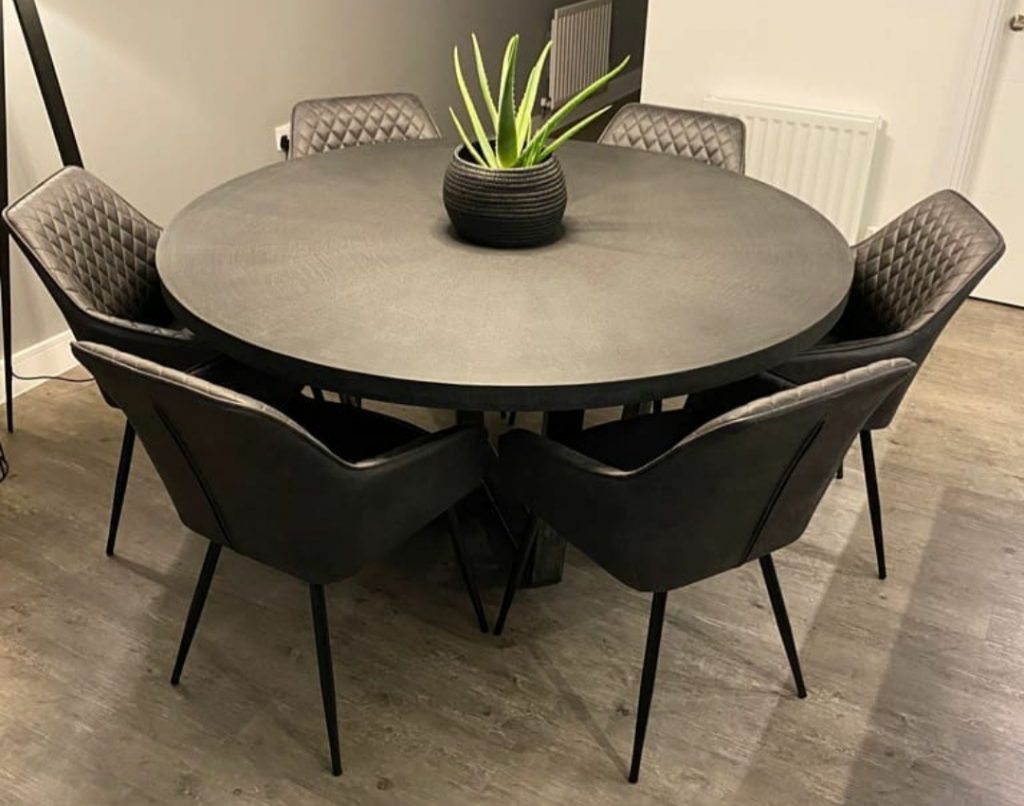
Shape matters too. Rectangular tables suit longer rooms and create a strong architectural line. Softer corners or more sculpted forms can ease that look if you want something contemporary without feeling too severe. Base and leg style also change the personality of the table. A cleaner, minimal frame gives a sharper urban feel, while a warmer metal finish or more substantial base can make the piece feel grounded and inviting.
Bespoke or collection piece?
This is usually where the decision becomes clearer. If you already know the exact dimensions you need, or you are working around cabinetry, glazing lines or a particular seating plan, bespoke is often the right route. It gives you control over length, width, thickness, edge profile, colour tone and supporting frame. That level of freedom is especially useful in renovated kitchens where standard sizes rarely fit perfectly.
If, on the other hand, you want the look and quality of a handmade concrete table with a more straightforward buying process, a standard collection can be a very sensible option. Well-designed fixed formats – such as six, eight or ten-seater configurations – tend to offer stronger price efficiency and shorter lead times while still delivering the same specialist craftsmanship.
Neither option is inherently better. It depends on whether your priority is full design freedom or a simpler path to a finished piece.
Handmade concrete furniture UK buyers should ask about performance
Beautiful furniture still has to function. Concrete can be extremely hard-wearing, but the quality of the build and finish is what makes the difference between a piece that ages well and one that frustrates you.
Ask how the surface is sealed and how it is expected to perform in daily use. A polished and properly protected top should cope well with normal dining life, but sensible habits still matter. As with stone, timber or any premium material, wiping spills promptly and using straightforward care is part of ownership.
Weight is another common concern. Concrete furniture is substantial, and that is part of its appeal, but it also means delivery and installation should be handled properly. A specialist maker will plan access, protect the piece in transit and ensure the table is installed safely and correctly in the room. For larger tables, that professional handling is not a luxury. It is essential.
Then there is finish consistency. Handmade concrete should have character, but it should not feel unpredictable. Good craftsmanship allows for natural variation while keeping the overall look refined. That distinction is worth paying attention to when comparing makers.
The aesthetic advantage of polished concrete
There is a reason polished concrete works so well in premium interiors. It has a clean, architectural quality, yet it avoids the shininess or obvious trendiness that dates some contemporary materials. It feels grounded, tactile and quietly confident.
In practical terms, it also gives you flexibility when styling the rest of the room. Concrete pairs beautifully with oak cabinetry, black accents, soft neutrals, leather dining chairs and textured fabrics. It can sharpen a lighter interior scheme or bring balance to richer materials. Because the surface has depth rather than loud pattern, it tends to complement rather than compete.
That is particularly valuable in homes where the dining table needs to hold attention without overwhelming the space. The best concrete pieces do exactly that. They draw the eye, but they do not shout.
What to look for in a maker
Specialisation matters. Concrete is not a side material that every furniture workshop handles equally well. It has its own technical demands, and buyers are usually better served by working with a maker who has a proven body of work in polished concrete specifically.
Look for evidence of hand-finished projects, a clear understanding of custom sizing, and confidence discussing practical details such as sealing, maintenance, delivery and installation. Strong testimonials help, but so does the quality of the portfolio itself. You want to see consistency, design judgement and a finish that feels elevated.
That consultation process is often where the difference shows. A good maker will help you refine proportions, discuss the right finish for your interior and guide you towards choices that work both visually and practically. Daniel Polished Concrete has built its reputation on exactly that kind of specialist, hands-on approach.
Is handmade concrete furniture right for every home?
Not always, and it is better to be honest about that. If you prefer furniture that is lightweight, easy to move around and visually delicate, concrete may not be the natural fit. It brings substance, permanence and a certain confidence to a room. That is the attraction, but it does mean it works best when chosen with intent.
For homeowners who want a dining table to disappear into the background, there are simpler options. But if you want the table to define the room, support daily life and still feel distinctive years from now, handmade concrete is a compelling choice.
The best pieces have that rare ability to feel both sculptural and useful. They are made for real homes, real routines and real occasions, but they still carry the presence of something special. If your dining space deserves more than a standard solution, that is usually the moment concrete starts to make perfect sense.