
A dining table often has to do more than one job. It hosts weeknight suppers, birthday lunches, homework, coffee with friends and the occasional laptop session. That is exactly why a modern industrial dining table has become such a strong choice for British homes – it offers presence, practicality and a clear design point of view without feeling overly decorative.
For many homeowners, the appeal starts with balance. Industrial style brings structure, honesty and material character. The modern side softens that look, making it cleaner, more architectural and easier to live with in an open-plan kitchen or renovated family dining room. Get that combination right and the table does not just fill a space. It defines it.
What makes a modern industrial dining table work
The phrase gets used loosely, but the best examples share a few clear qualities. A modern industrial dining table usually combines a pared-back silhouette with materials that have real visual weight. Think polished concrete, steel, dark timber or a carefully composed mix of textures. The lines are purposeful rather than fussy, and the finish feels tactile rather than polished to the point of looking artificial.
That does not mean every table should look raw or heavy. In fact, the strongest pieces are often the most refined. A slim concrete top with a hand-finished surface can feel far more contemporary than a bulky rustic slab. Likewise, a black powder-coated base can anchor the table without making the room feel dark.
This is where material quality matters. Industrial design can look effortless, but poor versions quickly feel cold, generic or oversized. A well-made piece has proportion, restraint and a finish that has been considered from every angle.
Why polished concrete suits the style so well
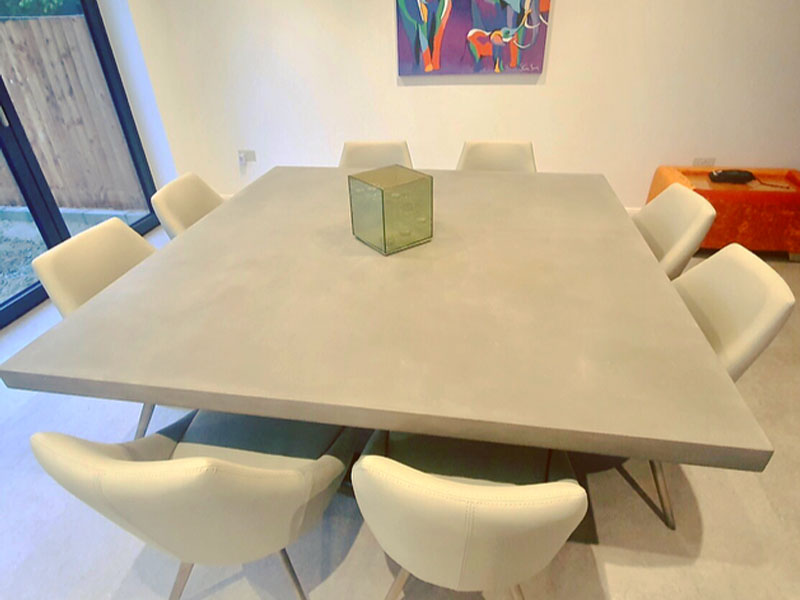
If you want a material that naturally belongs in this aesthetic, polished concrete is hard to beat. It has the urban design language people are often looking for, but with a more sophisticated finish than many expect. Done properly, it is smooth to the touch, visually rich and full of subtle variation in tone and texture.
Concrete also carries a sense of permanence. That is a real advantage when you are choosing a statement table for a forever home. It feels architectural, almost built into the room, yet it can still be tailored in shape, size and edge detail so it sits comfortably within the wider scheme.
There is also a practical side to its appeal. A professionally finished polished concrete table is designed for everyday life, not just for photographs. It stands up well to regular use, and when sealed correctly it offers reassuring resistance to stains and marks. For busy households, that matters just as much as the visual impact.
Of course, concrete is not the right answer for every interior. If your room already has a lot of visual density – dark cabinetry, heavy flooring, exposed brick on every wall – then the table needs careful balancing. In lighter spaces, though, concrete often brings exactly the depth and structure the room has been missing.
Size matters more than style trends
A beautiful table that is too small will always disappoint. One that is too large can dominate the room and make everyday movement awkward. Before choosing any modern industrial dining table, start with the realities of the space.
Think about how you actually live. Do you need six seats every day, or are you regularly hosting eight, ten or more? Is the table going into a dedicated dining room, or does it sit within a kitchen where circulation around islands, doors and cabinetry needs to be preserved? These details affect not only the table length, but also the shape and base design.
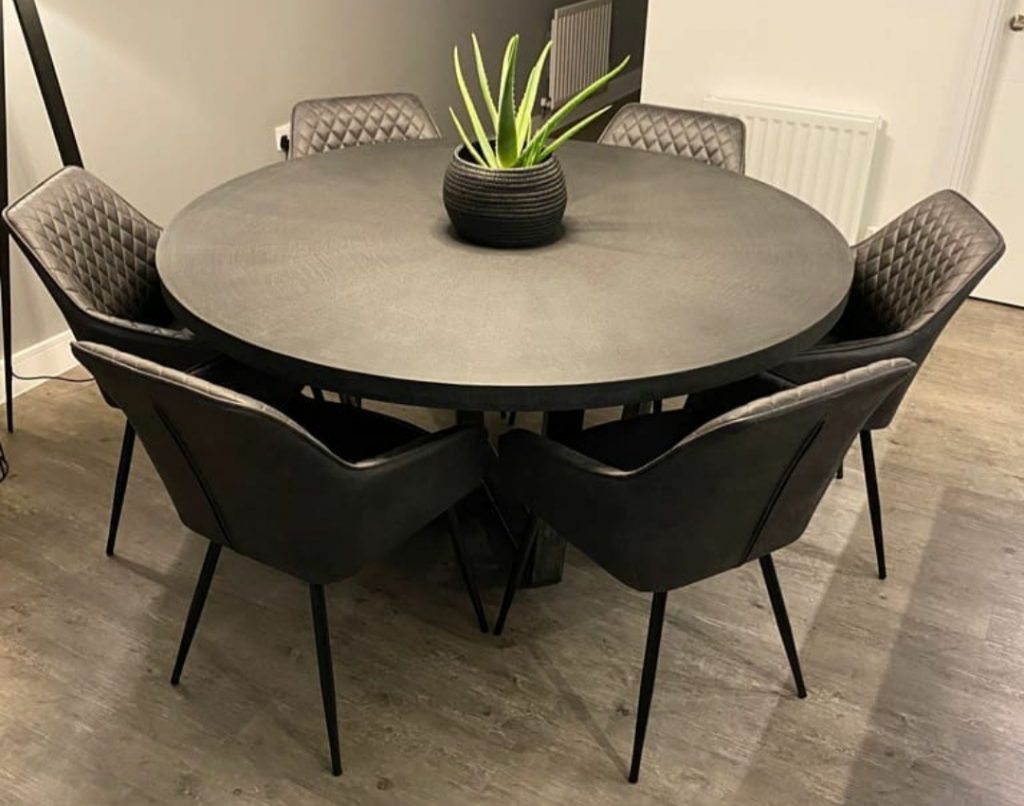
Rectangular tables remain the most popular choice for larger family homes because they suit long open-plan layouts and make it easy to seat more people. A round or oval table can work beautifully in tighter footprints or where you want the room to feel more relaxed and social. The right answer depends on the architecture of the space, not just the image you have saved on your phone.
This is often where bespoke design proves its value. Standard sizes are helpful when timing and budget are the priority, but made-to-measure dimensions can transform how a room functions. An extra 10 or 15 centimetres in the right place can be the difference between a table that merely fits and one that feels as if it was always meant to be there.
The base changes the whole character
People often focus on the tabletop first, but the base does a huge amount of visual work. It influences legroom, seating flexibility and the overall tone of the piece.
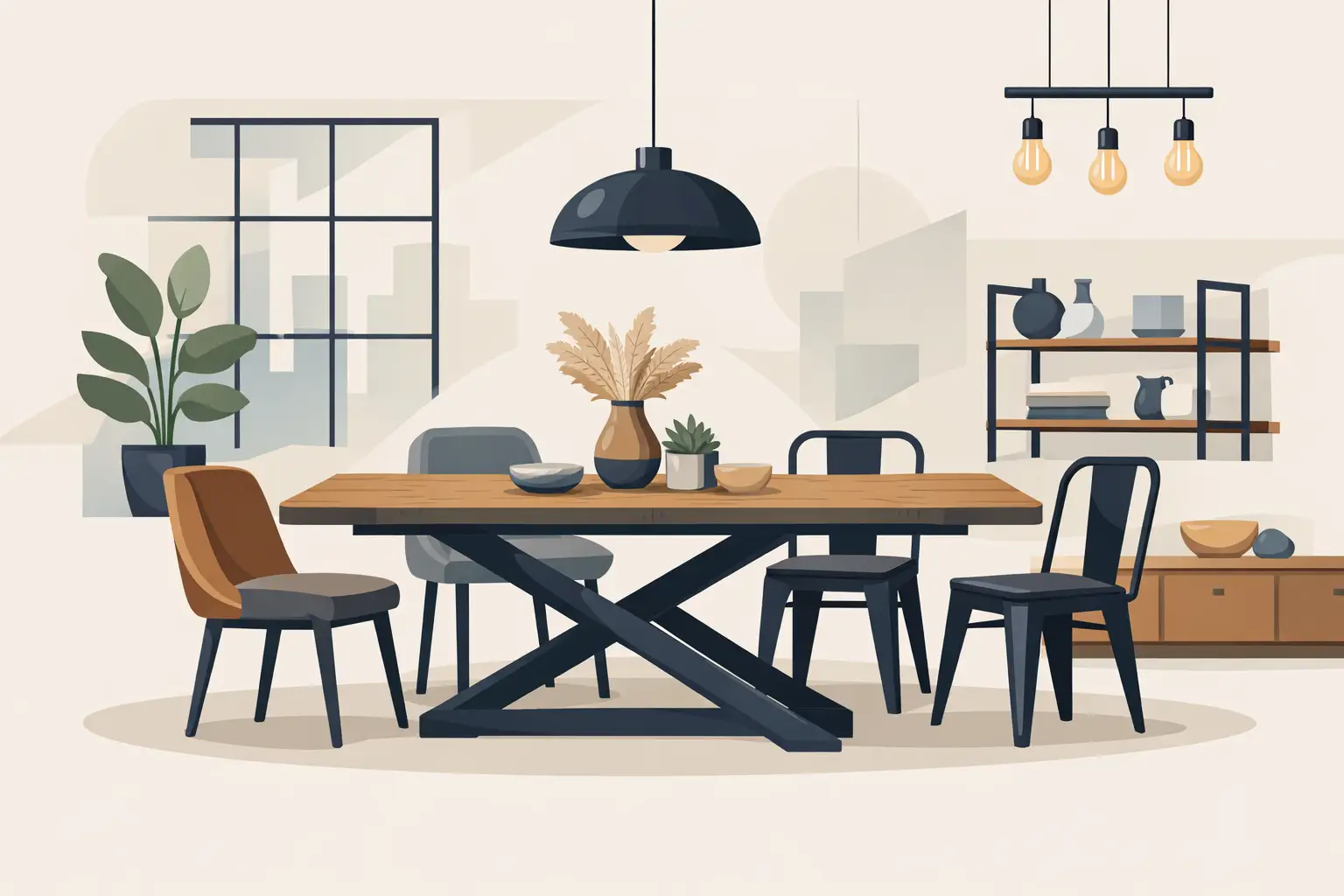
A central pedestal can give a concrete table a more sculptural look and avoid the interruption of corner legs. Tapered metal legs tend to feel lighter and more contemporary. Box frame or X-frame bases bring a stronger industrial note, but they need to be proportioned carefully or the table can start to feel too mechanical for a home setting.
There is no universal best option. If you want a table that reads as refined and modern, a simpler base often works better. If you want more obvious industrial edge, a bolder steel structure may be the right move. The key is making sure the base supports the architecture of the top rather than competing with it.
Colour and finish deserve proper thought
One of the biggest misconceptions about industrial furniture is that it has to be dark and severe. A modern industrial dining table can actually be surprisingly versatile in colour.
Softer greys work well in bright kitchens with pale oak, off-white cabinetry and natural stone. Charcoal tones can create drama in larger spaces, especially when paired with black-framed glazing or darker flooring. Warmer concrete hues can bridge the gap between industrial structure and a more inviting domestic feel.
Finish matters too. A hand-finished surface with natural movement tends to feel richer and more bespoke than one with a flat, uniform appearance. That subtle variation is part of what gives concrete its character. It should feel crafted, not factory-perfect.
This is worth keeping in mind if you are comparing materials. Mass-produced industrial-style tables often imitate concrete or weathered finishes, but they rarely have the same depth. The difference is not just visual. It changes how the furniture feels in the room.
How to make it feel warm, not stark
A common hesitation is that industrial design might feel cold. In reality, that usually comes down to styling choices rather than the table itself.
A concrete or steel-led table benefits from contrast. Upholstered dining chairs, textured rugs, timber joinery and soft lighting all help create warmth around it. In an open-plan setting, pendant lighting above the table is particularly useful because it visually grounds the dining zone and adds intimacy in the evening.
You do not need to over-style the table either. One reason these pieces work so well is that they bring enough presence on their own. A simple arrangement of ceramics, a linen runner or a sculptural bowl is often enough. Let the table be the centre piece rather than burying it under accessories.
Everyday performance counts
Style may start the conversation, but durability usually closes the sale. Dining tables have to cope with repeated use, shifting chairs, hot dishes, spilled drinks and the wear that comes with family life.
That is why craftsmanship and finishing should never be treated as an afterthought. A properly made polished concrete table is built with long-term use in mind. The surface should be sealed, the structure should feel solid, and the proportions should be considered not only for looks but for practical use every day.
There are trade-offs, of course. A substantial table will have real weight, and delivery needs to be handled professionally. Bespoke work also takes more thought than buying something off the shelf. Yet for many clients, that is precisely the point. They are not looking for a temporary piece. They want something distinctive, hard-wearing and made for the way they live.
For households investing in a major kitchen renovation or finishing a carefully planned interior, that level of permanence feels right. It brings confidence to the room.
Choosing the right modern industrial dining table for your home
The best choice is usually the one that answers both the design brief and the practical brief. It should sit naturally within the architecture of the room, seat the people you need it to seat, and still feel special on an ordinary Tuesday evening.
If you are drawn to the look, start by being honest about scale, use and material preference. Consider whether a standard size will do the job or whether your space would benefit from a made-to-measure piece. Think about how strong you want the industrial character to be, and whether the room needs contrast, warmth or a stronger focal point.
A good modern industrial dining table does not chase trends. It brings structure, character and everyday confidence to the home. When the materials are honest, the proportions are right and the finish has been crafted by hand, the result feels less like furniture and more like part of the architecture. If that is the kind of piece you are looking for, it is worth taking the time to get it exactly right.